 Wired868 Wired868 for smart sport news and opinion
Racial tensions are running high in Trinidad and Tobago at the moment. It is sad—heart-breaking really. Our “leaders” have descended into the language of c-words, n-words and percentages.
But what about the T-word? Tolerance: that powerful watch word handed to us by our nation’s founders. Or togetherness: “together we aspire, together we achieve”, as prescribed in our motto.
Or simply Trinbagonian: who we are.

Photo: Ashley Allen – CPL T20/ CPL T20 via Getty Images.
When we travel abroad, we unambiguously state that we are Trinidadian and Tobagonian. Not some hyphenated nationality. Try writing Afro-Trinidadian, Indo-Trinidadian or some other variation on your next trip abroad and see how far you get past the immigration officer.
The hyphenated Trinbagonian exists in T&T. It exists because we are historically a diverse country. And our diversity has given us much beauty: beautiful people, beautiful food, beautiful culture. And we should cherish this, and respect our different ancestral heritage.
But our diversity has also been exploited—to our detriment.
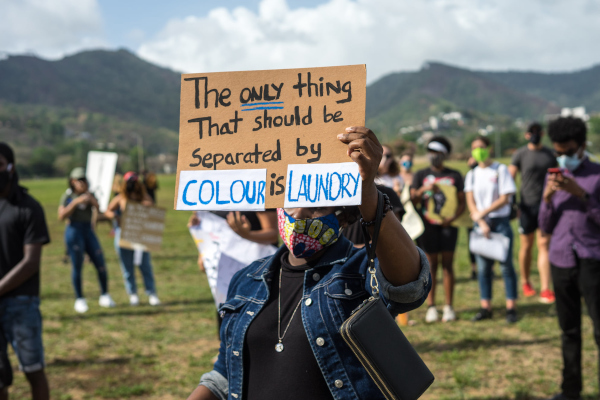
Photo: Ezra Bartholomew.
Several academic scholars noted the British style of colonial rule as “divide and conquer”. Existing divisions where exploited and new ones encouraged; be it across ethnic lines, religious lines, or other.
This strategy was deployed wherever the British went—in Africa, in Asia, in the Caribbean. Even in Europe, with the Catholics versus Protestants in Ireland, as one example.
The British understood that a people divided cannot speak with a collective voice. They cannot, in unison, speak of the social and economic hardships faced. They cannot focus their attention on the fact that their household income might be declining, that water does not flow through their taps, or the unsafety felt daily.
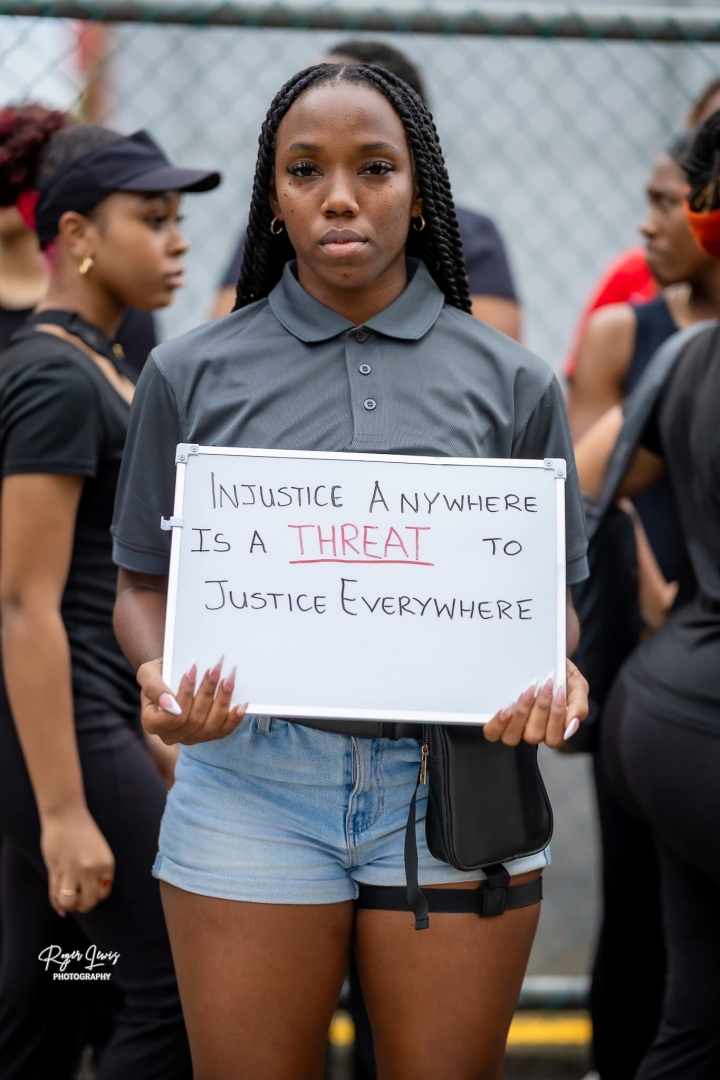
Photo: Roger Lewis/ Look Into My Eyes.
Instead, they blame and fight each other. When the people fought each other, the British won.
So, Trinidad and Tobago, we are no longer a British colony. Who is winning when we fight each other? When racial slurs that incite tensions are repeated time and time again in public discourse, who wins? To whose benefit?
Historians will name examples of how racial tensions have created civil unrest, wars and hardships. The sociologists will name the social harms and the dangers of socialising our young people into such a divisive culture. The linguists will emphasise the importance of language and how the use of words and semantics frames our understanding of ourselves and others.
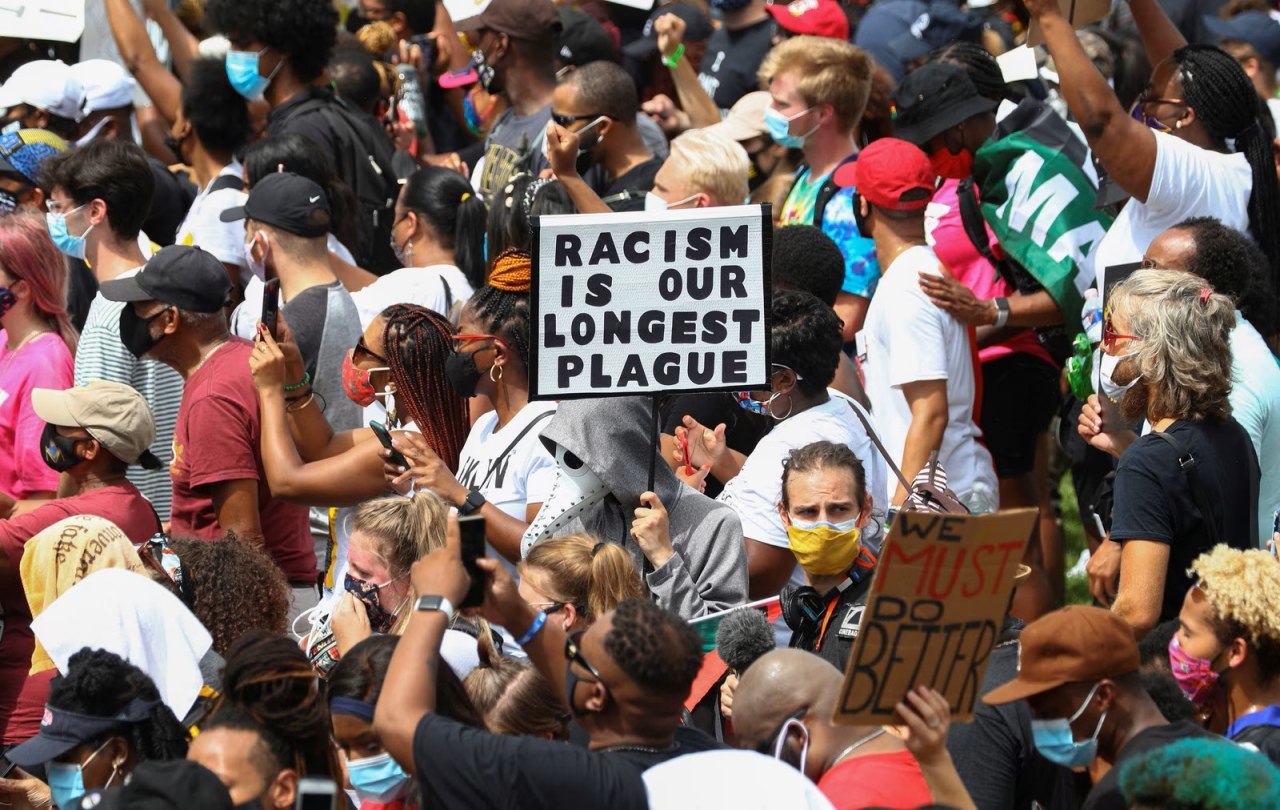
I will speak as an economist. Economic research has approached this issue in two ways.
The first looks at ethnic fractionalisation, an indicator that measures the level of ethnic diversity in a country. The research in this area suggests that the diversity element is not bad, but the tension element is. The result is resource-seeking behaviour of various ethnic groups.
Private investment suffers, there is a decline in public infrastructure, and the quality of economic and political institutions weaken.
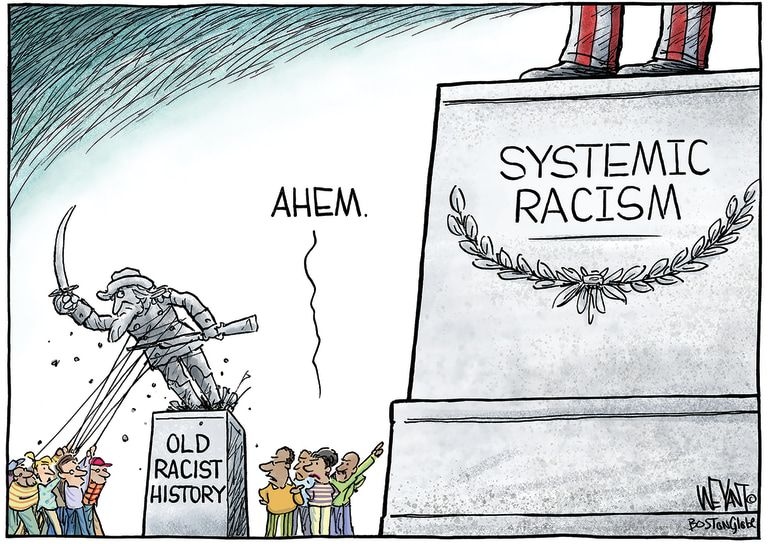
The second body of research focuses directly on changes in racial tensions. In a 2017 study, published in the academic journal Economic Letters, the authors use US data and show that as racial tension increases, real economic growth declines (holding all other important factors constant).
In this 2017 study, racial tension is measured by changes in media coverage overtime. This should be instructive to us.
Google Analytics of newspaper articles in T&T that speak to race relations show an upward trend since 2010. So, if you feel like there has been more “race talk” in recent years, it is not in your imagination—sadly.
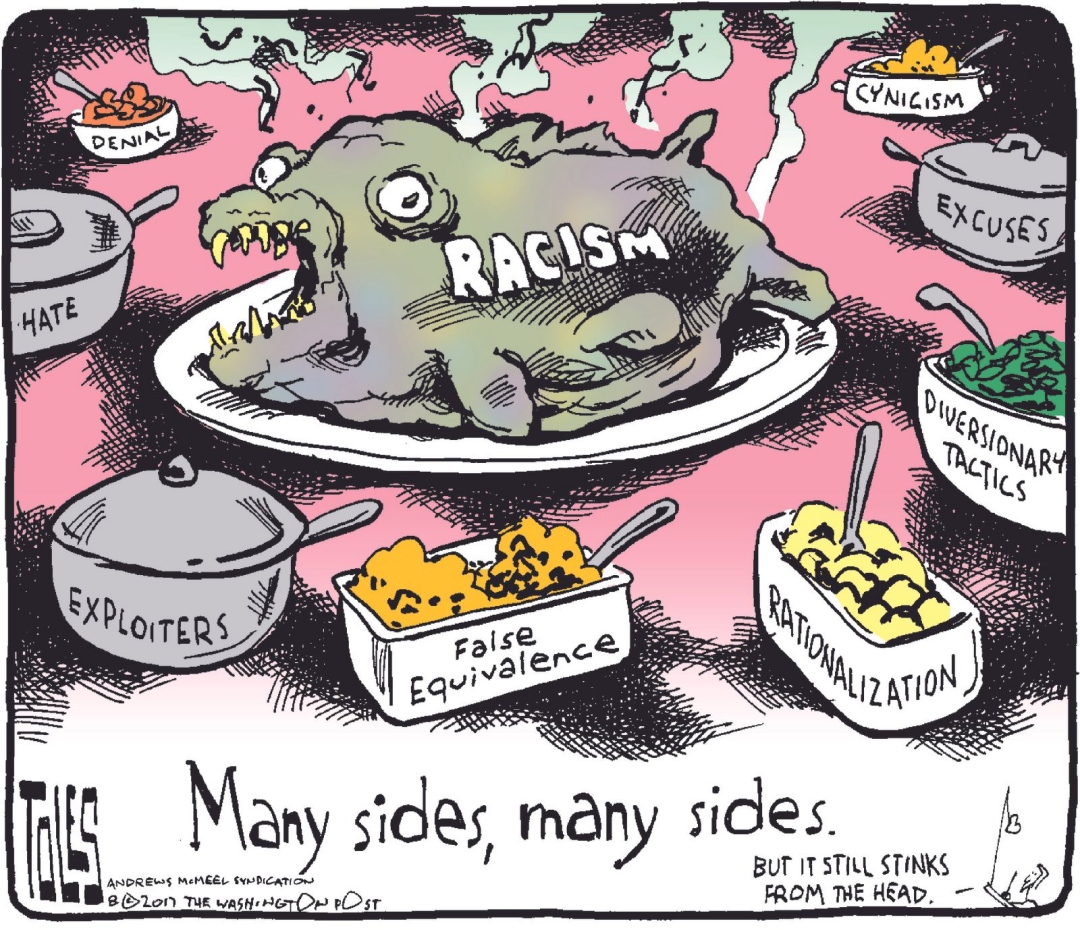
There is a commonly told metaphor about a frog that sits in a pot of water while the temperature slowly rises. Unaware of the gradual change in his surroundings the frog is cooked, unable to escape.
The temperature is too high in T&T. Let us turn it down. All of us. And especially those whose role and responsibility it is to promote the collective development of Trinidad and Tobago.

In 2005, Thomas Schelling won the Nobel Prize in Economics for his work on cooperation and conflict. Schelling’s work largely Read more
“[…] I urge our PM not to use the word ‘coolie’ to self-reference. I accept the fact that you may Read more

In two years, I will be a pensioner myself. So when I say the upcoming budget must increase the old Read more

“[…] I remember July 27, 1990—the fear, the uncertainty, the families gathered around radios and television sets. The attempted coup Read more

I have a question—a few actually. They are related to the policies at the Eric Williams Medical Sciences Complex, commonly Read more
“[…] In his 1971 book The Mechanics of Independence, ANR Robinson wrote that: ‘As financial rewards are lower in the Read more

Dr Jamelia Harris is an economist and Assistant Professor at the University of Warwick. She studies and has written on the labour market, public finance and development policy in Africa and the Caribbean. She is a double President’s Medal recipient and holds a PhD from the University of Oxford.
