 Wired868 Wired868 for smart sport news and opinion
“[…] In his 1971 book The Mechanics of Independence, ANR Robinson wrote that: ‘As financial rewards are lower in the less developed country, the decisive factor of keeping its skilled people from emigrating are likely to be career opportunity and job satisfaction.’
“Simply put, if we do not value our workers and treat them well, they will leave.
“And they have left. And will likely continue to do so…”
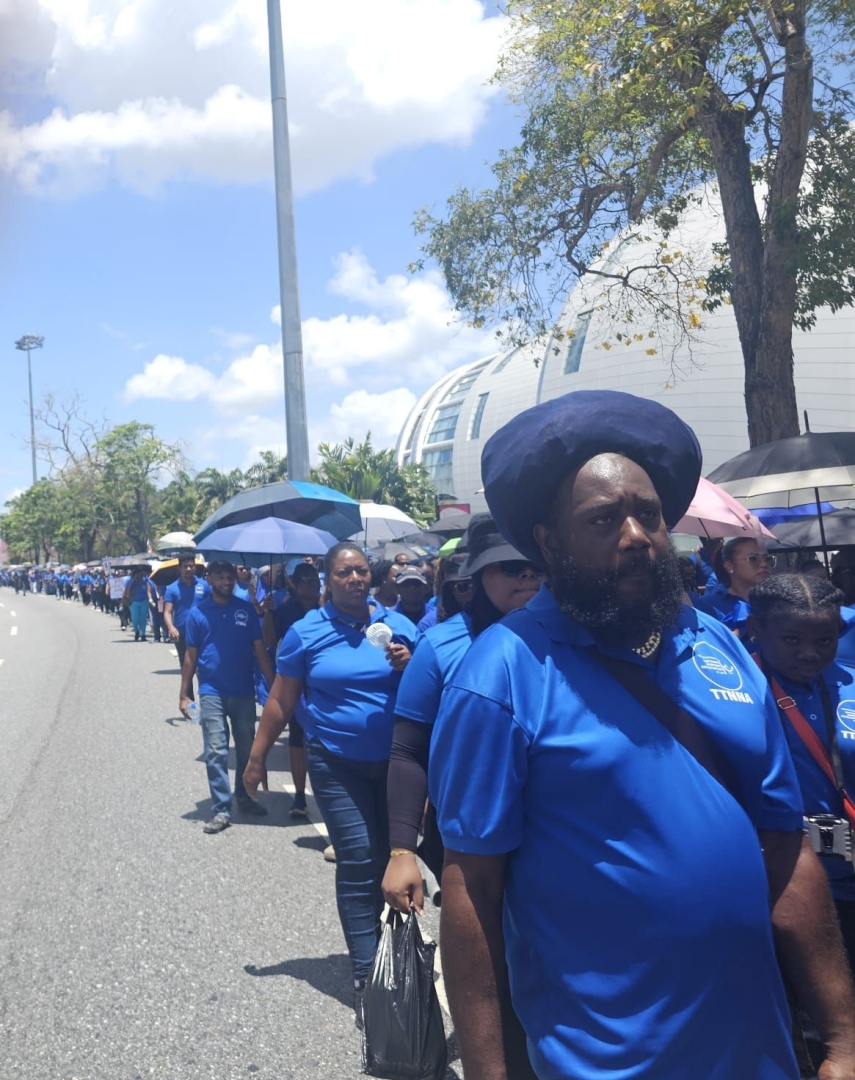
(via TTRNA.)
In the following guest column, economist Dr Jamelia Harris stresses the importance of valuing Trinidad and Tobago’s essential workers:
A few years ago, a friend of mine relayed a story to me about a very positive encounter they had with a nurse at a hospital in the UK. The nurse was Trinidadian, and because of this, my friend felt compelled to tell me how my fellow countrywomen was well-trained and had excellent bedside manners.
This fairly mundane story is particularly instructive as our nurses take to the streets in Trinidad and Tobago. It is instructive because it demonstrates that by global standards, our nurses are well-trained. And because of this, they end up being valued in other countries.
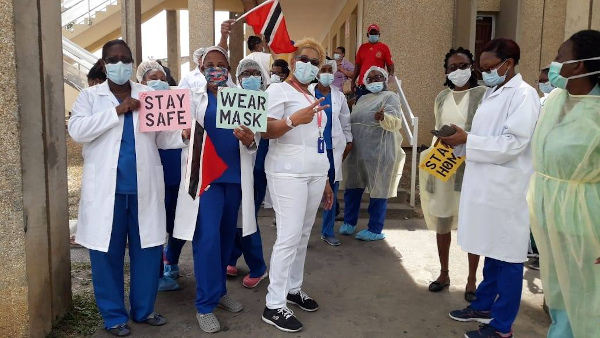
(via NCRHA.)
This begs the question, how can we better value our workers right here in T&T? A question that has been asked since Independence.
A few weeks ago, I wrote about the foreign policy lessons we can still learn from Dr Eric Williams in commemoration of the anniversary of his passing on 29 March. The anniversary of the death of another founding father of T&T recently passed on 9 April. That of ANR Robinson, who died 12 years ago in 2014.
ANR Robinson was the first minister of finance of independent T&T, holding the portfolio from 1961 to 1967. He was therefore instrumental in conceptualising and helping to deliver some of our early economic development policies, including the national development plans.
ANR Robinson is often most remembered for his political achievements (the only person to serve as head of the Tobago House of Assembly, prime minister and president of T&T) and international accolades as a pioneer of the International Criminal Court (ICC).

In addition to this, his intellectual understanding of labour in small countries like T&T, is incredibly important to us today.
Nurses are presently engaged in strike action, demanding higher wages and better working conditions. Nearly all of us interface with the public health system in some form or fashion, so this issue affects us all. And those who cannot seek private care because of costs are more acutely affected.
In his 1971 book The Mechanics of Independence, ANR Robinson wrote that: “As financial rewards are lower in the less developed country, the decisive factor of keeping its skilled people from emigrating are likely to be career opportunity and job satisfaction.”

Simply put, if we do not value our workers and treat them well, they will leave.
And they have left. And will likely continue to do so.
In the immediate post-independence years, despite efforts to train local labour, brain drain was a significant challenge as skilled workers were often attracted to employment opportunities abroad. In The Mechanics of Independence, ANR Robinson provides some data.
Between 1963-1968, 667 nurses qualified but 432 resigned to seek opportunities elsewhere. In the same period 10 dentists opened new practices, but 13 emigrated.

(via TTRNA.)
Between 1965-1968, 75 doctors joined the health services, but 46 resigned. These trends were not limited to medical professionals and affected many groups of skilled workers, including teachers, engineers and skilled craftsmen such as mechanics.
These patterns are still true today. Some of our best and brightest train locally and then go abroad to contribute to the economies of the US, UK, Canada, etc.
The T&T taxpayers either subsidise or fully pay for their training, then the citizens of some faraway developed country reap the rewards of this investment. Paradoxically, we struggle with shortages and rely on foreign labour in some sectors—including the health sector.
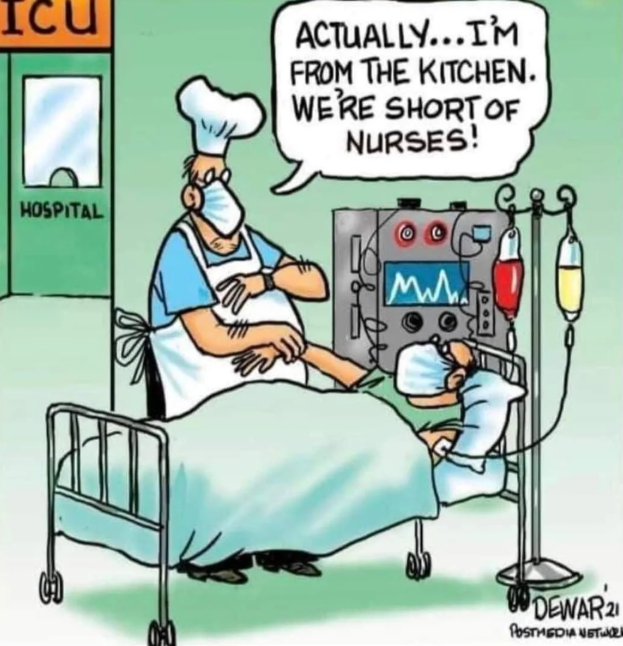
So, when our nurses strike, they do so because they do not feel valued.
Valuing our nurses, and all workers for that matter, begins with serious conversations around decent work. And decent work is more than pay.
Decent work is productive and delivers a fair income. It is also secure, offers opportunities for personal and professional development, and affords workers the freedom to express their concerns, organise and participate in the decisions that affect their working conditions.
Valuing our workers not only decreases the probability of emigration and brain drain, it also increases the productivity of those that stay.

(via TTRNA.)
There is a vast body of research which demonstrates that well-paid workers, who also have secure contracts and good work-life balance have higher levels of job satisfaction, and in turn, perform far better than those who do not enjoy these job characteristics.
So, if we wish to experience that well-trained Trinbagonian nurse with excellent bedside manners in T&T and not in a foreign country like the UK, maybe we should start treating our nurses with the respect, decency and dignity they deserve.
Afterall, charity should start at home, and so should valuing our workers.

The prescription for healthy living was flawless, if I do say so myself. Grilled fish, fresh vegetables, fruits bursting with Read more

Covid-19 was a masterclass in socioeconomic inequities but heatwaves have also ignited pervasive disparities in our society. The elderly, those Read more

In 2005, Thomas Schelling won the Nobel Prize in Economics for his work on cooperation and conflict. Schelling’s work largely Read more

“[…] I urge our PM not to use the word ‘coolie’ to self-reference. I accept the fact that you may Read more

In two years, I will be a pensioner myself. So when I say the upcoming budget must increase the old Read more

“[…] ‘No rule was broken’ is a legal answer to a question that isn’t, at its heart, legal. It’s a Read more

Want to share your thoughts with Wired868? Email us at editor@wired868.com.
Please keep your letter between 300 to 600 words and be sure to read it over first for typos and punctuation.
We don’t publish anonymously unless there is a good reason, such as an obvious threat of harassment or job loss.