 Wired868 Wired868 for smart sport news and opinion
A few years ago, Michal Teja captured hearts and titles with his hit song, DNA. At the time, I was living abroad and remember being moved by the line: “freedom in we DNA”.
I was moved by that line as the Russia-Ukraine and Israel-Palestine conflicts brewed, and what could be freely expressed in my country of domicile at the time seemed restricted. I thought, then, thank goodness I am from a country where freedom is cherished.

I reflect on this now, as to me, August is the month where we mark freedom as a country—starting with Emancipation on 1st August (freedom from enslavement), and ending with Independence on 31st August (freedom from colonial rule).
Our stated love of freedom is well-documented. Our national anthem begins with the words: “Forged from the love of liberty”.
Our Constitution enshrines several rights and freedoms, including: the right to express political views; freedom of movement; freedom of conscience and religious belief and observance; freedom of thought and expression; freedom of association and assembly; and freedom of the press.

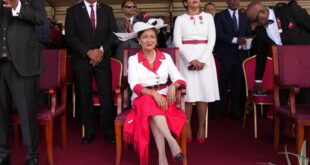
Photo: Chevaughn Christopher/ CA-images/ Wired868.
Our political parties emerged with promises of freedom. Dr Eric Williams was resolute in his vision for self-determination and sovereignty as the founder of the PNM, and first prime minister.
ANR Robinson, founder of the NAR, similarly articulated the value of national sovereignty, and stressed the importance of Tobago being able to freely express her position within a unified Trinidad and Tobago.
Basdeo Panday, founder of the UNC, promised to liberate the working class; and became the first East Indian prime minister, shattering perceived glass ceilings at the time.
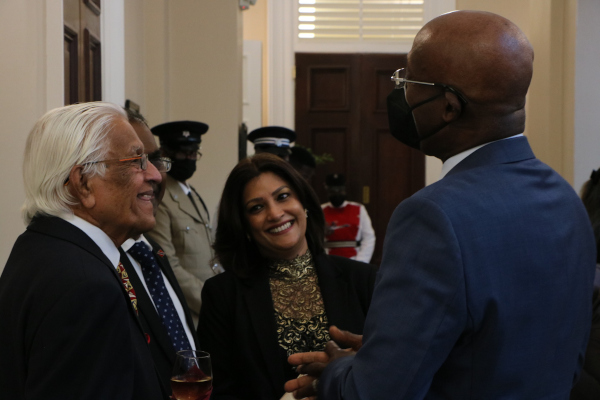
(Copyright Office of the Parliament.)
Freedom has always been in our social and political DNA. So, 64 years on from Independence, we should ask ourselves: do these tenets still hold?
Do we still love liberty as we profess in our national anthem? Are we free to associate politically without fear of consequence as enshrined in our Constitution?
Are we free to assemble and peacefully protest? Are we free to engage in political dissent? Are our institutions free from political interference? Is our press free? Are our labour markets and procurement processes free and fair?
 If the answer to most of these questions is no, then we are in trouble.
If one’s answers to these questions change depending on which party holds power, then this too is a problem; and perhaps even more troubling. It would suggest that not only is there the absence of perceptions of freedom, but the presence of perceptions of discrimination.
So why is this troubling? The first reason for concern is what this means for democracy—our democracy. Democracy is not merely voting in elections. It is a system which gives power to the people.
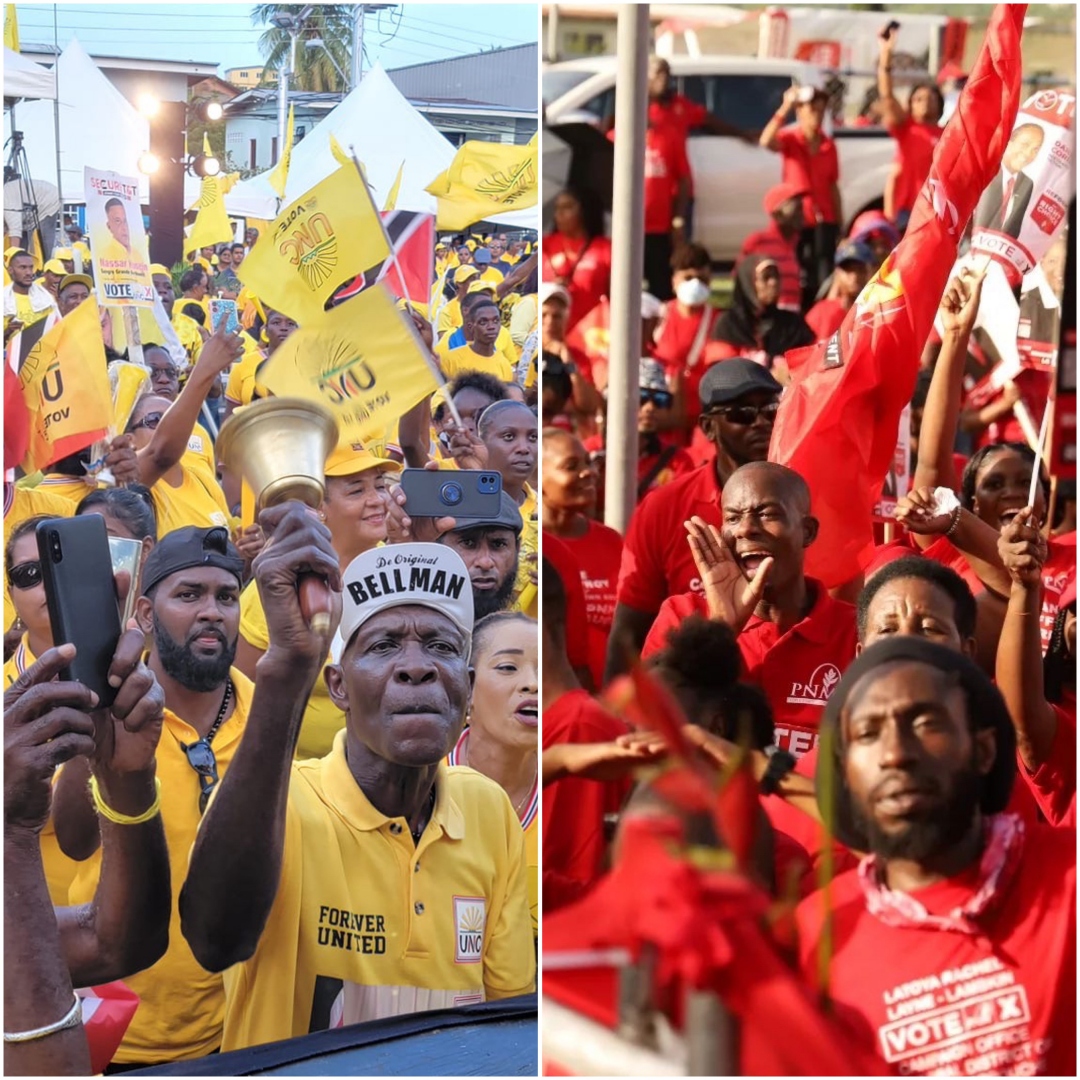
How can people have power if they do not have freedom?
In his first speech to independent Trinidad and Tobago, Dr Williams instructed that: “The first responsibility that devolves upon you is the protection and promotion of your democracy. Democracy means more, much more, than the right to vote and one vote for every man and every woman of the prescribed age. Democracy means recognition of the rights of others.”
Though some may disagree with Dr Williams politically, it is difficult to disagree with this statement intellectually.

The talks lasted about two weeks and resulted in Independence for Trinidad and Tobago.
Copyright: AP Photo/ Staff/ Laurence Harris.
The second reason for concern is economic development.
There is a vast academic literature which links freedom to economic development. There are many mechanisms behind this relationship, but perhaps the simplest and most powerful is ideas.
In the absence of freedom how can one formulate and express new ideas? Especially if those ideas challenge the dominant status quo.
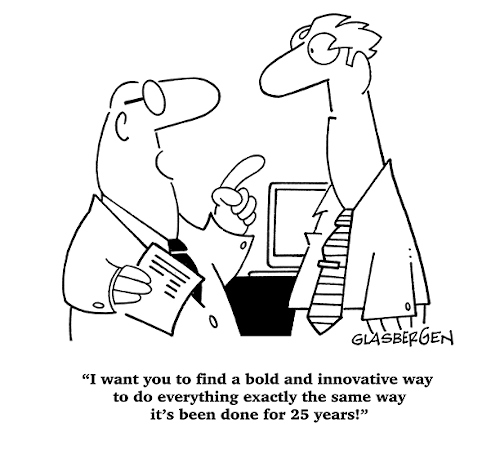
New ideas lie at the heart of innovation. Ideas enable economic, political and social change.
The third reason for concern is the direction of travel and its implications for future generations. In the 2025 Human Freedom Index, Trinidad and Tobago ranked 67 out of 165 countries. Not bad overall. But how do we compare to our regional neighbours and across time?
Jamaica was ranked 42 and Barbados 46 in 2025, both ahead of T&T. When the index was established in 2000, T&T had a score of 7.83 (out of 10), compared to 7.76 for Barbados and 7.74 for Jamaica. We were ahead.

By 2025, T&T’s score dropped to 7.37. Barbados increased to 7.81 and Jamaica to 7.89. We have regressed. What does this mean for the future if this trajectory continues?
When the Spanish interlopers arrived in 1498, the theft of the freedom of our indigenous peoples began. Our African ancestors born in 1833 were born into enslavement. Our ancestors born in 1961 were born British subjects in a country not fully free to determine its own future.
Trinidad and Tobago has had a long walk to freedom.

As we celebrate Emancipation and Independence this year, let us not only commemorate these milestones but also reflect on what freedom means in 2026 T&T—and importantly, the worrying trend we have embarked on.
Because what freedom means today, will likely define what freedom looks like in the future, for our children and grandchildren.
The renowned poet Kahlil Gibran wrote that: “Life without liberty is like a body without spirit.”
Trinidad and Tobago, let us not lose our spirit.
I am not a politician. I’m certainly not a senator. I am just a citizen who pays attention. So, when Read more
There is an old adage that says: “a wise man learns from the mistakes of others, while a fool learns Read more
Thirteen years have passed since health care workers, Lake Asphalt employees and other workers last received a salary adjustment. In Read more
Having just celebrated 64 years of independence, discussions as to whether Trinidad and Tobago is better off since gaining independence Read more
“[…] To the ‘UNC family’ she offers the old tired hymn: lagoons, cane fields, salt and rice, ponds and springs—the Read more

Some years ago, I lived and worked in Sierra Leone. I arrived in the capital, Freetown, just ten years after Read more

Dr Jamelia Harris is an economist and Assistant Professor at the University of Warwick. She studies and has written on the labour market, public finance and development policy in Africa and the Caribbean. She is a double President’s Medal recipient and holds a PhD from the University of Oxford.