 Wired868 Wired868 for smart sport news and opinion
“[…] A child is not a collection of bills to be divided equally without considering the circumstances of the parents responsible for meeting them… Equal contributions do not always result in equitable contributions.
“Consider two parents who share the cost of an expense equally. On paper, that arrangement appears fair.
“But if one parent earns significantly more, while the other parent carries all of the practical responsibility for raising their child, the financial impact of that equal split can be vastly different…”
The following Letter to the Editor on the difficulties in arriving at fair financial contributions for the children of divorced parents was submitted to Wired868 by A Parent and Advocate for Equitable Parenting:

(via Shutterstock.)
At what point does a parent become unreasonable for asking the other parent to contribute fairly towards the upbringing of their child?
I ask this question because I have been called unreasonable, selfish, and someone who is only interested in money. Why? Because I believe that raising a child requires more than selectively paying bills, dividing certain expenses down the middle and deciding, without meaningful consultation, which expenses are necessary and which are not.
Like many single parents, I carry the responsibility of ensuring that my child is fed, clothed, educated, transported, entertained, supported emotionally and given opportunities to grow.
I manage school commitments, extracurricular activities, lessons, appointments, daily routines and the countless other responsibilities that come with raising a child. I am the parent who makes arrangements, solves problems and finds solutions when something goes wrong.
The other parent contributes towards certain expenses, including school fees, groceries, a portion of extracurricular activities and lessons, and half of medical expenses.
These contributions are acknowledged. However, what happens to all the other expenses and responsibilities that make up a child’s life?
What about rent, utilities, transportation, diesel, clothing, school activities, recreation, holidays and the countless unexpected expenses that arise throughout the year?
What about the time, planning, driving, effort and emotional energy required to ensure that a child is cared for? What about managing schedules, attending school matters and being the parent who must always be available when something goes wrong?

(via Catholic TT.)
These responsibilities do not disappear simply because they are difficult to quantify on a receipt.
The problem is not that a parent contributes financially. Financial support is necessary. The problem arises when one parent decides what they are willing to pay, announces that decision as final and expects the other parent to accept it, regardless of the child’s overall needs or the financial burden left behind.
A child is not a collection of bills to be divided equally without considering the circumstances of the parents responsible for meeting them.
Here is what I find particularly troubling: the other parent has never once sat down with me to ask a simple question. What does it actually cost to raise our child?
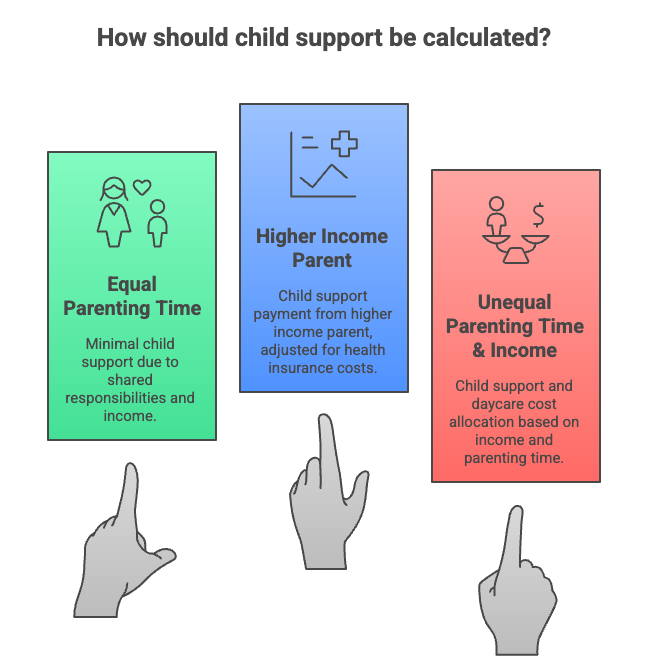
There has never been a genuine effort to sit together, go through the day-to-day expenses, discuss the financial realities of maintaining a home for our child, or understand the full extent of what is required.
There has been no meaningful conversation about how the responsibilities and expenses could be shared in a way that is fair to both parents and, most importantly, meets the child’s needs.
Instead, I am told what the other parent is prepared to pay. That is the amount, and that is the end of the discussion. I am expected to accept it and somehow make everything else work.
But parenting does not operate on a fixed list of expenses chosen by one person. The cost of raising a child extends far beyond the items one parent considers necessary.

There are ongoing expenses, unexpected costs and everyday responsibilities that must be met whether or not they have been included in someone’s personal calculation.
So I ask: Why am I the unreasonable parent? Why am I selfish for wanting to take the matter to court, when there has never been a genuine willingness to sit down and discuss what it actually takes to raise our child?
Why am I labelled unreasonable for asking for a fair contribution, rather than being met with a willingness to understand the financial reality of the situation?
Why is requesting a conversation about shared responsibility treated as greed, while one parent’s unilateral decision about what they will contribute is treated as final?

These are questions worth asking, because they speak to a much wider issue affecting separated parents and families throughout our society.
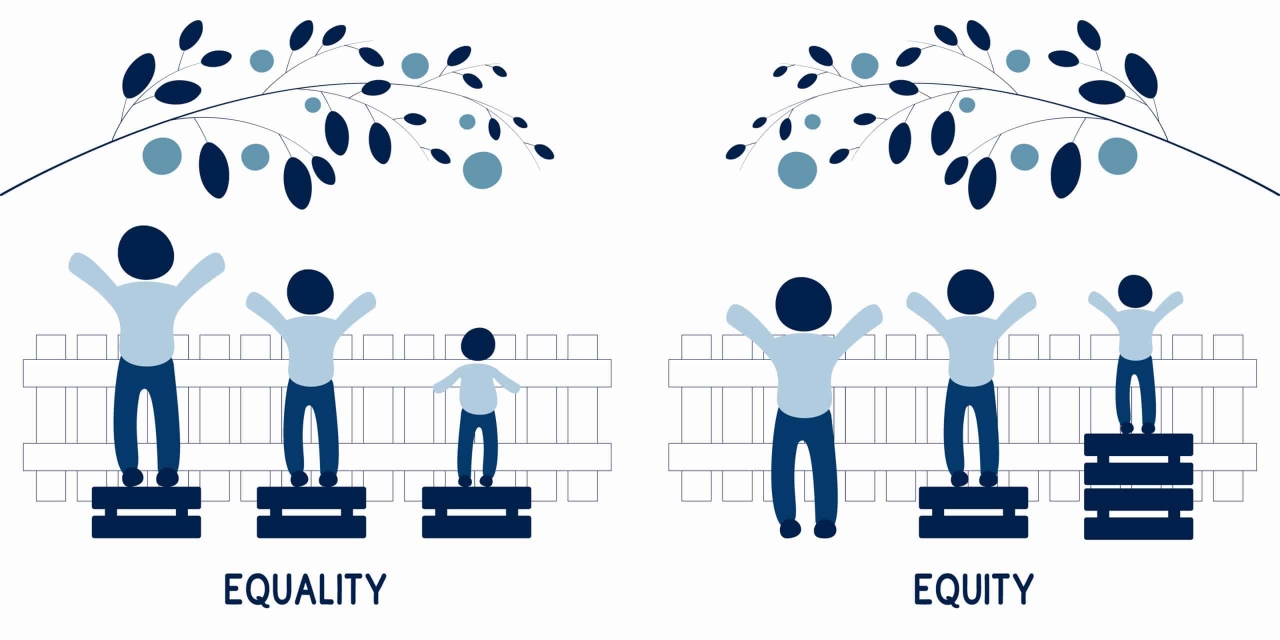
This brings me to a distinction we need to discuss more openly: the difference between equality and equity.
Equality means treating people the same or dividing something equally. Equity recognizes that people have different circumstances, resources and responsibilities, and that fairness may require different levels of support to achieve a fair outcome.
In parenting, is it truly fair to insist on an equal division of expenses when one parent earns significantly more than the other, while the lower-earning parent also performs the overwhelming majority of the daily caregiving?

One parent may have a substantially higher income and greater financial capacity. The other may earn considerably less while carrying out the responsibility for school runs, appointments, meals, extracurricular activities, household management and the daily demands of raising a child.
The latter parent contributes not only financially but also through hours of unpaid labour that make the child’s life function. Yet when the bills arrive, the expectation may still be that everything must be divided equally.
Equal contributions do not always result in equitable contributions.
Consider two parents who share the cost of an expense equally. On paper, that arrangement appears fair. But if one parent earns significantly more, while the other parent carries all of the practical responsibility for raising their child, the financial impact of that equal split can be vastly different.
For the higher-earning parent, paying half may be manageable. For the lower-earning parent, paying the other half while also covering rent, transportation, household expenses and the many costs that have not been included in the calculation may be financially overwhelming.
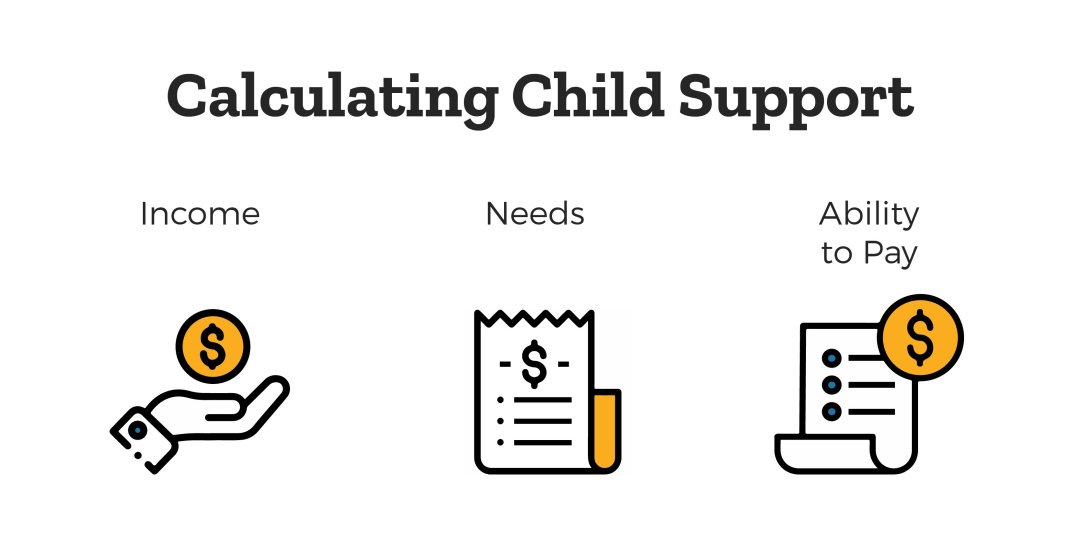
The question, therefore, should not simply be whether each parent pays 50 per cent. It should be whether each parent’s contribution is reasonable in light of their financial means, the child’s needs and the responsibilities each parent actually undertakes.
This does not mean that the higher-earning parent should automatically pay for everything. Nor does it mean that the lower-earning parent has no financial responsibility.
It means that fairness requires us to look at the complete picture rather than relying on an arbitrary 50/50 arrangement as the definition of responsible parenting.

When one parent does most of the practical work of raising a child, should the other parent not be willing to contribute a greater proportion of the financial costs, particularly when they have significantly greater financial means?
Why should the parent who provides the bulk of the daily care also be expected to shoulder an equal financial burden, regardless of the disparity in income?
Parenting requires communication, cooperation and a willingness to consider the child’s overall needs. It should not be a unilateral arrangement in which one parent decides what is necessary while the other is left to make everything else work.
Life, of course, does not always go according to plan. Families experience emergencies, financial setbacks and unexpected changes in employment. In my own circumstances, I have experienced two major financial setbacks one being the loss of my employment.

These circumstances have left me struggling to maintain financial stability and meet the needs of my child.
In such moments, I believe parents should be able to have an honest conversation about how to ensure their child’s basic needs are met. A change in circumstances should prompt a discussion about how both parents can help maintain stability for their child, taking into account their respective financial capacities.
When requests for assistance with essential household needs, including rent and basic household necessities, are refused, what options does the struggling parent have?
Should that parent simply remain silent, accept whatever contribution is offered and find a way to make the rest work, regardless of the consequences?

(via iStockphoto.)
I have reached the point of seeking the court’s intervention—not because I enjoy conflict, but because attempts to resolve matters through discussion have not produced the cooperation needed. Yet even this decision has resulted in accusations that I am unreasonable, selfish and interested only in money.
This is the part that troubles me most. Why is seeking a formal determination of parental financial responsibilities so readily interpreted as an act of greed or hostility?
Taking a matter to court should not automatically be viewed as an attempt to punish the other parent. Sometimes, it is the remaining avenue when communication has broken down and the parents cannot reach an agreement about what their child needs and how those needs should be met.
I will not even begin to discuss the lengthy timelines associated with the court system, or the additional financial, emotional and practical strain that comes with waiting for a matter to be resolved.

(via Epp Law.)
While the process unfolds, the child’s needs do not stop, the bills do not stop coming, and the parent carrying the day-to-day responsibility cannot simply put life on hold while waiting for a resolution.
No parent should have to feel ashamed for seeking a fair arrangement. Equally, no parent should be expected to agree blindly to every financial request. There must be accountability, transparency and reasonable discussion on both sides.
But how can parents arrive at a reasonable arrangement when one parent is unwilling to have the conversation in the first place?
A parent can earn a substantial income and still leave the other parent carrying the greater burden of raising their child. Conversely, a parent who earns less may be contributing far more than their financial circumstances would suggest through daily care, time, sacrifice and constant responsibility.

Money matters. It pays for a roof over a child’s head, food on the table, transportation, medical care and opportunities to participate in activities that support their development. But money is only one part of parenting.
Financial contributions do not automatically replace presence, communication, shared decision-making or practical support.
Nor should the parent who provides most of the daily care have to repeatedly justify every expense without the benefit of a genuine discussion about the overall cost of raising their child.
Ultimately, the question is not simply whether one parent pays half of certain expenses. The question is whether both parents are contributing fairly, according to their circumstances, to the full range of their child’s needs. That includes the financial costs, the practical responsibilities, and the work that never appears on a bank statement.

(via Pagel Schulenburg.)
I am not asking for luxury. I am asking for a conversation, shared responsibility and recognition that raising a child is an ongoing commitment—not a list of selected expenses that one parent gets to determine unilaterally.
So, if asking for that makes me an “unreasonable parent” in someone else’s eyes, perhaps we need to reconsider what we have come to accept as reasonable.
Perhaps the real question is not why one parent is asking for more, but why there was never a genuine willingness to sit down, listen and understand what was needed in the first place.
Equality asks whether both parents are paying the same amount. Equity asks whether both parents are contributing fairly, given their financial circumstances and caregiving responsibilities.
Our children deserve more than a debate over who pays half. They deserve parents who recognise that their needs come first, that caregiving is real work, and that financial responsibility should be shared fairly rather than mechanically.
A parent should not have to carry the overwhelming weight of raising a child, struggle to meet the financial demands that come with that responsibility, and then be made to feel ashamed for asking the other parent to contribute fairly.
When did asking for a discussion about the real cost of raising a child, and seeking a fair contribution when that discussion is refused, become unreasonable?

“[…] It’s not necessarily that I don’t like you—it’s just immensely discomforting to be up close and personal. “It feels Read more

“[…] I urge our PM not to use the word ‘coolie’ to self-reference. I accept the fact that you may Read more

In two years, I will be a pensioner myself. So when I say the upcoming budget must increase the old Read more

“[…] ‘No rule was broken’ is a legal answer to a question that isn’t, at its heart, legal. It’s a Read more

Is this new UNC Government celebrating our Independence, or declaring its independence from public accountability and the rights of its Read more

“[…] As the applause faded, I thought about our inconsistent and unreliable water schedule, even in the rainy season. I’ve Read more

Want to share your thoughts with Wired868? Email us at editor@wired868.com.
Please keep your letter between 300 to 600 words and be sure to read it over first for typos and punctuation.
We don’t publish anonymously unless there is a good reason, such as an obvious threat of harassment or job loss.