 Wired868 Wired868 for smart sport news and opinion
“[…] The obvious question is: What has changed since 2024 to make another significant constitutional restructuring necessary? […] The TTFA’s 25 October statement merely says that the current review has been undertaken with consideration given to Fifa recommendations.
“It does not identify the recommendations, explain whether they are mandatory or discretionary, or establish which proposed amendments originate directly from Fifa and which have been developed by the TTFA Executive Committee.
“Has Fifa introduced new requirements? Has it identified deficiencies in the 2024 Statutes? Or is the Executive Committee proposing changes that it considers desirable? These are fundamentally different explanations.
“The TTFA should circulate the relevant Fifa and Concacaf correspondence and identify precisely which amendments are required for compliance, which are recommendations, and which are domestic governance initiatives…”

The following guest column, which looks at amendments to the current Trinidad and Tobago Football Association (TTFA) Statutes—proposed by the Kieron Edwards-led executive committee—was submitted to Wired868 by Betterment:
The Trinidad and Tobago Football Association’s (TTFA) 25 October announcement that it will begin consultations on proposed statutory amendments is a welcome development. However, it does not resolve the fundamental concerns surrounding the proposals.

(via TTFA.)
Questions about voting rights, candidate eligibility, Tobago representation, presidential authority and electoral independence go beyond routine constitutional housekeeping.
They concern the distribution and exercise of power within the Association and could have significant implications for the 2028 presidential election.
The TTFA has responded by emphasising consultation, consensus and the constitutional authority of Congress to approve amendments. It has also stated that proposals failing to attract sufficient support will not be included in the package presented to Congress.
These are important assurances. But there is a fundamental distinction between announcing consultations and demonstrating a genuine commitment to participatory governance.
Members should therefore ask how support will be assessed, how recommendations will be recorded and whether the Association intends to publish a revised draft showing the changes resulting from consultation.

Photo: TTFA Media.
A genuine consultation must be more than an opportunity to listen to presentations and express opinions. It must provide a demonstrable mechanism through which members can influence decisions.
Otherwise, consultation risks creating an appearance of participation without necessarily changing the direction of policy.
The real test will not be how many meetings the TTFA conducts, but whether members can influence the outcome, whether legitimate concerns result in changes and whether the Executive Committee is prepared to reconsider proposals that cannot withstand scrutiny.
Understanding the present debate requires revisiting the circumstances surrounding the previous constitutional reform.
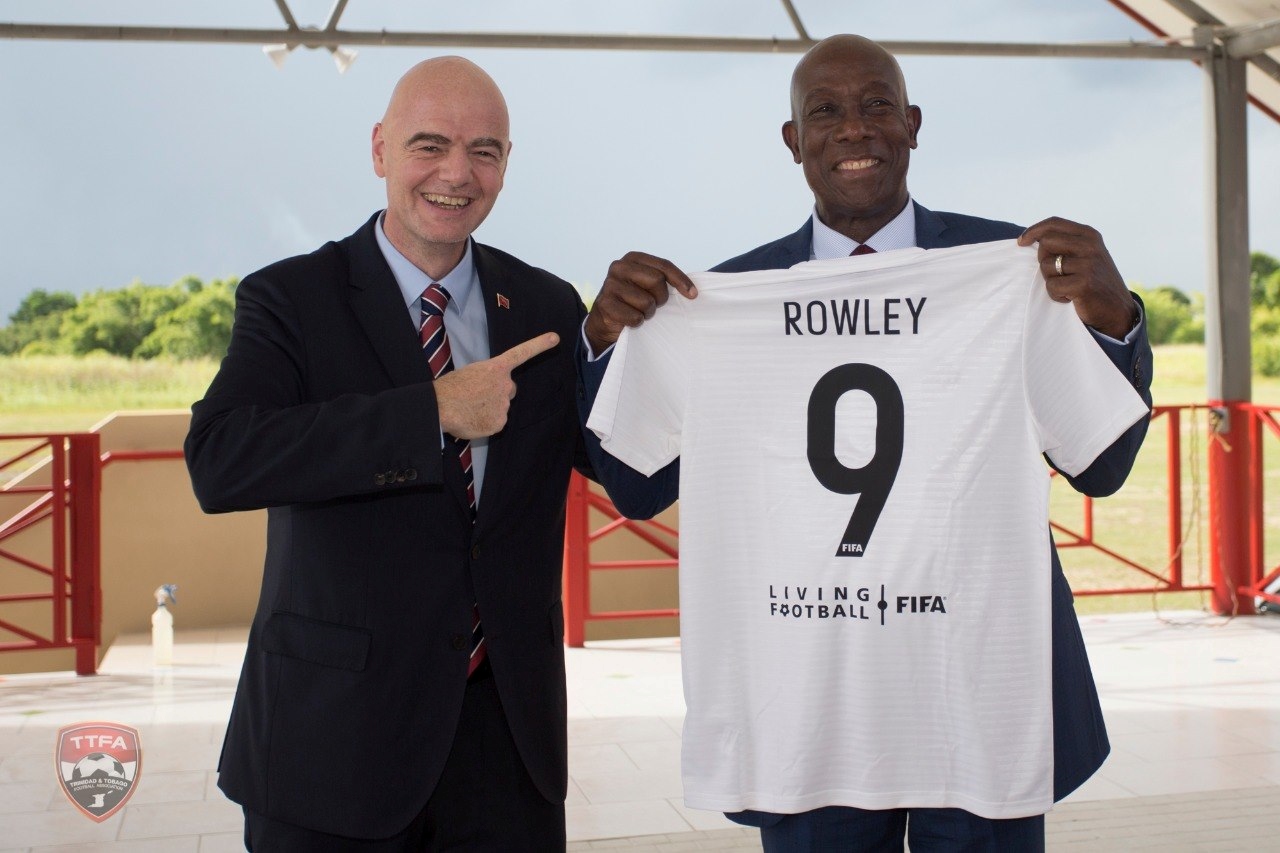
(via TTFA Media.)
In March 2020, Fifa appointed a Normalisation Committee to assume control of the TTFA, following serious governance and financial concerns. Among its responsibilities were reviewing and amending the Association’s Statutes to ensure compliance with Fifa requirements and organising elections to restore elected governance.
By January 2024, the Normalisation Committee had been in place for almost four years.
The circumstances surrounding the approval of the revised Statutes on 28 January were therefore particularly significant.
Contemporary reporting by Wired868, under the headline, “Anything but Hadad! TTFA members accept Fifa amendments to avoid NC extension”, described an atmosphere in which members felt they faced a difficult choice: accept the proposed constitutional framework or risk prolonging the Normalisation Committee’s tenure.

Photo: Daniel Prentice/ Wired868.
The report reflected concerns among members that rejecting the proposals could delay the Association’s return to elected governance. Members were therefore considering constitutional reform within an institutional environment that was far from ordinary.
The official record provides further context.
On 24 January 2024, Fifa communicated that the revised Statutes complied with Fifa and Concacaf requirements. Following their unanimous adoption by Congress on 28 January, the signed Statutes were submitted to Fifa and Concacaf on 1 February.
In its 12 February correspondence, Fifa confirmed that the Statutes were fully aligned with its requirements.

Photo: Daniel Prentice/ Wired868.
Fifa also explained that the new Statutes required a minimum 60-day period for convening an elective Congress and receiving candidate nominations. Consequently, the Normalisation Committee’s mandate was extended until 30 April 2024, to allow the election to be completed. The election subsequently took place on 13 April.
This distinction is important. Contemporary reporting described members’ perception that rejecting the amendments could prolong normalisation.
Fifa’s official correspondence established that the subsequent extension was necessary to accommodate the statutory election timetable. It did not establish that Fifa had imposed an automatic or indefinite extension as a penalty for rejecting the proposals.
Nevertheless, the institutional pressure was real and formed an important part of the political environment in which members made their decision.

Photo: TTFA.
Today, the circumstances are different.
The TTFA has an elected administration. The Normalisation Committee has completed its mandate. The Association is undertaking another substantial statutory review less than three years after the previous reform.
The obvious question is: What has changed since 2024 to make another significant constitutional restructuring necessary?
Fifa’s confirmation that the 2024 Statutes complied with its requirements does not mean they can never be amended. International regulations evolve, and member associations must maintain compliance.

However, the TTFA’s 25 October statement merely says that the current review has been undertaken with consideration given to Fifa recommendations.
It does not identify the recommendations, explain whether they are mandatory or discretionary, or establish which proposed amendments originate directly from Fifa and which have been developed by the TTFA Executive Committee.
Has Fifa introduced new requirements? Has it identified deficiencies in the 2024 Statutes? Or is the Executive Committee proposing changes that it considers desirable?
These are fundamentally different explanations.

(via TTFA Media.)
The TTFA should circulate the relevant Fifa and Concacaf correspondence and identify precisely which amendments are required for compliance, which are recommendations, and which are domestic governance initiatives.
Members must not be expected to assume that every proposed change carries Fifa’s authority simply because the Association refers to Fifa recommendations.
The 25 October statement is carefully framed around consultation, consensus and member participation. The Association emphasises that no amendments have been unilaterally adopted and that Congress remains the only body empowered to approve changes to the Statutes.
That is constitutionally important, but it does not explain the rationale behind the individual proposals.
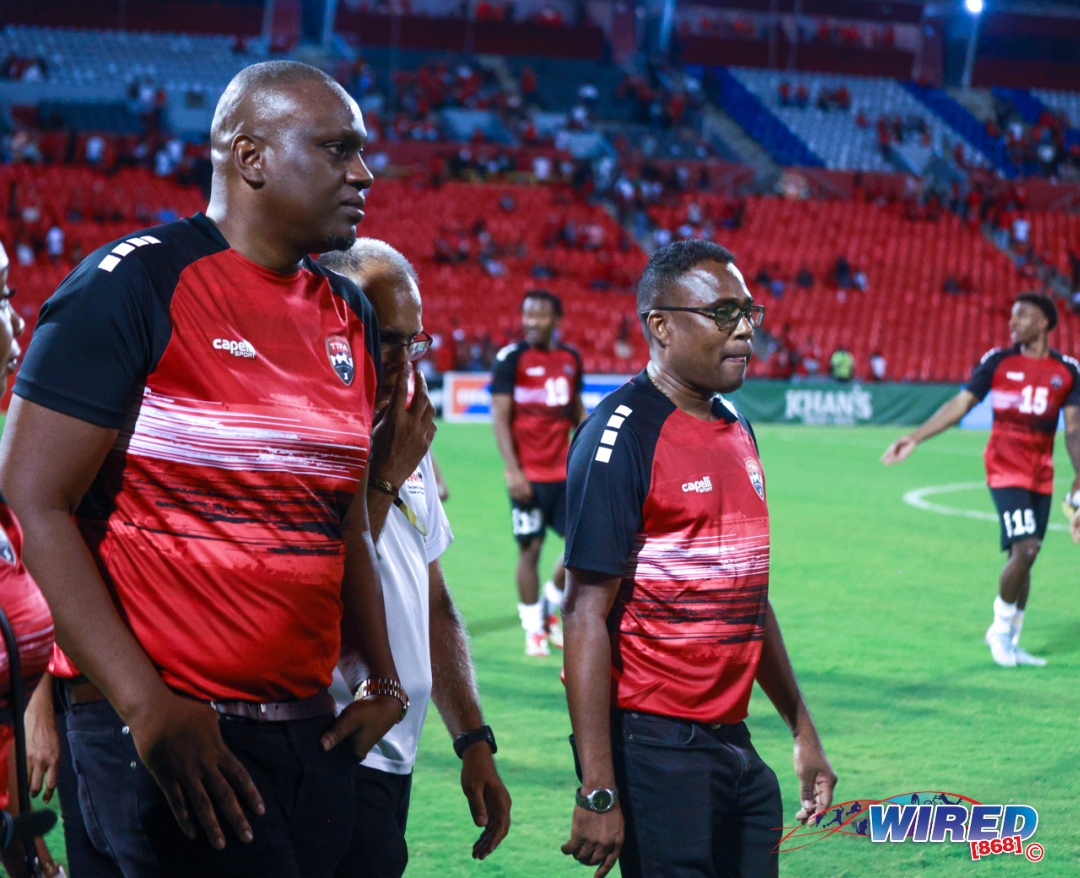
Photo: Nicholas Bhajan/ Wired868.
The proposed redistribution of Congress voting rights, in Article 26, is among the most consequential changes.
Under the 2024 Statutes, Tier 1 and Tier 2 clubs collectively hold 36 of 57 votes, approximately 63.2 per cent. Under the proposed 2026 arrangement, their combined allocation would fall to 15 of 43 votes—approximately 34.9 per cent.
The six regional associations would increase from 12 to 18 votes, while TT Women’s League Football would increase from two to three. Regional associations would consequently account for approximately 41.9 per cent of the proposed electorate.
Together, regional associations and the Women’s League would increase their combined allocation from 14 of 57 votes, approximately 24.6 per cent, to 21 of 43 votes, approximately 48.8 per cent.

Photo: Daniel Prentice/ Wired868.
These figures assume that the proposed allocations are accurately reflected in the complete draft and that the other seven organisations retain their existing votes. This is a substantial redistribution of political influence.
There may be legitimate reasons to reconsider the voting structure. However, the TTFA must explain the criteria used to determine representation.
Why should clubs lose 21 votes? What measurable criteria justify the additional votes for regional associations? Are voting rights based on active competitions, registered players, membership, developmental responsibilities or geographical representation?
These questions are particularly relevant given concerns about the activity levels of certain regional associations and the continued operation of professional competitions.
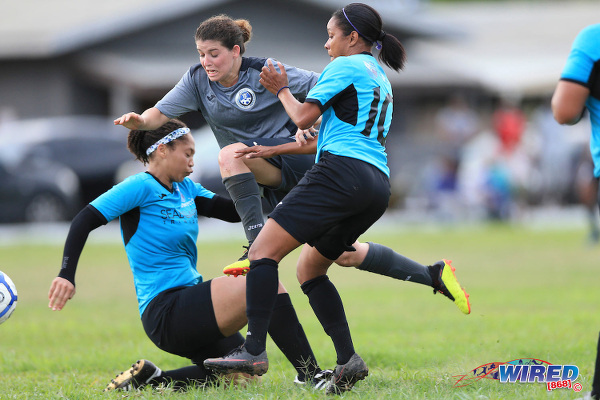
QPCC won 2-1.
Photo: Allan V Crane/ CAI/ Wired868.
The political implications also deserve transparency. President Kieron Edwards previously served as president of the Eastern Football Association, while his wife currently heads TT Women’s League Football. Both organisations stand to gain additional voting influence.
These circumstances do not establish improper conduct or an intention to manipulate an election. However, they make institutional independence and transparency particularly important.
The objective should be a voting structure that fairly reflects each constituency’s contribution to football, not one whose justification rests on the political interests of particular officeholders.
The proposed changes to candidate eligibility raise another important concern: could unresolved disciplinary proceedings or provisional safeguarding restrictions prevent individuals from contesting elected office?

(via TTFA Media.)
The TTFA’s safeguarding procedures have attracted public scrutiny through several disciplinary matters, raising questions about the balance between protecting vulnerable persons and ensuring procedural fairness. (See action taken against former national under-17 team coach Shawn Cooper and the Next Level Consulting Limited (NLCL) Community Cup, organised by Brian and Germaine Jordan.)
These cases should not be interpreted as proof that the individuals or organisations concerned committed misconduct, nor should the absence of a publicly reported final determination automatically be taken as evidence that allegations were unfounded.
The wider institutional question is whether the TTFA consistently provides clear reasons for restrictions, appropriate opportunities to respond, timely independent hearings and effective appeal mechanisms.
Safeguarding must protect children and vulnerable persons. The Association must retain the authority to impose precautionary measures where necessary. However, those powers must be exercised proportionately, transparently and subject to meaningful independent oversight.

The constitutional question is whether someone subject to an unresolved restriction could be prevented from contesting an election before the underlying matter has been determined.
The TTFA must clarify the distinction between final sanctions, completed suspensions, provisional restrictions and unresolved investigations. It must also establish appropriate review and appeal mechanisms.
The credibility of a safeguarding framework depends not only on its ability to impose restrictions, but also on its ability to demonstrate that those restrictions are fair, justified and subject to due process.
Another proposal deserving serious attention concerns Article 39(f), which reportedly would require the Executive Committee to appoint a general secretary only where the candidate has been proposed by the president.
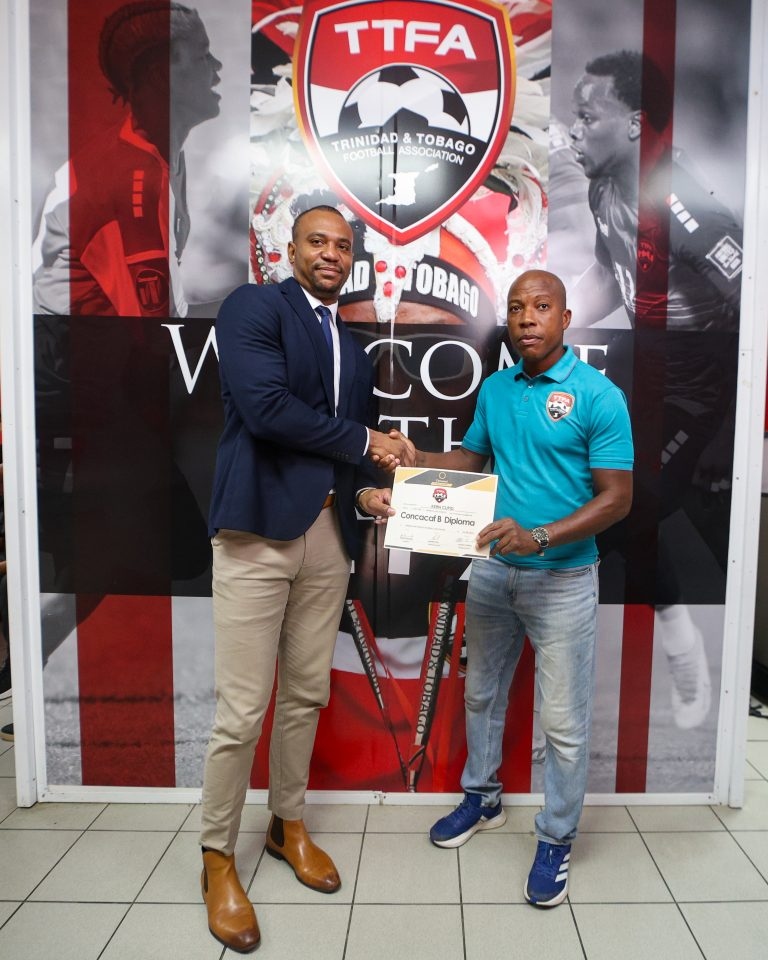
(via TTFA Media.)
The general secretary is central to the Association’s administration. The office should serve the institution and its membership, not simply the political interests of the individual occupying the presidency.
Why should the president alone determine who can be considered for this important position? What authority would the Executive Committee retain to assess or reject a nominee?
These questions become more significant when considered alongside proposed changes affecting the appointment and dismissal of administrative staff.
Presidential leadership and administrative accountability are not mutually exclusive. However, strengthening presidential authority must not come at the expense of collective oversight.

Photo: Nicholas Bhajan/ Wired868.
A constitution should protect the institution against excessive concentration of power, regardless of who occupies the office.
The proposed weakening of Tobago’s guaranteed representation on the Executive Committee is another important issue.
The 2024 Statutes provided for a Tobago representative. The proposed changes would reportedly make that representation strongly recommended rather than compulsory.
Given Tobago’s geographical separation and the particular challenges facing football on the island, guaranteed representation provides an important institutional safeguard.

Photo: Nicholas Williams/ Wired868.
The TTFA should explain why this protection is no longer considered necessary and what alternative arrangements would ensure Tobago’s interests remain represented.
Similarly, the proposal to designate the Electoral Committee as independent must be examined beyond its title.
The reported reduction in its minimum membership from five to two raises questions about capacity, conflicts of interest and decision-making.
How will members be appointed? Who protects the committee’s independence? Will decisions concerning candidate eligibility and electoral disputes be subject to independent review?
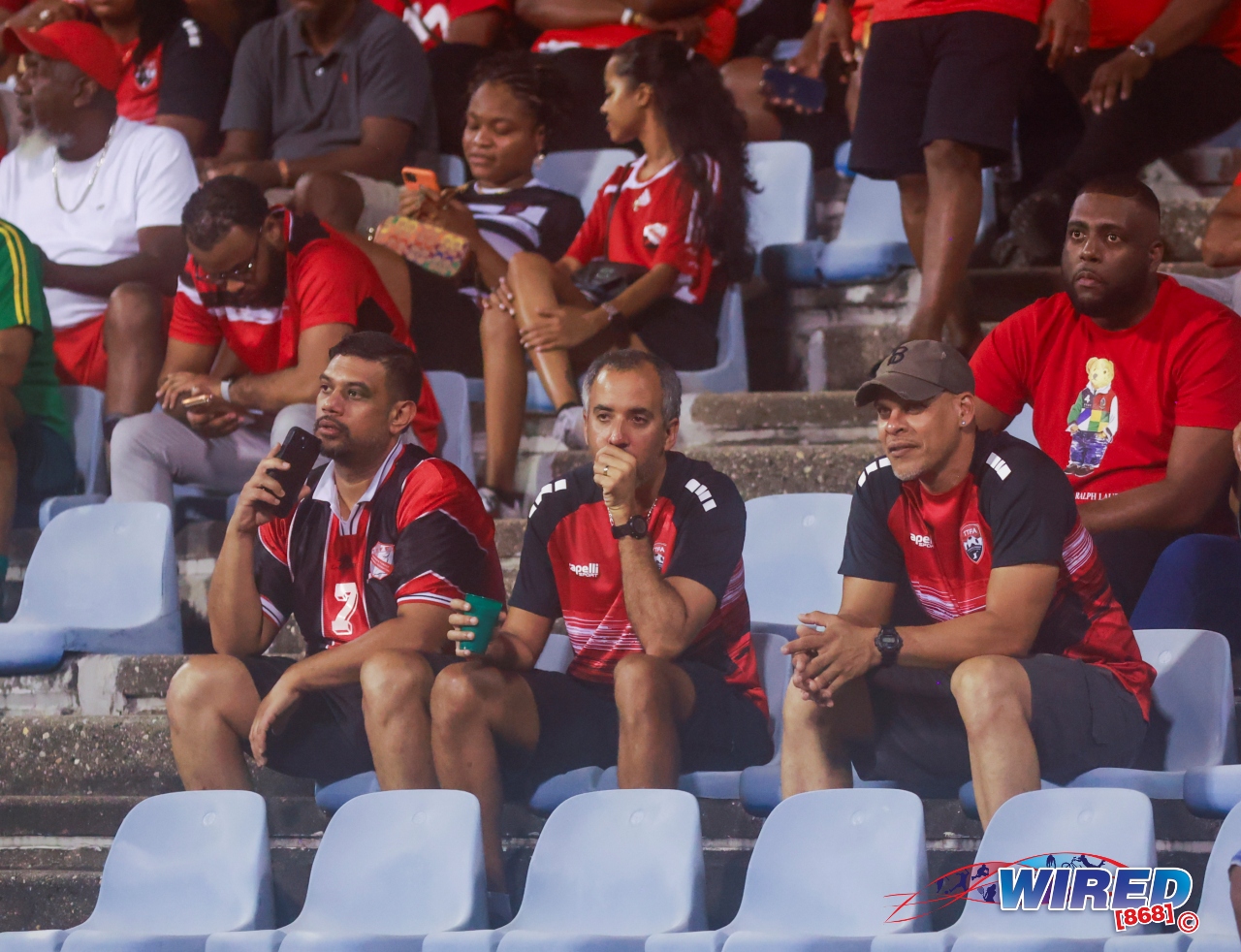
Photo: Nicholas Bhajan/ Wired868.
An electoral committee cannot be considered independent simply because the constitution describes it that way.
The November consultations should not become occasions for members to passively receive explanations from the Executive Committee.
Every affiliated organisation must understand its constitutional responsibilities and the consequences of the decisions it is being asked to make.
Members should insist on:
Fifa and Concacaf clarification: Circulation of the relevant correspondence identifying new requirements, recommendations and discretionary proposals.
- Voting rights: A clear methodology explaining the proposed allocations and the justification for reducing club representation.
- Candidate eligibility: Explicit distinctions between final sanctions, completed suspensions, provisional restrictions and unresolved investigations.
- Administrative independence: Clear accountability mechanisms governing presidential involvement in General Secretariat appointments.
- Electoral oversight: Transparent Electoral Committee appointment procedures, conflict-of-interest safeguards and independent review.
- Tobago representation: A compelling justification for removing the existing statutory guarantee.
- Consultation accountability: Publication of recommendations received, amendments made and reasons for rejecting significant proposals.

(via TTFA Media.)
Members should submit recommendations in writing and request that they be formally recorded.
The TTFA should publish the complete proposed amendments alongside the existing Statutes, together with an explanatory memorandum. A revised draft showing the changes resulting from consultation should be circulated sufficiently ahead of Congress.
If consultation is genuine, members should be able to identify precisely how their contributions influenced the final document.
The TTFA stated that proposals failing to attract sufficient support will not be included in the package submitted to Congress. Members should hold the Association to that commitment.
Photo: CFU.
There should be no pressure to approve controversial provisions simply to complete the constitutional review or demonstrate agreement.
Some amendments may be necessary and beneficial. Others may require substantial revision, additional safeguards or further consultation. Rejecting a particular amendment does not mean rejecting reform. It means recognising that constitutional changes must be justified on their merits.
The credibility of the 2028 presidential election will depend not only on the votes eventually cast, but also on the constitutional framework established beforehand.
The real measure of successful reform is whether it creates an institution in which no president is bigger than the Association, no constituency is unfairly marginalised and no eligible candidate is arbitrarily excluded.

(via TTFA Media.)
The question the TTFA must answer is not simply whether constitutional reform is desirable. It is whether these particular amendments are necessary, fairly justified and consistent with the interests of Trinidad and Tobago football.
Constitutional reform must strengthen the institution, not simply strengthen those who temporarily control it.
|
Wired868 has provided readers with solid, independent journalism since 2012. If you appreciate our work, please contribute to our efforts. Support Independent Journalism |


“[…] Under the proposed TTFA Statutes amendments, clubs would lose 21 votes, reducing their combined allocation from 36 to 15—a Read more
“[…] Where else would you find U14 and U16 games playing at 10am on a workday, attracting 200 to 300 Read more

“[…] Mr Gary St Rose himself acknowledges that the investigations are not complete. So what exactly formed the basis of Read more

“[…] The TTFA’s published Safeguarding Policy and Framework (version 3.0) says the TTFA ‘shall’ impose conditions on a licence whenever Read more
“[…] A strategic plan should not simply articulate where an organisation hopes to be in four years. It should clearly Read more

“[…] The TTFA could work with clubs, academies, parents and relevant child-protection stakeholders to review its youth-team travel standards and Read more

Want to share your thoughts with Wired868? Email us at editor@wired868.com.
Please keep your letter between 300 to 600 words and be sure to read it over first for typos and punctuation.
We don’t publish anonymously unless there is a good reason, such as an obvious threat of harassment or job loss.