 Wired868 Wired868 for smart sport news and opinion
The recent announcement by the government to divest state assets has stimulated some conversations on the role of the state in the economy.
In my opinion these conversations have been fairly limited given the magnitude and range of the divestment, including the Hilton Trinidad, Magdalena Grand Beach and Golf Resort, National Quarries Limited and the La Brea Industrial Development Company Limited (LABIDCO).

(via Hilton.com.)
This is perhaps because the announcement was made after the budget speech and therefore escaped the gaze of most economists, who commented on the budget presentation.
The economists who weighed in have put forward efficiency arguments and suggested the: ‘State should facilitate, not operate’ (Trinidad Express, 16th October).
These assertions are typical neo-classical arguments. The challenge, however, with neo-classical economics is that it relies on several assumptions—assumptions that most economists agree rarely hold.
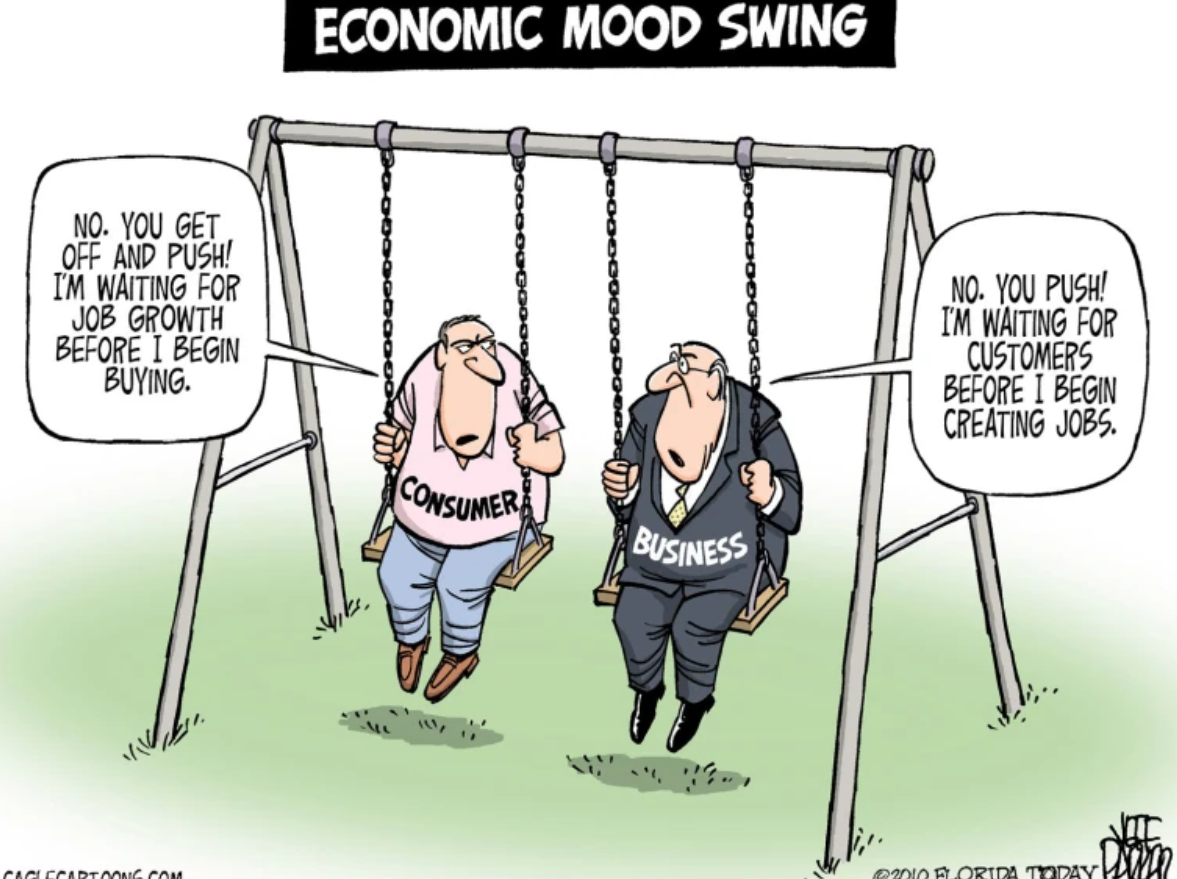
This piece is not intended to argue against all divestment, but rather to demonstrate that these issues are far more complex that simplified arguments of efficiency; and if as a country, we are to engage in these conversations about the role of the state, we need to recognise these complexities.
Why does the state get involved?
Across the world, the state is involved in several sectors. Sometimes, it is because the private sector chooses not to provide some services, as they are not profitable. Sometimes it is because these services are necessities (like public utilities) and universal access and affordability trump efficiency.
Water, electricity, postal services, transport on the air and sea bridges are examples of these in Trinidad and Tobago.

Photo: Ministry of Education.
The state also provides health, education and housing, though this is also private sector business. In T&T, we decided that this is state business.
Recall, free universal secondary education was a policy decision by Dr Eric Williams in 1962. Increased access to public healthcare and housing were also post-independence polices.
How did the state become involved in several sectors of the Trinidad and Tobago economy?
ANR Robinson, the first Finance minister in independent T&T, under Dr Williams, answers this question in his book: The Mechanics of Independence.
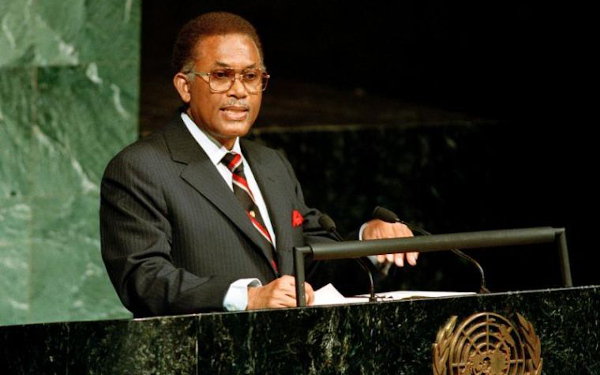
According to Robinson (p 151) “if resource allocation is determined by external influences […], the level of employment becomes irrelevant to the decision-making process”.
By “domestification”, Robinson refers to domestic ownership—either by the state or nationals. It was in the national interest to ensure national ownership of resources.
One must also appreciate that having been colonised by foreign powers for centuries, local ownership was desirable. At the time, the most common vehicle for this was state ownership.

Copyright: Stephen Broadbridge.
State involvement in the T&T economy was also used to promote diversification and expand the manufacturing sector in the 1970s. The Third Development Plan (1969–1973) recognised “the need for diversification to overcome structural problems”.
The state, with the use of oil revenues, became heavily active in various sectors of the economy through state-owned enterprises. Notable examples included the incorporation of National Flour Mills (1972), the EximBank of T&T (1973), NGC (1975) and the now-closed Caroni (1975) Ltd.
In the absence of these efforts, the T&T economy would look vastly different today.

Photo: NCC.
How does this look in other countries?
Contrary to popular belief, the state is highly present in commercial sectors across the globe. A 2023 World Bank report concluded that “state participation in markets is widespread, especially in competitive markets”. Yes, you read that correctly: especially in competitive markets.
The 2023 report is not ahistorical. I ask the reader to think of one country that developed without significant state involvement in the economy. One might be tempted to say the United States. But the United States’ (selective) embrace of neo-classical economics is fairly recent in their history.
Alexander Hamilton, one of the founding fathers of the United States, and first US Treasury secretary, strongly believed in economic nationalism and promoted the active role of the federal government in US industrialisation and wider development.

Copyright: Getty Images.
In fact, the Americans are so eternally grateful for his contribution to their development that his face appears on the US$10 bill.
As renowned economist Professor Ha-Joon Chang argues, all countries developed through state involvement in the economy. This is true for Europe, the US and Asian Tigers. It is also true for Trinidad and Tobago. We should not forget that.
The state has a role in the economy, and that role often surpasses “facilitation” and certainly entails “operation” in many cases. The extent of involvement is guided by state policy, not only efficiency.

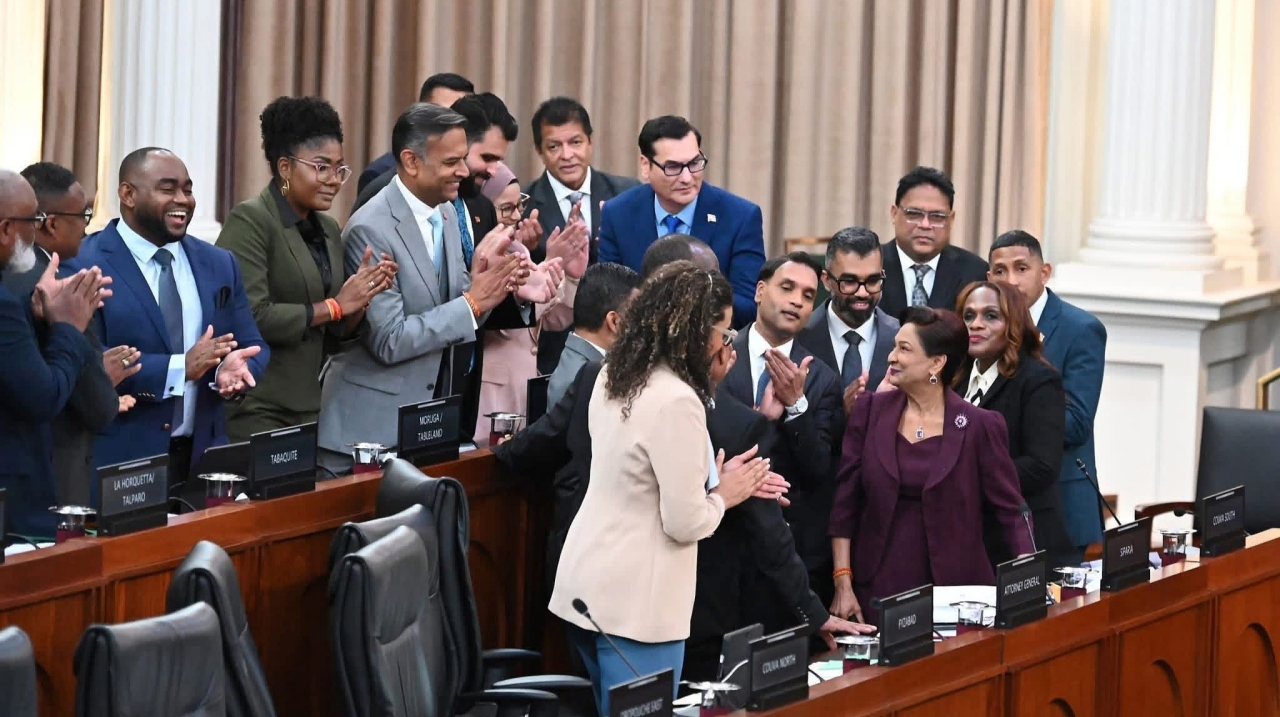
Copyright: Office of the Parliament 2025.
But the issue of efficiency is still important. And to that I pose the following questions. What of the positive examples? NGC reported profits of TT$3.46 billion in 2025 and the Hyatt is a premier hotel. Both are state assets.
Should we divest these too if the state has no role in operations and should only facilitate?
Blanket statements on efficiency and the state as facilitator and not operator are theoretical and not grounded in history nor contemporary evidence.

Photo: TTFA Media.
Perhaps what we should be discussing is why the government is able to manage some state assets better than others; and how some countries manage state enterprises more efficiently.
The 2023 World Bank Report offers some insights: reducing patronage and increasing productivity. When political patronage overshadows performance in decision-making, then inefficiencies follow.
Take a simple example, imagine a world of jobs for the best and not jobs for the boys (and girls) to run these organisations. Are we ready for that conversation?
There is an old adage that says: “a wise man learns from the mistakes of others, while a fool learns Read more
Having just celebrated 64 years of independence, discussions as to whether Trinidad and Tobago is better off since gaining independence Read more

Some years ago, I lived and worked in Sierra Leone. I arrived in the capital, Freetown, just ten years after Read more

A popular quote attributed to Benjamin Franklyn aptly summarises the situation that Trinidad and Tobago finds itself in: “He that Read more

On 30 August 1962, speaking at a youth rally, Dr Eric Williams stated the now famous words: “You carry the Read more

In 1937 Trinidad and Tobago, life was not easy. Worker abuse, underpayment of workers, and overt racism were not uncommon. Read more

Dr Jamelia Harris is an economist and Assistant Professor at the University of Warwick. She studies and has written on the labour market, public finance and development policy in Africa and the Caribbean. She is a double President’s Medal recipient and holds a PhD from the University of Oxford.