 Wired868 Wired868 for smart sport news and opinion
I have a question—a few actually. They are related to the policies at the Eric Williams Medical Sciences Complex, commonly known as Mt Hope hospital.
I was genuinely perplexed at the procedures regarding patients who had been admitted through the Accident and Emergency portal.
People complain about the waiting period at the facility, but having your name registered and then getting an initial check is not unduly long. As someone who has inhabited several waiting rooms at various private facilities, it really is not much different, even when you have an appointment.
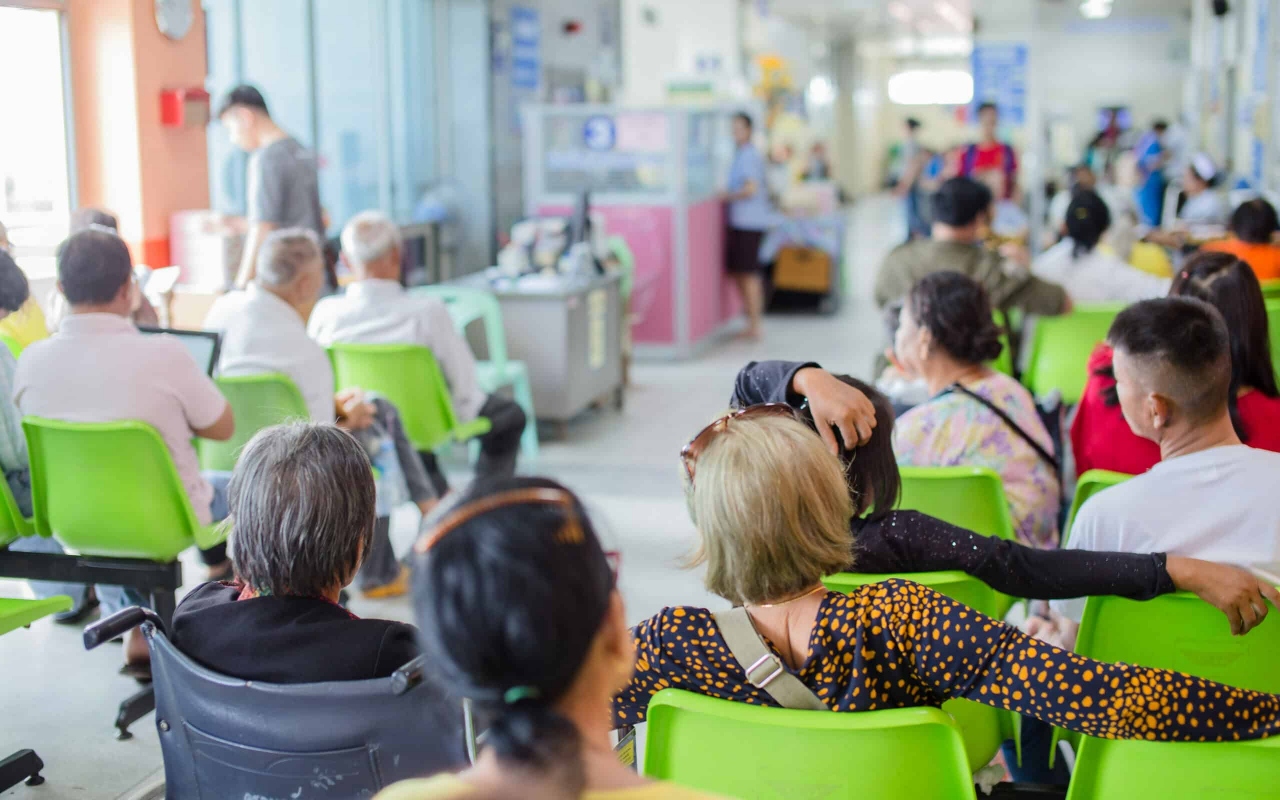
(via Shutterstock.)
After a blood test was taken to determine if a CT scan was also necessary (it was), it was about three hours before the scanning was available. All well and good—it had been just five hours from the inception of proceedings.
In total, the service was pleasant and good.
The report from the scan would take four hours. Could one leave and return around that time? No. Why not? It’s hospital policy. But why? No one could offer any reason other than that it is hospital policy.
In all the decades I have gone to see medics in private facilities, I have never encountered such a policy.
Doctors send you off to do tests at labs either in-house or externally—CT scans, ECGs, MRIs, X-rays, bloodwork—all of which you pay for, and they don’t hold you on their premises until results return.
Is it because of some possible legal liability? Is it that the hospital wants to ensure that people don’t just disappear?
If you are there from early morning, by four o’clock in the afternoon, you are tired. The facilities are not dreadful, but sitting on chairs for long periods can be very uncomfortable. Most of the people there were elderly. This is not just a matter of discomfort; it can become very painful.
What it means in a practical sense is that after the departures for whatever medical attention is required, a cluster of those whose admissions may have been around similar times, are now herded into a waiting room to await the call of their names.
This is where it stops making sense.
People with all manner of ailments are sitting here—some slumped passively, others pacing restlessly. Everyone is hungry, thirsty and anxious.
One woman was clearly mentally unsettled. She kept opening the door to the area marked for ‘staff only’ to see what was happening. She emerged each time to say they said they would be coming soon. She uttered her thoughts aloud without stopping. She approached everyone to complain.
Another woman rummaged through her bag and began eating from a packet of crisps. The restive woman said she was hungry.
I offered her my pack of Dixie biscuits. She took it reluctantly because she said she needed something to drink. There were vending machines not far away, but they did not seem to be working. Instead, hustlers came by selling bottled water.

She wandered around for some time then returned to sit. Peering out of her little blue plastic bag, was a bottle of water. I pointed it out to her. She seemed surprised, but drank from it. Her lips were lightly coated with a whitish powder. She was obviously dehydrated.
Eventually she declared that she could bear it no longer and she was leaving. The security guard gently detained her. She came back and announced graciously that they had kindly invited her to stay, so she would. But she couldn’t stop pacing.
Another woman gripped the pole holding the IV drips, her head drooping unto her chest. Her eyes were closed and she was moaning softly.
Earlier, as another entered the room and made for the only seat available in the corner, she was stopped by a loud chorus warning her that someone had done a number on that chair and she shouldn’t sit there.
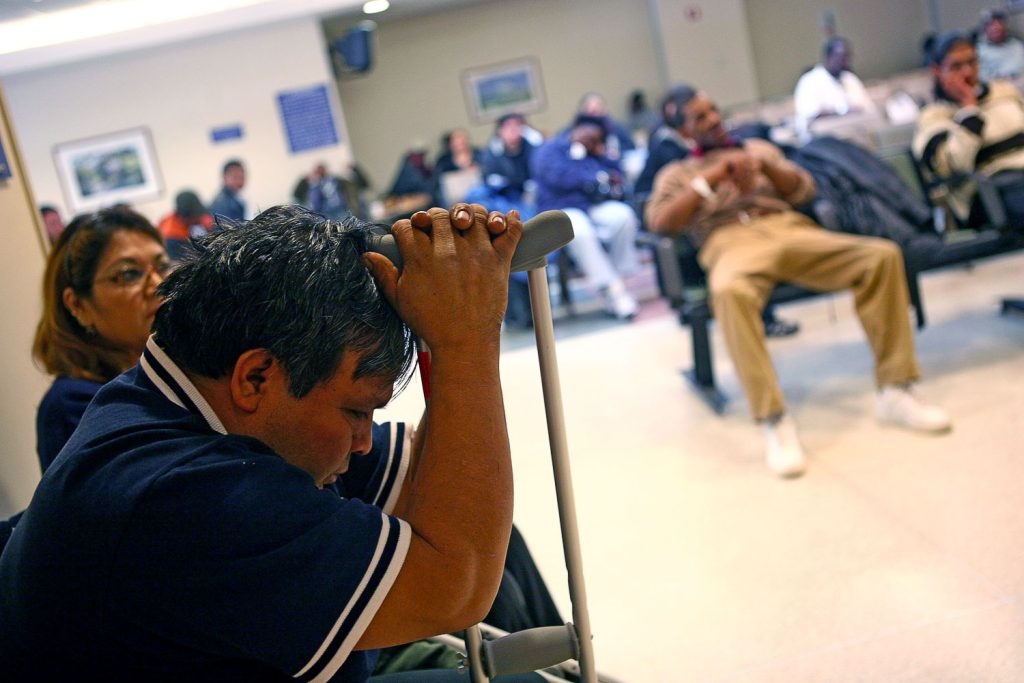
The chair appeared to be clean, no different from all the others. It occurred to me that all the chairs had probably had the experience of receiving human bodily waste. This was a hospital after all.
This was nightfall, the small groups of relatives and concerned parties, had disappeared from the interior. They were outside on the open verandah.
Waiting.
Clearly, the people being detained inside were not alone, or unloved. The evidence was there in the groups outside.

(via MD Premier.)
Everyone I saw had a cell phone. I was the only one with a book for company. People played games, some at very loud levels, they talked on their phones, they looked at videos. Two young men came in selling Bmobile plans.
There was a lot of animation in the beginning. By dusk, everyone was subdued. Energy was low. Phones rang intermittently with enquiries about the status of things.
One woman said she knew she would have to spend the night there. “Is alright,” she told her caller. It was just patients now.
The thing that puzzled me is that this seemed totally unnecessary. Couldn’t the system be more flexible? Couldn’t patients have the choice to stay or leave and return? Couldn’t they be told to return around the time when results were expected?
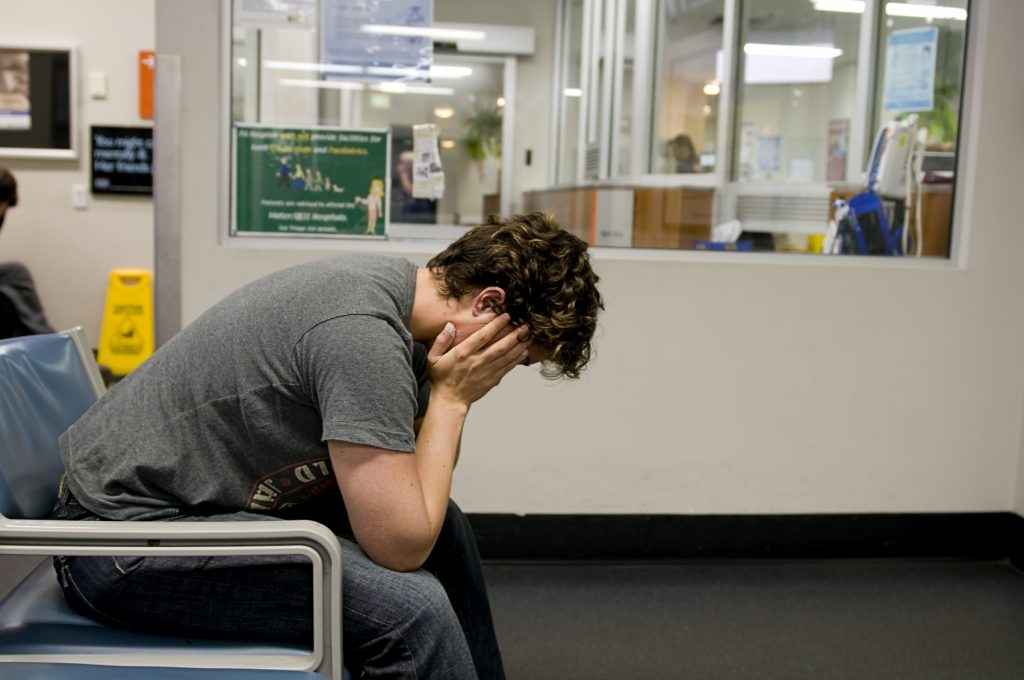
It would clear the space somewhat because there was never enough seating. It would relieve both the staff (and physical) resources and the patients’ stress.
I really don’t understand the rationale for this policy. Perhaps someone from within can explain?

Too many things are unacceptably wrong with this brown water situation. The State tells us it is temporary, and so Read more

The prescription for healthy living was flawless, if I do say so myself. Grilled fish, fresh vegetables, fruits bursting with Read more

Covid-19 was a masterclass in socioeconomic inequities but heatwaves have also ignited pervasive disparities in our society. The elderly, those Read more

In 2005, Thomas Schelling won the Nobel Prize in Economics for his work on cooperation and conflict. Schelling’s work largely Read more
No matter how thrifty I am, it is a challenge to manage the high cost of living. Working from home Read more

In two years, I will be a pensioner myself. So when I say the upcoming budget must increase the old Read more

Vaneisa Baksh is a columnist with the Trinidad Express, an editor and a cricket historian. She is the author of a biography of Sir Frank Worrell.

Until the public demand a proper Public Health Care service …….