 Wired868 Wired868 for smart sport news and opinion
The concluded Christmas and New Year period has demonstrated the failure of the amendments passed in Parliament to the Summary Offences Act (“the fireworks legislation”) as a means of regulating the use of fireworks and in particular to bring relief from the noise that adversely affects persons and animals.
The Minister of Homeland Security since indicated that alternative steps may have to be taken to bring relief—possibly by requiring the use of so-called silent fireworks. In the debate on the legislation, the Attorney General had anticipated movement towards noise reducing fireworks.

(via FireOne Fireworks.)
I see the failure of the fireworks legislation in the broader context of the self-inflicted damage to the value of our Parliament.
However, before proceeding with an examination of that broader context, it may be useful to share with readers the statement of The Firework Campaign UK, a group campaigning to reform United Kingdom (UK) firework legislation, that the term “silent fireworks” is misleading.
Reportedly, “there is no new form of firework that produces huge explosions with little or no noise”. The Firework Campaign UK group quoted the vice-chairman of the British Fireworks Association as stating:
“You cannot have an absolutely quiet firework. The lifting charge on a firework for a shot tube is about 95 decibels, and that’s just the cartridge being ejected in the air”.

Helpfully, the Firework Campaign UK Group also provides information about the 120 decibel limit placed on fireworks sold in the UK and discloses that the World Health Organisation lists “120 decibels as the pain threshold for sound”.
It is asserted that “loud fireworks are typically above 150 decibels and can even reach up to 170 decibels or more”.
Interestingly also, according to the links provided, the noise associated with visual display produced by the firework is separate from the sound when the cartridge is fired. But the visual display can “range from nearly silent displays” to “massively loud aerial ‘skyrocket’ shells”.
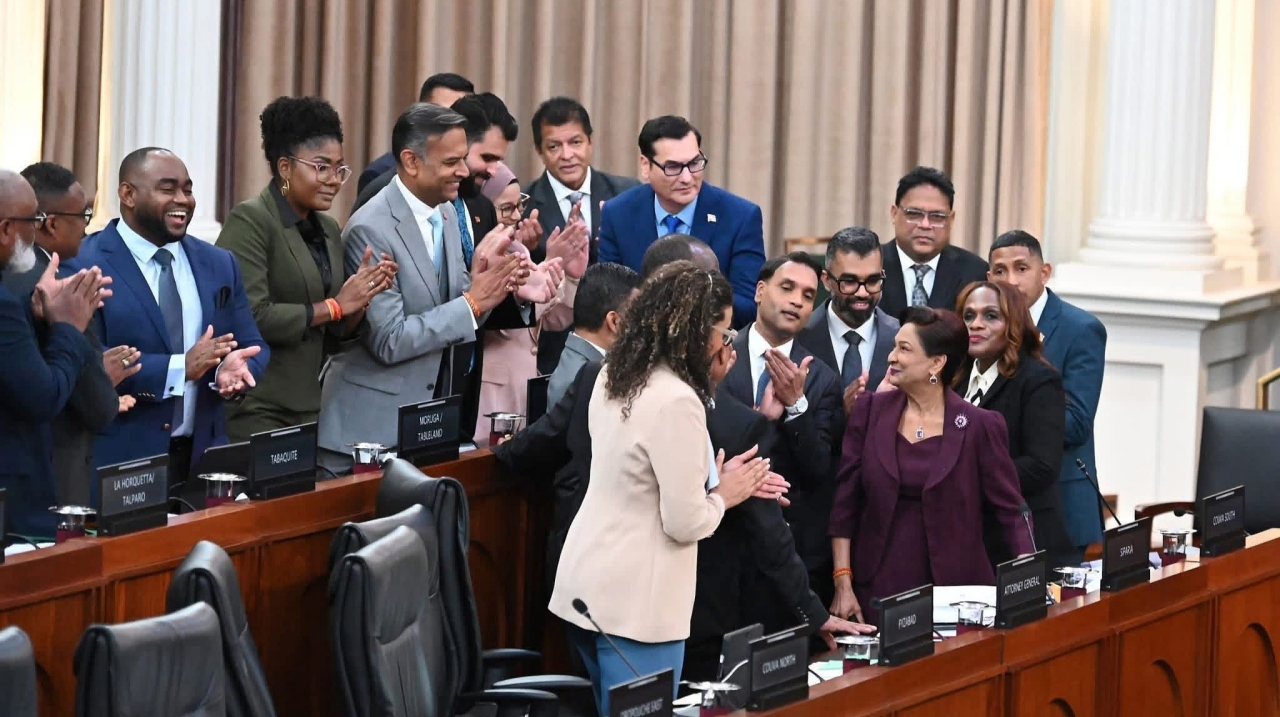
The self-inflicted damage to the value of our Parliament has arisen because of kinks in the conduct of parliamentary business. First, those members of Parliament that represent the party in government are expected to support legislation put forward by the government.
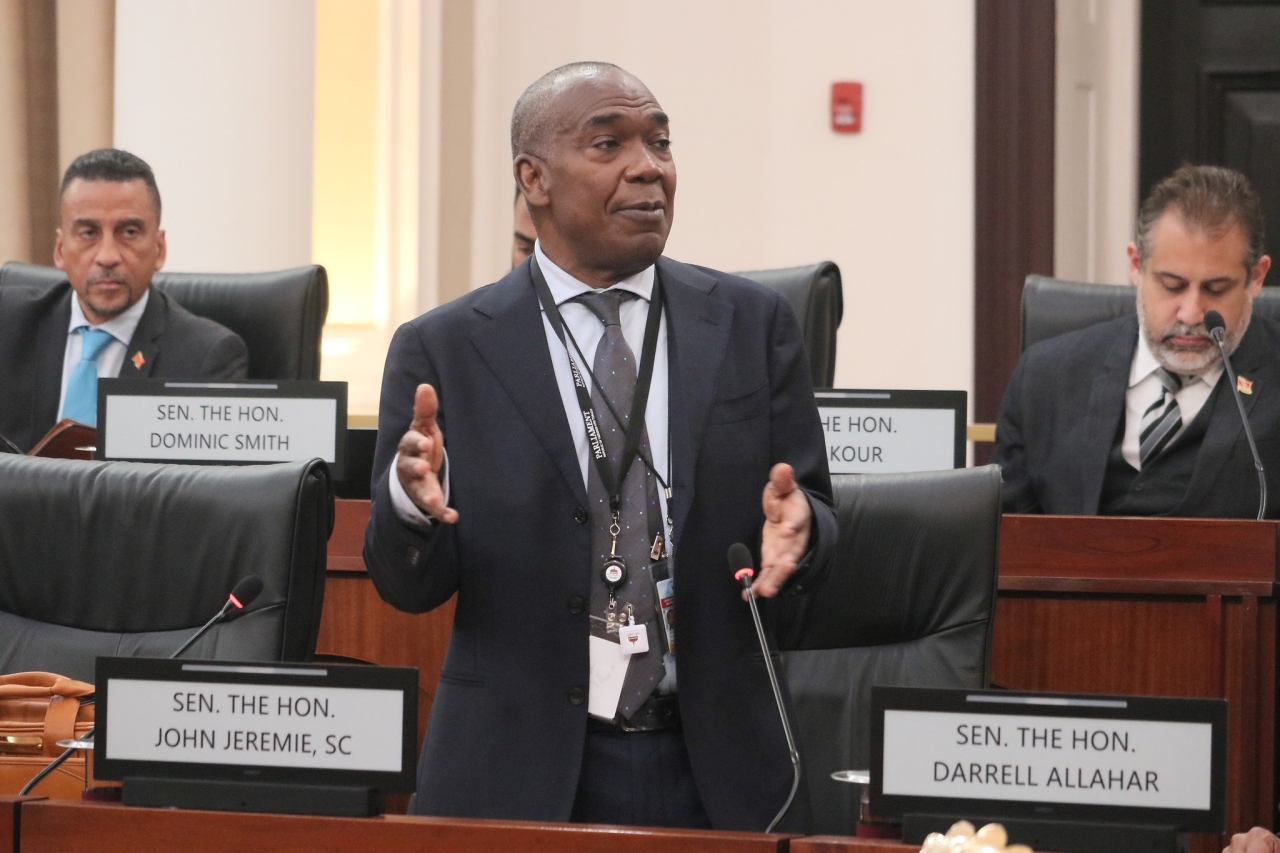
Photo: Office of the Parliament 2025.
In a small House of Representatives like ours—particularly where nearly every member on the government side is a minister, junior minister or a parliamentary secretary—there is little room on the government side to strongly critique proposed legislation.
Secondly, although members of the opposition have a free hand to be critical of proposed legislation and to introduce amendments for consideration, the traditional practice of our opposition members in the House is to give priority to attacking the integrity of the government of the day.
The opposition typically only gives superficial attention to the nuts and bolts of the legislation proposed, while the senate is expected to “to fix it”.
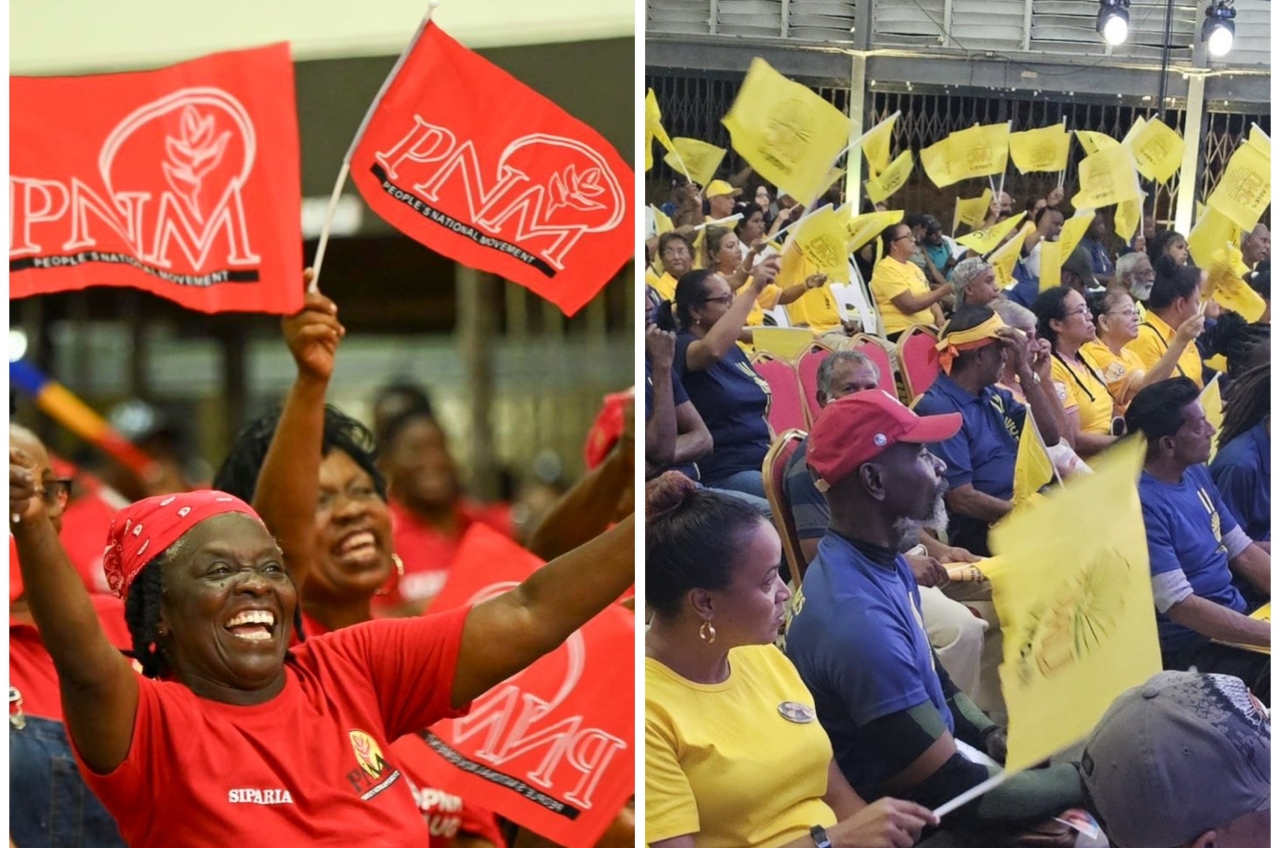
These unhelpful practices have been followed whichever of the two main political parties is in government or opposition, depending on the results of a general election.
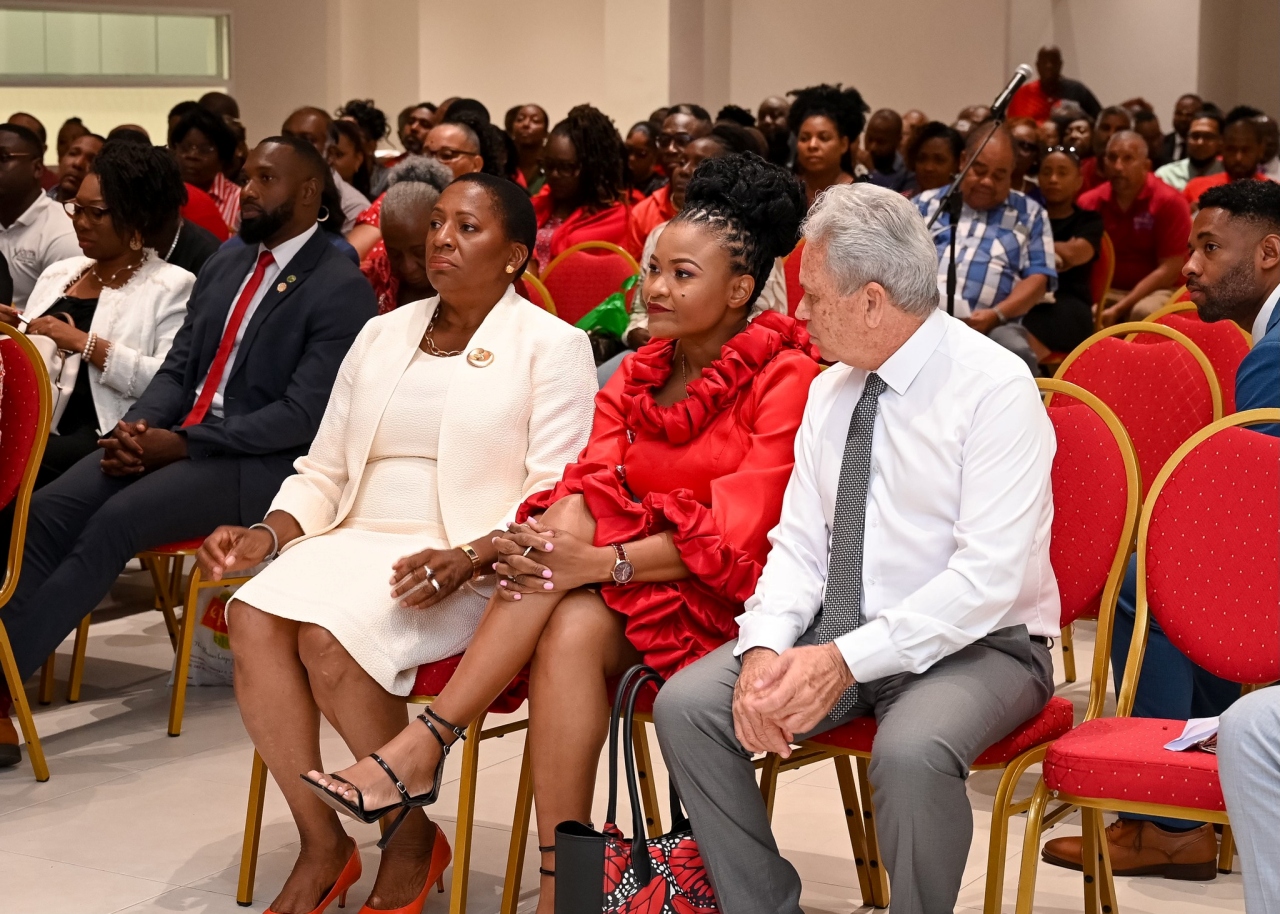
(via PNM.)
In Explainer’s immortal phrase “in Parliament dey kicksing”. The public has long been fed up of that.
Since Independence, the Senate has performed as a deliberative body, but working relationships between government and opposition senators has been repeatedly strained as a result of debating tactics that have become a near mirror image of what obtains in the House of Representatives.
Consequently, the independent senators sometimes carry a disproportionate burden of reviewing proposed legislation and putting forward amendments—and, more recently, they face personal abuse and attempted intimidation by the comments of zealots.
The fireworks legislation was supported by both government and opposition but it turned out to be superficial work.

(via FireOne Fireworks.)
In the Senate, Independent Senator Francis Lewis, according to Hansard, withdrew amendments he intended to propose. Perhaps it is difficult to be a conscientious dissenter when there is bipartisan government and opposition support.
It is fervently hoped that the fireworks legislation will be revised before matters get further out of hand and that the independent senators participate robustly in the public interest as each one of them sees it.
A ban on the sale of fireworks must be debated. Right now, it is case of promise made, promise half-baked.
I am not a politician. I’m certainly not a senator. I am just a citizen who pays attention. So, when Read more
There is an old adage that says: “a wise man learns from the mistakes of others, while a fool learns Read more
“[…] It is nothing short of amazing how this current political directorate can go from conceptualization of 30 ‘police post’ Read more

“[…] The media release by the heads of judiciaries—that seemed to focus on the leak of the emails and breach Read more
“[…] Neither African nor Indian communities benefit from this… In cases where division arises unintentionally, accountability must fall on leaders, Read more

A few years ago, Michal Teja captured hearts and titles with his hit song, DNA. At the time, I was Read more
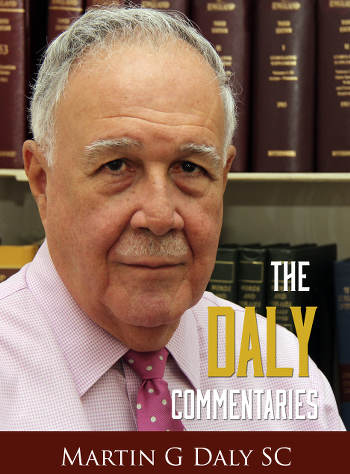
Martin G Daly SC is a prominent attorney-at-law. He is a former Independent Senator and past president of the Law Association of Trinidad and Tobago.
He is chairman of the Pat Bishop Foundation and a steelpan music enthusiast.