 Wired868 Wired868 for smart sport news and opinion
Soca star Patrice Roberts linked the negative effect of current financial challenges on the ability to experience the joy, love and togetherness of Carnival. As a consequence, she cancelled her scheduled ticketed concert on 22 January and will perform free instead.
Her motivation, as reported in the Trinidad Express newspaper last Monday, is as follows: “Carnival has a sound, but it also has a feeling of togetherness, release, and excitement. I know this year that not everyone can indulge or fete, and that’s okay. Carnival is about us and is meant for us.

(via Patrice Roberts Music.)
“So, on 22 January, I am giving you me—no tickets, no barriers, no pressure to spend. Just music, love, and community. This is for all the faithful fans, families, and anyone who wants to feel the magic. A free concert, from my heart to yours.”
Patrice’s insightful call for Carnival with no barriers is to be applauded.
Unfortunately, it carries the sad recognition that participation in Carnival, even in the street festival, comes at a price. It recognizes the reality that citizens have to pay to play.
The Carnival of the streets, has its roots in defiance against the former plantation system run by the well-to-do exclusive ruling elites—but participation now requires spending money in order to participate.

Photo: NCC.
Thus, present day Carnival is once more a divisive feature of life in Trinidad and Tobago. Carnival is a month away, but where are we with the participation of less fortunate citizen’s participation in the event—which is relentlessly touted in superlative, self-congratulatory terms?
Moreover, Carnival is being kept alive by government spending for which there is no underlying policy and for which there is scant accountability, without any data to show whether we obtain authentic cultural, artistic and community building value in return for government spend.
Is Carnival generating a net beneficial economic impact to the extent that is constantly being touted? To what extent do small businesses and artisans benefit from the consumer choices made by Carnival masqueraders and visitors?
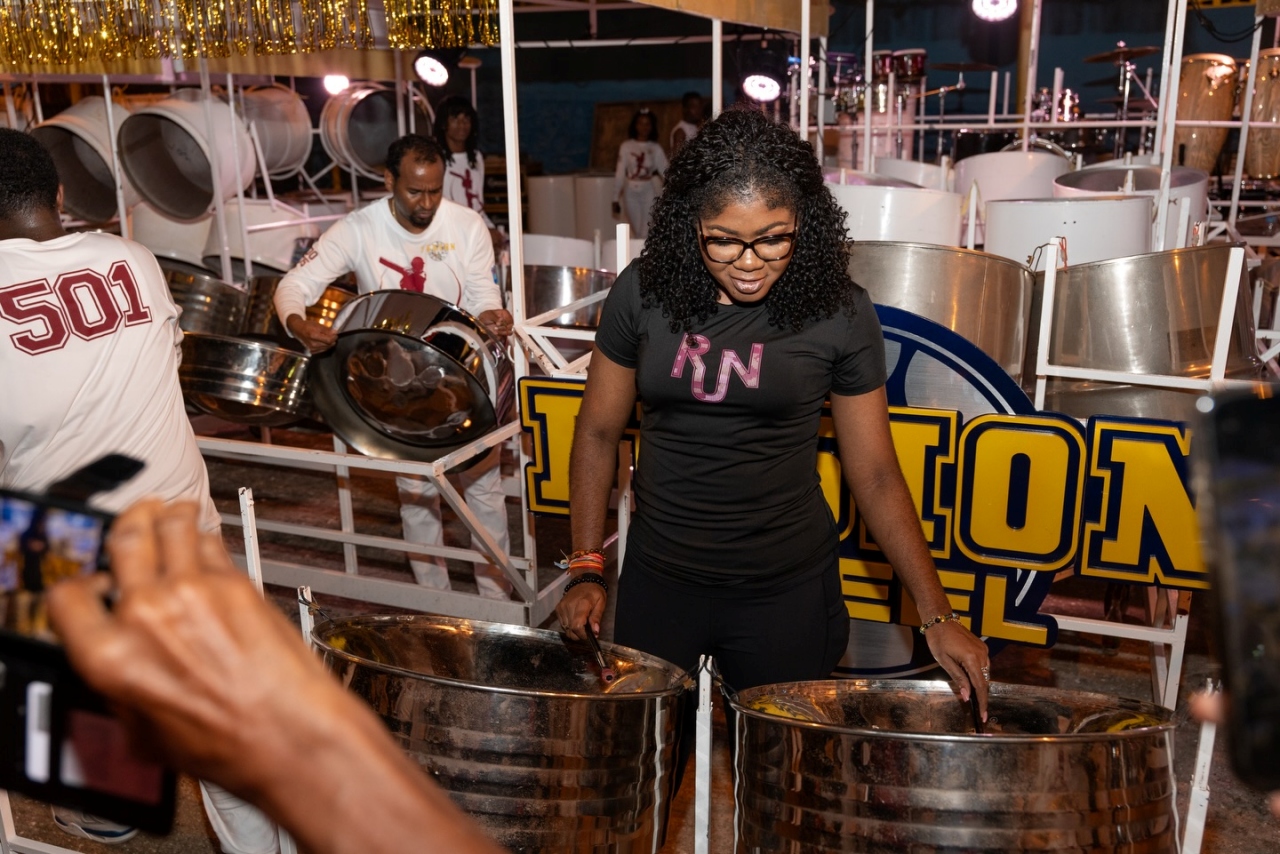
Photo: NCC.
Newsday, which will soon cease publication, will be missed. In its editorial, also Monday last, it asserted that “the NCC (the National Carnival Commission) is spending far more than it earns against nebulous economic gains that have never been satisfactorily quantified and audited.
“The country is expected to believe that billions flow into the country because of the annual event, but there is notable and historical recalcitrance to put verifiable numbers behind that claim.”
Dr Keith Nurse, former president of the College of Science, Technology and Applied Arts of Trinidad and Tobago (COSTATT), shared his insights into the wider issues affecting Carnival on many occasions.
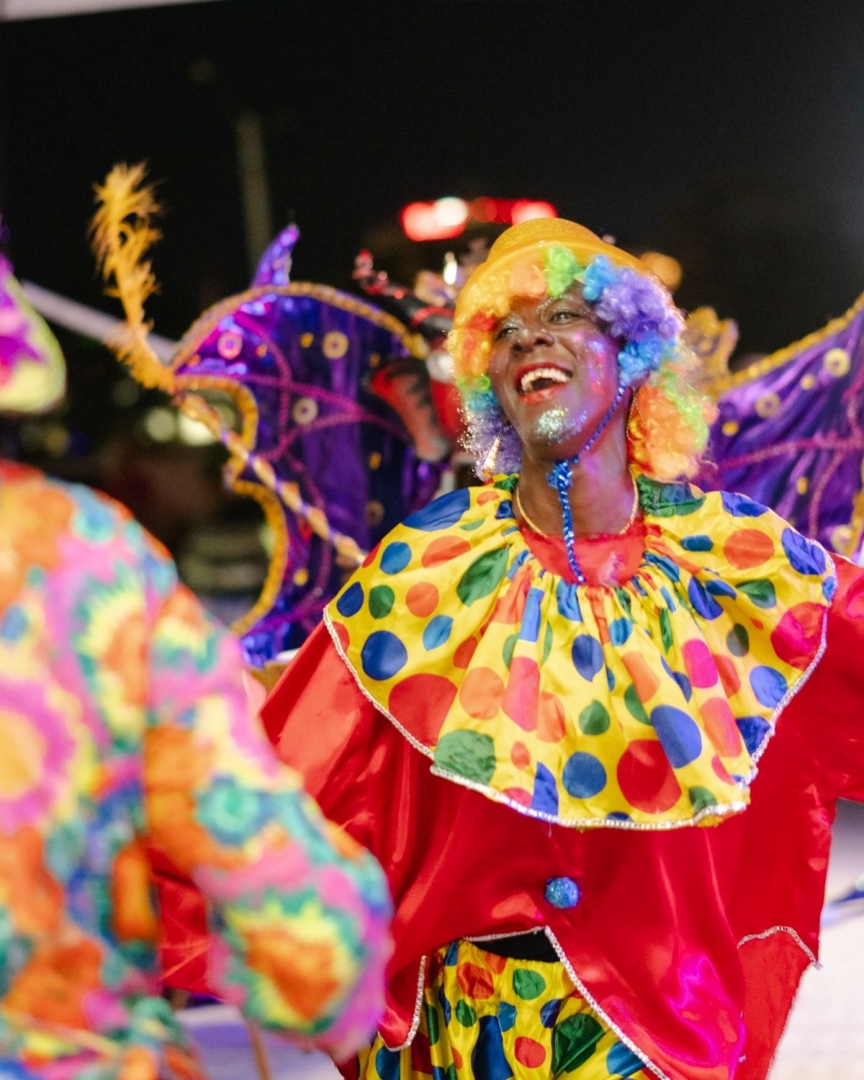
Photo: NCC.
For example, in the Trinidad Guardian of 23 February 2025 he was reported as stating that “weak data capture and ad hoc event focus management are among the two main barriers preventing Trinidad and Tobago from properly monetizing its carnival product.”
Several columns of mine, such as those entitled Our other oil, What’s left of Carnival and Resisting the part-time lovers, raised the above and other issues related to pan and the performing arts and strategic steps that might be taken.
The current relevance of these issues is strongly reflected in the recent editorials and commentaries mentioned in this column. It is pointless trying to dismiss reference to the decay caused by the years of indifference to these issues, in the face of commentary and of prescriptions to do things differently.

Photo: UNC.
Just last Wednesday in the Trinidad Express, in the even wider context of what was described as the current business exodus and economic decline, Dr Vaalmikki Arjoon—a frequent and persuasive economic commentator—was emphatic that our current economic conditions are not new or sudden problems, but the ongoing consequences of choices made years ago that continue to surface today.
He set out alternatives foregone that might have made a difference.
Meanwhile the recently concluded Tobago House of Assembly election was characterised again by another low voter turnout, as was the case in the last general election.
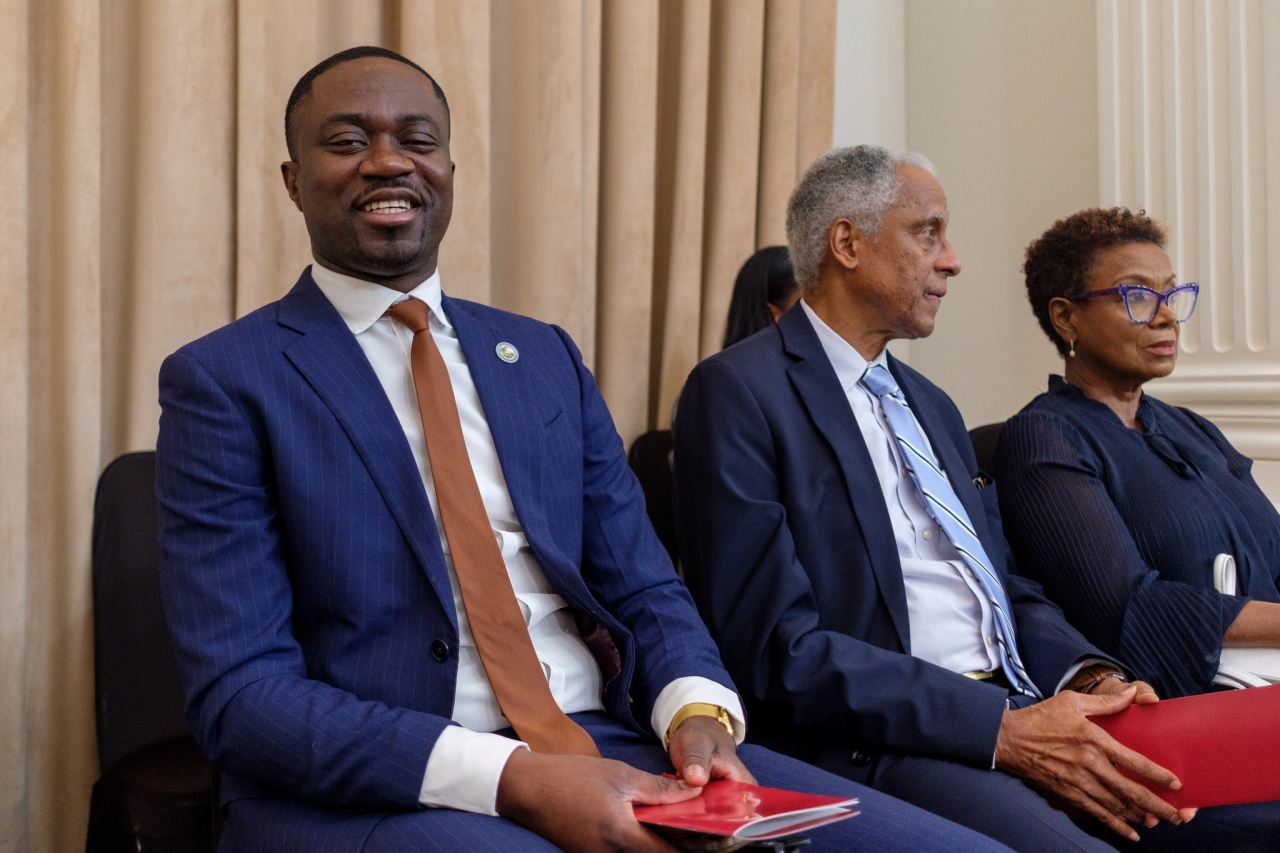
Photo: Office of the Parliament 2025.
Why should the electorate bother to vote when there is no contest of ideas—only hating on each other?
Stagnation and decline are inevitable consequences of that type of politics.

In 1942, Austrian economist Joseph Schumpeter coined the term ‘creative destruction’. It describes a process where innovative products, technologies, and Read more

“[…] As we navigate 2026, we find ourselves facing a rather curious paradox: the very mechanism designed to illuminate public Read more

In light of current general statements about economic diversification, it will not surprise my readers that I will proceed on Read more

This is my penultimate column before I proceed on my break after twenty-four years of writing these weekly columns. As Read more

Trinidad and Tobago entered into the Americas Counter Cartel Coalition, which was announced in Doral, Florida, two weeks ago at Read more

David Rudder famously sang in 1996 in The Madman’s Rant: “Somebody clean out the weed real fast. But somebody letting Read more
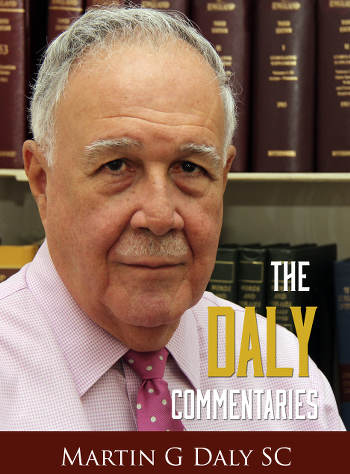
Martin G Daly SC is a prominent attorney-at-law. He is a former Independent Senator and past president of the Law Association of Trinidad and Tobago.
He is chairman of the Pat Bishop Foundation and a steelpan music enthusiast.

Martin Daly has once again perfected the art of writing a long column that travels impressively far, only to arrive precisely nowhere.
We begin with Patrice Roberts.
We end with low voter turnout.
Somewhere in between: plantations, NCC spending, Newsday’s impending death, Dr Keith Nurse, Dr Arjoon, Tobago elections, and a greatest-hits album of Daly’s own past columns.
What we do not get is a single clear conclusion, policy proposal, or testable claim.
First, the Patrice problem.
A singer offers a free concert out of goodwill. Daly treats this as evidence that Carnival itself is now morally compromised, economically unjust, and socially divisive.
This is like arguing that free soup kitchens prove food has failed as a concept.
A generous gesture becomes a sociological crisis.
Second, the “Carnival used to be resistance” argument.
Yes. Historically true.
Also historically true: drums were once banned, slavery existed, and there was no Wi-Fi.
The fact that Carnival once arose from defiance does not logically mean that every costume in 2026 must now be state-subsidised to preserve authenticity.
History is not a budgeting framework.
Third, the great discovery: Carnival costs money.
Correct.
So do weddings. Funerals. Football. Church fundraisers.
The existence of price is not proof of moral decay. It is proof that materials, labour, transport, sound systems and toilets exist.
Fourth, the “billions flow in” complaint.
This is his strongest point — and he does absolutely nothing with it.
He quotes:
Newsday saying the gains are nebulous
Keith Nurse saying data capture is weak
And then… stops.
No figures.
No alternative model.
No recommendation.
No analysis of how to measure properly.
Just: “We don’t know.”
Thank you, Professor Uncertainty.
Fifth, the grand drift into elections and political stagnation.
This is where the essay finally gives up on pretending to be about Carnival.
We move from free concerts to voter apathy with the logical elegance of a man changing radio stations mid-sentence.
Carnival, NCC spending, business exodus, Tobago turnout — all are placed in the same basket labelled “things are bad”.
No causal links.
No hierarchy of causes.
No policy chain.
Just vibes.
Final problem:
After 1,000+ words, Daly has not told us:
Whether Carnival should be smaller
Or cheaper
Or differently funded
Or differently managed
Or partly privatised
Or better audited
Or better measured
We are left with:
sadness,
nostalgia,
distrust,
and several academic quotations.
This is not analysis.
It is what Mark Twain accused Fenimore Cooper of:
“He writes a sentence, and then goes looking for a place to put it.”
Martin Daly does not argue.
He orbits.
Many words.
No destination.