 Wired868 Wired868 for smart sport news and opinion
“[…] Trinidad and Tobago stands at a pivotal moment in how we document, conserve, and teach our past.
“While dedicated field researchers, statutory agencies, and legitimate Indigenous communities are working diligently to safeguard our archaeological record, a parallel trend has emerged: individuals bypassing established statutory frameworks, heritage legislation, and recognized Indigenous governance structures to erect monuments, stage unvetted ceremonies, and disseminate fabricated or unsubstantiated historical claims on public and protected lands…”
The following Letter to the Editor on the importance of preserving Trinidad and Tobago’s heritage was submitted to Wired868 by archaeologist (zooarchaeology and heritage management) Dr Shad Gobinsingh, PhD:
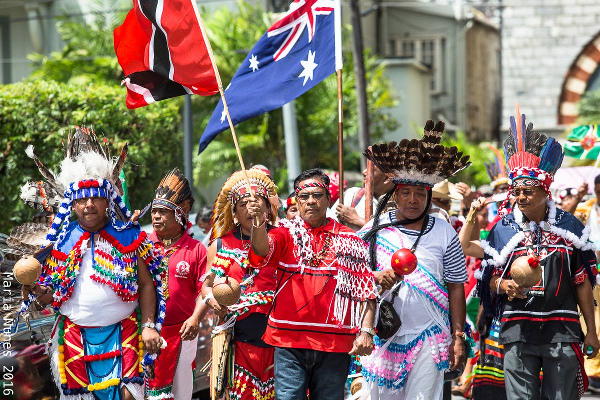
(Copyright Maria Nunes.)
As an archaeologist, and as the first citizen in the history of Trinidad and Tobago to earn a Doctorate (PhD) in Archaeology, I write to Wired868’s readership to address an urgent and escalating threat to our nation’s heritage management, historical integrity, and public administration: the unauthorized physical alteration of protected heritage sites and the unchecked proliferation of unverified historical narratives.
Trinidad and Tobago stands at a pivotal moment in how we document, conserve, and teach our past.
While dedicated field researchers, statutory agencies, and legitimate Indigenous communities are working diligently to safeguard our archaeological record, a parallel trend has emerged: individuals bypassing established statutory frameworks, heritage legislation, and recognized Indigenous governance structures to erect monuments, stage unvetted ceremonies, and disseminate fabricated or unsubstantiated historical claims on public and protected lands.
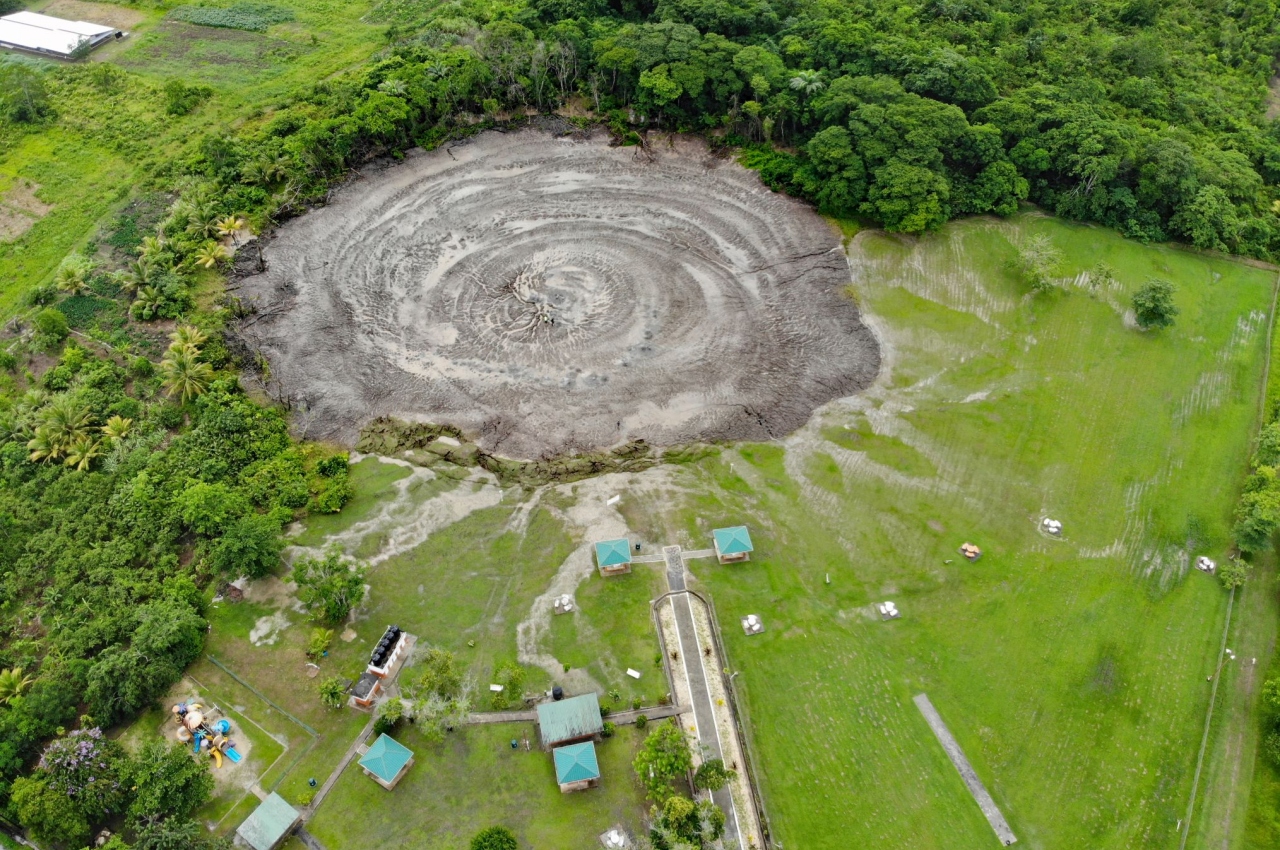
Copyright: Curtis Archie.
- The statutory breach of protected landscapes
A glaring and deeply concerning example of this disregard for due process is the recent intent to install unauthorized structures at Devil’s Woodyard in Hindustan, New Grant—a designated Natural Heritage site of profound geological, ecological, and cultural significance.
Protected landscapes and archaeological sites are fragile, non-renewable national assets. Under the National Trust of Trinidad and Tobago Act (Chap. 40:53) and environmental planning regulations administered alongside the Environmental Management Authority (EMA) and Town and Country Planning Division (TCPD), physical interventions on heritage sites require rigorous Heritage Impact Assessments (HIAs), statutory consultation, and formal written authorization.

Subsurface deposits, stratigraphic layers, and sacred cultural landscapes cannot be reconstructed once disturbed by unpermitted digging, concrete foundations, or ad-hoc monument installations.
Allowing any individual or self-styled group to unilaterally alter a protected site sets a dangerous precedent that undermines the rule of law and places our national patrimony at irreversible risk.
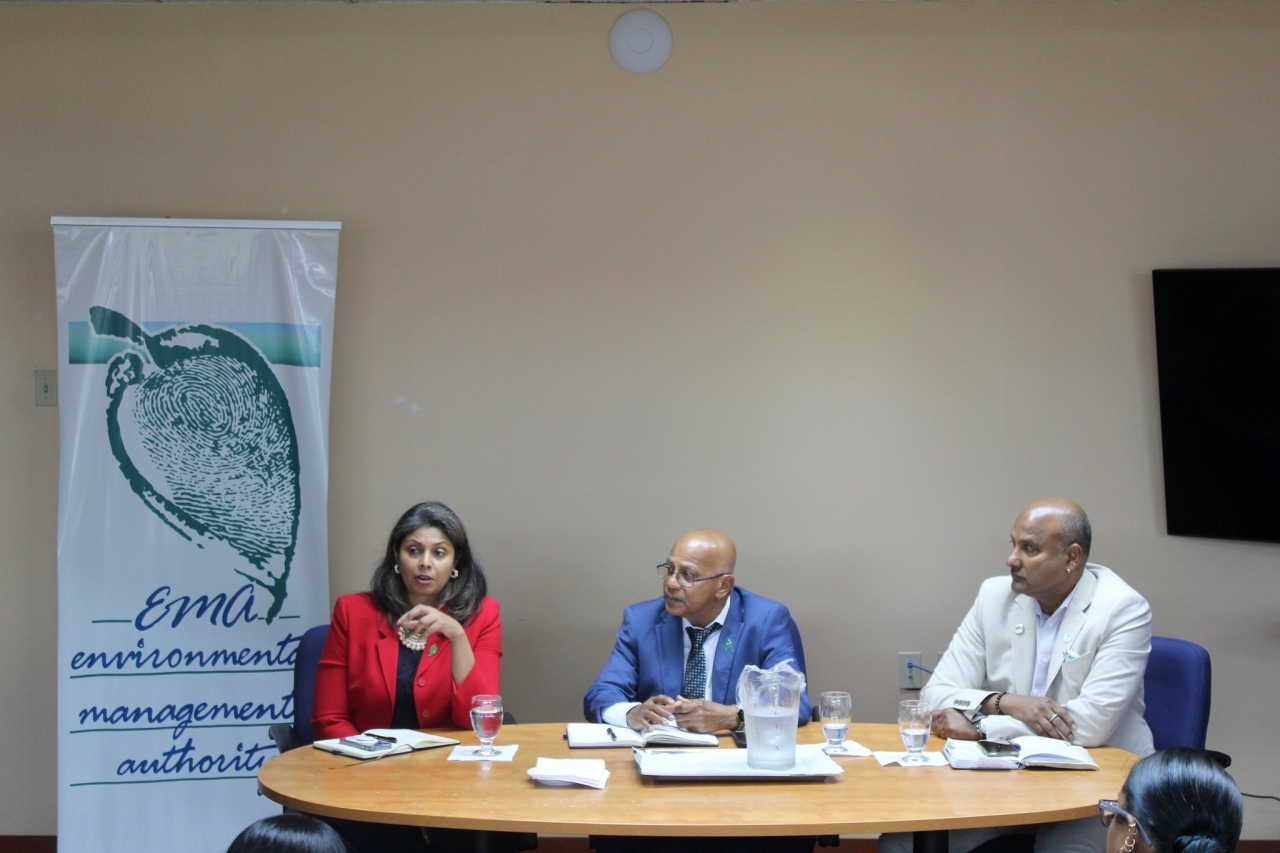
Photo: EMA.
- Safeguarding authentic Indigenous governance from self-appointed entities
Equally troubling is the institutional confusion caused when state agencies, municipal corporations, or media platforms inadvertently grant official recognition, permits, or ceremonial platforms to self-proclaimed titles and unverified entities.
Trinidad and Tobago already possesses verifiable, continuous Indigenous governance structures whose ancestral mandates and customary standing are formally recognized by the state—most notably the Santa Rosa First Peoples Community (SRFPC) in Arima, led by Chief Ricardo Bharath, alongside documented Warao heritage communities whose continuous historic ties between the Orinoco Delta and South Trinidad are well attested in both historical archives and living memory.
Elevating parallel, self-appointed entities creates severe administrative confusion, fractures community trust, and actively marginalizes our legitimate Indigenous stewards.
Authentic reconciliation and heritage preservation demand that public officials verify institutional legitimacy and consult directly with recognized First Peoples leadership rather than entertaining personal mythopoeia.
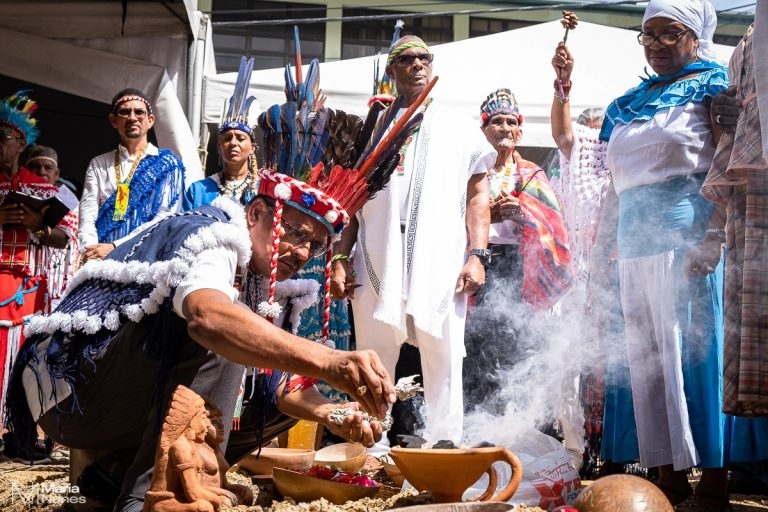
- Scientific stewardship in action: current archaeological and Indigenous collaborations
Critique must always be matched by constructive, evidence-based action. Over the past year, my work alongside colleagues at the National Trust of Trinidad and Tobago, The University of the West Indies (UWI), international research partners, and recognized Indigenous leadership demonstrated what genuine, statutory, and community-centered heritage governance looks like in practice:
▪ Banwari Trace Revitalization & Indigenous Co-Stewardship (Siparia): At Banwari Trace, the oldest documented pre-Columbian archaeological site in the insular Caribbean, dating back over 7,000 years, we have actively collaborated with the Warao Nation and the Santa Rosa First Peoples Community for an auspicious event.
In August 2026, our World Indigenous People’s Day and Ice Age Fossil Outreach event united UWI researchers, National Trust Experts, National Geographic scientists studying Late Pleistocene Glyptodon remains, and First Peoples elders to share peer-reviewed science directly with the public.
▪ Nationwide Archaeological Site Assessments & Coastal Monitoring: Through systematic field surveys across Manzanilla (SAN-1, Cocal, Cascadoux), Mayaro (Guayaguayare, Gros Morne, Lagoun Doux), the Icacos–Cedros peninsula, and Lover’s Retreat (TOB-69) in Tobago, we are documenting coastal erosion, developmental threats, and stratigraphic integrity to build statutory nomination dossiers and peer-reviewed baseline records.
▪ Repatriation, Laboratory Conservation & Zooarchaeological Analysis: We have completed the comprehensive sorting, conservation, and inventory verification of repatriated assemblage through application of rigorous zooarchaeological and osteological protocols to reconstruct ancient diet, biodiversity, and human-environment interactions.
▪ Training the Next Generation & Preserving Living Archives: As Field Director for the Researching the Environment through Archaeology and Community Heritage (REACH) Field Schools (2025 and 2026) in South Trinidad, we have trained local and international students in systematic pedestrian survey, grid collection, excavation, and GIS mapping.
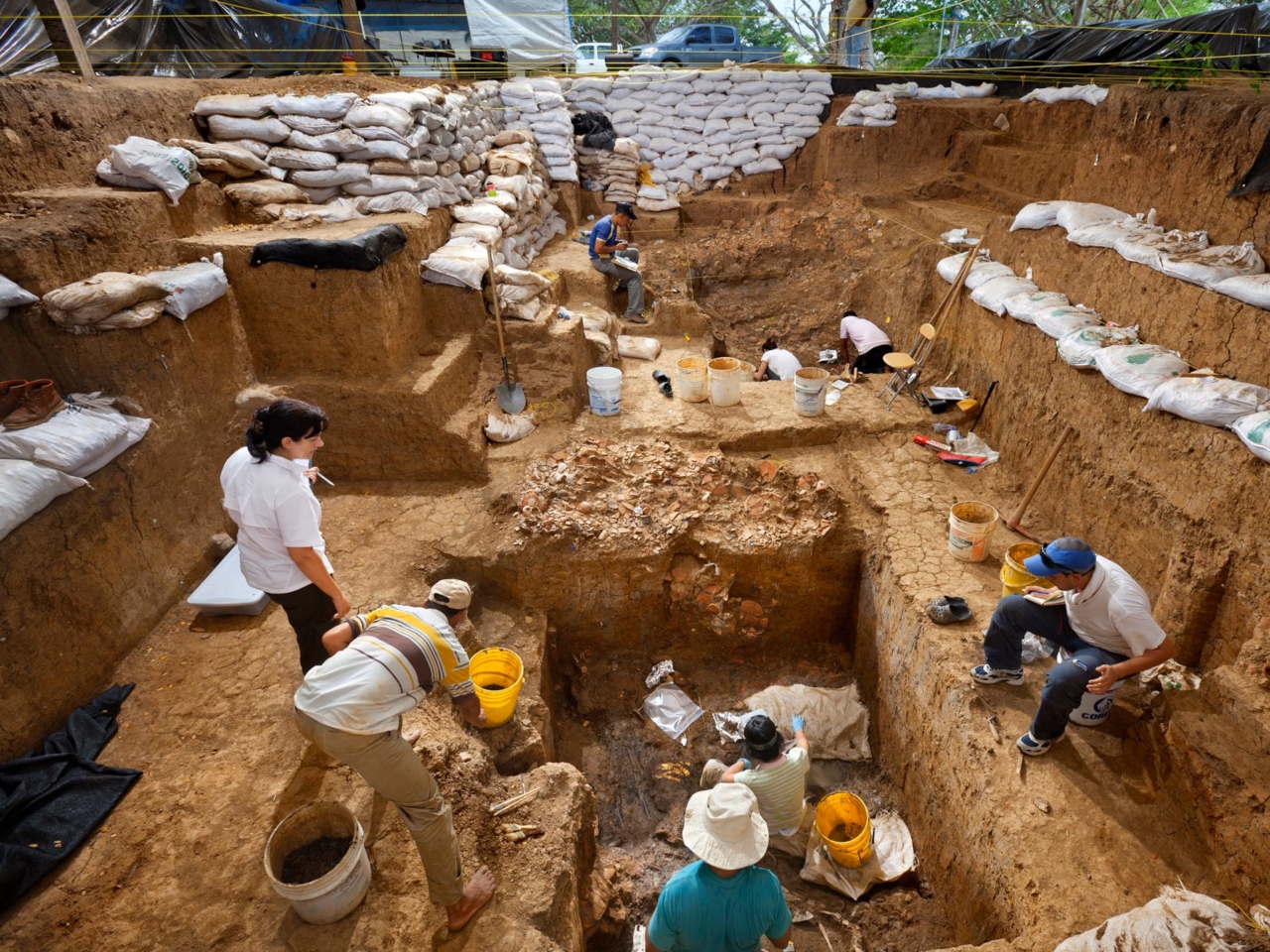
Photo: National Geographic.
Reference Framework: Statutory vs Unvetted Heritage Practices
| Governance Pillar | Statutory & Scientific Standard | Risk of Unregulated Activity |
| Site Interventions (e.g., Devil’s Woodyard) |
Prior Heritage Impact Assessment (HIA), statutory consultation, and formal written permits under Chap. 40:53 and EMA/TCPD rules. | Irreversible destruction of stratigraphy, artifacts, and sacred geological/cultural features. |
| Indigenous Representation |
Consultation with State-recognized, continuous communities (Santa Rosa First Peoples Community & documented Warao leadership). | Administrative confusion, tokenism, and marginalization of legitimate ancestral stewards. |
| Public & School Education |
Peer-reviewed historiography, archaeological evidence, and vetted institutional programs (National Trust, UWI, NALIS). | Dissemination of fabricated history and pseudoscience to primary and secondary students. |
| Artifact & Site Reporting |
In-situ documentation, GPS/GIS coordinate logging, and formal reporting to statutory heritage repositories. | Looting, loss of provenance, and permanent removal of artifacts from public scientific record. |
- Protecting Educational Standards and Calling on the Public
Safeguarding our national identity also requires strict vigilance inside our classrooms. School presentations, Heritage Week lectures, and public curricula must rest upon peer-reviewed historiography, scientific archaeology, and vetted cultural institutions such as the National Trust, UWI, NALIS, and recognized First Peoples representatives, rather than unverified individuals or groups.
Allowing unvetted individuals to lecture students under the guise of historical authority compromises the intellectual rigor our young citizens deserve.
National heritage is a public trust protected by law for every citizen of Trinidad and Tobago. Preserving it demands rigorous adherence to statutory oversight, inter-ministerial coordination, and unwavering respect for our legitimate historical and Indigenous defenders.
At the same time, heritage conservation cannot succeed behind closed doors—it belongs to the people.

(via Destination TnT.)
Many citizens across Trinidad and Tobago may possess family heirlooms, encounter historical artifacts on agricultural or residential land, or hold vital traditional knowledge and oral histories without realizing their profound national significance.
If you are unsure how to properly handle an archaeological find, or if you wish to document and report relics, historic structures, cultural spaces, or traditional knowledge, I strongly encourage you to contact me directly.
Open dialogue and responsible public collaboration are our strongest tools for protecting and upholding the authentic cultural heritage of Trinidad and Tobago for generations to come.
Editor’s Note: Dr Shad Gobinsingh PhD can be contacted via email at shadgobinsingh@gmail.com, or via WhatsApp at +919072578745.

(via OPRTT.)
Media Dossier: Published Newspaper Articles, Broadcast Features & Research Links
The following verified newspaper features, television broadcasts, and peer-reviewed academic publications document Dr. Shad Gobinsingh’s ongoing archaeological fieldwork, Indigenous heritage partnerships, and statutory conservation advocacy across Trinidad and Tobago:
- Trinidad & Tobago Guardian (Oct 27, 2026) — “Digging into southern Trinidad’s forgotten heritage” (Feature on the REACH Field School & South Trinidad archaeological research)
- Trinidad & Tobago Guardian (Nov 3, 2026) — “The heritage behind Port-of-Spain’s street names” (Historical & heritage preservation commentary)
- Trinidad & Tobago Guardian (Sep 1, 2026) — “The red, white and black” (National identity and historical heritage commentary)
- Trinidad & Tobago Guardian (Aug 27, 2026) — “Banwari Trace showcases the country’s Indigenous and prehistoric heritage” (World Indigenous People’s Day & Ice Age Fossil Outreach feature)
- CNC3 News / Guardian Media (Aug 25, 2026) — “Banwari Trace showcases the country’s Indigenous and prehistoric heritage” (Broadcast & digital news feature)
- Trinidad & Tobago Guardian (Jul 7, 2026) — “National Trust launches drive to assess 300 archaeological sites” (Nationwide site assessment initiative)
- CNC3 News / Guardian Media (Jul 5, 2026) — “National Trust launches drive to assess 300 archaeological sites” (Television & digital coverage)
- Trinidad & Tobago Guardian (Jul 6, 2026) — “Step back 7,000 years into history at Banwari Trace” (Feature on Banwari Trace archaeological preservation and dugout canoes)
- CNC3 News / Guardian Media (Jul 4, 2026) — “Step back 7,000 years into history at Banwari Trace” (Broadcast feature)
- Trinidad & Tobago Guardian (Mar 23, 2026) — “Heritage sites must be preserved, says archaeologist” (Statutory preservation & South Trinidad heritage call to action)
- Trinidad & Tobago Guardian (Oct 3, 2025) — “From Survival to Stewardship: Dr Shad Gobinsingh’s mission to unearth T&T’s past” (In-depth profile on becoming T&T’s first Ph.D. in Archaeology)
- TTT Live Online — Keeping It Green (Oct 29, 2025) — “Promoting Eco Tourism Through Archaeology” (Broadcast television segment featuring Dr. Shad Gobinsingh)
- ResearchGate Academic Profile & Publications — Dr. Shad Gobinsingh (Peer-reviewed zooarchaeological & osteological publications)
Statutory Legislation & Institutional Reference Portals:
▪ National Trust of Trinidad and Tobago (Chap. 40:53 & Heritage Sites Registry): https://nationaltrust.tt
▪ Laws of Trinidad and Tobago (Office of the Attorney General & Ministry of Legal Affairs): https://rgd.legalaffairs.gov.tt
▪ Environmental Management Authority (EMA) — Environmental Impact & CEC Rules: https://www.ema.co.tt
▪ Santa Rosa First Peoples Community (Arima): https://santarosafirstpeoples.org.

The tragedy off Staubles Bay last Sunday left six people dead after two pleasure craft—a 28-foot vessel and a 29-foot Read more

“[…] A child is not a collection of bills to be divided equally without considering the circumstances of the parents Read more

“[…] It’s not necessarily that I don’t like you—it’s just immensely discomforting to be up close and personal. “It feels Read more
“[…] I urge our PM not to use the word ‘coolie’ to self-reference. I accept the fact that you may Read more

In two years, I will be a pensioner myself. So when I say the upcoming budget must increase the old Read more
“[…] ‘No rule was broken’ is a legal answer to a question that isn’t, at its heart, legal. It’s a Read more

Want to share your thoughts with Wired868? Email us at editor@wired868.com.
Please keep your letter between 300 to 600 words and be sure to read it over first for typos and punctuation.
We don’t publish anonymously unless there is a good reason, such as an obvious threat of harassment or job loss.