 Wired868 Wired868 for smart sport news and opinion
“[…] A Trinidad and Tobago National U-14 player was reportedly left at Piarco International Airport at approximately 3am, after the group had already spent the better part of the previous day travelling.
“It was further reported that the Team Manager departed while the minor remained alone at the airport, with the expectation that the child would remain there until the airline counter opened and arrange the purchase of a ticket for his onward travel to Tobago.
“[…] When [such] safeguarding concerns are formally raised, parents should not be left wondering whether those processes are working, whether risks have been assessed or when they can reasonably expect meaningful engagement…”
The following Letter to the Editor, which points to two potential safeguarding issues involving the Trinidad and Tobago Boys’ National Under-14 Team, was submitted to Wired868 by A Concerned Parent:

There are few moments that make a parent prouder than watching a child earn the opportunity to represent their country. Alongside that pride comes trust.
As parents, we willingly place our trust in organisations responsible for developing, supervising and protecting our children. That trust is strengthened by transparency and accountability and weakened when legitimate concerns about child welfare are met with silence.
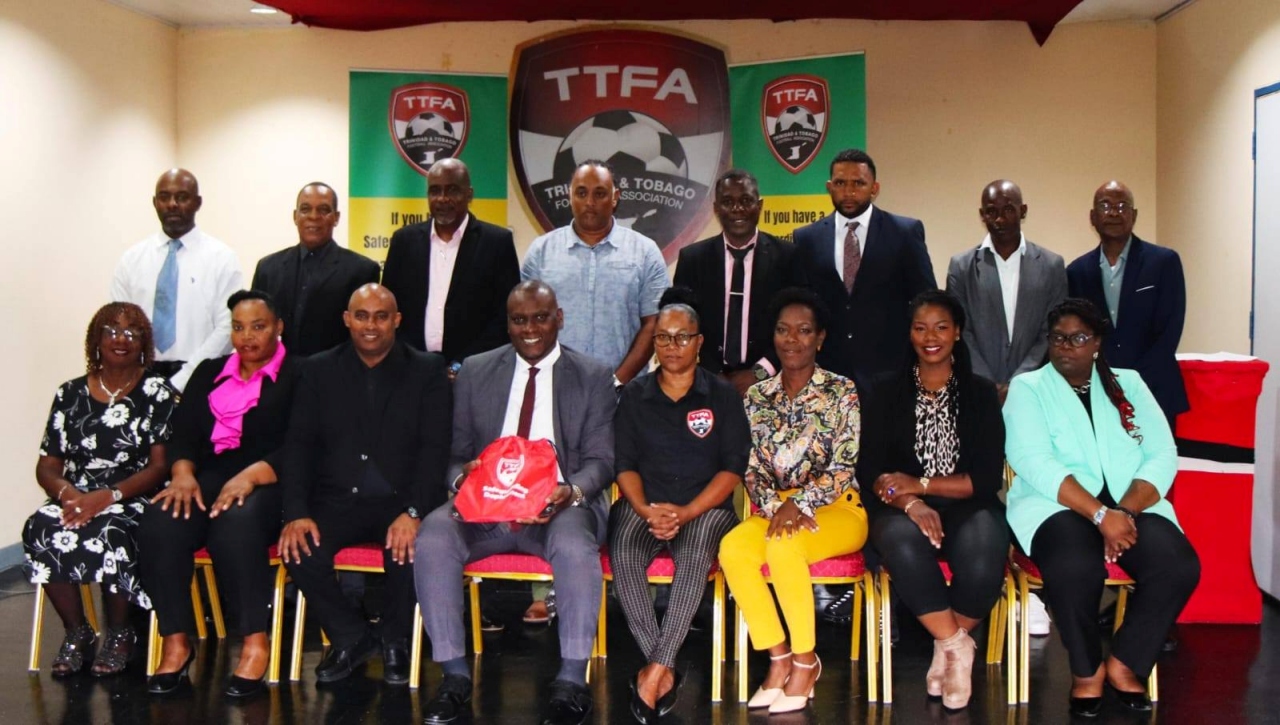
(via TTFA Media.)
Several weeks ago, a detailed letter was submitted to the Trinidad and Tobago Football Association (TTFA) raising concerns about safeguarding, duty of care and the treatment of minors participating in national youth football programmes. It sought clarity on safeguarding procedures, accountability measures and several incidents involving youth players.
To date, no substantive response has been received.
Among the concerns raised was the experience of a Trinidad and Tobago Boys’ National Under-14 player who, despite having submitted his passport bio-data page to team management upon selection, was denied boarding—after it was discovered that his passport fell three days short of the destination’s six-month validity requirement.
After missing the initial departure, the same player was subsequently booked on an itinerary that was incompatible with the airline’s unaccompanied-minor requirements.
Even after this issue became apparent, there remained uncertainty about who would accompany the child, including up to approximately three hours before airport check-in.
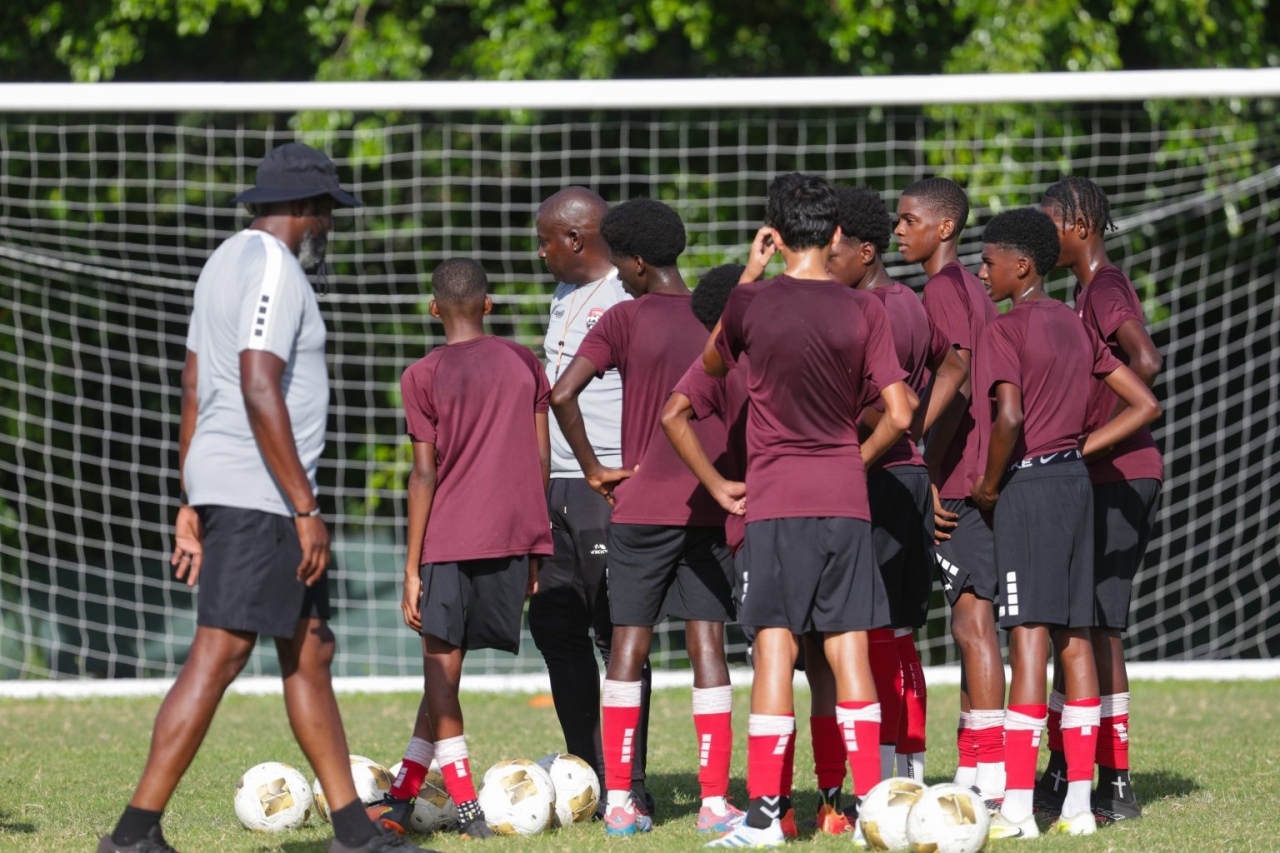
(via TTFA Media.)
Faced with the possibility of seeing the same young athlete denied the opportunity to travel for a second consecutive night, a parent was left with little option but to purchase a last-minute airline ticket and accompany the child at personal expense.
Safeguarding is often viewed through the lens of physical protection, but it also encompasses the mental and emotional wellbeing of young athletes. One need only imagine the impact on a child who had already been denied the opportunity to travel once, only to face the prospect of a second disappointment less than 24 hours later.
The welfare of young players cannot be separated into physical and emotional categories. Both matter, and both should be central to any safeguarding framework.
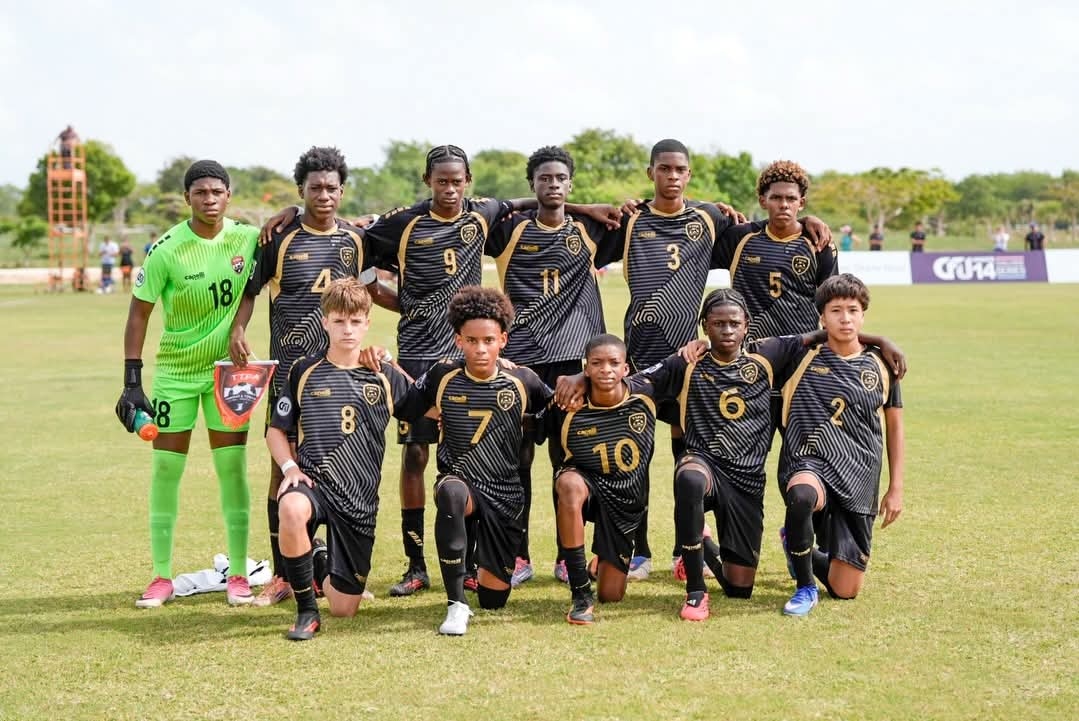
Photo: CFU.
The parent was subsequently assured that the additional travel cost would be reimbursed after the relevant details were submitted. To date, reimbursement remains outstanding.
Yet, in a Wired868 article discussing the matter, TTFA President Kieron Edwards was quoted as saying: “We just calmly moved along and got his passport renewed yesterday and got him on the flight to DR. The player is travelling with his father and he will reach in a couple of hours. This issue was resolved and everyone is happy.”
For the family involved, however, significant costs were incurred, assurances remain unfulfilled and the wider concerns formally submitted to the TTFA remain unanswered.
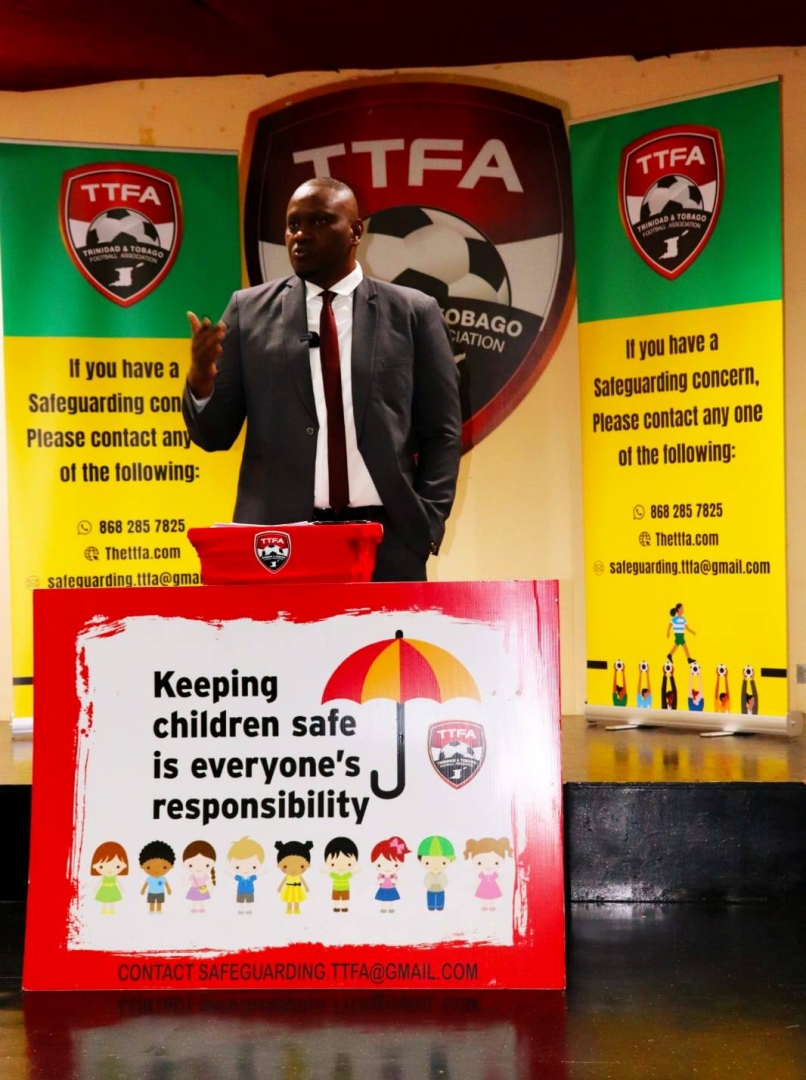
(via TTFA Media.)
The letter also referenced another troubling incident in which a National Under-14 player was reportedly left at Piarco International Airport at approximately 3am, after the group had already spent the better part of the previous day travelling.
It was further reported that the Team Manager departed while the minor remained alone at the airport, with the expectation that the child would remain there until the airline counter opened and arrange the purchase of a ticket for his onward travel to Tobago.
However, the child was reportedly unable to do so because airline requirements did not permit the transaction to be completed by a minor acting alone.

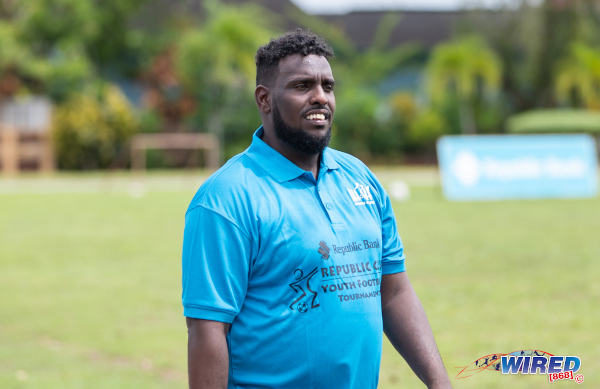
Romain is the National U-14 team manager.
Photo: Daniel Prentice/ Wired868.
In effect, the very solution reportedly left to the child was one he could not execute himself.
Regardless of the circumstances, the prospect of a minor being placed in such a position raises legitimate questions about supervision, contingency planning, communication and the duty of care owed to young athletes participating in national programmes.
It also raises an equally important question: if safeguarding exists to protect children from foreseeable risks, who is vetting, training and overseeing the safeguarding guardians entrusted with their care?
These concerns do not exist in isolation. Trinidad and Tobago football has previously faced safeguarding-related controversies, including the suspension of coach Shawn Cooper following allegations involving youth players. There was also public discussion surrounding the welfare of a young national player reportedly left behind in the United Kingdom following international travel.
The purpose of referencing these matters is not to revisit them, but to demonstrate why safeguarding cannot be treated as an administrative exercise or a policy that sits on the sidelines.
As TTFA Safeguarding, Player Care and Wellbeing Manager Gary St Rose has publicly stated: “Safeguarding should not be seen as something that sits beside athlete development. It should be one of the foundations upon which athlete development is built.”

Those words reflect a principle that most parents would wholeheartedly support.
If safeguarding is truly a foundation of athlete development, parents should have confidence not only that policies exist, but that concerns raised under them are acknowledged, reviewed and addressed in a way that inspires trust.
The TTFA has stated that concerns are managed under its Safeguarding Children and Vulnerable Persons Policy and Framework, that safeguarding risks are assessed and that appropriate risk-mitigation measures are implemented where required. Those commitments are welcome.
However, when safeguarding concerns are formally raised, parents should not be left wondering whether those processes are working, whether risks have been assessed or when they can reasonably expect meaningful engagement.
Sensitive information can be protected while still providing reasonable procedural reassurance that concerns about children’s welfare are being actively and appropriately addressed.
Confidentiality should protect the process, not make that process invisible.
The central issue is not any one player, parent, official or incident. It is whether adequate safeguarding procedures are in place, whether concerns involving children’s welfare are properly reviewed and whether parents can have confidence that those concerns will receive meaningful attention.

(via Fifa.)
Parents entrust sporting organisations with something far more valuable than a football jersey or plane ticket. They entrust them with their children.
The original correspondence was never intended to assign blame. It sought understanding, accountability and reassurance that the welfare of young athletes remains paramount. Most importantly, it sought to help ensure that future players and their families do not face similar circumstances.
To date, those questions remain unanswered.
When safeguarding concerns are raised, why is silence the response?
Photo: CFU.
Young athletes deserve more than unanswered correspondence and unresolved questions. Parents deserve confidence that their children will be protected, supported and cared for when representing their country. Players deserve an environment where their wellbeing is treated as seriously as their performance.
If safeguarding is truly one of the foundations upon which athlete development is built, that commitment must be demonstrated not only through policies and public statements, but through transparency, accountability and meaningful engagement when concerns arise.
Our children deserve better. And they deserve change.
Editor’s Note: Trinidad and Tobago Boys’ National Under-14 team manager Adrian Romain’s response to the allegation that he left a 14-year-old national youth player alone at the Piarco International Airport at 3am was: “no comment”.
“[…] Under the proposed TTFA Statutes amendments, clubs would lose 21 votes, reducing their combined allocation from 36 to 15—a Read more

“[…] Where else would you find U14 and U16 games playing at 10am on a workday, attracting 200 to 300 Read more

“[…] Mr Gary St Rose himself acknowledges that the investigations are not complete. So what exactly formed the basis of Read more
Trinidad and Tobago Boys’ National Under-15 Team manager Adrian Romain has been cleared to continue his duties with the national Read more

“[…] The TTFA’s published Safeguarding Policy and Framework (version 3.0) says the TTFA ‘shall’ impose conditions on a licence whenever Read more
“[…] A strategic plan should not simply articulate where an organisation hopes to be in four years. It should clearly Read more

Want to share your thoughts with Wired868? Email us at editor@wired868.com.
Please keep your letter between 300 to 600 words and be sure to read it over first for typos and punctuation.
We don’t publish anonymously unless there is a good reason, such as an obvious threat of harassment or job loss.