 Wired868 Wired868 for smart sport news and opinion
The Secondary Schools Football League (SSFL) is set for a sensational departure from its top flight schedule in 2026, after the general membership voted to run the Premier Division competition without Tobago schools—for the first time since 2014.
As it stands, 17 schools, rather than the usual 16, are due to compete in the 2026 Boys Premier Division, after the member schools ratified the SSFL executive’s decision to keep Malick Secondary in the top flight.

Photo: Nicholas Bhajan/ Wired868.
Malick faced relegation due to a late legal victory by St Augustine Secondary along with the subsequent abandonment of the latter school’s final game against Signal Hill Secondary, which meant the “Green Machine” would have climbed out of relegation trouble—at Malick’s expense.
Therefore, defending champions Naparima College, Arima North Secondary, Fatima College, Presentation College (San Fernando), Queen’s Royal College (QRC), San Juan North Secondary, Signal Hill Secondary, St Anthony’s College, St Benedict’s College, St Mary’s College (CIC), Trinity College (Moka), and Trinity College East retained their Premier Division status.

And Hillview College, Mucurapo West Secondary, and Speyside Secondary earned the right to join them, via promotion through the 2025 Big Five competition.

Photo: Nicholas Bhajan/ Wired868.
However, in a response to the SSFL’s financial issues, which has dogged the Premier Division over the last two seasons in particular, the North Zone offered a proposal to temporarily exclude Tobago schools from the league, which was accepted by members in a tense vote on Wednesday 22 July.
“Primarily, the major reason for this new format is we think it gives the league the best possible chance to be completed before the end of the December,” said North Zone chair and former Mucurapo West Secondary principal Joseph Taylor.
“We are trying to give the SSFL time to fix some of the challenges they have been having, which we feel would have been worse with an additional team—and the fact that, on top of that, we have also lost significant sponsorships.
“There is a challenge for a lot of schools centred around travelling to Tobago, where funding has been an issue.”
Last season, the SSFL executive, headed by president Merere Gonzales, abandoned the season with four games outstanding, which comprised the Boys National Under-14 and Under-16 finals, the Girls Big Five final, and the fixture between St Augustine and Signal Hill.

Photo: Nicholas Bhajan/ Wired868.
All four games involved inter-island travel. There were over a half dozen rescheduled games due to the same issue.
The North Zone’s proposal to school football’s general membership was a Premier Division with only Trinidad schools, followed by a National Big Four competition that comprised the Tobago zonal winner and the top three Premier teams.
The format was similar to the one used in 2014 when the Premier Division was born, under then SSFL president Anthony Creed.
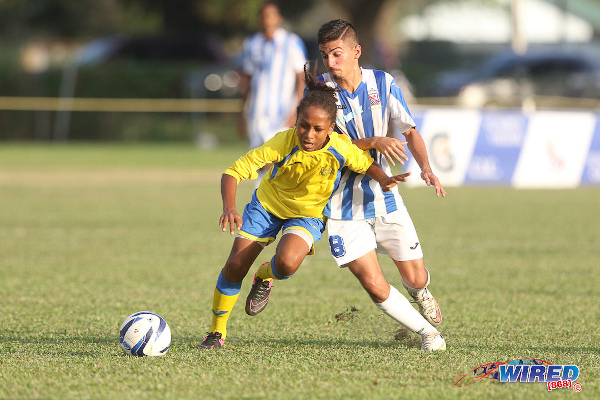
Garcia was 14 years old at the time.
Photo: Chevaughn Christopher/ Wired868.
At the time, Speyside, the 2013 Tobago champions, baulked at the expense of seven trips to Trinidad, in the new tournament structure, and opted out of the inaugural national competition.
Taylor explained that their proposal for the 2026 season was temporary and included a provision for the return of Tobago schools in 2027, once the SSFL executive had found a solution for the inter-island travel issues.
The bottom three Premier Division schools from the upcoming season would be demoted, with just two schools taking their place from a Trinidad Championship Division Big Four, made up of winners from the Central, East, North, and South Zones.

Photo: Dirk Allahar/ bCreative/ Wired868.
Should Tobago schools return in 2027, they would be guaranteed the same two spots they have at present. However, those would go to the two best finishers in the 2026 Tobago Zone, made up of the island’s two Premier schools plus their six Championship Division teams in a new eight-team competition.
Taylor conceded that separate league competitions for Trinidad and Tobago schools was not the best-case scenario. But he felt carrying on as they have been doing was damaging to the SSFL.
“We think the best developmental structure is having the best teams play everybody—and that includes the Tobago schools,” said Taylor. “We are not trying to exclude Tobago. I think that Tobago getting an opportunity to experience the playing styles of the schools from Trinidad, and vice versa, on a regular basis is beneficial to everyone.

Photo: Nicholas Bhajan/ Wired868.
“However, the SSFL executive need to look at the challenges they have been facing over the last three years and see it hasn’t been working. So, this is just to give them time to get themselves in order.”
Interestingly, the proposed format from the North Zone got mixed reviews from the inconvenienced Tobago schools: Signal Hill and Speyside.
Speyside have just returned to the top flight, after winning promotion through the 2025 Big Five competition. Manager Kerry Lynch was unimpressed to hear that the “Country Boys” will have to stay in Tobago, regardless.
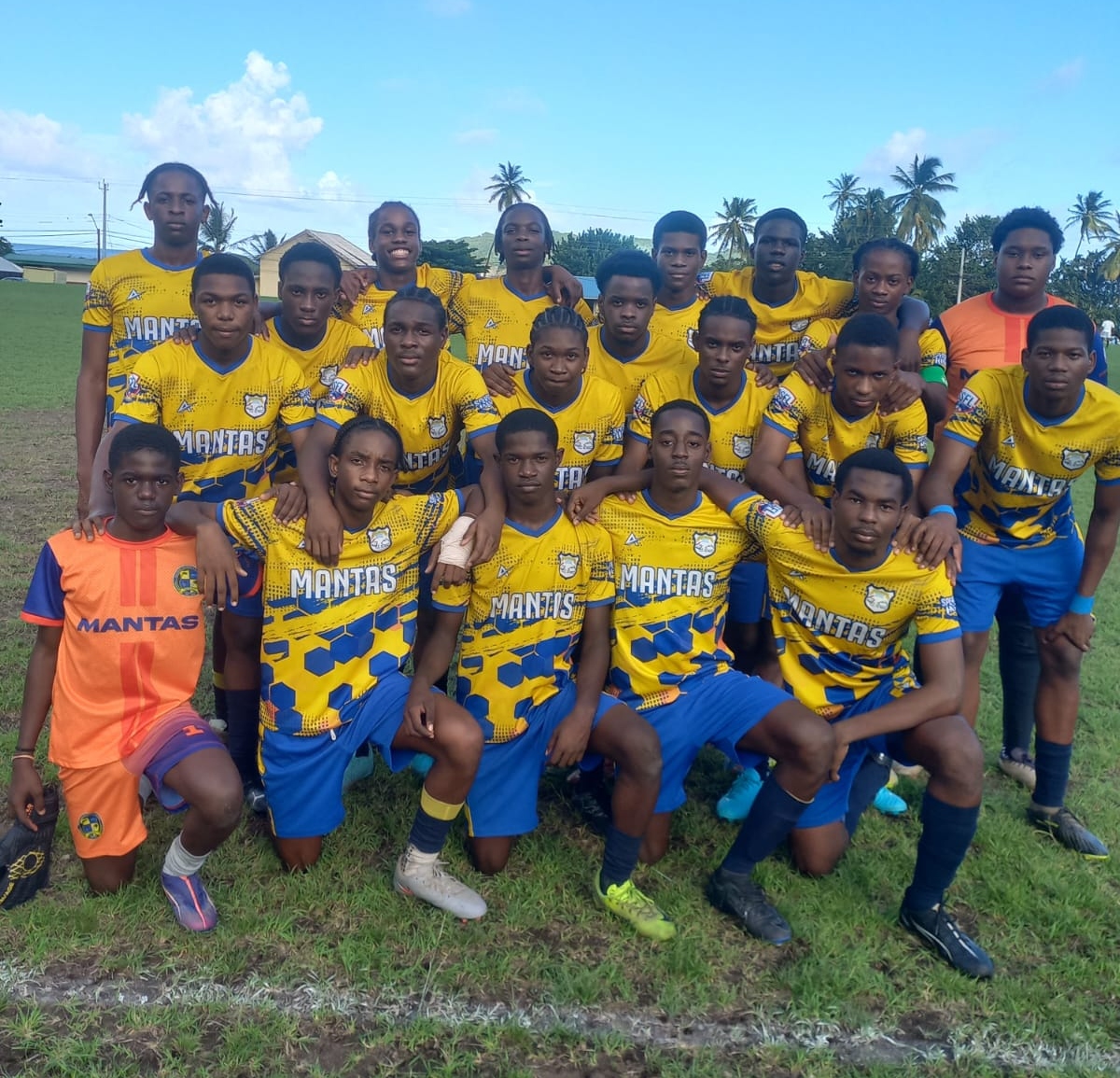
“They said Tobago isn’t left out per se because Tobago is still in the big four—but it still feels that way,” said Lynch. “[…] The Tobago Zone is generally not as strong as the Trinidad zones, even if the winners are strong. So, our schools now miss out on that level of competition.”
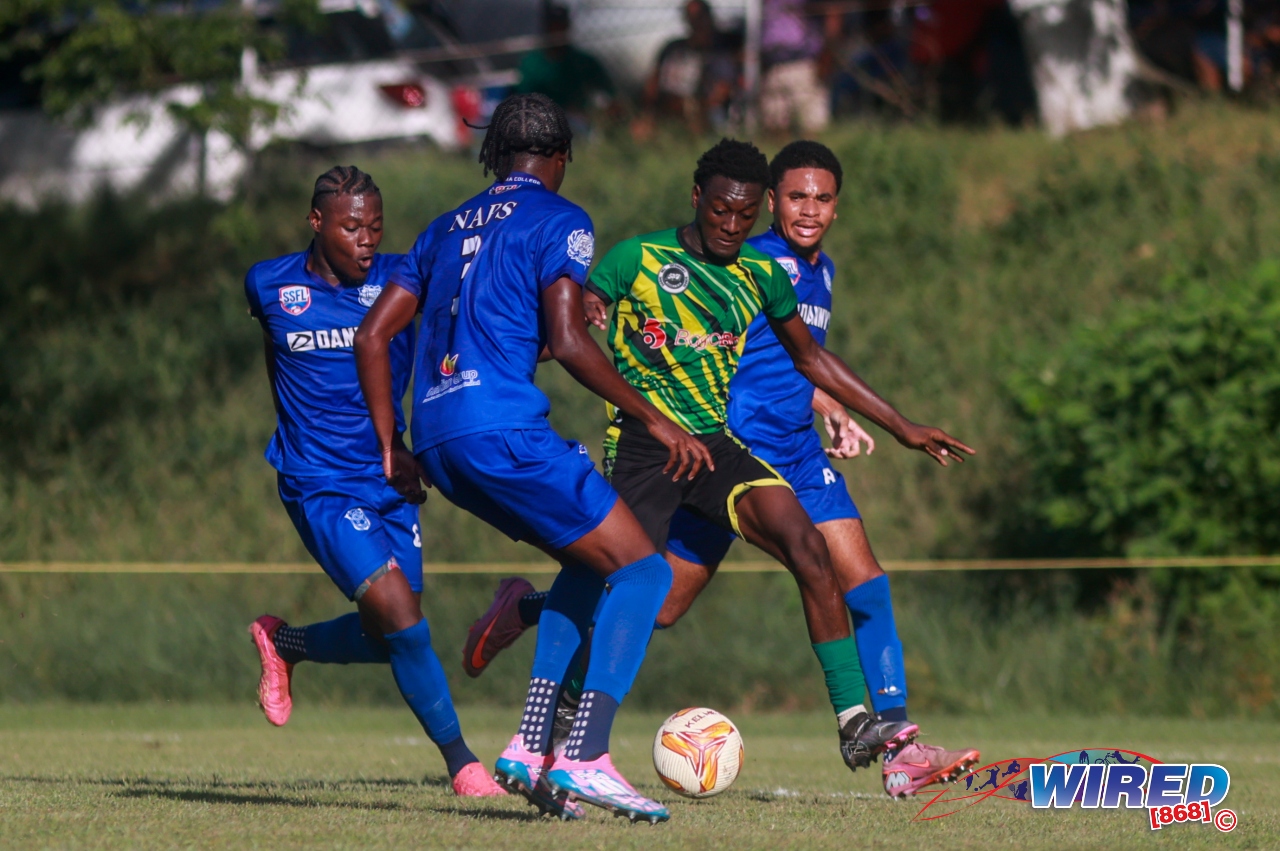
Speyside star attacker Riquelme Phillips spent roughly one term at Naparima last year, during which time he was instrumental in helping “Naps” win their first Premier Division and Intercol titles of the post-Covid era.
Phillips promptly transferred back to Speyside, after failing to settle at Naparima for several reasons. The new format could potentially deny the talented attacker of the chance to face Naps again this year, as well as to match his wits against the best talent on the two-island republic.

Photo: Nicholas Bhajan/ Wired868.
Lynch thinks both islands will be worse off, as a result of the change.
“Signal Hill did extremely well last year (third in the league and National Intercol runners-up) and I thought they were well in place to compete for the title this year,” said Lynch. “The Tobago schools are improving. Look at how Central Zone is right in Trinidad but has no team in there (the Premier Division). That has never happened to Tobago, despite the lack of player numbers and resources.
“Even some of the Trinidad teams recruit in Tobago although they (the Trinidad schools) have a much bigger player pool. So that says a lot about the talent we have in Tobago.”

Photo: Nicholas Bhajan/ Wired868.
Signal Hill coach Downie Marcelle acknowledged the negative aspects of the format change, but was happy to identify some positives too.
“Playing in the Premier Division really improved the boys,” said Marcelle. “So not being there may work against us in terms of our standards. In the Premier Division, you might have two or three weak schools—but other than that, every game you have to be on your Ps and Qs.
“Last season, we beat Trinity Moka 7-1, then our very next game we lost 3-1 to Arima North. Almost every game, you have to be ready to deliver or you are in trouble. We might miss out on that level of competition. So that’s the negative.

Photo: Nicholas Bhajan/ Wired868.
“On the plus side, I don’t have to leave my job as often to go to Trinidad and it helps the boys who will now miss less classes in school. So, I think it could work out for us overall—but we will have to do real work to ensure we maintain our standard and are ready for when we reach to Trinidad.”
There is another con. Marcelle said the flip-side of Signal Hill’s success is that his best players have been chased by Trinidad’s more prestigious schools.
Now that Signal Hill are outside of the Premier Division, he only expects those approaches to increase.
Watkins represented the Trinidad and Tobago National U-17 team under coach Randolph Boyce in 2026. Boyce is also head coach at St Benedict’s College.
Photo: Nicholas Bhajan/ Wired868.
“The Trinidad schools have been pursuing about five of our players,” said Marcelle. “Immanuel Wright is already in Trinidad with Naparima, St Benedict’s are trying to get J’meke Watkins and Presentation (San Fernando) have also been calling our parents.
“I think Angus [Eve] knows very well that if we keep our Signal Hill team together, we have a very good chance of winning the league and we are a threat to Naparima.
“He is afraid of Signal Hill and the best way to stop Signal Hill is to take our best players. We are trying to do what coach Bertille St Clair did years ago [when he made Signal Hill national champions] and it is a struggle because coaches are offering them the world to come [to] Trinidad.”

Photo: Nicholas Bhajan/ Wired868.
Wired868 asked Eve for comment on Marcelle’s assertion that he was targeting Signal Hill’s best players, on behalf of Naparima. However, he responded only to say that his school made a clean sweep of titles in 2025 without, he claimed, him having scouted for players.
(Phillips, a transfer from Speyside last September, was a crucial component of Naparima’s 2025 success.)
Lynch said the Tobago Zone will meet soon to decide on the way forward. But there is little that can be done, due to the general council vote.

Photo: Daniel Prentice/ Wired868
“The vote was 9-6 in favour of the North Zone proposal,” said Lynch. “But there were six abstentions. I find those six persons could have made a choice, so we would have a clear idea of what they were thinking…”
Lynch felt let down too by the Gonzales-led executive.
Twelve years ago, after Speyside turned down the chance to play in the inaugural Premier Division due to high travel costs, Lynch, a school teacher, met with officials from the Education Division of the Tobago House of Assembly (THA).

Photo: Allan V Crane/ Wired868.
Together, they hammered out a pact that saw Tobago schools subsidised by the THA ever since.
Tobago schools are disproportionately burdened with travel costs in the Premier Division, since almost 90% of the top flight teams are based in Trinidad.
As a result, schools from the Sister Isle cross the sea-bridge between seven to eight times a season, exclusive of the Intercol competition, while Trinidad schools travel to Tobago just once during that same timeframe.

Photo: Nicholas Bhajan/ Wired868.
Now, Speyside and Signal Hill have been asked to leave because their Trinidad counterparts are unwilling or unable to make even that single trip to Tobago.
“They claim it is due to a lack of funding and sponsorship, but I feel it is probably just a lack of will by the national executive to really sit down with stakeholders,” Lynch told Wired868.
“For us (Tobago schools) to play in the Premier Division, it meant us having a discussion with the powers that be and reasoning with them, until they said ‘yes, we understand why it is crucial’—and they agreed to help.

Photo: Nicholas Bhajan/ Wired868.
“I don’t think that was done by our national executive… The SSFL is not a small-fry institution, they could have held meetings early with Port Authority or CAL to see what can be done for these school children, in terms of trips between the islands across just two months in the year.
“I think it is just the will to negotiate with stakeholders that was lacking.”
On 22 July, school reps at the SSFL general council meeting had three options. The first was to retain the status quo and continue with a 17-team competition with two Tobago schools and the resulting inter-island travel.
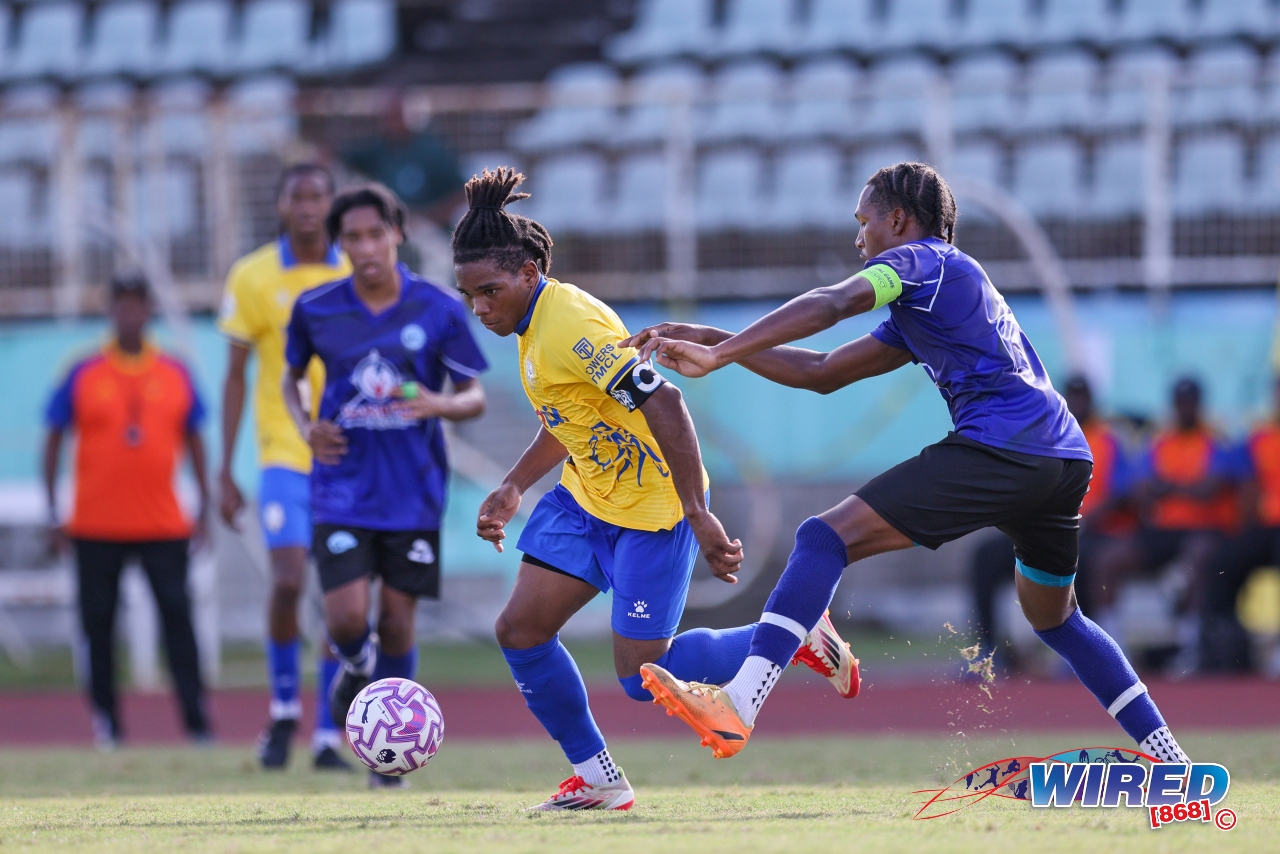
Photo: Daniel Prentice/ Wired868.
Since the SportsMax era, the SSFL executive paid Trinidad schools $10,000 per season to offset inter-island travel expenses, which could range from $9,600 to $22,000 per trip—depending on if a team went by ferry on match day, or took a flight on the eve of their fixture and stayed at a guest house.
However, that travel allowance dropped to $8,000 in 2024, while several Trinidad schools received no money at all in 2025. And, crucially, the SSFL executive promised nothing for 2026.
The second option was a proposal by the South Zone, which would see the Premier Division split into two groups with a Tobago school in either group—similar to the format used in the 2022 season, immediately after the pandemic.

Photo: Nicholas Williams/ Wired868.
The two top teams from each group would then enter a Big Four competition.
The downside of that pitch was that schools would have just six or seven guaranteed league games, instead of 15 (or 16 this year) in the normal format or 14 under the North Zone proposal.
Also, with Tobago schools still included, it meant although seven or eight Trinidad schools would be spared crossing the seabridge, the other seven or eight would have to.
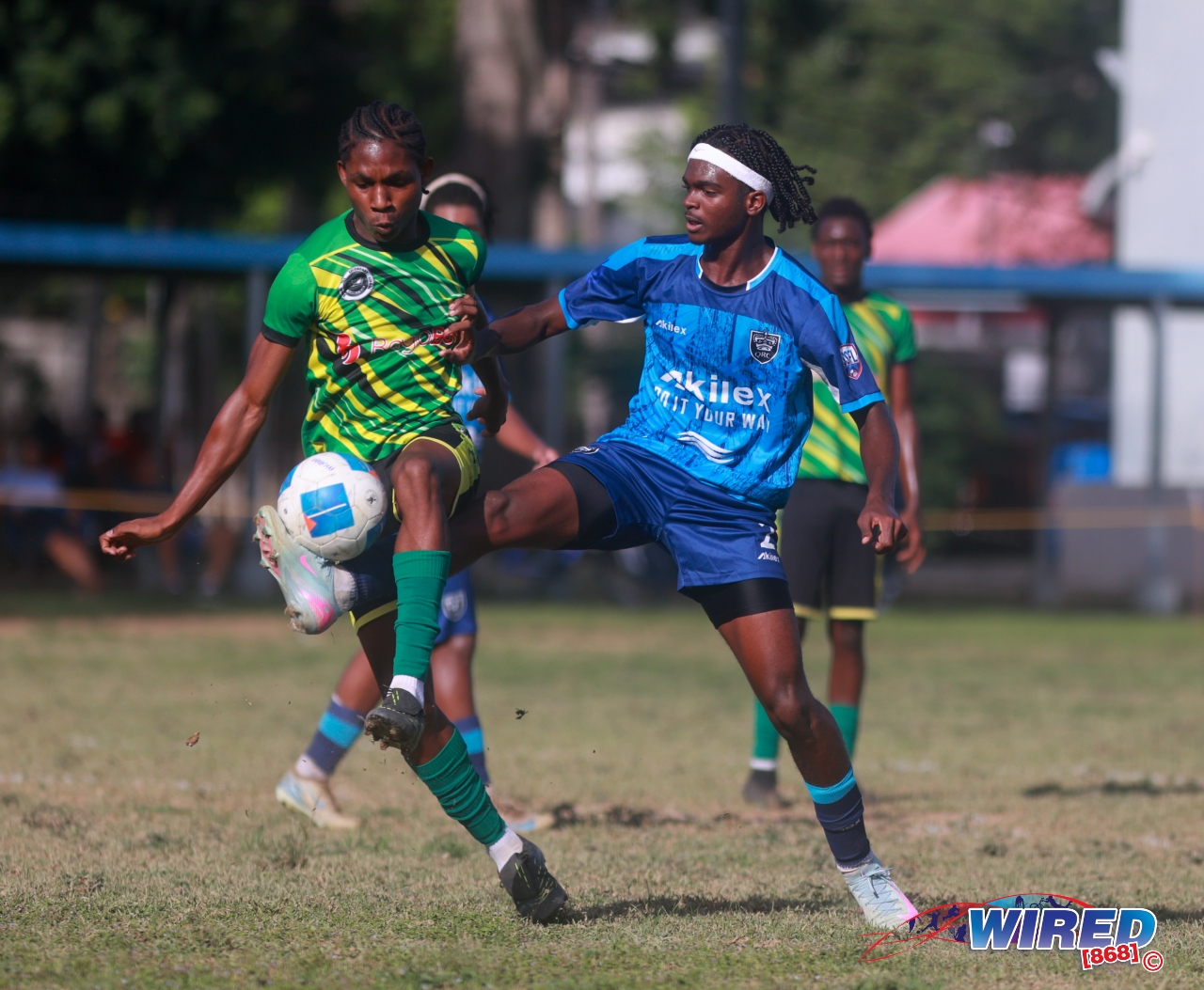
Photo: Nicholas Bhajan/ Wired868.
The only proposal that ensured those costs would not be incurred was the North Zone offer. Even then, it was a fairly narrow victory.
“We think that this is democracy,” said Taylor. “People at that meeting voiced very serious concerns and ours wasn’t the only proposal. I can’t say why some people abstained, but at the end of the day schools voted and this is what they said.
“[…] The objective was never to have a zone bring a proposal that hurts another zone. This was done to see how we can complete the league. If the members didn’t accept it, we would have agreed to play the normal way and see if we could complete the league.

Photo: Daniel Prentice/ Wired868.
“We felt this was the best option to finish the league and the majority of the members agreed. So, we will have a Trinidad winner, Tobago will have their winner, and then we will have a national winner.”
Wired868 reached out to Gonzales for comment on the new format as well as for details on the SSFL’s financial health and his body’s attempts to address the Tobago travel issue. However, he did not respond up to the time of publication.
Taylor said he could not blame the national executive for failing to raise the necessary money, since he did not know who they did or did not approach for finances.

Photo: Nicholas Bhajan/ Wired868.
He focused instead on fixing a problem that the executive could not, albeit temporarily.
“What I know for a fact is we have lost a major sponsor,” he said, “so funding and sponsorship of the league will be less than last year. So the objective for us was to save money, and we felt this was the best way to do that.”
|
Wired868 has provided readers with solid, independent journalism since 2012. If you appreciate our work, please contribute to our efforts. Support Independent Journalism |

St Mary’s College extended their lead atop the Secondary Schools Football League (SSFL) SporTT Premiership standings today with a 2-0 Read more
Signal Hill Secondary stuttered in Westmoorings today in the only surprise of the round, as the favourites generally did the Read more

Can 2026 give birth to a new goalscoring record in the Secondary Schools Football League (SSFL) Premiership Division? Fatima College Read more

What football ground has the best vibes? What venue do you have the most fun at during the SSFL season? Read more

“[…] What impresses me most is his drive and determination. When he loses possession, he doesn’t simply give up; he Read more

St Anthony’s College climbed out of the relegation zone for the first time in the 2026 SSFL SporTT Premiership Division Read more

Lasana Liburd is the managing director and chief editor at Wired868.com and a journalist with over 20 years experience at several Trinidad and Tobago and international publications including Play the Game, World Soccer, UK Guardian and the Trinidad Express.
