 Wired868 Wired868 for smart sport news and opinion
“[…] The Industrial Court wields quasi-constitutional powers in employment matters. It issues binding decisions affecting the rights of workers, unions, and employers. The notion that such a role can be filled by a recent Opposition MP, without even a law degree, ought to provoke national concern.
“Appointments to judicial office, particularly one as senior and constitutionally protected as the Industrial Court, must be based on merit, impartiality, and competence, not political allegiance or trade union seniority. Otherwise, we risk transforming the Industrial Court into a political retirement home rather than a neutral, rights-respecting adjudicative body…”
The following Letter to the Editor on the appointment of former UNC MP Rudranath Indarsingh to the post of Industrial Court judge was submitted to Wired868 by Mohan Ramcharan, a Birmingham-based lawyer:
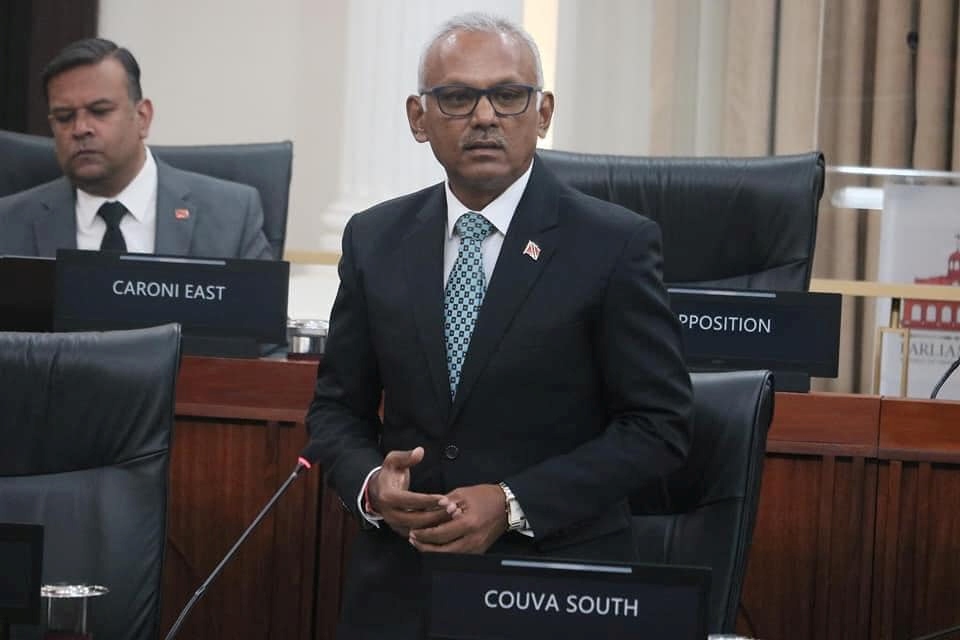
(Indarsingh served as Couva South MP from 2010 to 2025.)
The recent appointment of Mr Rudranath Indarsingh, a former government minister, member of Parliament, and active political figure, to the Industrial Court of Trinidad and Tobago demands urgent and critical scrutiny—not least because it raises serious questions about the independence, competence, and credibility of the judicial process in industrial relations.
Let us be clear: this is not merely a political concern; it is a matter that strikes at the heart of constitutional governance and the rule of law.

While the Industrial Relations Act, Chap. 88:01 permits the appointment of non-legally qualified individuals as members of the Industrial Court, this provision was never intended to serve as a back door for overtly political actors to secure judicial office without legal qualifications, training, or a period of political neutrality.
The Court wields quasi-constitutional powers in employment matters. It issues binding decisions affecting the rights of workers, unions, and employers. The notion that such a role can be filled by a recent Opposition MP, without even a law degree, ought to provoke national concern.
Appointments to judicial office, particularly one as senior and constitutionally protected as the Industrial Court, must be based on merit, impartiality, and competence, not political allegiance or trade union seniority. Otherwise, we risk transforming the Industrial Court into a political retirement home rather than a neutral, rights-respecting adjudicative body.

Furthermore, the absence of a cooling-off period between political service and judicial appointment breaches accepted international norms of judicial independence, as recognised by the Latimer House Principles, to which Trinidad and Tobago is committed.
Judicial credibility is not merely about lawful appointments—it is about perceived and actual impartiality.
I call upon the Judicial and Legal Service Commission, the Office of the President, and the Law Association of Trinidad and Tobago to account publicly for:
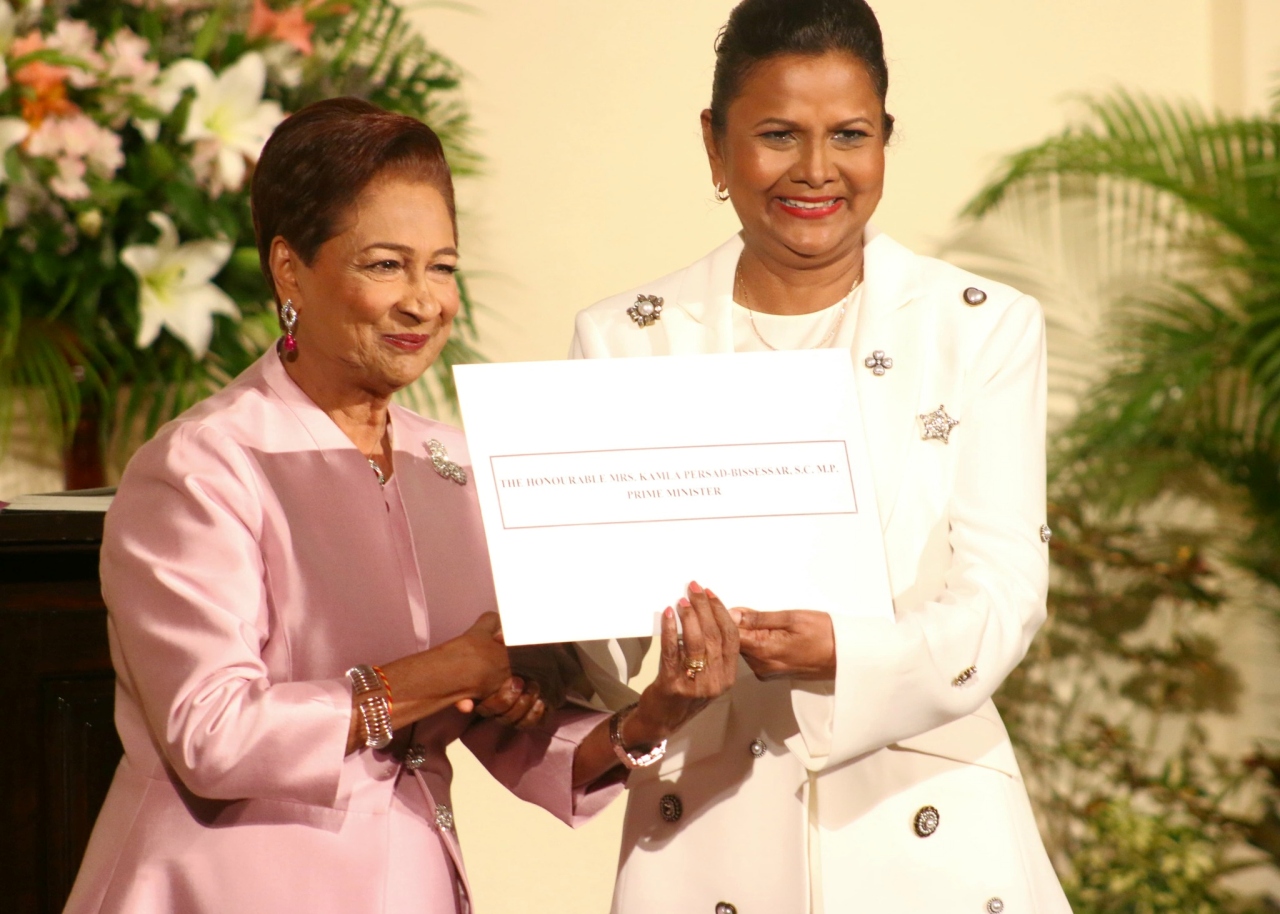
Photo: Sunil Lalla/ UNC.
- The criteria used to assess Mr Indarsingh’s suitability for judicial appointment;
- Whether any legal competence or judicial training was required or undertaken;
- Whether any period of political disengagement was observed before appointment;
- The process by which the appointment was made, and whether it was transparently advertised or competitively assessed.
In a country where judicial appointments must inspire confidence, not controversy, this decision risks undermining decades of effort to safeguard the independence and credibility of the judiciary—especially in a forum as vital as the Industrial Court.
The people of Trinidad and Tobago deserve judges, not party loyalists.
I am not a politician. I’m certainly not a senator. I am just a citizen who pays attention. So, when Read more

Today, Trinidad and Tobago, and indeed the Caribbean, bids farewell to a true cultural giant. With the passing of Dr Read more

“[…] It is nothing short of amazing how this current political directorate can go from conceptualization of 30 ‘police post’ Read more

Thirteen years have passed since health care workers, Lake Asphalt employees and other workers last received a salary adjustment. In Read more
“[…] To the ‘UNC family’ she offers the old tired hymn: lagoons, cane fields, salt and rice, ponds and springs—the Read more

“[…] The media release by the heads of judiciaries—that seemed to focus on the leak of the emails and breach Read more

Mohan Ramcharan is a Trinidadian living in England, an LLB (Hons) law graduate, systems thinking practitioner, and critical thinker. He is a product of two cultures and strives to be ethical and impartial in his thoughts and actions.

Based on The Industrial Relations Act, his appointment is legal.
The actions of the Third Reich (Nazis) in World War II were also legal.
It is deeply troubling that some have rushed to defend the recent appointment of Rudranath Indarsingh to the Industrial Court by arguing (1) that we should “judge him by his performance” on the bench, and (2) that a former PNM minister, Larry Achong, was appointed in the past without public outcry.
Both arguments are fatally flawed—and dangerously so.
First, the notion that judicial appointees should be evaluated only after taking office ignores the very standards that protect judicial independence and public confidence. The legal competence, impartiality, and perceived neutrality of a judge are not optional extras. They are entry-level requirements, not outcomes to be “monitored later”.
A judge must be independent at the moment of appointment, not merely promise to act neutrally once on the bench. Public confidence cannot be retrofitted. Judicial decisions shape lives and livelihoods in real time—especially in the Industrial Court, where workers and unions must trust the process without fear of political contamination.
Second, the attempt to excuse Mr Indarsingh’s appointment by pointing to that of Larry Achong is a textbook red herring. If a mistake was made before, that does not justify repetition. It merely highlights a pattern of politicisation that should concern all citizens. Judicial office is not a political consolation prize to be awarded to party loyalists of any stripe—UNC or PNM.
The issue is not which party the appointee came from, but whether any former politician—recently active, unqualified in law, and lacking a period of political disengagement—should be installed in a role that requires constitutional impartiality and legal reasoning.
The Industrial Relations Act may permit lay appointments, but lawful does not mean wise, and procedural compliance does not equal constitutional legitimacy.
Judicial appointments must be judged by their effect on the rule of law, not by the party colour of the appointee. The argument that “it happened before” is not a defence. It is a warning.
How come no issue was raise when former PMM minister. Larry Achong was appointed an industrial court judge
How is that relevant?