 Wired868 Wired868 for smart sport news and opinion
Before international matches begin, it has become customary to play the national anthems of the teams. It wasn’t always so. In fact, that helped the West Indies cricket team avoid the dilemma of finding a song that represented its constituents fairly.
Ours was (and still is) the only multi-national Test team. It is fitting that it now has a special cricket anthem, adapted from Rally Round the West Indies, by David Rudder.
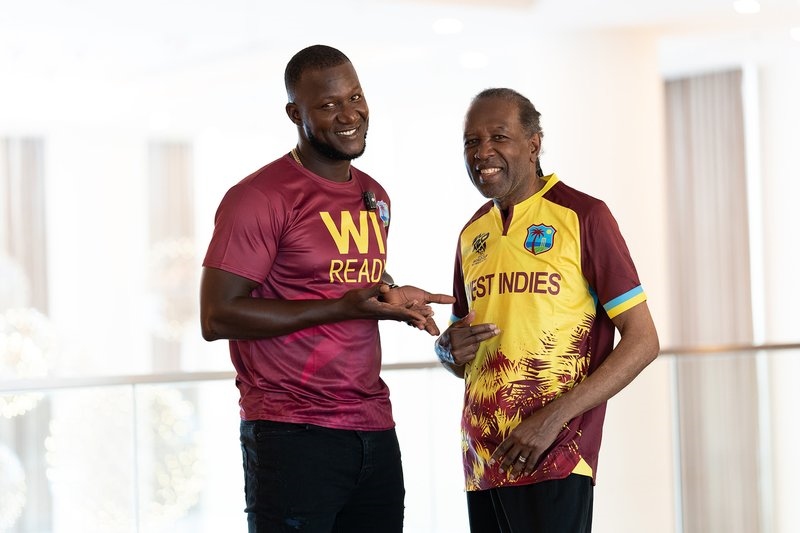
Rudder’s timeless hit Rally Around The West Indies is the official West Indies cricket anthem.
Photo CWI Media.
You didn’t have to be a cricket fan to have succumbed to the trenchant poignancy of those lyrics. Released in 1987, nearly 40 years ago, it was formally adopted as the West Indian cricket anthem in 1999—when the ritual became the norm.
With an adjustment to the lyrics and music, it glided toward a slower, military-style drum roll that lent an additional air of gravitas.

If you look at any form of cricket where the anthems are played, you must surely be moved by this particular rendition. Solemn and stirring, it speaks directly to the West Indian condition, inside and outside of the game.
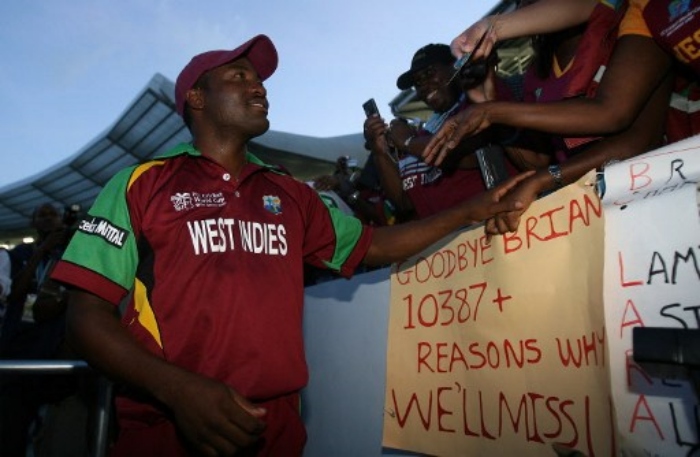
Lara’s glittering international career ended in a cruel run out and an unfortunate one-wicket defeat to England.
Copyright AFP 2017/ Prakash Singh.
It makes you feel that you belong to a grand civilisation that has fought against injustice and survived. It invokes a sense of identity and community, and bestows a feeling of ownership to this West Indian thing that continues to hold us in its bedraggled bosom.
In an interview with the Guardian (UK) in 2020, Rudder told Ali Martin that the song came about because of the way Caribbean people were complaining about the decline in performance.
“People who had become far too accustomed to winning all the time began grumbling. I was listening to all the things being said, their mouths running off, and thought: ‘That’s enough! I’m going to write a song to answer all that.’ And I just wrote what I felt inside.
“I was also trying to capture a certain point in time, to tell a story about the moment. But at the same time I wanted to recognise that there is tomorrow. So the song reflects the mood of the day but also calls on people to rally and protect the future.”
His music is rooted in reality—he does not shy away from tabling our struggles, but there is an abiding air of optimism and fealty.
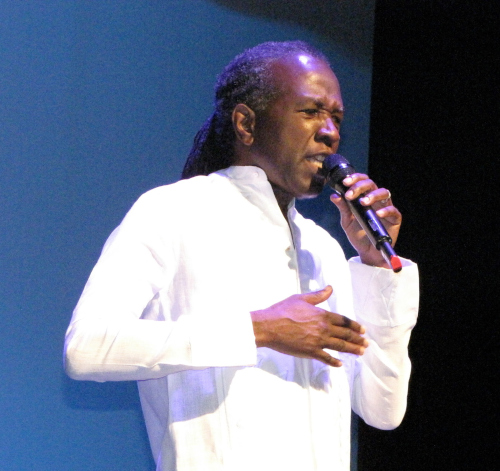
“No noble thoughts brought us here to this region, but through it all we have risen above.” That invitation to recall our past in the service of the future is Rudder’s signature on the compositions across his formidable realm.
But today, my gaze is on the way his music has influenced the way we feel about cricket.
I have a theory. (I always have a theory, as my friend Rahul used to tease me.) Off the cricket field, Rudder has done more to sustain West Indies cricket spirits than anyone else. If he did not remind us of our heritage, we would not keep any kind of faith in these dismal times. He has kept us alive and afloat.

West Indies won the match by 7 wickets, while Pakistan led the series 2-1.
Copyright: AFP Photo/ Jewel Samad.
About 20 years ago, he released a CD called The Cricket Chronicles, when the West Indies hosted the ICC World Cup in 2007. I did not know of its existence until a few years ago. I had heard some of the songs before, but did not realise they were part of a collection of 14 tracks.
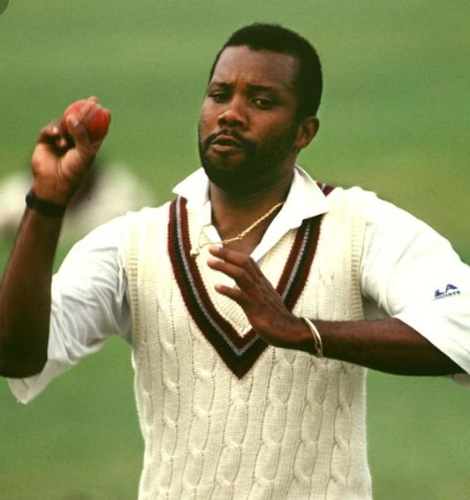
This included both versions of Rally, and others like Legacy, Here Come the West Indies, which opens with Shadow (“I am not a bad boy, but I cannot help it”) and the haunting one in tribute to the late fast bowler, Malcolm Marshall, Smiling Eyes of Steel (“One more disciple has left the yard, my people, for a brighter day. Farewell, mighty warrior,”).
Then there is Bankie’s Son about Omari Banks from Anguilla, the musician son of Clement, the reggae singer, known as Bankie Banx.
(When I first wrote the piece, I thought he was talking about Brian Lara because of the reference to the bemused Australians, I should have followed my instinct to contact Rudder to check. It is one of the times when you kick yourself. Thanks to Gary Hector, who pointed out the mistake.)
There is the exquisitely profound Champions, which begins: “There is a time in our lives when a country forgets its woes and lives and lives.”
Telling us of the way our heroes can help us transcend the mundane, he says: “Champions take our dreams and make us all immortal.” It is a far cry in depth and meaning from the one of the same name most people would know.
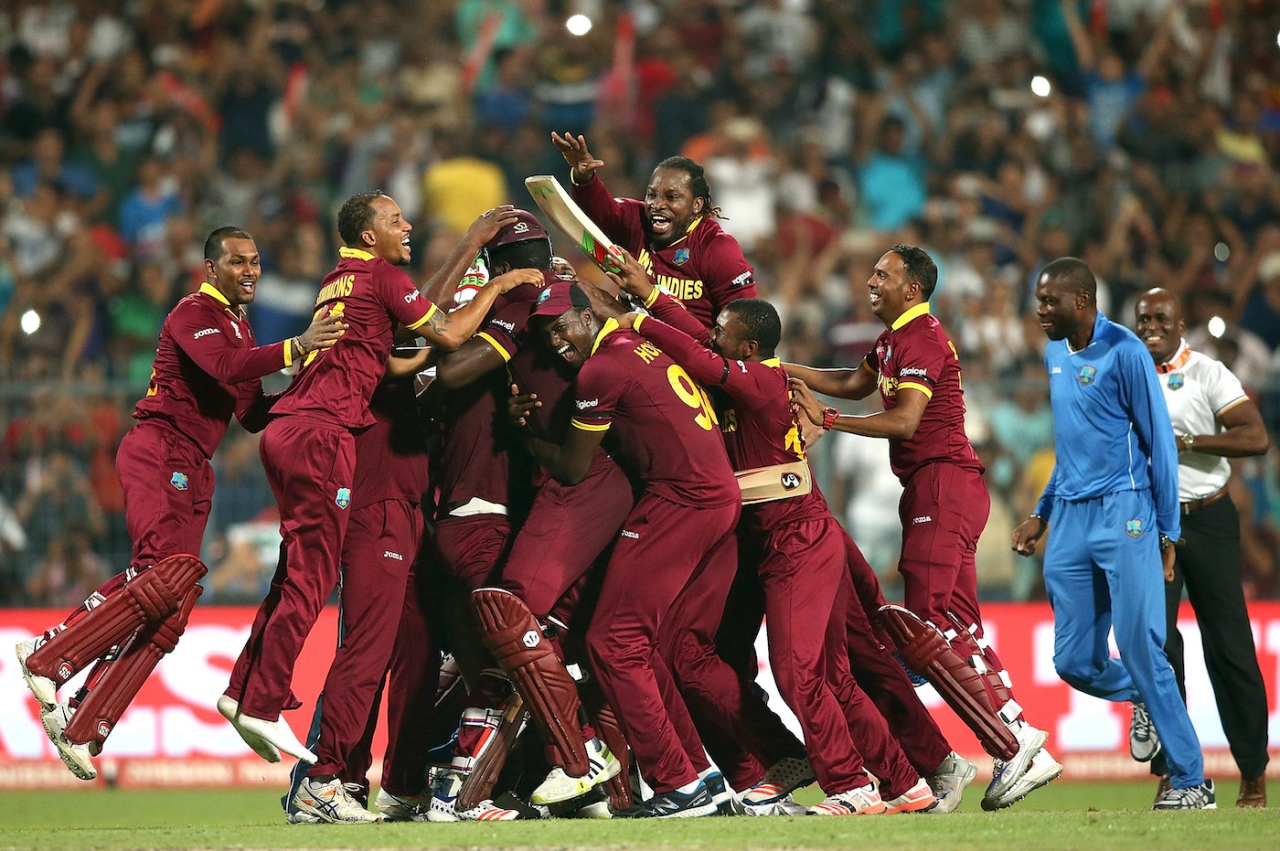
Photo: Jan Kruger-IDI/ IDI via Getty Images.
The first track is Lovely Day, an energetic celebration of life: “I’m living in the livingness of life,” he says (I love the idea of this livingness), acknowledging that although things can be hard, he is determined to find joy.
“Another murderous day on the island, but it’s not the end.”
All you need to feel the West Indian call is a cursory look at the titles, It’s a West Indian Thing (Bounce) which declares that “it’s a communion, the energy, the vibe.”
Lifted comes in two versions, one that he describes as rockaiso. There’s Caribbean Party and Knock Dem Down. It ends with (Cricket) It’s Over a song that invokes for me Kitchener’s The Carnival is Over from 1979.

Photo: Nicholas Bhajan/ Wired868.
All of it speaks audibly to cricket, but as in Rudder’s music, the philosophical outlook flows to the life we live in our little crannies of the world. In the way he embraces us as a West Indian community, he has given us that feeling of belonging to something intangible but real.
In a divided world, where we are ourselves culpable for fostering divisiveness and ugliness, he has brought messages that wash away the unlovely. For more than 40 years he has been an evangelist, urging us to find our better selves and to give thanks and praises for what we have received.
From the world of cricket and beyond, I feel blessed for the privilege of his contributions. He has provided a soundtrack that lifts us.

A friend asked why I love the CPL. Truth be told, the cricket itself is not the primary attraction, although Read more
On 14 July, Spain offered a sublime display of football savoir faire to the world and knocked the French out Read more
Cricket fans will be allowed free entry to Kensington Oval for the fourth and fifth One-Day Internationals between the West Read more
West Indians, were you watching the second Kolkata Knight Riders and Lucknow Super Giants thriller? With two ex-Maroon Men, Sunil Read more

There aren’t too many cricketing things that give my morning walk partner Bobby more pleasure than a West Indies victory. Read more

If West Indies prepare just as well for their next two Super Eights matches—and if their luck holds!—the 2026 T20 Read more

Vaneisa Baksh is a columnist with the Trinidad Express, an editor and a cricket historian. She is the author of a biography of Sir Frank Worrell.