 Wired868 Wired868 for smart sport news and opinion
Hard to imagine that Sade is 67.
For decades, she wooed the world with her mellifluous voice and songs about passion. I suspect many people believed themselves to be madly in love at her behest. How easy it is to float away on the cloud of Kiss of Life!

Listening to her music the other day, I was intrigued by the way she gave the concept of love, romantic love, such absolute control over human emotions.
I stood in my shoes and I wondered about this universal cauldron. Is there such a thing as unconditional love? And if so, is it an ideal state?
The concept is often applied to parenting. Offspring are generally accepted as its natural recipients, regardless of character and behaviour.
We have probably witnessed it in situations where a child seems to be running loose without boundaries; when teen years bring more than the usual scuffling, and adulthood is a constant stream of angst and disappointment.

Whereas many would throw up their hands in despair, parents can continue to absorb the blows and persevere lovingly. It doesn’t necessarily follow that a parent continuing to demonstrate love is one who pampers and enables a sense of entitlement.
Someone pointed out the common words uttered by mothers about their criminal sons, “he was a good boy,” as evidence of the way we can bypass character in favour of love.
We had a long talk about this complex relationship between parents and children. How many aspects there are!
This free love that is expected to automatically emanate because you are a parent, cannot possibly exist like some invisible umbilical cord that remains intact for a lifetime. It must become frayed at some point. I suppose that it is when it is most frayed that the immutability is tested.
What happens when a parent is not inclined to this kind of allegiance?
My friend was reflecting that she did not think her mother’s love was without conditions. Her parents had separated when she was but a child. Time spent with her father was met with hostility, and accusations of loving him more than her, regardless of what she had done, the sacrifices she had made.
My friend is in her fifties, and those wounds, though buried, exist. I can relate to that. It felt like being forced to make choices, this parent or that, and sometimes, when you had no say in the matter, when you were obliged to spend time with the “absent” father, you were made to feel guilty and disloyal.
And what about the parents who can’t even show love, with or without conditions? Hallmark and Facebook and other such manipulators, encourage us to believe that family is the most important thing—that we must revere the people whose amorous congress brought us to the planet.
Most people try to rise to the challenge of parenthood. Often, they believe it is enough to meet the basic needs of food and shelter. They feel no call to nurture with affection, with respect for the child as a human being entitled to care.
You know how many children are exposed daily to humiliations and authority displayed by licks and threats? It stems from the environments in which these parents have themselves been brought up. Everything comes around, doesn’t it?
There is the aspect of unconditional love expected from parent to child, and the other side, that of the child to the parent. What you go do? That is your father, or that is your mother.
Drilled into young, suffering heads is the notion that no matter the injustice and unkindness you face, you have a duty to show respect and obedience to the occupants of the role of parent.
We are conditioned to believe that it is the ultimate sin to question the divinity of those office-holders. It might take years of misery and inner rage before a person can find the strength to say: “No more.”
I have often said, because I believe it absolutely, that your family is not necessarily the people whose bloodline you share, but those who care about you.
As we roamed about our conversation, we agreed that siblings can share unconditional love (until a will is read!), although that is not a guarantee.
But the love that seemed least likely to be unconditional was the romantic love, so rapturously described by Sade. What might begin as romance can alter along the bumpy roads of life. They say the two become one, but that is not quite true.
As families grow, two become the farthest thing from one. Children arrive. Roles change. Responsibilities replace carefree days of spontaneity. Bills roll in regularly. Sickness, injury, schooling, household management, and a host of other things join the family.

With every stage, you love your partner differently. Sometimes that love disappears, replaced by a kind of weariness and a sense of disappointment with the way things turned out.
If there are breaches in trust, feelings that your partner is not investing as much as you are, things will inevitably start to crumble. Such a far cry from the idyll you once saw in each other’s eyes.
A friend’s take is that regardless of what people think, they are in it because of what it gives them, he said, opining that it’s not unconditional, this thing called love. It lasts until the mutual benefits disappear.
What do you think?
No matter how thrifty I am, it is a challenge to manage the high cost of living. Working from home Read more
When I reach into the freezer for something from my hoard of cooked dishes, I am often reminded of the Read more
The school holidays have arrived. Children wake later. Shoes disappear under beds. Lunch kits are forgotten for a while. Grandparents Read more
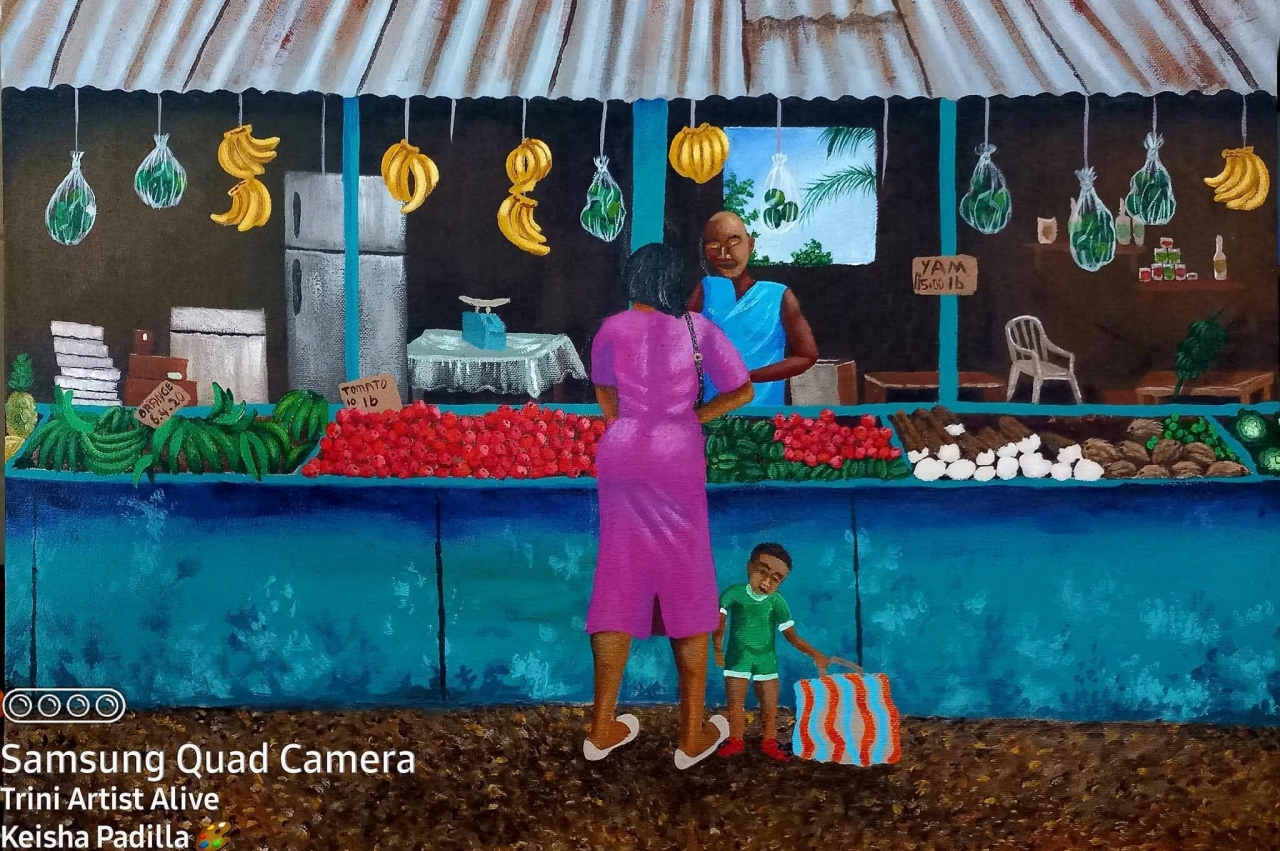
She wasn’t one of my regular produce vendors—her stall was just off my usual tracks and her array of vegetables Read more

Ask someone for help to resolve an issue and more often than not they will tell you that YouTube is Read more
I was a fair way into my column when the call came. It was from one of the sharpest, most Read more
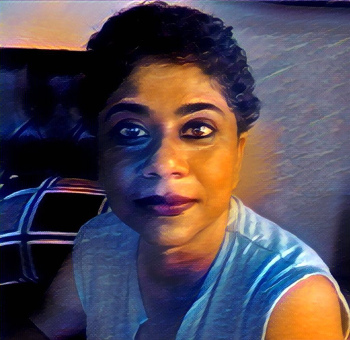
Vaneisa Baksh is a columnist with the Trinidad Express, an editor and a cricket historian. She is the author of a biography of Sir Frank Worrell.

“If I’m laden at all, then I’m laden with sadness that everyone’s heart isn’t filled with the gladness of love for one another…”