 Wired868 Wired868 for smart sport news and opinion
“[…] Critics may dismiss the [Home Invasion] Bill as mere ‘political comfort food’. Its purpose is practical: to bridge gaps between legal theory and public understanding.
“This places justice not as an abstract theory but a lived reality focused on offenders causing death during violent crimes like home invasion [and can] strengthen protections for victims and defenders…”
The following Letter to the Editor, which rebuts the commentary of Mohan Ramcharan on the Home Invasion Bill, was submitted to Wired868 by Ula Nathai-Lutchman, an international barrister at law with over 20 years of experience in international criminal, human rights, and administrative law across the Commonwealth, Caribbean & international legal frameworks:

Mohan Ramcharan’s recent commentary (30 Nov, 2025) on Trinidad and Tobago’s proposed Home Invasion Bill omits a fundamental and well-established legal fact.
Specifically, T&T’s legal system already includes a statutory felony murder provision. To claim that there is “no felony murder rule in T&T homicide law generally” is factually incorrect and risks misleading the public discourse on this critical issue.
To educate the public “on the law, not the limelight”—as Mr Ramcharan contends (as a legal adviser)—one must start with a complete account of the law and accurate presentation of legal principles. This must include a clear explanation of Section 2A(1) of the Criminal Law Act.
In 1997, Parliament enacted Section 2A(1), which explicitly revived the felony murder principle as a statutory offence. While the old common law ‘felony murder rule’ was abolished, Parliament replaced it with Section 2A(1), a modern, distinct statutory provision.

Copyright: Office of the Parliament 2024.
This law states that if someone dies during a violent crime like robbery, burglary, or kidnapping, even accidentally, those responsible can be charged with murder, even without proving intent to kill.
This provision was established precisely to address the abolition of the outdated common law felony murder rule (which was based on archaic British legal categories in 1979). Section 2A(1) is not an imported American concept but a locally crafted legal measure designed to ensure accountability for unintended deaths occurring during the commission of violent crimes.
In April 2024, the Court of Appeal of Trinidad and Tobago, in the case of Nigel Charles and Marlon Hope, affirmed the constitutional validity of Section 2A(1) of the Criminal Law legislation.

It upheld Section 2A(1) as a valid law, ensuring it can be used to charge criminals with murder even if they did not intend to kill, and must accordingly be presented to juries as a valid alternative to common law murder.
This provision functions as a distinct and legitimate criminal charge operating independently of legal frameworks in the United States or the United Kingdom.
This ruling establishes that courts may find defendants guilty of murder without requiring proof of intent to kill, a legal principle that has stood for more than a quarter of a century.
The Court clarified that although the traditional common law felony murder rule was abolished in 1979, Parliament effectively reinstated the underlying rationale through Section 2A(1) in 1997.

Photo: Office of the Parliament 2025.
Mr Ramcharan argues that Trinidad and Tobago lacks such a specific legal rule, depending instead on outdated common law principles and precedents from the United Kingdom. This position, however, is materially misleading and overlooks Section 2A(1) and the 2024 Court of Appeal ruling, both of which confirm that the law has evolved.
Far from being a relic of the past, the statute represents a deliberate choice by Parliament to address accountability gaps in cases of violent crime.
The proposed Home Invasion Bill, 2025 while formally introducing a new criminal category, does not substantively alter the core legal framework governing homicide.

This legislative proposal outlines three core objectives: first, to formally criminalise and establish penalties for home invasion; second, to explicitly eliminate any duty to retreat when an individual is defending themselves or their property during such an intrusion; and third, to legally authorise the use of necessary force, including lethal force, within one’s residence for the purpose of protection.
These provisions are intended to operate in conjunction with existing statutes, not to overhaul established principles governing justifiable homicide or self-defence law.
Critics may dismiss the Bill as mere “political comfort food”. Its purpose is practical: to bridge gaps between legal theory and public understanding. This places justice not as an abstract theory but a lived reality focused on offenders causing death during violent crimes like home invasion.

Photo: Office of the President.
The law evolves, and Parliament chose in 1997, and now again, to strengthen protections for victims and defenders.
On 2 December 2025, the Attorney General confirmed in the Senate that the proposed Home Invasion Bill explicitly incorporates the felony murder rule. He stated that while the rule is “derived from English common law”, it has been tailored specifically to deter home invasions by holding all participants liable for deaths that occur during such crimes.
This approach aligns with Section 2A(1) of the Criminal Law Act, which already permits murder charges for deaths resulting from violent crimes such as robbery or burglary, regardless of whether there was intent to kill.
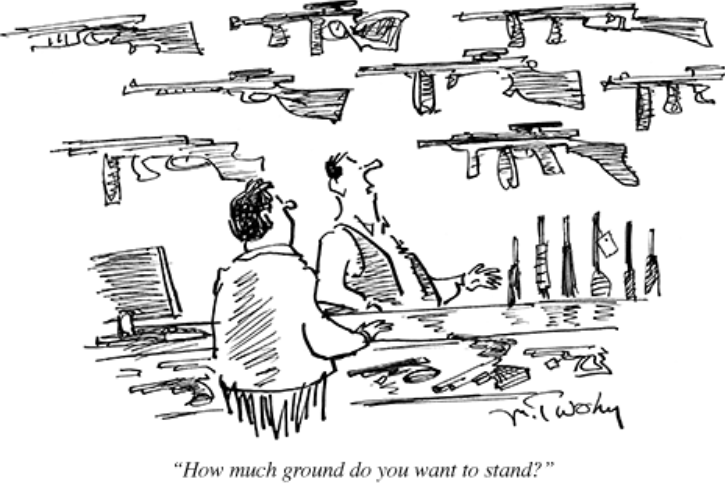
The Attorney General’s emphasis on collective responsibility for home invaders underscores that the Bill does not import a foreign legal concept. Instead, it extends an existing statutory principle rooted in Parliament’s 1997 reforms, which have been affirmed by the courts.
By building upon this domestic legal foundation, the proposed Home Invasion Bill, 2025 represents a coherent development of existing law, rather than an instance of legal overreach or the importation of external doctrine.

Once again, the calypso fraternity and the nation of Trinidad and Tobago have been plunged into mourning with the passing Read more

I am not a politician. I’m certainly not a senator. I am just a citizen who pays attention. So, when Read more

Today, Trinidad and Tobago, and indeed the Caribbean, bids farewell to a true cultural giant. With the passing of Dr Read more

“[…] It is nothing short of amazing how this current political directorate can go from conceptualization of 30 ‘police post’ Read more

Thirteen years have passed since health care workers, Lake Asphalt employees and other workers last received a salary adjustment. In Read more

“[…] To the ‘UNC family’ she offers the old tired hymn: lagoons, cane fields, salt and rice, ponds and springs—the Read more

Want to share your thoughts with Wired868? Email us at editor@wired868.com.
Please keep your letter between 300 to 600 words and be sure to read it over first for typos and punctuation.
We don’t publish anonymously unless there is a good reason, such as an obvious threat of harassment or job loss.

You are mistaken on the law. Period. Courts favour counsel who demonstrate forthrightness, candour, and professional maturity by conceding points when the law is against them – whether that counsel/lawyer is an Attorney, a Barrister with equivalent qualifications called to the bar, or a Solicitor with rights of audience. Therefore, I believe you do not practice law or are a lawyer. This view is reinforced by your letter submitted as a legal adviser, which conspicuously omits standard details such as your specialty, jurisdiction, or years of experience – information expected from any credible legal professional.
Your comment does not engage with the law at all.
You identify no statutory error, cite no case, and point to no doctrinal flaw. Instead, you rely entirely on status, seniority, and speculation about my professional background. That is not legal reasoning; it is argument from authority combined with ad hominem.
In law, propositions stand or fall on evidence and analysis, not on who makes them. Courts do not ask whether a commentator has rights of audience or how many years they have been called. They ask whether the legal proposition is correct.
I expressly acknowledged the existence and scope of section 2A(1) of the Criminal Law Act and distinguished it from a general felony-murder doctrine. That distinction is orthodox and accurate. You have not shown otherwise.
Saying “you are mistaken, period” without identifying what is wrong or why it is wrong is assertion, not argument. It shifts the burden of proof and avoids the substance. That may work rhetorically, but it does not survive legal scrutiny.
Linear thinking focuses on isolated points. Legal reasoning requires structure, distinction, and context. Taking one sentence in isolation and inflating it into a claim I did not make is not candour; it is mischaracterisation.
If you believe a specific legal proposition in my analysis is incorrect, identify it and support your position with authority. Until then, questioning my credentials is irrelevant and does nothing to advance the law or the public’s understanding of it.
Your poor reasoning skills reminded me of Dietrich Bonhoeffer and his seminal observations.
Someday, but I suspect not too soon, Ula might make a coherent legal argument worthy of her opinion of her ability residing in her head.