 Wired868 Wired868 for smart sport news and opinion
(Part four.) English abundance.
Having established that the first limited-over cricket tournament was played in India in 1951, it was at the home of the inventors of the game, England, that the variation of the traditional format first took root more than a decade later, and eventually earned wider appeal beyond its own boundaries.

Copyright: Getty Images.
So, as the countdown continues with 47 days to go to the 50th anniversary of the West Indies’ triumph at Lord’s in the 1975 World Cup final, our journey along the cricketing timeline goes back 13 years from that celebratory moment to a modest start for the limited-over game in England.
For it was in 1962 that Mike Turner, a young, ambitious secretary of Leicestershire County Cricket Club, recognised an opportunity to introduce a limited-over tournament involving three other neighbouring county teams: Nottinghamshire, Northamptonshire and Derbyshire.

“I saw some gaps in the schedule and phoned around,” said Turner in a 2011 interview with Martin Williamson on the ESPNCricinfo website. “My opposite numbers jumped at the chance.
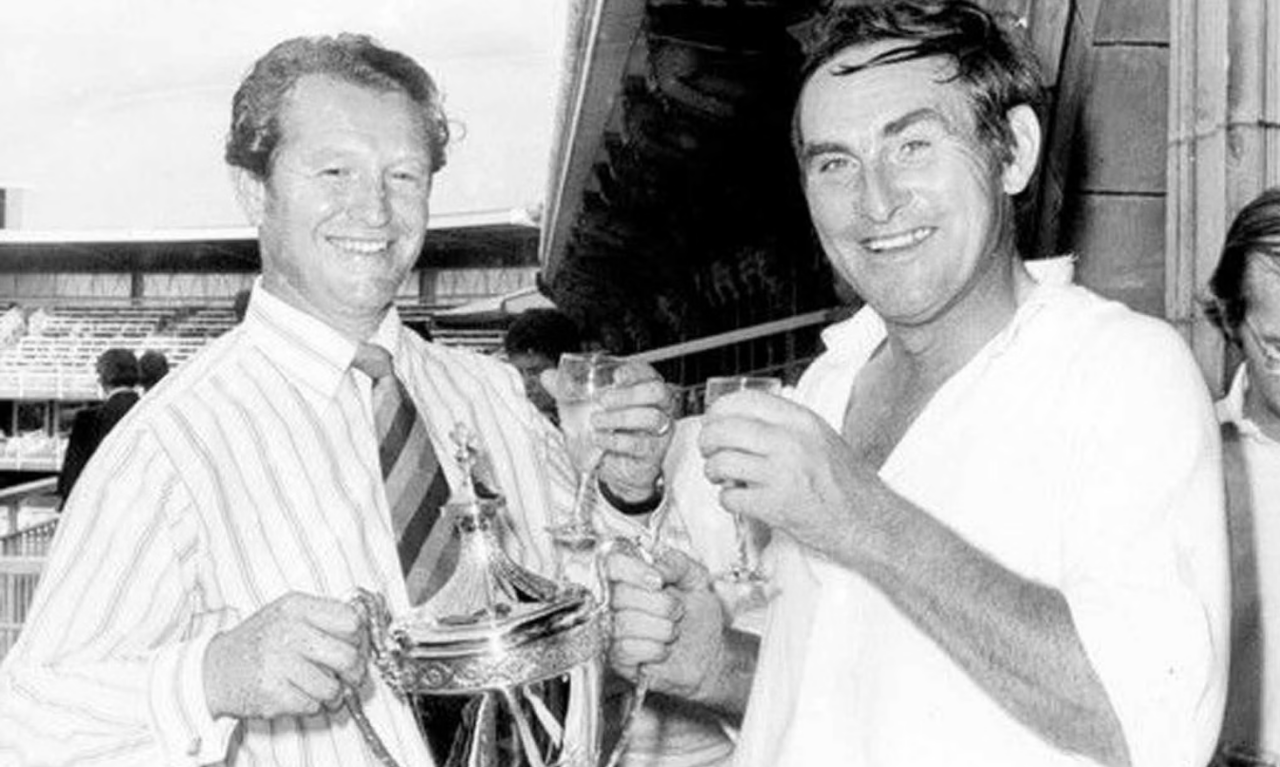
(Copyright Leicester Mercury.)
“By the early 1960s, we had reached the end of cricket’s post-War boom. The crowds had declined and there was a need to make the game more viable. These were parlous times and there were arguments about which direction the game should take.”
This competition, played in bitterly cold conditions, was known as the Midlands Knockout Cup with Northamptonshire completing a five-wicket win over hosts Leicestershire in the final of what was a 65 overs-per-side event.
Not surprisingly, given the traditional moorings of the game, there many vocal critics to the innovation. But there were backers too, including the influential Cricketer magazine, whose writer, Leslie Smith observed that: “cricket’s FA Cup should be a real money-spinner…the ability to start and finish matches inside a single day must have an appeal to certain sections of the British public.”
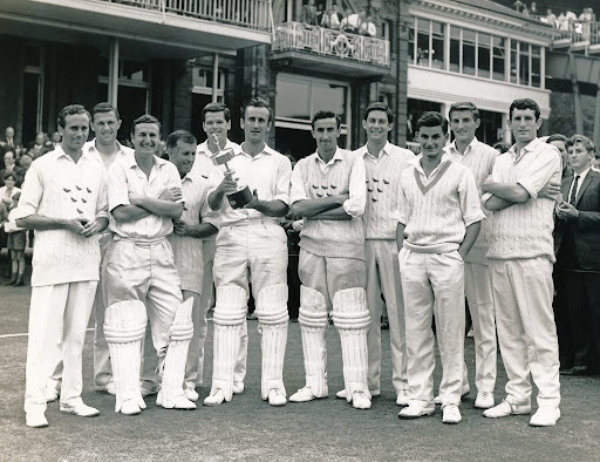
The 1963 Gillette Cup was the first limited-over tournament to ever be played in England.
Copyright: Sussex Cricket Museum.
English cricket’s powerbrokers, awakened to that reality, went for it full blast the very next year, 1963, with the advent of what became known as the Gillette Cup featuring all 17 first-class counties in a tournament spread across the four months of the English cricket summer.
It culminated with England captain Ted Dexter lifting the trophy after his Sussex team held off Worcestershire by 14 runs in a final played before a full house of 25,000 at Lord’s.
Such was the appetite for limited-over cricket that two more competitions, the John Player League and Benson and Hedges Cup, were crammed into the scheduled in the coming years.
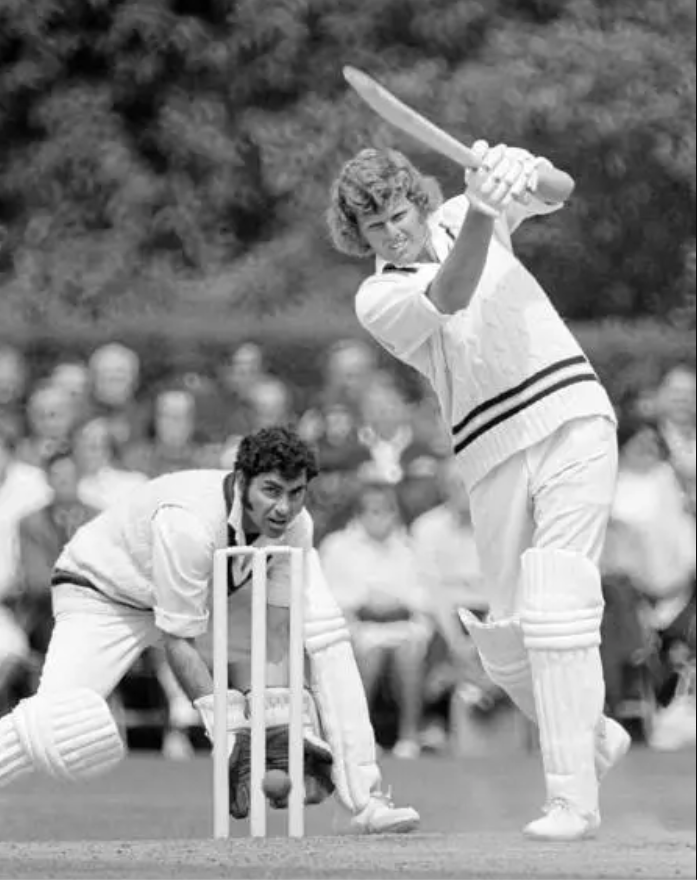
England’s first-class County Championship had crammed three limited-over competitions – Gillette Cup, Benson and Hedges Cup and John Player League – into its domestic season by then.
From that point, it was only a matter of time before the format went international, although that very first ODI, the topic of our next edition, was purely accidental.
(Part 51.) Lloyd’s crowning glory. West Indies cricket has enjoyed many moments of celebration, but few match lifting the trophy Read more
(Part 50.) Judge by numbers. After exactly seven weeks of counting down, here we are: one day to go to Read more
(Part 49.) Gary Gilmour’s day. While the West Indies were breezing past New Zealand at The Oval in London in Read more
(Part 48.) West Indies too good. With just three days to go to the 50th anniversary of the West Indies Read more
(Part 47.) When Guyana hailed its conquering hero It has taken the imminent occasion of the 50th anniversary of the Read more

(Part 46.) Getting inside the numbers. At the last men’s 50-overs-per-side Cricket World Cup in 2023, Australia’s vanquishing of previously Read more

Fazeer Mohammed is a journalist/broadcaster with almost 40 years’ experience across a range of media.
His interest in cricket, and particularly its history, started at home via his father’s small collection of autobiographies and magazines, offering perspectives and context which have informed his commentary and analysis on contemporary issues in the game.
