 Wired868 Wired868 for smart sport news and opinion
For more than a decade, I have consistently taken the position that so called stakeholder consultations, pretty ministerial speeches and public relations announcements will contribute little to improving the lives of our disadvantaged young people—many of whom are easily lured into violent crime as a way of life.
One reason why these broad brush approaches are unproductive is that they are conducted on the basis of a rigid status quo, such as the almost universally condemned, unreformed education system. It is a system which is disproportionately based on passing exams and routinely breeds anti-social behaviour.

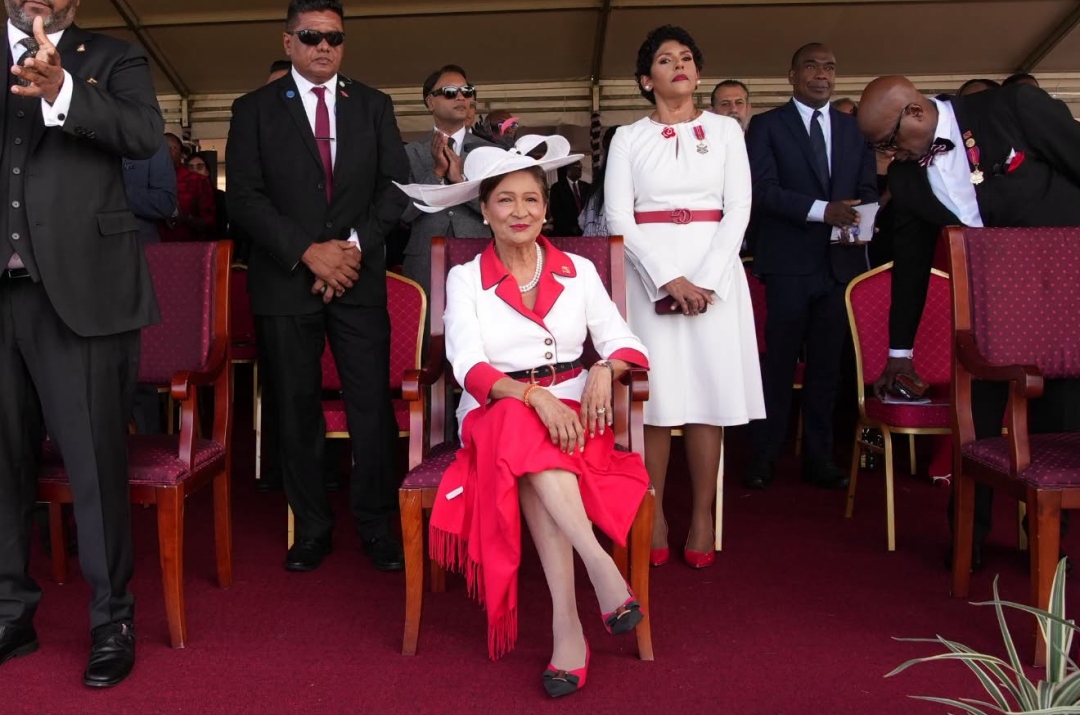
(Courtesy Office of the President)
I and many others have long advocated for an education system that equips children—within their varying individual capabilities—to face the adult world, with developing life skills and genuine hope that they have a reasonable chance of finding some productive occupation.
For example, on 5 January 2019, the group Resett1962 set out 11 goals in the Trinidad Express for ‘a properly designed and operative education system in Trinidad and Tobago’. These goals were not referable to passing exams; they included items such as ‘help to build resilience to the enticements of negative and ant-social sub-cultures’.
President Paula Mae Weekes struck a similar note—for which she received some knee jerk criticism—when she said that a significant number of tertiary level students had a sense of entitlement to big rewards for minimum effort. She added pungently that ‘it was clear that these failings of character had been carried over from their earlier interaction with the education system’.
I add and repeat that these failings are first and foremost the result of the majority of leaders in this society and now so-called influencers, leading us to believe that the measure of personal success is exclusively the acquisition or display of material wealth. That’s why Carnival band leaders can sell so many ‘frontline’ costumes.
One feature of such visionless leadership is insufficient attention to the horrible underlying social conditions into which many children are born. Governments merely hook disadvantaged communities into dependency on them and into forced partisan political preference.

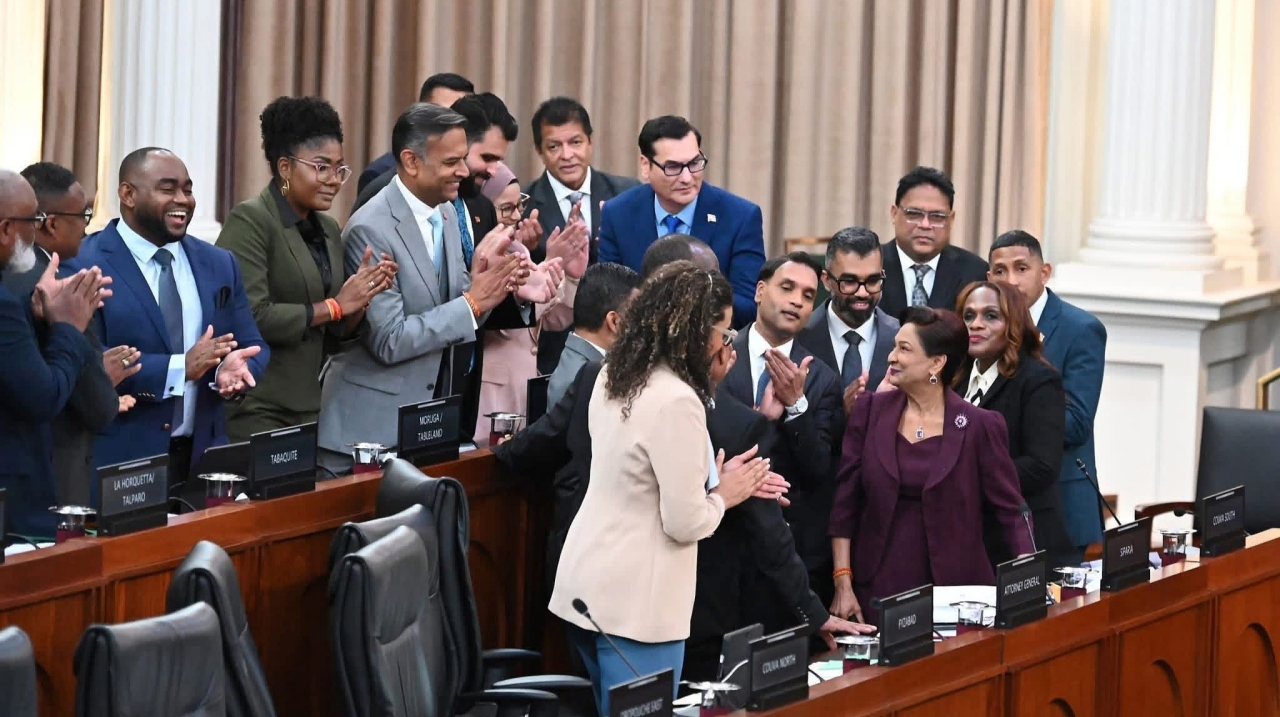
(Courtesy News.Gov.TT)
While these conditions go without sustainable amelioration, the continuously growing underclass look on at the frontlines of wealth and corruption with resentment and alienation.
In the absence of a coherent social development policy, what has invariably interested me are programmes which encourage the participation of our neglected young people in activities likely to expand their horizons, improve their sense of self worth and foster an ability to make their own way in the world—as free as possible from the crippling effects of the status quo, including the dependency syndrome. Such dependency does not enable empowerment.
I learned recently of a little dedicated group who, for the past two years, have run a mentorship programme for 12 girls from the St Jude’s Home. The spearhead of the group is the NiNa Foundation. The programme comprises a seven-day residential mentorship camp followed by a monthly mentorship programme, which involves motivational activities intended to empower the girls to create and manage their own business activities.
These activities go in the desirable direction of resetting a path of resilience and self starting. It is to their theme—enabling empowerment without dependency—that I address this column.
The survival of these girls and many youngsters of both genders depends on building their capacity to transition out from institutional care when they reach the age limit. There is urgent need for the use of a property to be used as a transition house for those who have no shelter while they begin to stand on their own.

(Courtesy Allan V Crane/Wired868)
I was fortunate to receive an invitation to attend a fundraiser on Sunday last at which the ‘graduating’ girls were present. The organisers are typical of the many persons trying to keep this place from falling apart completely and should be wholeheartedly supported on merit—not contact—and without the attachment of political strings.
Many youngsters are in a crisis to find shelter from harm. We cannot rely on government ministries, which ‘allocate’ resources but do not provide them for holistic social development on a timely or structured basis.
I am not a politician. I’m certainly not a senator. I am just a citizen who pays attention. So, when Read more
There is an old adage that says: “a wise man learns from the mistakes of others, while a fool learns Read more
“[…] The media release by the heads of judiciaries—that seemed to focus on the leak of the emails and breach Read more
“[…] Neither African nor Indian communities benefit from this… In cases where division arises unintentionally, accountability must fall on leaders, Read more

A few years ago, Michal Teja captured hearts and titles with his hit song, DNA. At the time, I was Read more
Three thousand dollars a month. That’s the minimum National Insurance pension a citizen receives after a lifetime of work. It’s Read more
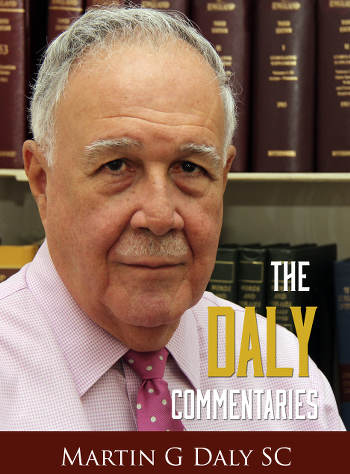
Martin G Daly SC is a prominent attorney-at-law. He is a former Independent Senator and past president of the Law Association of Trinidad and Tobago.
He is chairman of the Pat Bishop Foundation and a steelpan music enthusiast.
“There is urgent need for the use of a property to be used as a transition house for those who have no shelter while they begin to stand on their own.” These are some of the unseen hurdles that these kids have to face. Some of them seem to intuitively chart their course, as if they have recognized early on that they will soon have to make their own way. But others require more oversight. From the homes I have visited it seems to have much to do with how they are managed that makes the difference. There are some where the caretakers are more indifferent to holistic approaches and do what is necessary just to meet their wards’ daily needs and some again, that take a very comprehensive approach to include many activities and programs geared to helping the kids transition to a working life. Even if they do, they are out there unsupported. This is a real need and both citizens and private companies need to give monetary and infrastructural support. The ones who already do really need to be free of political incumbrances and honored for their contributions. This author’s contribution also is a good start to the discussion and I thank him for bringing it forward.
Wrt caption Daly is quite correct
I wonder if he wishes to explain the historical reasons for this
Kyon Esdelle no he doesn’t it would hit to close home
https://www.ncbi.nlm.nih.gov/pmc/articles/PMC5641572/
Poverty causes Brian damage which then causes poor decisions
Not to mention gd decisions are more expensive
How did these ppl become poor in the first place ?
“The problem with stereotypes is not that they are untrue, but that they are incomplete.
They make one story become the only story… Show a people as one thing, as only one thing, over and over again, and that is what they become.”~Chimamanda Adichie