 Wired868 Wired868 for smart sport news and opinion
I first noticed the candlestick tree at the back of Garden with Wings in the Royal Botanic Gardens.
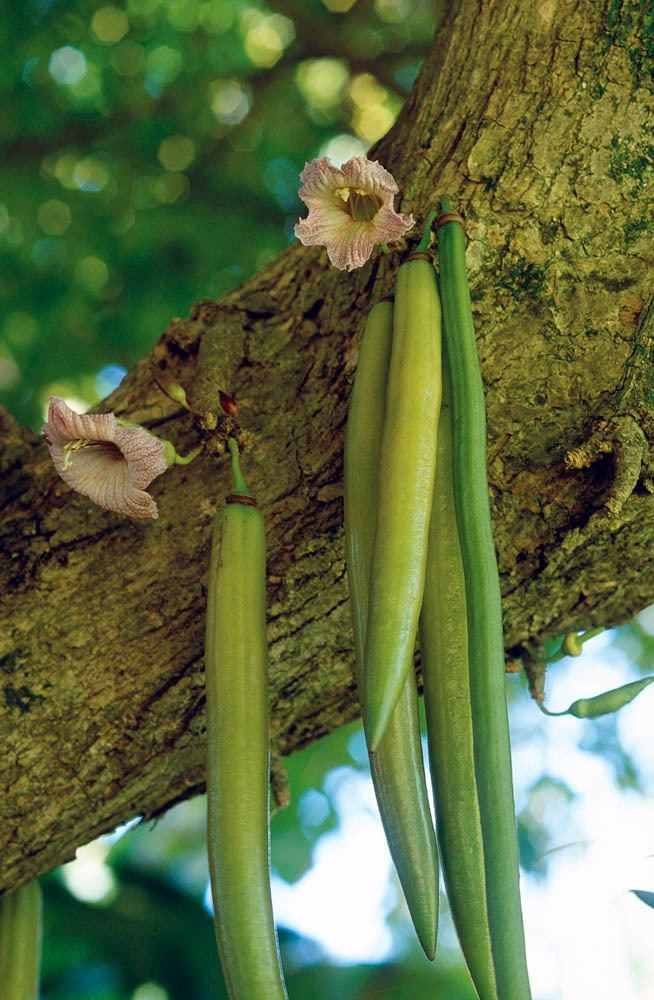
It was one of those trees that seem to be quietly at work without asking to be explained. Its flowers and fruit hang directly from the trunk and branches: long waxy “candles”, pale green turning yellow, abundant and radiant. A cousin to the calabash tree, it looks as if it could have walked out of Papa Bois’ forest.
At first, I saw it as a curiosity, as a horticulturist might: decorative, easily taken for granted within a botanic tradition shaped as much by class and collection as by science—where beauty often meant ornament rather than relationship. And then, one day, as if Papa Bois had set an ancient, wax-lit candelabrum in my path, I wondered what it tasted like.
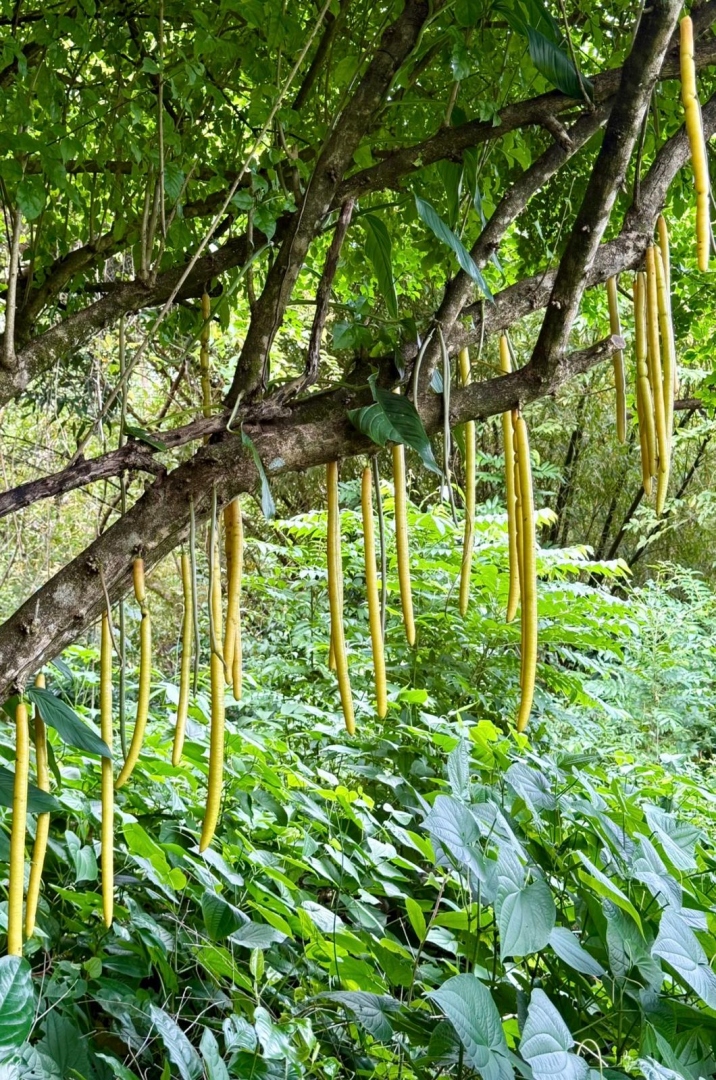
(via Serina Hearn.)
I did not yet know it was edible. I only knew it had stopped being decorative and had become a question. Call me a daughter of Eve; curiosity has long had a troubled reputation.
Curiosity also led me to notice how we inherit permission structures we did not choose: what counts as respectable, what counts as “food”, what counts as “bush”, what is safe, what is worth learning.
Often, the voice that grants permission is not our own. It arrives dressed as common sense. A label follows. And once a thing has its “government name”, the labeller begins to sound like the authority.
Later, I made an appointment at the Kew Gardens library in London. There I began finding the candlestick tree again, this time not in the garden but in the ledgers of botany: seed indexes, exchange lists, catalogues where living plants became entries in a global system of classification and circulation.
One such record appears in an Index Seminum, a seed catalogue produced by the Trinidad Botanic Gardens for exchange with other gardens worldwide.
Under the family Bignoniaceae, I found it: Parmentiera cereifera, one line among dozens on a quietly bureaucratic page. The living tree had become an entry.
Language does not only describe the world; it licenses it. Records can do what power does: make the living world legible in their own terms, then call the result knowledge.
And yet there are counter-stories. As I peel back the layers of my own rediscovery of my birth nation, I keep looking for forms of knowledge already rooted in these lands, systems that did not separate naming from relationship.
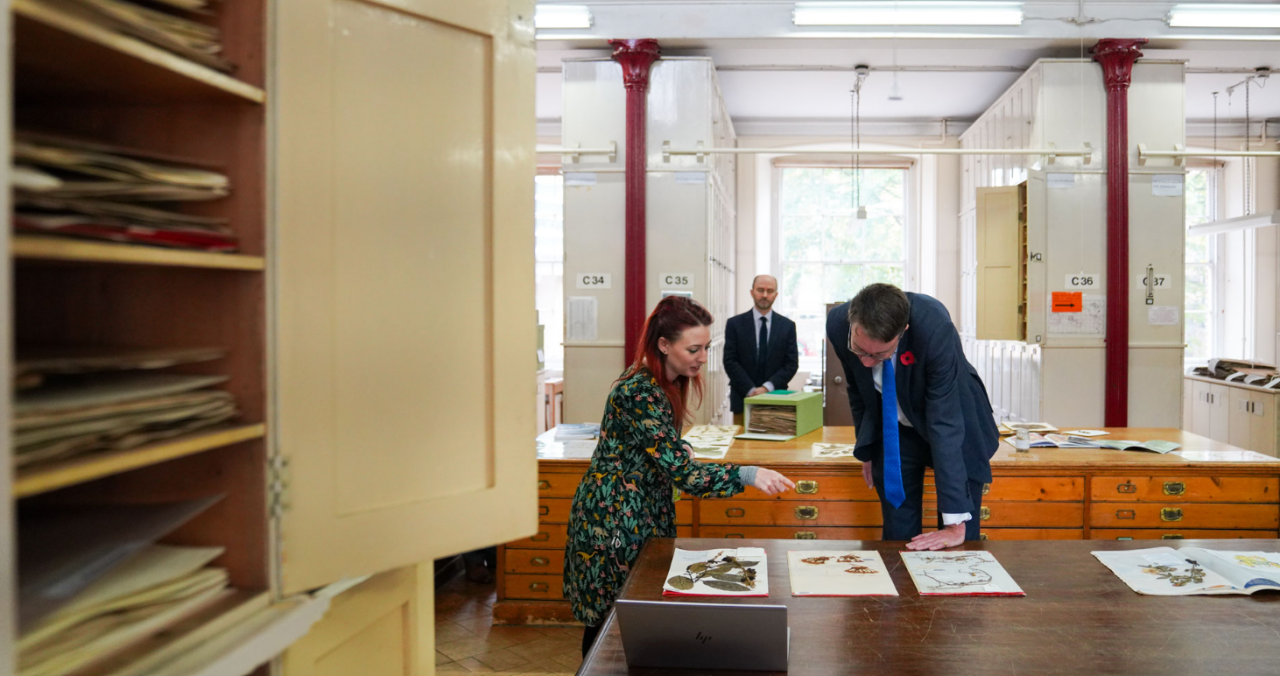
(via Kew Gardens.)
In the Arawak-English dictionary compiled by Canon John Peter Bennett, a Lokono priest in Guyana, words do not stand alone. A caterpillar is not just named; it is placed by what it eats and where it can be found. There is not one word for caterpillar, but many, each tied to a specific life.
Cassava, too, appears not simply as food, but as part of a living system: food for humans, and in Bennett’s account a host plant for moth larvae that feed on its leaves.
The dictionary becomes more than translation. It is also a record of natural history—but more importantly, it is an act of survival. Bennett carried this knowledge across a system that forbade his first language, using its forms to preserve what it could not contain.
What survives here is not just a record, but a bridge. Without that kind of intervention, much more would have been lost.
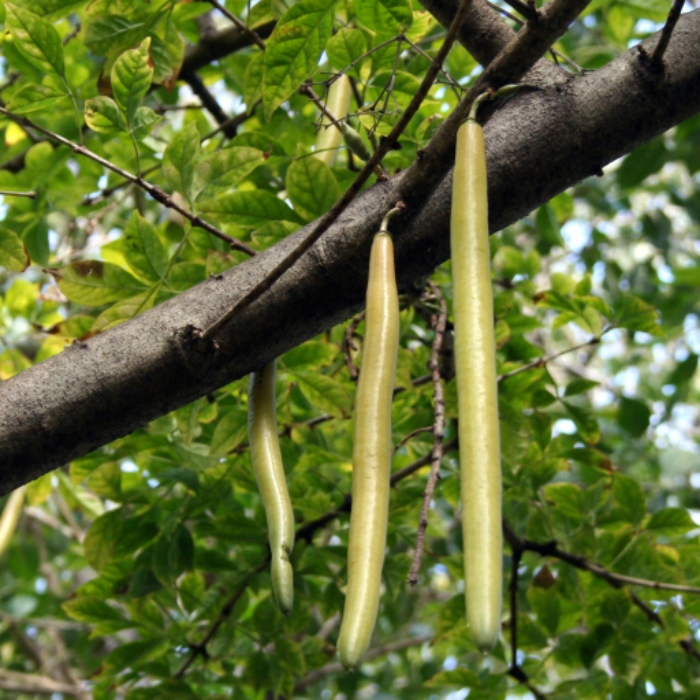
(via Plantiary.)
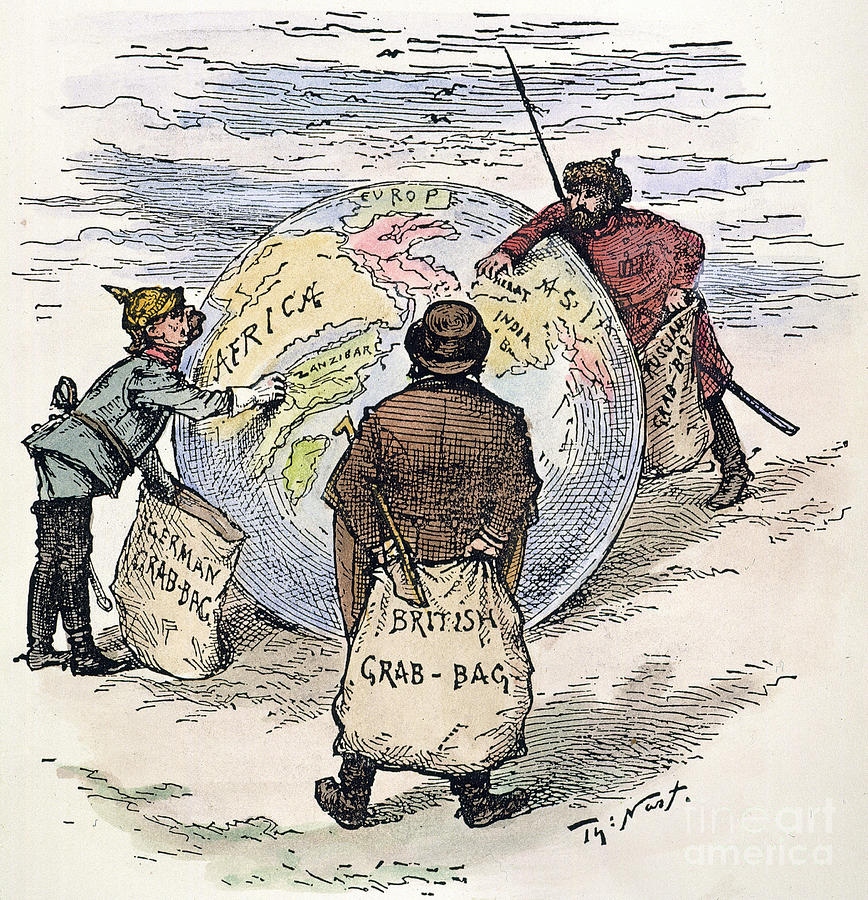
Then there is the name itself: the candlestick tree, Parmentiera cereifera. A Frenchman’s name attached to a tree native to Panama, shaped by Spanish colonial history.
It is one small example of how European institutions have often been better at cataloguing life than listening to it.
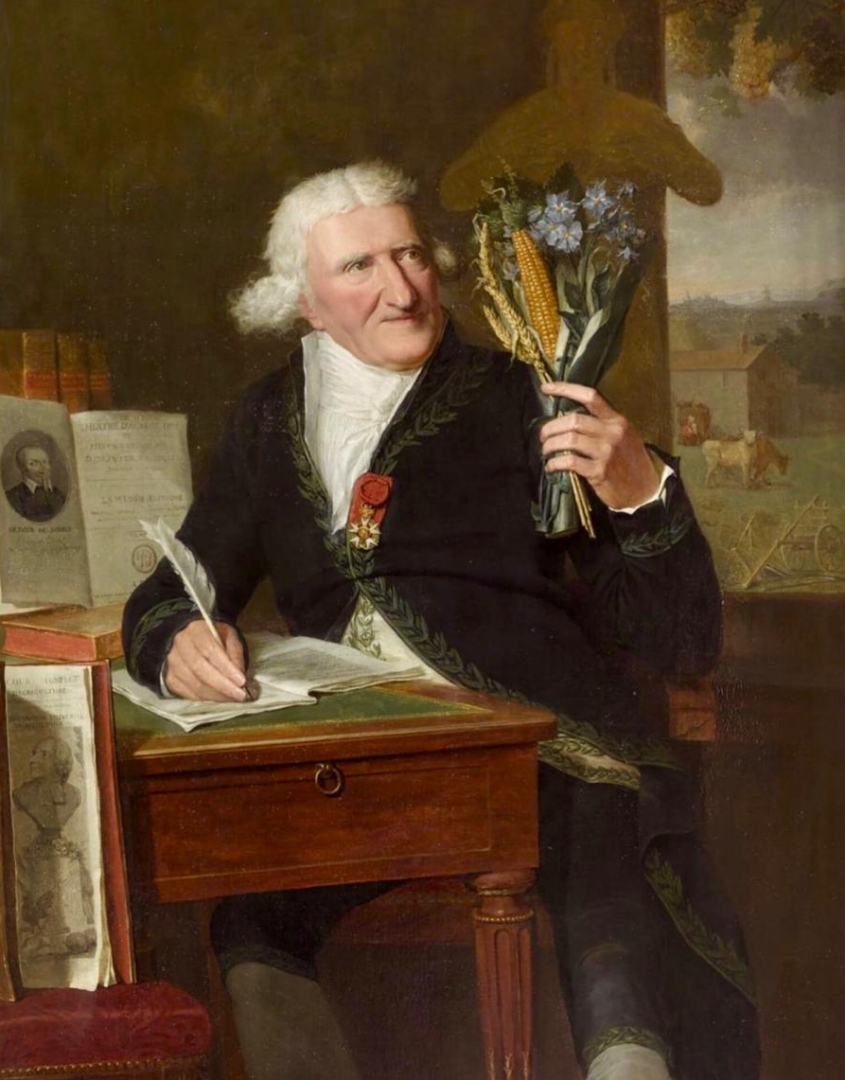
Antoine-Augustin Parmentier is remembered for helping to make the potato respectable in France, an Andean crop that entered Europe through colonial routes. He did not only argue for it; he staged legitimacy.
In his portrait, he holds potato flowers like a formal bouquet, as if to say: this belongs on a table. But Parmentier’s fame also reveals an old pattern. The European advocate is remembered—the Indigenous peoples whose knowledge, labour, and long cultivation made the potato possible, recede into a vague “origin”. The winners keep their names.
And once you notice that pattern, the candlestick tree begins to look different. If Europeans once needed permission to eat an Andean tuber, why do we hesitate before a waxy fruit we do not have recipes for?
Unfamiliar does not mean unsafe. It often just means untranslated. In an island nation, that hesitation has a cost: edible abundance grows at our feet while we keep reaching for food shipped across oceans.
We are also living in a moment when that dependence feels less abstract. Supply chains stretch across oceans. Fuel prices shift. The distance between where food is grown and where it is eaten becomes newly visible.
For a place that imports so much of what it consumes, that distance is not just geography. It is exposure.
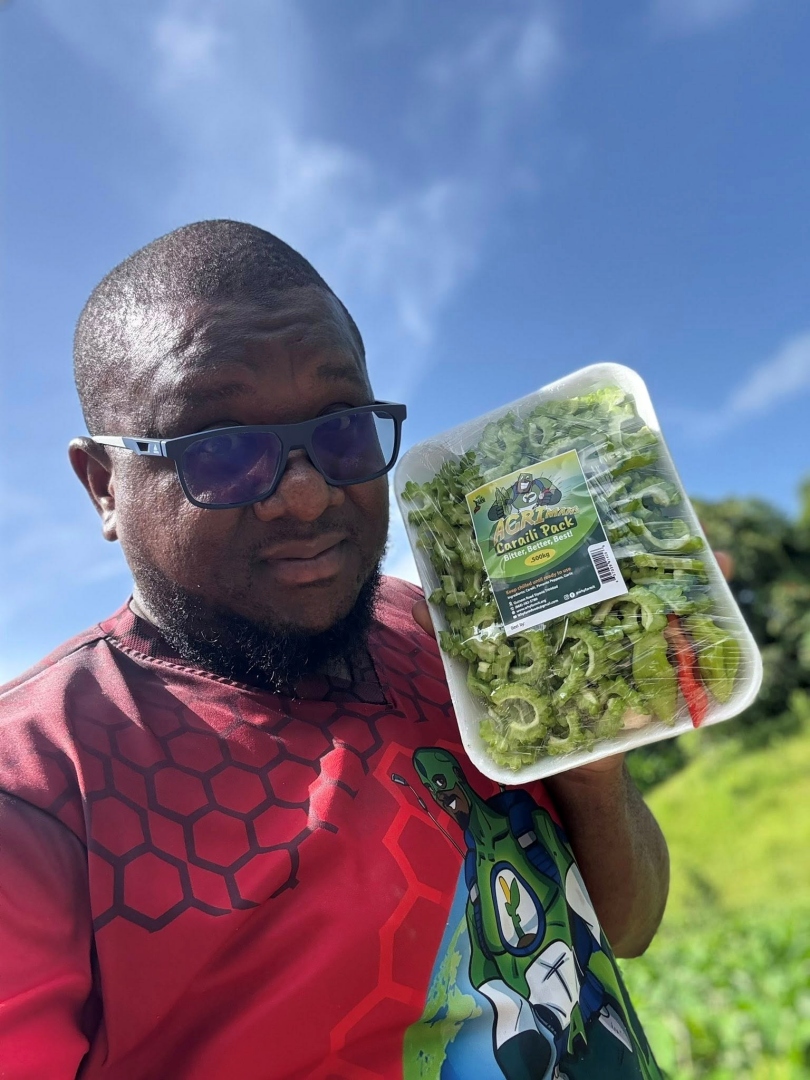
(via WhyFarm.)
So I came back to the garden with a different kind of attention. Not the attention that asks: is this officially edible? But the attention that asks: who is already in relationship with this plant?
The parrots that visit our garden eat the fruit. The tree fruits in our heat and humidity without drama. When it flowers, it draws the night shift, pale blooms that open as the day animals settle.
At dusk, its allies arrive: moths, sometimes bats, circling the pale flowers. By morning, the ground is scattered with fallen blossoms, like discarded dresses from a late-night party.
And then there is the simplest fact: the tree is suited. Not suited in theory. Suited in practice.
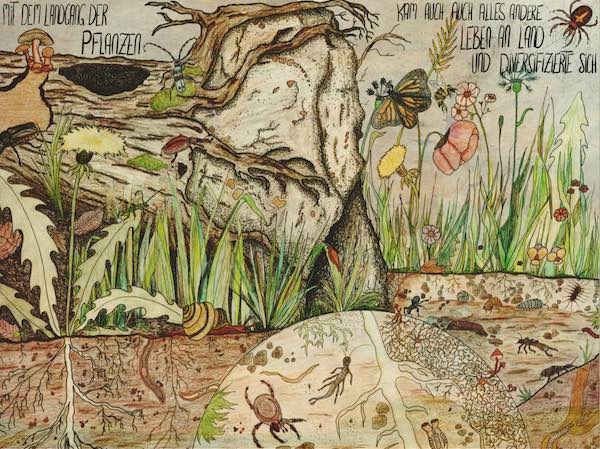
Image: HHU/ Mona Schreiber.
The animals recognise it. The ecosystem makes room for it. It is not fighting the place. It is participating.
So, the question becomes: what are we waiting for?
What we are facing is not a lack of resources, but a failure of recognition. We live among an unclaimed abundance, visible all around us, yet undervalued and rarely brought into daily use.
The candlestick tree is Panamanian in the most literal sense, rooted in a particular geography, linked in botanical writing to wet lowland forests. Long before anyone pinned a Latin name to a herbarium sheet, that land was lived: people, memory, exchange, language, and relationships that do not fit neatly on labels.
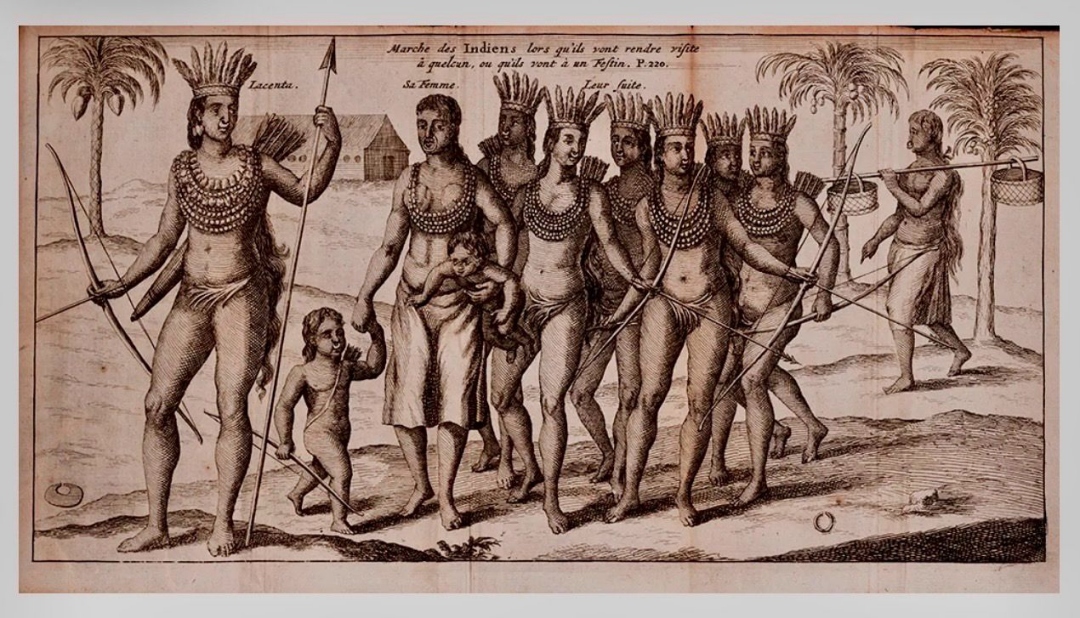
What survives in the archive is often the specimen, not the relationship, the recipes, cautions, and names carried by the people who lived with it. A Latin binomial can make a plant “official”, but it cannot tell you how people ate it, healed with it, avoided it, or honoured it.
Many of us do not have an inherited way of eating candlestick fruit. That is not a flaw in the fruit. It is a gap in transmission.
Food knowledge travels with people: migration, trade, coercion, invention, repetition. Familiarity is not proof of nativeness. It is proof that knowledge arrived, and stayed.
In Trinidad, “traditional” rarely means “native”. It means brought here by many histories, taken up, repeated, and made ours—practice done so often it begins to feel like memory.

(via We Trini Food.)
Africans adopted Indian foods; Indian kitchens, in turn, absorbed African, Creole, Chinese, Syrian-Lebanese, and European influences. What lasts becomes traditional not because it was always here, but because people built a life around it.
When I first sautéed the fruit with garlic and onions, I realised the barrier had never been the plant. It was the absence of the people who once knew it.
My great-grandmother shared what she knew with me, but she did not come from these islands. The first people of this landscape—communities whose presence reaches back at least 7,800 to 7,900 years, as the archaeological record at the Banwari Trace suggests—are largely missing from the chain of instruction.
In their absence, we end up searching the remains: seed catalogues, herbarium sheets, scientific papers, archives that confirm what living memory might once have taught at the kitchen table.
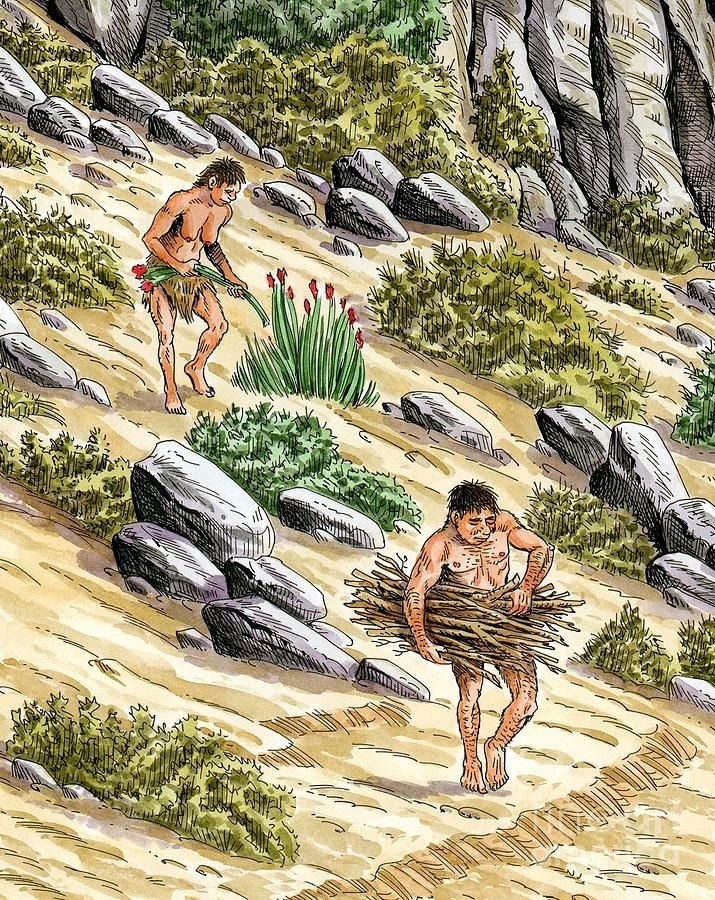
Image: Luis Montanya and Marta Montanya.
The experiment was deliberately ordinary: garlic, onion, heat. The slices went in, and I kept them moving, just enough to turn them fragrant while letting them stay themselves.
It was delicious: mild, fresh, satisfying in that vegetable-fruit way, closer in spirit to cucumber or young squash than to anything sugary. My nervousness dissolved into a simpler thought: so many of our food decisions are habits disguised as common sense.
So how do we begin?
Not with a manifesto. With small trials. Onions softening, garlic lifting in hot oil. Another time, lime, salt, and green herbs. Another, a quick soak in vinegar brightened the fruit and kept its crunch.
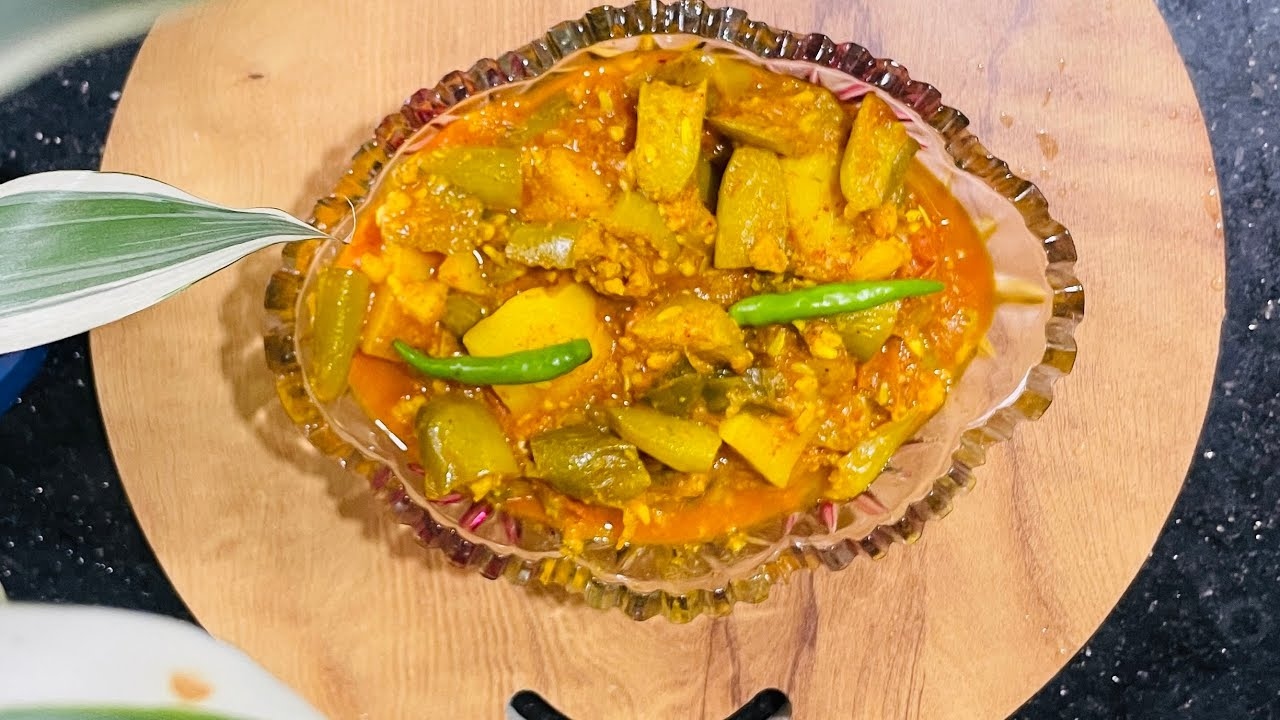
When I mentioned the fruit to Marlene, owner of Surya Chai Wellness Cafe in Woodbrook, she immediately thought of pickling. In Trinidad, unfamiliar fruits rarely arrive at the table as grand dishes; they enter quietly, through chows, chutneys, and relishes, forms that travel easily from market to kitchen to memory.
Candlestick fruit, mild, crisp, and receptive to flavour, is well suited to that tradition. Marlene is now experimenting with a pickled version she plans to bottle alongside her other preserves—not just as a product, but as a small act of repatriation, returning a native regional bounty to everyday use.
This is how unclaimed abundance becomes ordinary: not by permission, but by use. Repeated until it no longer feels unfamiliar, a plant moves from curiosity to ingredient, and from ingredient to culture.
And perhaps that is the work in front of us: translating what this geography is already offering into meals, into memory, into something we can rely on.
(via Alchetron.)
Recognition is the miracle, the moment we see the abundance that was at our feet all along and stop treating wonder as something that only happens elsewhere. That is where my awe comes from: recognising the many tongues of our extraordinary biodiversity, day and night, pollinator and fruit-eater, stigma and wingbeat, each answering in its own dialect.
When we learn to speak those languages, we are not discovering something new. We are learning how to enter relationships that were always here, one ordinary meal at a time.
Is this new UNC Government celebrating our Independence, or declaring its independence from public accountability and the rights of its Read more

“[…] (John Aboud’s Superior Hotels) consistently refused to adjust the project’s scale, design, or mitigation strategies, demonstrating a profound lack Read more

There is something quietly disarming about watching a child see a giraffe in the zoo for the first time. The Read more
In 1818, the Royal Botanic Gardens in Trinidad were established under British colonial administration. That same year, Mary Shelley published Read more
On most maps, Trinidad and Tobago is a small smudge near the mouth of the Orinoco River. In real life, Read more
A few days ago, Nemme McSweeney sent me the link to a YouTube video featuring the man behind Moruga Hill Read more
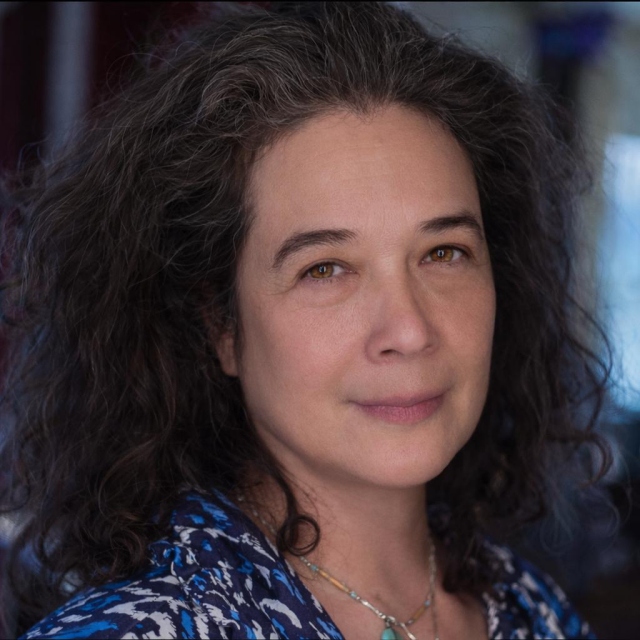
Serina A Hearn is a poet/writer and environmental activist and a Bishop Anstey alum who attended St Martin’s School of Art, London, UK. She conceived and curates the Garden with Wings pollinator project at the Royal Botanic Gardens (2020) and is the author of two poetry collections (Mid-America Press; Woodley Memorial Press), with a third book in progress.