 Wired868 Wired868 for smart sport news and opinion
In 1818, the Royal Botanic Gardens in Trinidad were established under British colonial administration. That same year, Mary Shelley published Frankenstein: the story of a scientist who assembles a living being and then abandons it.
Nearly eighty years later, HG Wells wrote The Island of Doctor Moreau, where natural life is not only brutally reassembled, but compelled to resemble its maker—in the name of “civilization”.
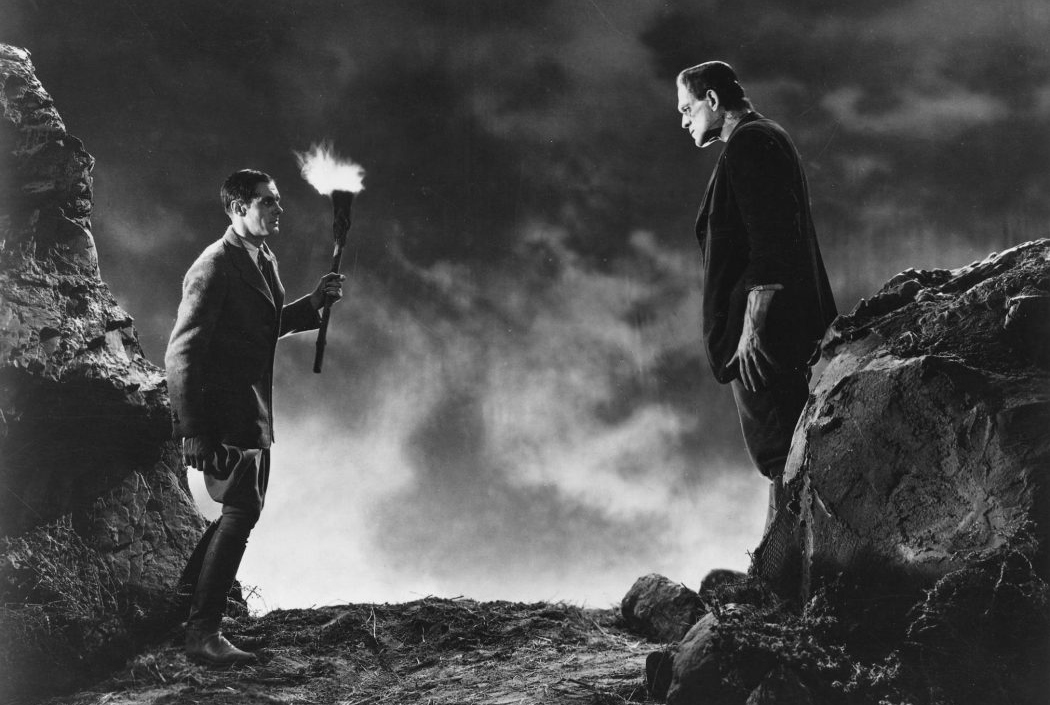
Both novels emerged during the Industrial Revolution—an age of extraction, acceleration, and scientific certainty. Both asked what happens when power outruns humility.
Empire practiced both logics.
Plants were uprooted, renamed, catalogued, shipped, and monetized. Colonial botanic gardens were not merely ornamental; they were laboratories—testing export crops, acclimatizing species, rearranging economies. Landscapes were designed to serve markets, not belonging.
Trinidad was assembled inside that system: African bodies, Indian indenture, Indigenous displacement, Chinese migration, European governance, inserted into a geography reorganized around sugar, cocoa, asphalt, oil, and gas.
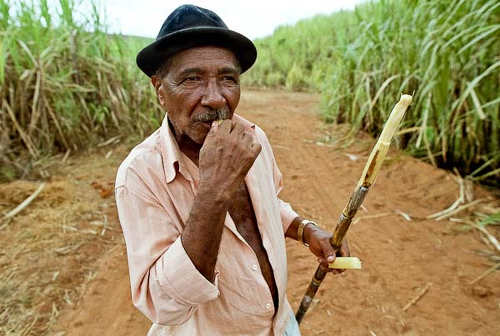
(Courtesy Riomate.)
Each extractive cycle structured the island’s economy.
Each later contracted—through market shifts, disease, labour changes, political decisions, and, at times, mismanagement—leaving communities to absorb the aftermath.
Empire built an economy organized around extraction, not integration. Independence inherited that structure, along with the psychological wreckage it left behind.
We were not stepping into calm inheritance. We were stepping out of a wound: a people brought together by force, asked to become whole inside systems built for export—conscious before integrated, awake before belonging.
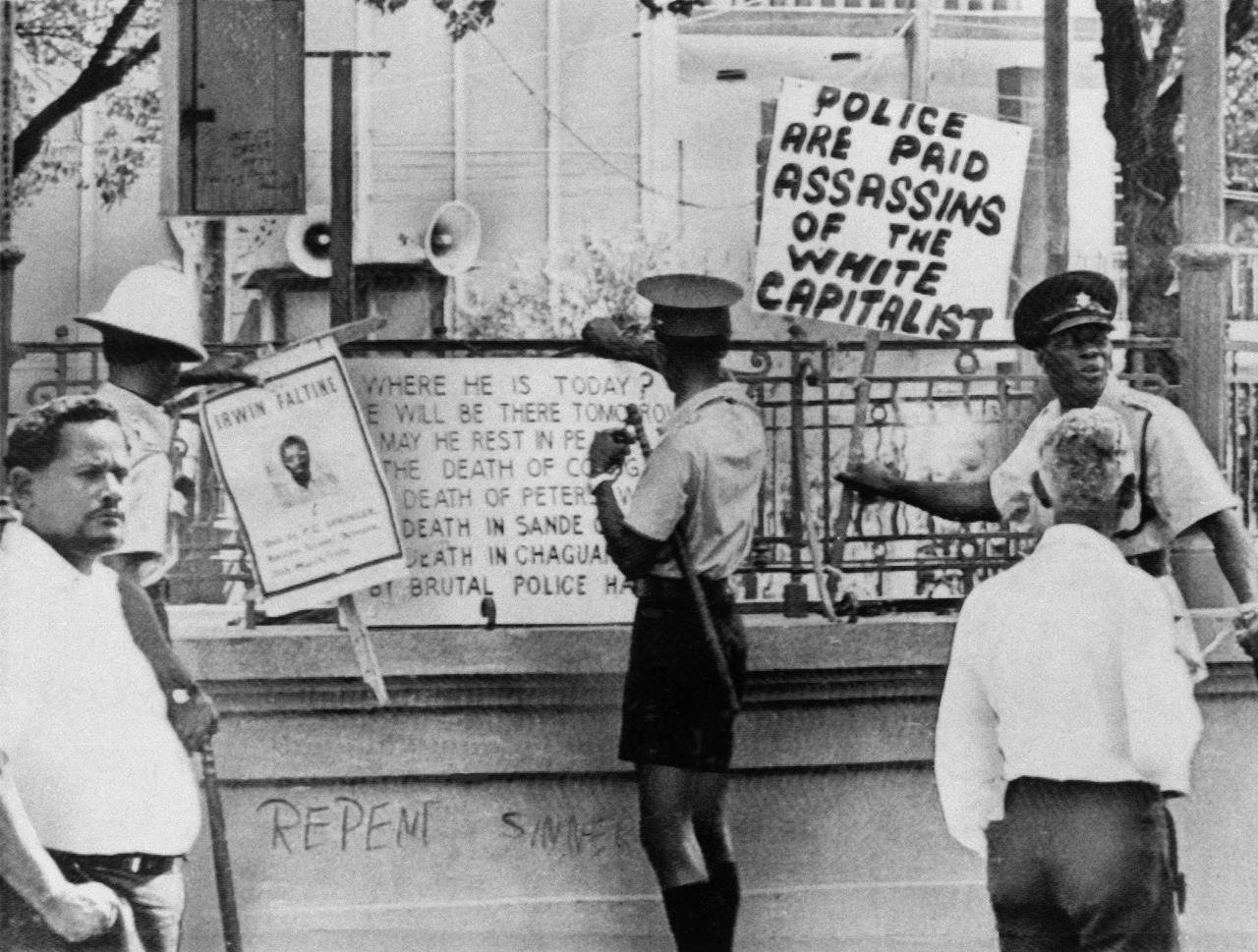
The square was a popular gathering point for Black Power militants in the city.
Copyright: AP Photo.
Anger was understandable. Rebellion was necessary. Inexperience was inevitable.
And then oil arrived.
Oil revenue should have been a bridge to diversification. Instead, it became a cushion. Wealth rose from beneath the ground and made dependency feel like security. We imported food instead of growing it, ornamented instead of nourished, postponed redesign.
Some industries were mismanaged. Some opportunities squandered. Corruption played its role. But beneath those failures was something deeper: a culture still organized around extraction rather than integration.
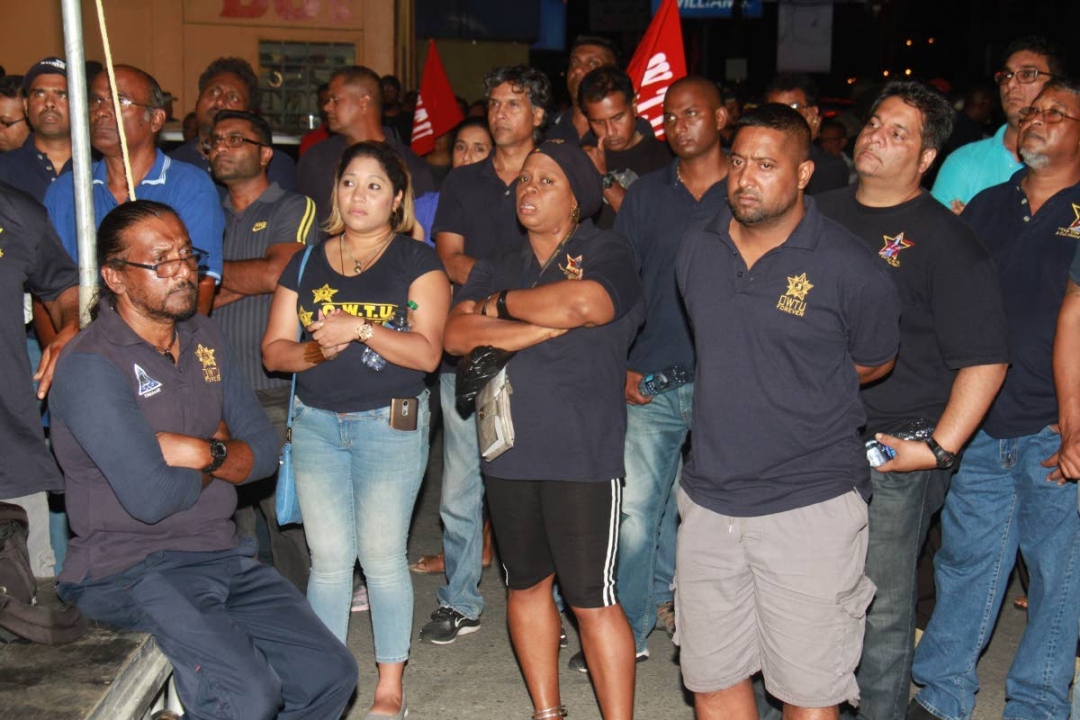
Photo: Newsday.
If we remain permanently in blame, toward empire or our own leaders, we remain psychologically tethered.
We are reactive, courting bacchanal like teenagers—with moral authorities and their critics alike certain of their righteousness—forgetting that when the boats stop, whether through geopolitics or empty coffers, we all starve. Meanwhile, the unglamorous work of feeding ourselves, replanting shade, and redesigning our systems goes neglected.
Frankenstein’s creature demands recognition from his creator. Endless rage binds him to the very figure he despises.

(Copyright Ministry of Public Administration.)
Coming home requires something harder.
- It requires integrating the parts.
- It requires belonging to the geography we inhabit.
- It requires asking not who ruined us—but what grows here.
Recently, I visited a restaurant in Trinidad where the chef creates intricate vegetarian dishes. I asked her why Chaya—a hardy perennial leafy green native to Mesoamerica, grown across the tropics, unusually nutrient-dense—was not on the menu.
She hesitated. Not because Chaya is unpleasant, but because she wasn’t sure her customers would recognize it as food; and in a restaurant, unfamiliarity is risk.

Chaya is the kind of plant that, once established, keeps giving—the opposite of scarcity—but only if a culture knows how to see it.
That hesitation was not culinary. It was educational. It exposed a quiet kind of unbelonging: we do not always know where we are, or what this place can feed us.
Trinidad and Tobago’s table is layered with histories—Indian, Chinese, African, European—and I honor that richness. But much of what we consider “normal” was defined elsewhere.
Meanwhile, the ecology beneath our feet, this South American place we inhabit, remains partly unread: plants that thrive here, nourish here, and belong here, treated as “bush” not because they lack value, but because we were never taught to see their value.
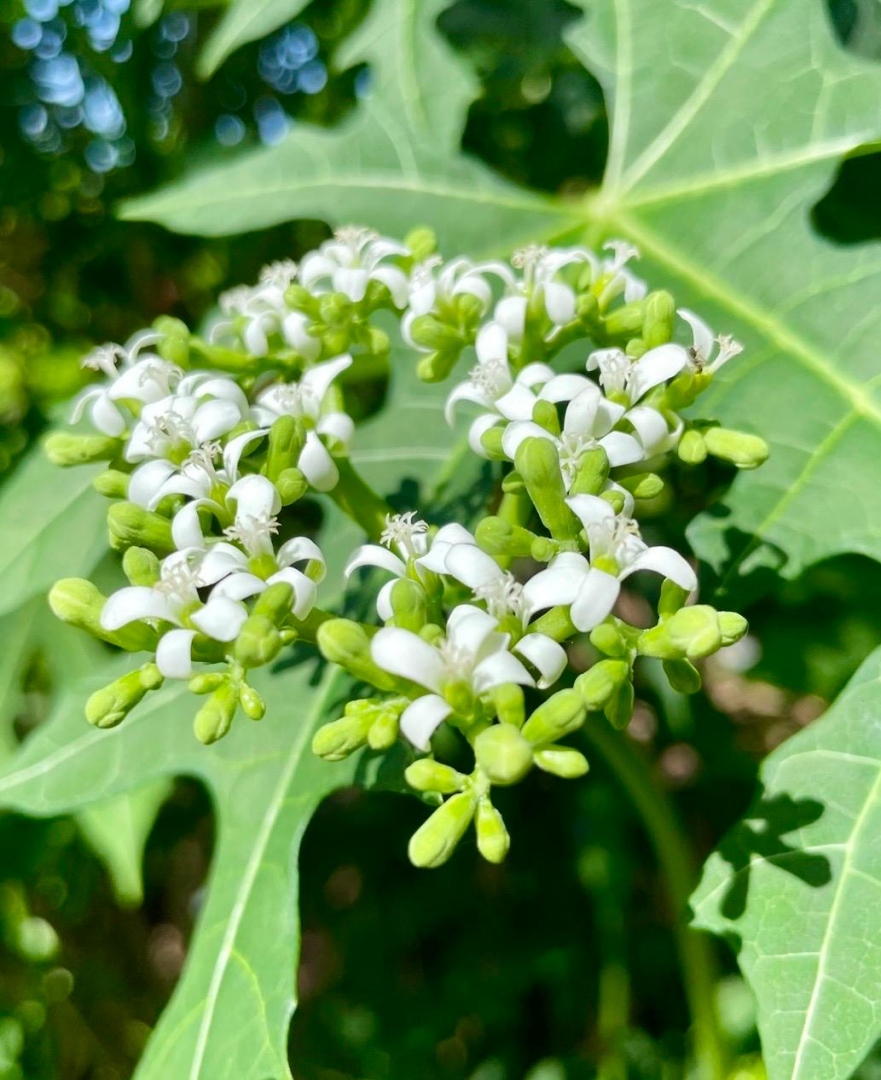
(via Serina Hearn.)
Chaya is not the only example.
Cassava was cultivated across the Caribbean long before European arrival. We eat the root—mostly starch—and ignore the leaves, which carry far more of the plant’s protein and micronutrients.
The leaves, when properly prepared, are often more nutrient-dense than the root itself. This is what unbelonging looks like in practice: abundance present, knowledge absent.
Unbelonging keeps us hungry for Victor, for recognition, and it keeps us angry.
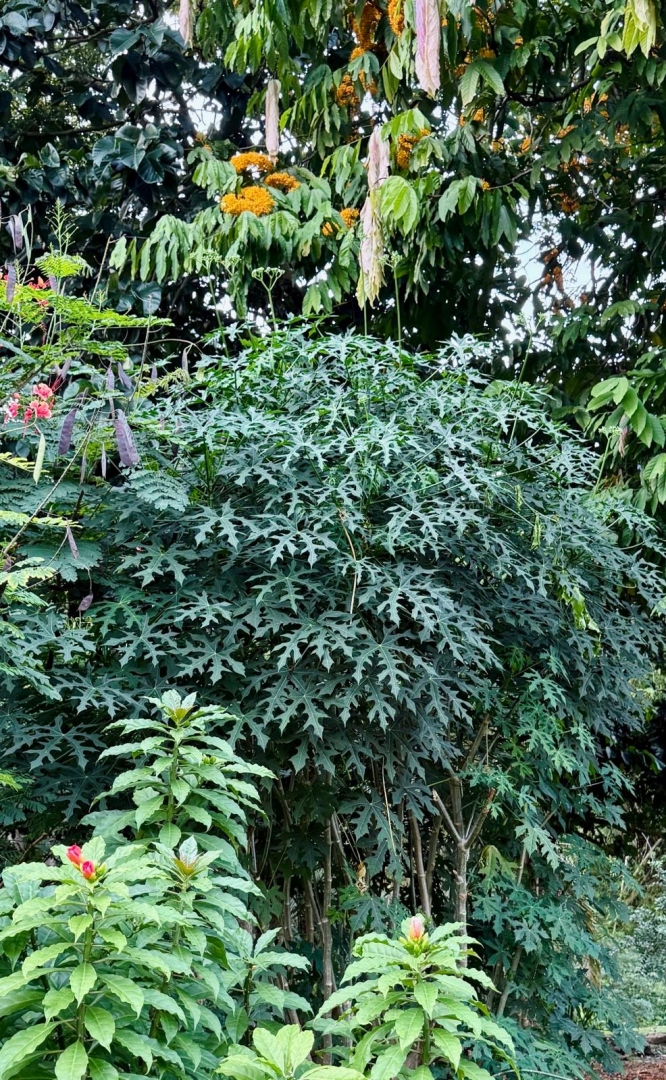
(via Serina Hearn.)
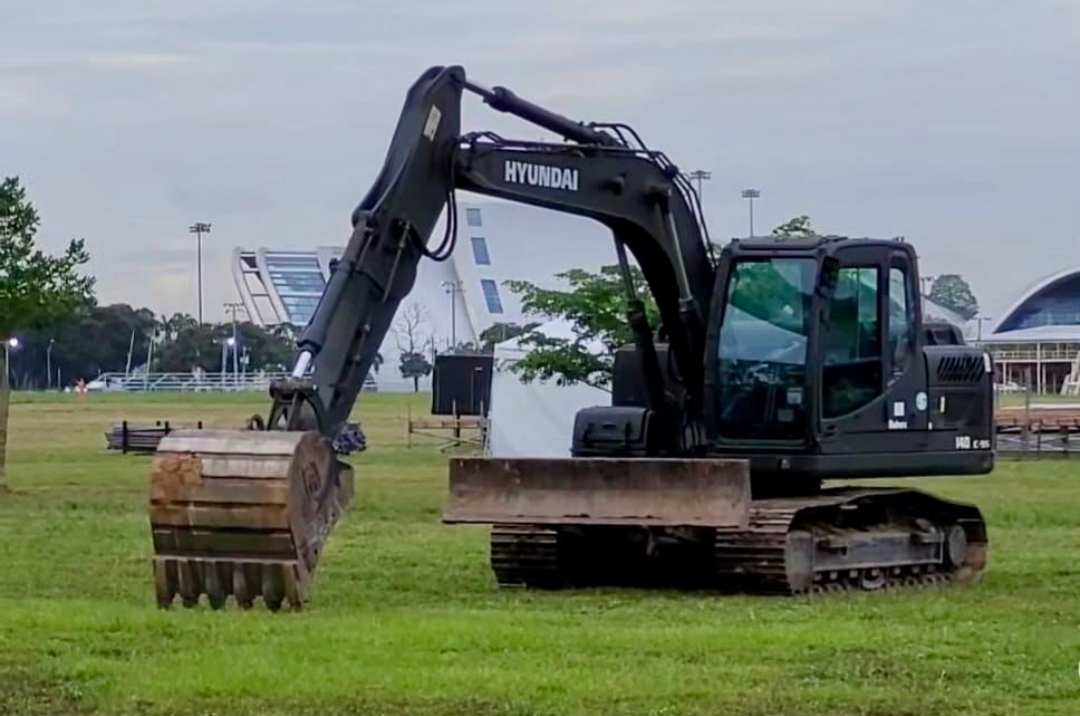
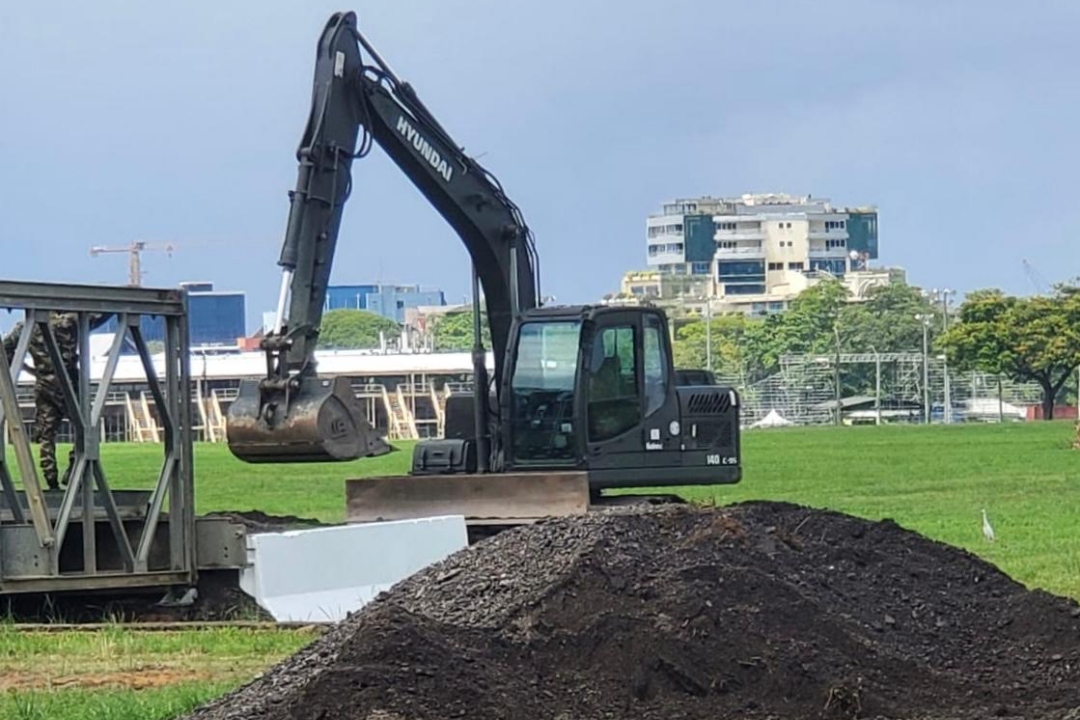
Meanwhile, across the Savannah, Woodford Square, and within the Botanic Gardens, many mature trees have been cut down in recent years. Some were old and structurally unsafe. Some had not been properly pruned and became too heavy.
Trees require maintenance—monitoring, pruning, eventual replacement.
That is not the problem.
The problem is when removal is not paired with replanting.
The question has been raised: should we restore what was once planted under British direction?
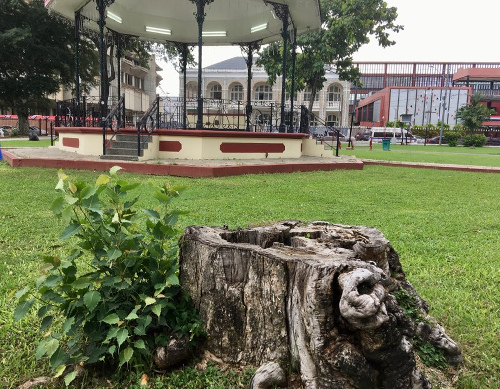
(Courtesy Serina Hearn.)
No.
We should plant intentionally with native and locally adapted species that support birds, butterflies, pollinators, and soil life—species suited to our rainfall, heat, and ecology.
Trinidad and Tobago holds extraordinary biodiversity: hundreds of butterfly species, hundreds of birds, hummingbirds that flash like living jewels, ecosystems that shift from mangrove to mountain within an hour’s drive.
This is not ornamental wealth. It is inheritance.
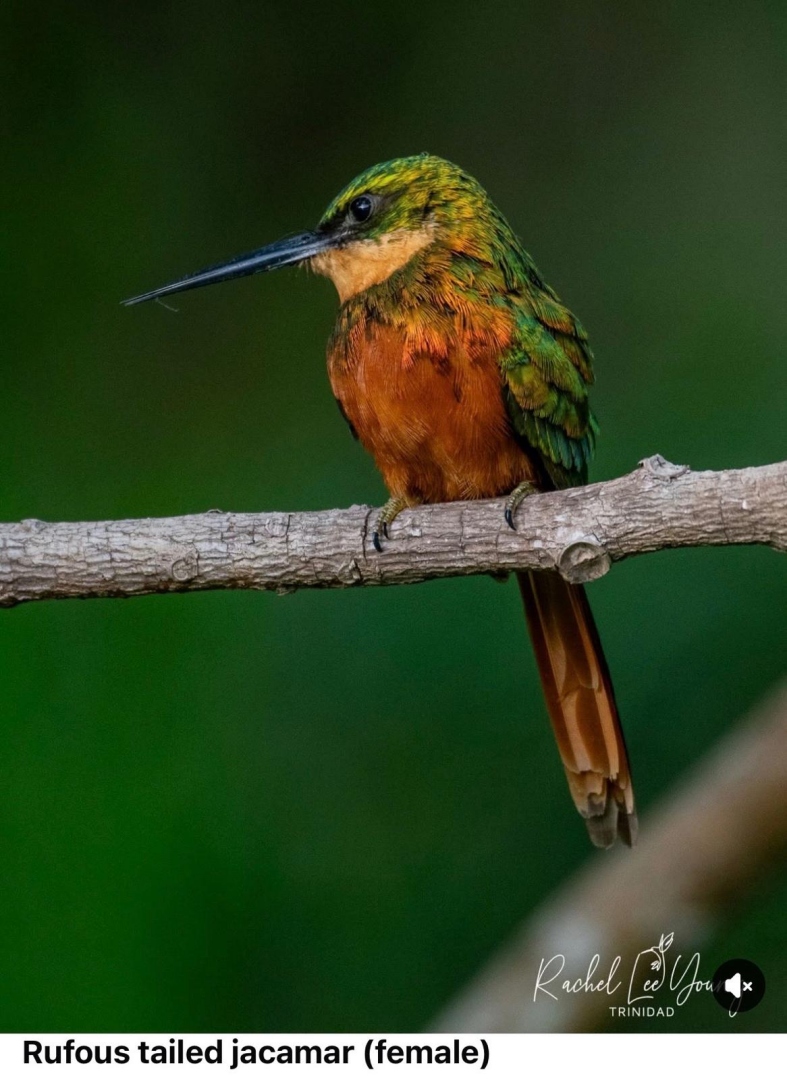
The living world it requires is. Photo taken in Tobago.
I recently heard a respected artist argue that Tobago needs a waterpark because “the children have nothing”.
Nothing—on one of the most ecologically extraordinary islands in the region.
I was not angry. I was stunned.
We should be raising curious, capable children who know how to read a landscape, not consumers who need to be entertained by concrete.
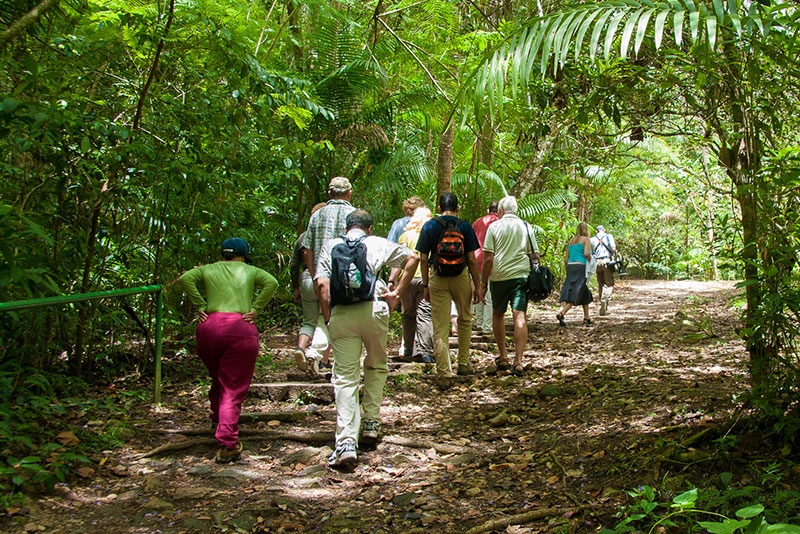
(via My Tobago.)
Children with mangroves to explore, driftwood to build with, tides to study, hills to climb, fish to watch, sand to engineer, wind to chase—nothing?
When we say “nothing”, we often mean nothing structured, nothing commercial, nothing imported. We have learned to measure value by construction rather than experience.
- Imagination does not require concrete.
- Belonging does not require ticket booths.
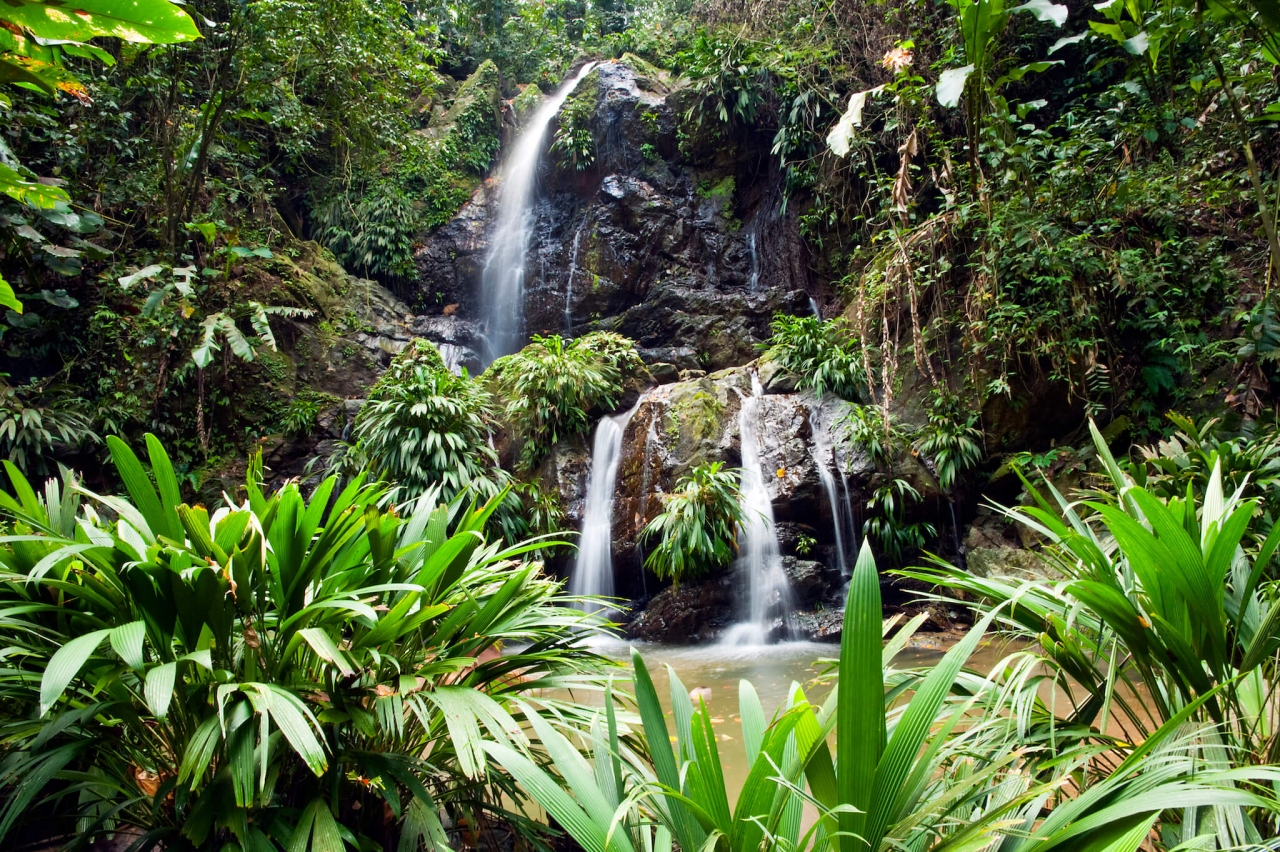
Photo: VisitTobago.gov.tt.
If we do not teach children to see what surrounds them, they will believe they have nothing—even while standing inside abundance.
Instead of arguing endlessly over colonial statues and the names we inherited, we could plant memory. We could plant Ceiba, the silk cotton tree, in Cumucurapo, the original name of Port of Spain.
Let history take root in something living: shade, birds, cooling air—rather than stone.
We stand again at a technological turning point, as in the era that built empire. The Industrial Revolution mechanized muscle. Artificial intelligence now mechanizes cognition. Power accelerates faster than ethics.
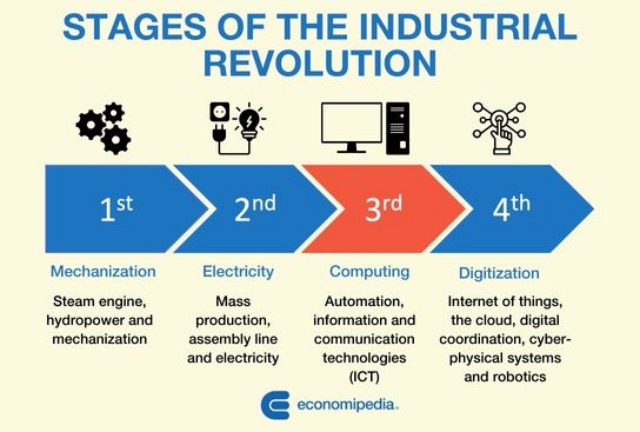
But soil remains real.
Living soil is not metaphor. It is relationship. It is resilience. It is exchange.
Sustainability is not a slogan. It is the quiet dignity of knowing we can continue—economically, ecologically, culturally.
If we were assembled by empire and cushioned by oil, then coming home is not nostalgia.
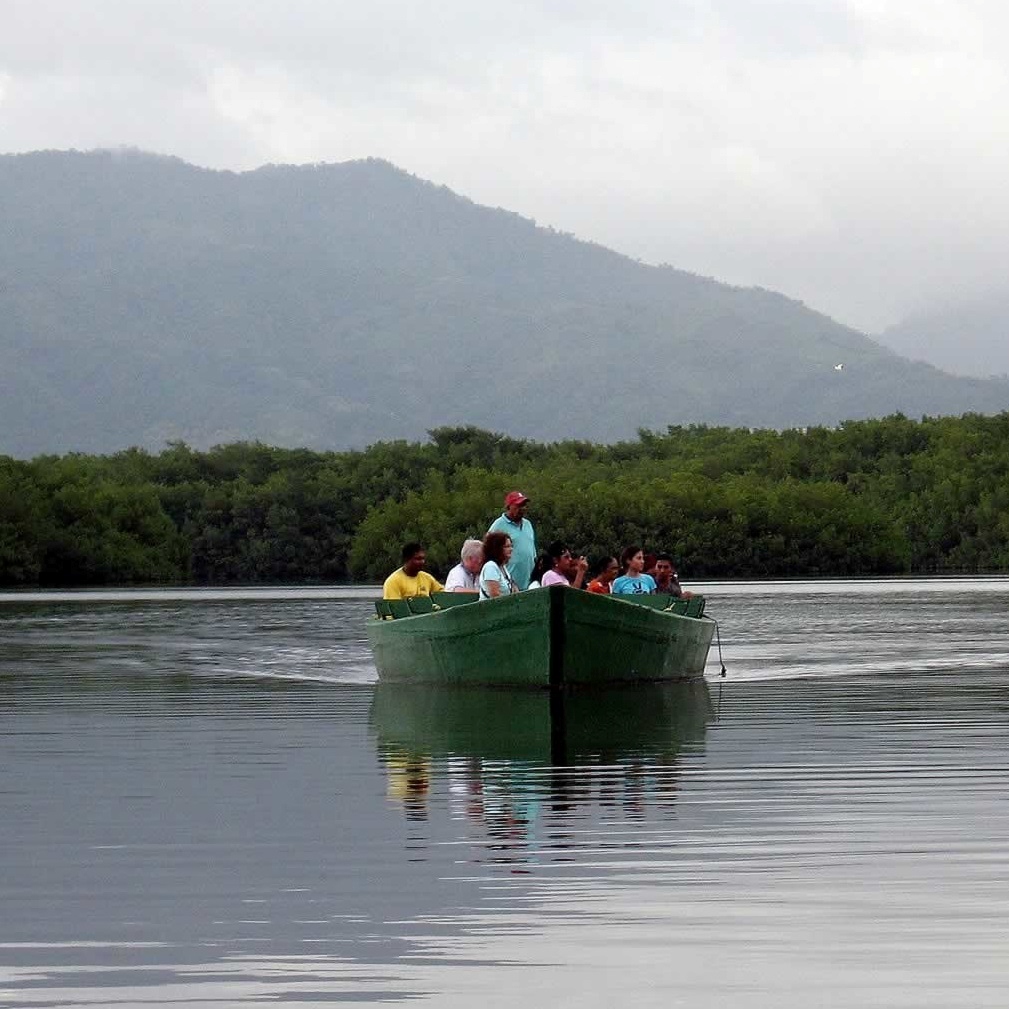
(via Island Experiences TT.)
- It is integration.
- It is stewardship.
- It is planting what belongs.
- It is tending trees as if shade matters.
- It is allowing fruit in public space.
- It is teaching children to see.
We do not have nothing.
- We have mangroves and mountains.
- We have butterflies and hummingbirds.
- We have cassava and Chaya.
- We have knowledge waiting to be remembered.
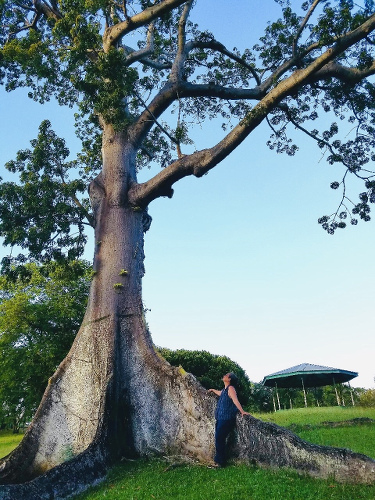
(Courtesy Serina Hearn.)
- We have inheritance.
- The work is to recognize it—and tend it.
- This is how belonging grows.

Too many things are unacceptably wrong with this brown water situation. The State tells us it is temporary, and so Read more

In 2005, Thomas Schelling won the Nobel Prize in Economics for his work on cooperation and conflict. Schelling’s work largely Read more

In the days before the new academic year begins, the quest for books, uniforms and shoes continues. Health is often Read more

In two years, I will be a pensioner myself. So when I say the upcoming budget must increase the old Read more
“[…] ‘No rule was broken’ is a legal answer to a question that isn’t, at its heart, legal. It’s a Read more
Is this new UNC Government celebrating our Independence, or declaring its independence from public accountability and the rights of its Read more
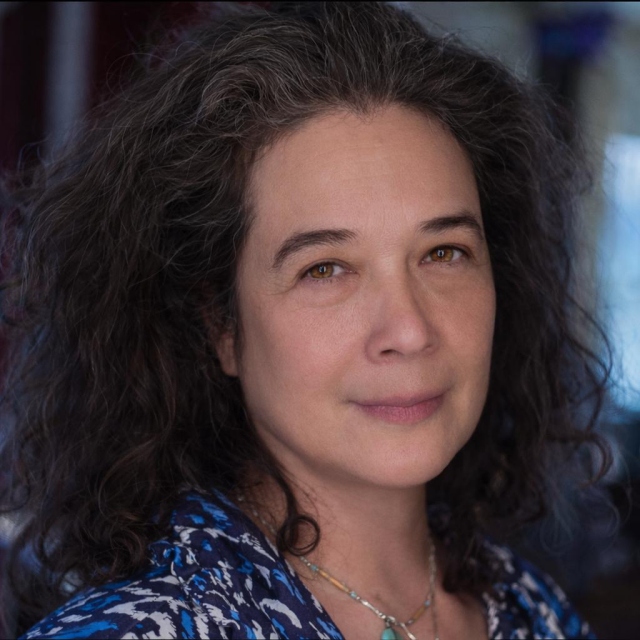
Serina A Hearn is a poet/writer and environmental activist and a Bishop Anstey alum who attended St Martin’s School of Art, London, UK. She conceived and curates the Garden with Wings pollinator project at the Royal Botanic Gardens (2020) and is the author of two poetry collections (Mid-America Press; Woodley Memorial Press), with a third book in progress.

This is a power piece, brutal in its honesty. It is a call to a return that is only a memory for the older ones amongst us who have long ago chosen another path. We chose the path of extraction. Salvation might yet be possible if a latent longing, maybe even knowing could be awakened in the young who unconsciously yearn for what so many have forgotten. Who long for integration. Compulsory reading for all those who still feel.
100%. I couldn’t agree more.