 Wired868 Wired868 for smart sport news and opinion
Have you ever noticed that some people never get ill? They seem to be so perfectly constructed that no matter what dreadful ailments are soaring about the countryside, they remain untouched.
Some years ago, I had written about how I had been plagued by chronic headaches since I was about 12. (I always falter before referring to them in the plural because I wonder if it is accurate to break them up into separate units, given that it has been a continuous one for decades. Maybe it is technically more precise since they vary in type and severity.)
Anyway, when that column appeared, more than one person told me they had never had a headache in their lives and couldn’t imagine what it felt like. Most said they only had them occasionally, but when they did, it would be too debilitating for them to function.
Naturally, I found it equally difficult to imagine a head that could hum along merrily every single day. It got me thinking about how humans can be so different in the way we are made, even though we share so many characteristics.
For instance, the way we behave — everyone has bouts of emotional sunshine and gloom. Some of us are perpetually grumpy and cantankerous; others try to stay cheerful and optimistic, whatever the circumstances.
How much of our outlook, our disposition, is connected to our physical state?
This man, now in his early sixties, has one of those remarkably constitutions. His work requires a lot of activity, and while he has had injuries, he has never been ill in the 50 years I’ve known him.
He thinks that illness is a sign of weakness, which I suppose is true, but in his opinion, it is evidence of a feeble character.
His daughter has been rather frail: asthmatic, anaemic, and prone to catching anything viral that passes by. He tells her she has to power through; she must not rest because that is giving in to the ailments.

He does not say it in a rough way. It is not an admonishment. Rather, he is passing it on as words of wisdom and guidance. He proudly holds up his good health as proof that his philosophy works.
I know many people whose lives are unblemished by anything noxious. From my observations, they do not lead particularly healthy lives.
Most people pay little attention to even the most basic concepts of nutrition, rest, and exercise. Questioned, most say they were probably blessed with good genes, because they’d never noticed that what they experience is not common. They take it for granted.

At the other end of the spectrum are those who have been afflicted with various ailments for most of their lives. How much of it is because they are genetically disposed to frailties in their bodies? How much is wrought by toxic environments?
They spend much time and energy seeking relief and searching for cures, all of which is financially costly. Their lives are defined by pain and incapacity. Many activities are forbidden; many pleasures foregone. Every day is a struggle, and eventually, the spirit is browbeaten into a resigned state of discomfort.
How does it affect their outlook? Do they become stoic, do they become depressed? Do they channel feelings into savouring precious moments? Do they develop high thresholds for pain? Do they power through? How do they get by?
Another observation. Many people who have spent their lives blithely enjoying good health are absolutely stricken when something capsizes that. As one gets older, even the most immaculate constitutions weaken, especially if one has been cruising through life without being mindful of the fact that everything requires some sort of maintenance.
An elderly woman who, to be fair, has taken care of herself with exercise and nutrition, injured her knee a couple of years ago. At first, she diligently followed the physiotherapy her doctor recommended. But she lapsed, mainly (in my opinion) because her children and her extended family attended to all her needs and wants.
They indulged her every whim, and it soon became easier for her to lap up the additional attention she was getting on account of the injury. But circumstances changed, and she no longer had the massive support system at her disposal.
Her knee issues worsened because she was no longer doing her physiotherapy regimen, and she is now convinced that she needs surgery to make things better.
She has ignored advice that, at her age, surgery might create more problems than she anticipates. The thing is, psychologically, she is not prepared to accept the discomfort or to believe she can help by doing her exercises. She wants an immediate solution.
I’ve seen many of the able-bodied completely floored by any kind of pain, mild or severe. I surmise that a lifetime of good health probably does not prepare you for even a modicum of suffering.

I mean, who wants to go gentle into that good night? It is reasonable to rage against the dying of the light.
Nearly 30 years ago, my beloved neighbour, Leo, who belonged to the category of the fit, stood chatting at his front gate with a friend. Normal, normal. A couple of hours later, as he was having a shower, he had a heart attack, and he died instantly. No prolonged suffering. No warning.
I’d like to go like that.
The third scalding shower before breakfast was not for cleanliness. It was the only place the young man stopped vomiting. Read more
Men will discuss chest pain, blood in the urine and constipation with surprising courage. Erectile dysfunction often arrives in a Read more

Coffee and chocolate have spent years in and out of medicine’s good books. One month, coffee is blamed for palpitations, Read more
When I reach into the freezer for something from my hoard of cooked dishes, I am often reminded of the Read more

It’s hard to find composure in the face of the overwhelming human tragedy that has befallen our Venezuelan neighbours. Everything Read more

Most people worry about their heart. Some worry about their blood sugar, cancer, cholesterol, blood pressure or the mysterious ache Read more
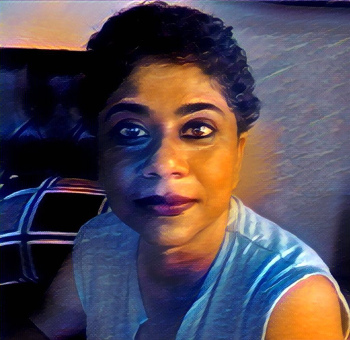
Vaneisa Baksh is a columnist with the Trinidad Express, an editor and a cricket historian. She is the author of a biography of Sir Frank Worrell.