 Wired868 Wired868 for smart sport news and opinion
However the intended and laudable “revitalisation” of Trinidad and Tobago may proceed, the long standing need for socio-economic reform, accountable governance, and massive bureaucracy busting cannot be evaded.
It is an essential part of any revitalisation.

Photo: UNC.
I therefore fully support the statement in a recent Trinidad Express editorial that “in tandem with the mega projects, the Government must continue to focus on the fundamentals: reduced crime, a reformed education system, more efficient healthcare, and less bureaucracy.”
In addition, however, as we look for investors to partner with any government in such revitalisation, our current reputation as a country also cannot be evaded.
It is plainly depressing and likely to be counterproductive that there are international commentaries that mention Trinidad and Tobago in connection with what is now described as “the largest buildup of US firepower in the region in generations” and refer to our island nation as “a stopover point for drug shipments headed to Europe and North America”.

Uncomplimentary references to our corrupted state are not new and the reputational damage to our country has been and is severe.
By way of another example that illustrates how we have long been seen negatively in the outside world, in a searing column entitled Little fish, big fish and an ocean of lies, the late Michael Harris provided the link to a video documentary entitled Guns, Drugs and Secrets.
This documentary was aired by the British Channel Four broadcast television in the United Kingdom and it featured our country’s now firmly discredited 2011 State of Emergency.
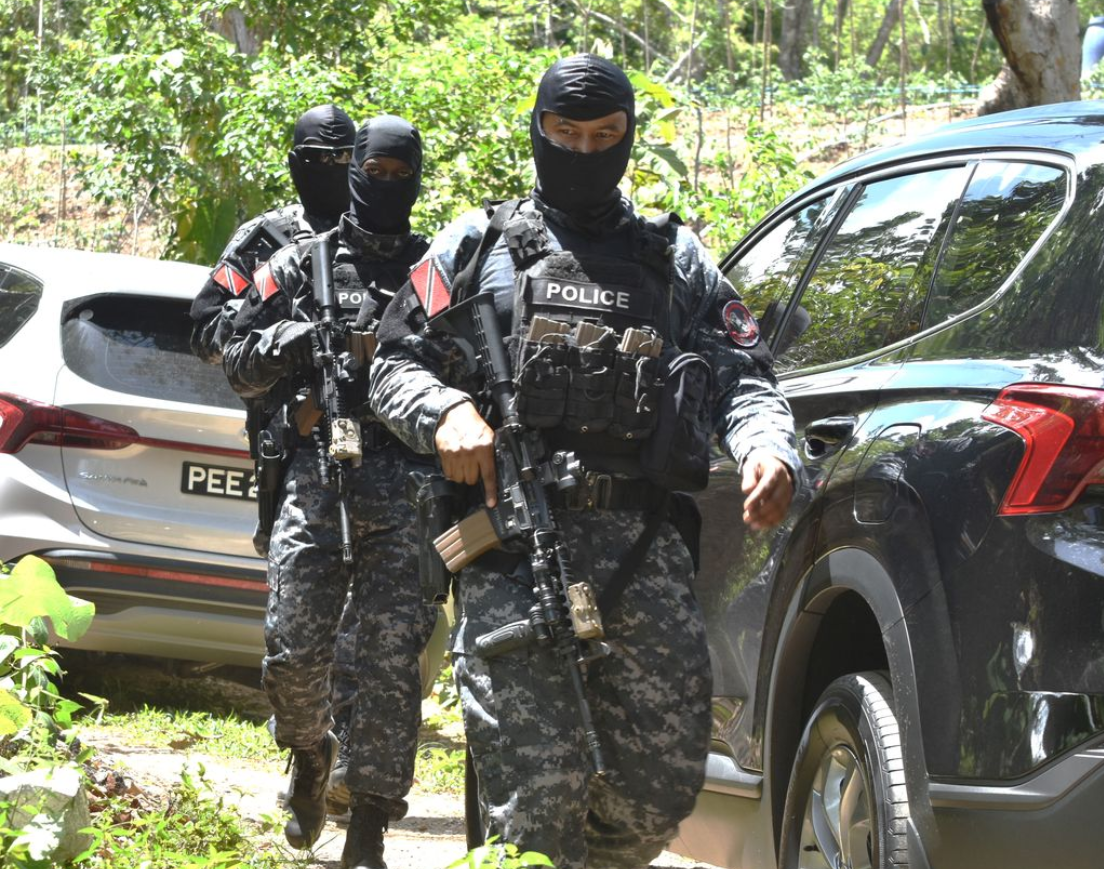
Copyright: Trinidad Guardian.
From that Channel 4 documentary, Harris quoted the following proposition the British journalist, without restraint, put to Captain Gary Griffith, not yet Commissioner of Police:
“It’s probably no surprise to you to hear that every person I speak to in Trinidad, when I ask them where the drugs and the guns come from, they tell me that the ports, the customs authorities, the Coast Guard and the police are involved…”
The 2011 State of Emergency was discredited because, according to Harris, only “little fish” were being arrested and carted off to jail while there was not a single case of the arrest of a “big fish”.

(via Getty Images.)
Many of the little fish subsequently received damages for their unwarranted detention while rampant murder continued, largely with impunity. There is a strong perception that so-called white-collar crime is not seriously on any governance agenda.
The fact is that successive governments over decades have been unwilling or unable to squarely face the deterioration in public safety attributable to our descent into a narco-infiltrated state—to the extent that declarations of states of emergency are the only methods of temporary disruption of rampant gang related murder and other violent crime.
Moreover, as repeatedly emphasized by others, gang capture of government make-work programmes has been another stimulant for fatal gang warfare.
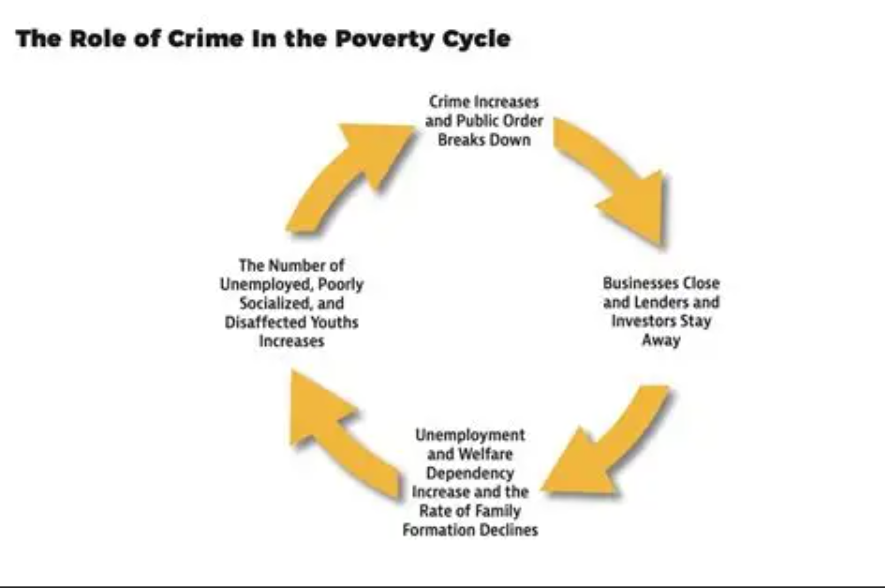
Our governments have been equally unwilling or unable to face the impunity with which violent crime is committed owing to poor detection rates and minimal risk of successful prosecution.
We now have this Government’s Minister of Homeland Security referring to a 33 per cent detection rate, apparently as something creditable. See the Trinidad Express editorial on Sunday last, commenting on the need for other measures to make the country safe, which concluded as follows:
“The boldness of the ongoing murders shows that criminals who are not part of gangs, or only members of smaller gangs, still do not fear the police. The 33% detection rate means criminals have a two-in-three chance of getting away; and, for the one-third who are caught, the conviction rate will be even lower.”

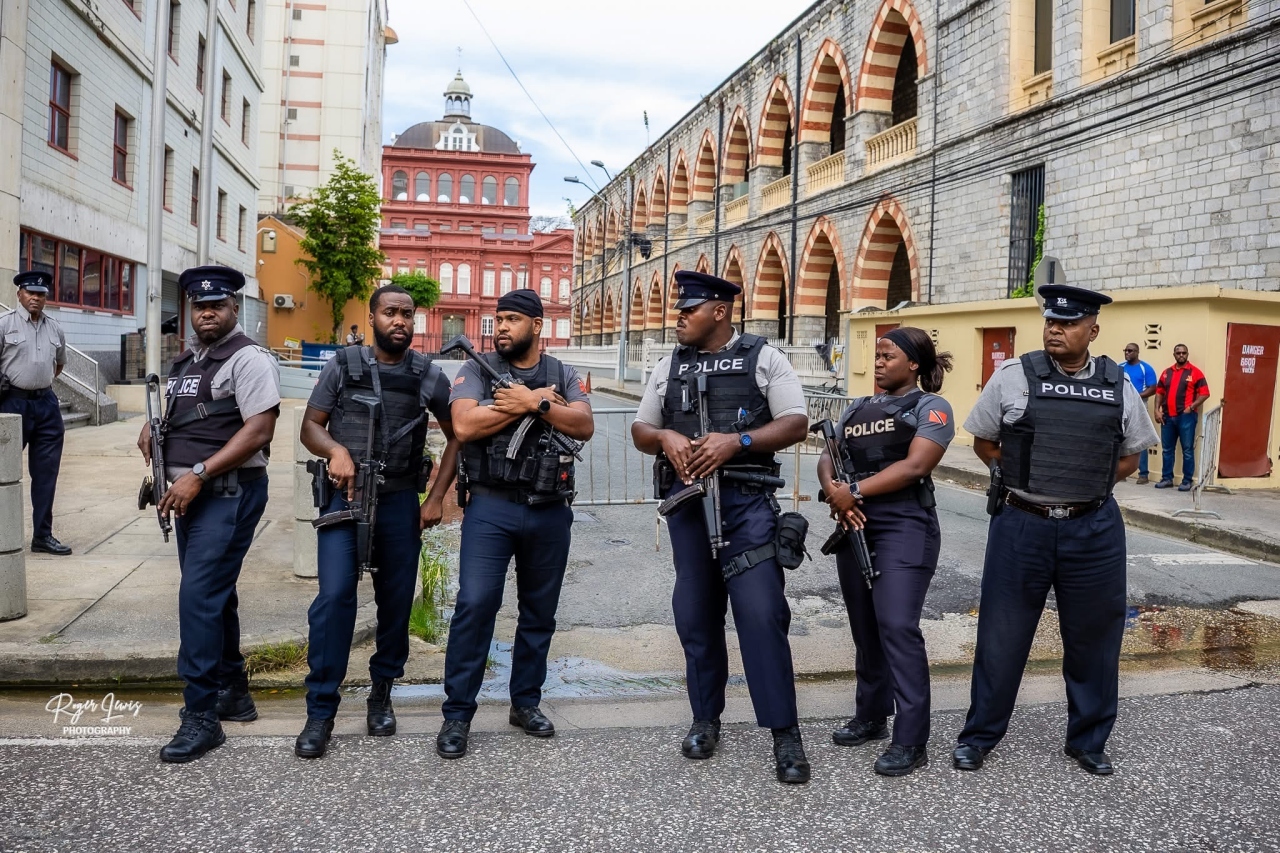
Photo: TTPS.
As suggested in last Sunday’s column, the use of emergency powers may turn out only to be the press of a pause button, as the use of those powers have not made the lives of ordinary citizens any safer.
Even with more efficiency in crime fighting, can that change without the socio-economic reform and attention to the other fundamentals identified above?
“[…] It is nothing short of amazing how this current political directorate can go from conceptualization of 30 ‘police post’ Read more
Having just celebrated 64 years of independence, discussions as to whether Trinidad and Tobago is better off since gaining independence Read more

Some years ago, I lived and worked in Sierra Leone. I arrived in the capital, Freetown, just ten years after Read more
“[…] Neither African nor Indian communities benefit from this… In cases where division arises unintentionally, accountability must fall on leaders, Read more

A few years ago, Michal Teja captured hearts and titles with his hit song, DNA. At the time, I was Read more

Three thousand dollars a month. That’s the minimum National Insurance pension a citizen receives after a lifetime of work. It’s Read more
Martin G Daly SC is a prominent attorney-at-law. He is a former Independent Senator and past president of the Law Association of Trinidad and Tobago.
He is chairman of the Pat Bishop Foundation and a steelpan music enthusiast.