 Wired868 Wired868 for smart sport news and opinion
As long ago as 2007, readers of this column were introduced to the phrase “breakdown of ordered legal control in the face of anarchy or banditry” as I began my predictions about where we were headed.
The phrase belongs to Professor HLA Hart, who was a famous professor of Jurisprudence and a legal philosopher.
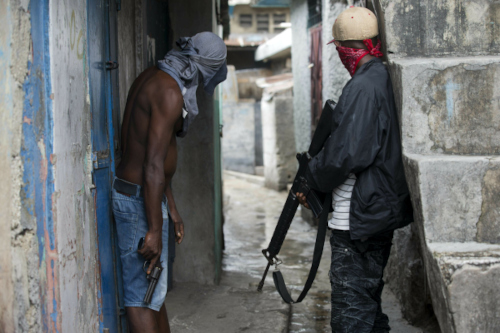
It is part of an exposition that a situation akin to a revolution or coup d’état occurs when bandits have gained sufficient control of areas of a country because they have been permitted adequate room to operate with impunity and to become sovereign in some areas—and that is the direction in which we have been heading.
The bandits do not need to seize political control or become the official government. Current events in our Caribbean neighbour, Haiti, graphically illustrate what life becomes when the full breakdown eventually takes place.
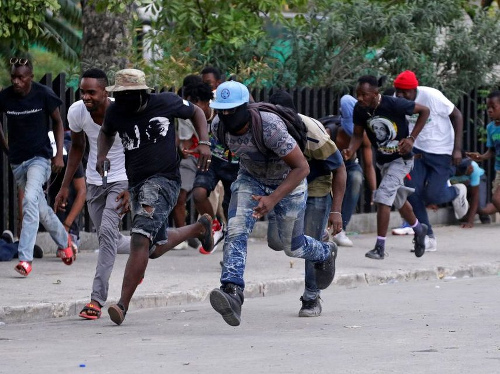
In Port-au-Prince, Haiti’s capital, armed bandits had been openly controlling the streets, remaining in place and not bothering to depart after they gun down someone. However, since Monday last, there are areas where the terrorized population have been rising up against the bandits.
Those bandits that they kill or beat into submission are burned right there in the streets—the beaten ones still alive are dragged into the fire. Dogs reportedly feed on some of the corpses.
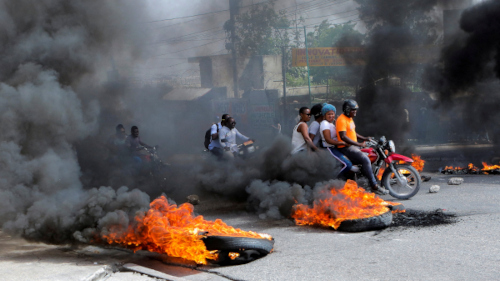
(Copyright New York Times)
Let me concede at once that the tragedies of hurricanes and a brutal earthquake in 2010 that killed 300,000 persons recently propelled Haiti towards anarchy.
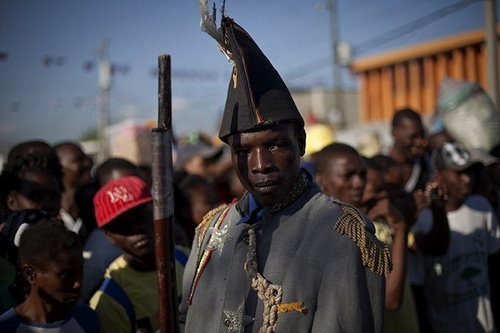
Haiti’s fragility is also attributable to external pressure and international interventions despite, or perhaps because of, its vanguard position in liberation and independence through the leadership of Toussaint Louverture at the end of the 18th century and beginning of the 19th.
Louverture’s initial victory over Napoleon is celebrated in the opening line of our David Rudder’s ode to Haiti, followed by the lyrics:
“Haiti I’m sorry. We misunderstood you. But one day we will turn our heads and look inside you. Haiti I’m sorry. We misunderstood you. One day we will turn our heads and restore your glory.”
It is of course ironic that Haiti should have grisly prominence in the news just as Rudder is facing challenges of his own, about which he has been candid prior to his 7.0 concert this weekend—likely to be his last such undertaking of that magnitude. We are extremely grateful for his illustrious body of work.
Haiti’s hope for restoration of the glory of its independence won in 1804 has long since been destroyed. As it bent under the pressures described above, the Papa Doc dictatorship, extremely inequitable socio-economic conditions and corrupt political and business practices, added to Haiti’s burdens, leading to the bloody breakdown that has occurred.
In a blog posted in Just Security, an online forum based at a centre in New York University School of Law, a commentator, Louis-Henri Mars, director of Lakou Lap (Kwyòl for Courtyard of Peace) asserts that “to curb gang violence in Haiti a break with politics as usual” is required.
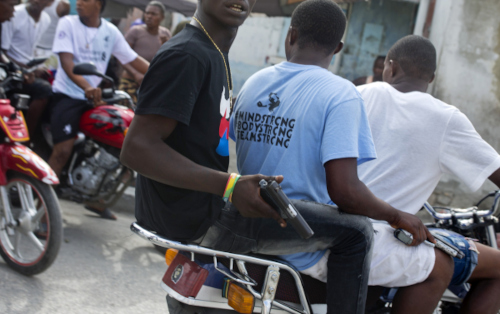
He states: “in my work in disadvantaged communities over 15 years, I have seen that, every time a gang member dies or rejects gang life, he is immediately replaced–the next day. This system, in which gangs bolster politics, is strong and durable because the Haitian state and society have done so little for so many neglected neighborhoods, and many young people are desperate.”
He asserts that: “without patrons in politics and business, gangs will lose steam”. Only then it will become possible to change the gang dynamic in neighbourhood control for partisan political purposes and “simultaneously support major political and economic change.”
The full horror of what is happening in the streets of Port-au-Prince is described in a wide variety of international media.
(via St Lucia Newsonline)
Meanwhile, even as our own media, last week, reported on alarm and fear for the safety of school children in our deteriorating situation, Haitian activist, Vlina Charlier, voiced despair in the UK Guardian at how the bloodshed would affect children and “the collective trauma” likely to manifest itself in the years to come.
Do we want to go there?
“[…] It is nothing short of amazing how this current political directorate can go from conceptualization of 30 ‘police post’ Read more
“[…] The old Caribbean fowl thief occupied a strange cultural category. He (mainly men were the culprits) was a criminal, Read more
In light of current general statements about economic diversification, it will not surprise my readers that I will proceed on Read more
This is my penultimate column before I proceed on my break after twenty-four years of writing these weekly columns. As Read more
Trinidad and Tobago entered into the Americas Counter Cartel Coalition, which was announced in Doral, Florida, two weeks ago at Read more
David Rudder famously sang in 1996 in The Madman’s Rant: “Somebody clean out the weed real fast. But somebody letting Read more
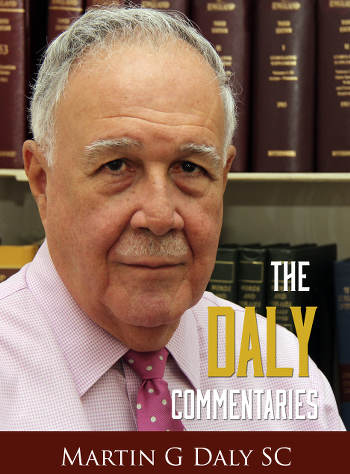
Martin G Daly SC is a prominent attorney-at-law. He is a former Independent Senator and past president of the Law Association of Trinidad and Tobago.
He is chairman of the Pat Bishop Foundation and a steelpan music enthusiast.