 Wired868 Wired868 for smart sport news and opinion
The Prime Minister last Sunday, in a speech before the PNM Women’s League, expressly acknowledged that Trinidad and Tobago is in “a situation of unacceptably high levels of crime”.
This is an important acknowledgement after all the years of dismissive responses to the high levels of violent crime pioneered and repeated by the Patrick Manning-led PNM Governments.

(via TTPS)
The problem for the Dr Keith Rowley-led PNM Government is that, having acknowledged the crime problem, it is only capable of processing it on two wavelengths.
The predominant wavelength is the national security one—on which the Prime Minister transmits his messages on crime and his frustration at the lack of Cabinet control of law enforcement agencies.
Serious constitutional issues would arise if an attempt were made to vest control of law enforcement agencies in the Cabinet and it is unclear how that would result in better law enforcement results. Sadly for us, the Government appears to be in retreat with the refrain: “There is only so much we can do”.
I can hear the Government growling as this column advances further into a critique of the uninspiring stance on crime. However, the growling does not deter regular commentators and many of us are unimpressed by the UNC Opposition as currently led.

(Copyright Office of the Parliament 2021)
What we seek is fresh thinking on a problem that is overwhelming our country.
Fresh thinking involves thinking that is complementary to the national security toolbox. That brings us again directly to the key role of social programmes required to reverse the conditions drawing youth into gangs and violent crime.
Equally sadly for us, the second wavelength on which the Government transmits its messages on crime is the provision of opportunity by welfare programmes, which pay little regard to the importance of opportunity arising out of broader visions and implementation of socio-economic management of the country’s resources.

(Copyright Mark Anderson/ Andertoons.com)
Such management critically must include development of our human capital, which must be relevantly educated, skills-trained and kept emotionally healthy.
This lack of broader vision was cruelly exposed by some statements of the Minister of Public Utilities, Marvin Gonzalez, which preceded those of the Prime Minister by a few days but which came too late for consideration in last Sunday’s column about finding hope.
Minister Gonzalez seemed bewildered by youths who were turning to crime and guns because there were so many opportunities for young people not available when he was a young man growing up.

(Courtesy Nicholas Bhajan/ Wired868)
This is how he described the opportunities: “[…] But yet still with the abundance of social services today, the number of opportunities for young people to make something of themselves—be it under the Ministry of Youth Development, Ministry of Education, you know all these programmes to allow people to make something of themselves—but yet still we have a crime situation and people turning to crime.”
But if significant numbers of schools are failing and the education system is inadequate to develop human capital, how will the youth be able even to take advantage of the social welfare programmes beloved by Mr Gonzalez and his colleagues?
By 12 or 15 years old, low self-esteem is already embedded in young men and women. These are the young men reaching out for gang and gun and the young women, whose problems require differentiated attention and are already at the mercy of predators.

Professor Emeritus Dr Ramesh Deosaran, for example, has commented in his Newsday columns on “the refusal of the authorities to take early care to prevent increasing school violence and delinquency” and to help change our “demoralised disposition”.
Social scientists, like Dr Deosaran, understand and articulate clearly that social programmes must comprise much more than welfare-driven opportunity, as expressed by Minister Gonzalez.
Dr Gabrielle Hosein, also a social scientist and formidable researcher, in a Newsday column on Wednesday last dealing with peace building, incisively asserted that “the conditions for youth risk created by traumas at home from family violence are often connected to socio-economic precarity and poor school outcomes, and escalated through access to weapons, guns and legal and illegal sources of income.”

The required range of interventions needed is much wider than the Government would have us believe. No more retreat and bewilderment please.

In light of current general statements about economic diversification, it will not surprise my readers that I will proceed on Read more

The danger was never the word. The danger… was that it sounded familiar. Once upon a time, leadership had a Read more

Truth be told, Dr Keith Rowley should have held his tongue—he does not have the moral high ground. He should Read more
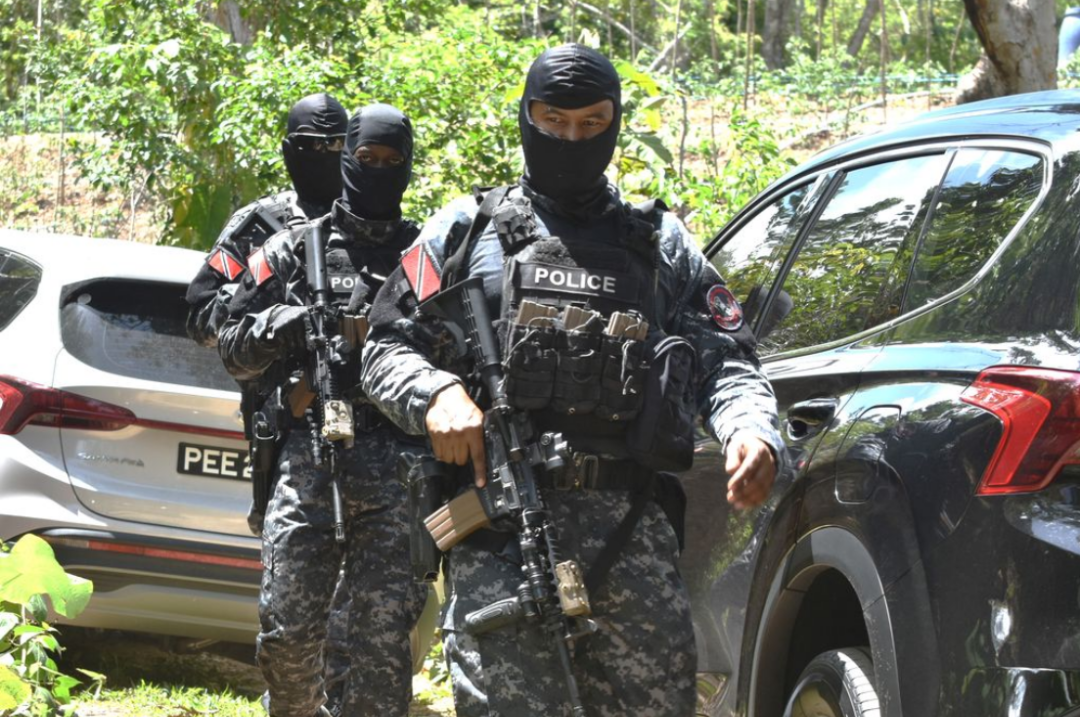
This is my penultimate column before I proceed on my break after twenty-four years of writing these weekly columns. As Read more
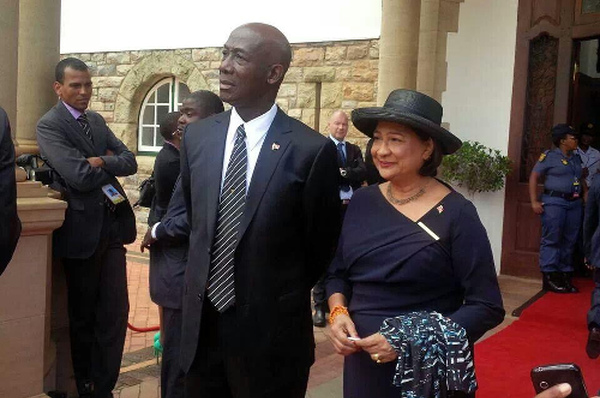
“[…] This is not leadership; it is a distraction. “[…] Ordinary citizens risk lawsuits or police action for far less, Read more
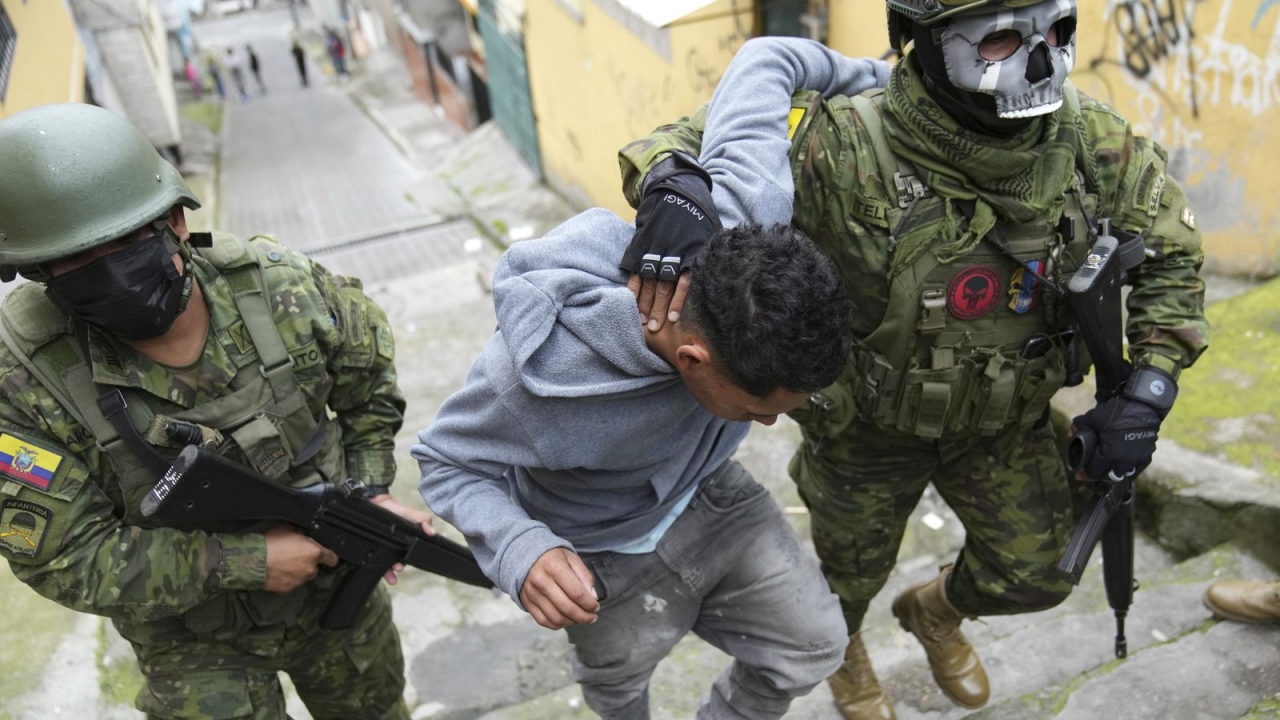
Trinidad and Tobago entered into the Americas Counter Cartel Coalition, which was announced in Doral, Florida, two weeks ago at Read more
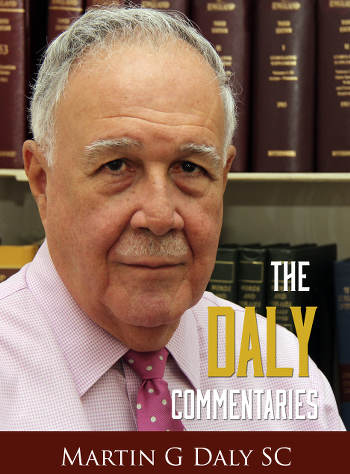
Martin G Daly SC is a prominent attorney-at-law. He is a former Independent Senator and past president of the Law Association of Trinidad and Tobago.
He is chairman of the Pat Bishop Foundation and a steelpan music enthusiast.