 Wired868 Wired868 for smart sport news and opinion
“[…] We are losing hope in the ability of our economy to provide good jobs for us. A smaller share of the working age population has been participating in the labour market.
“[…] The decline is largely driven by falling male participation from above 80% to just above 60%. Female participation has increased slightly but is still below 50%.
“[…] We are also losing hope in our democracy, as a lower share participate in political processes. Voter turnout was at an all-time low in 2025 at 54%, down from 66.8% in 2015…”
The following Letter to the Editor, which points to the importance of greater national consciousness for 2026, was submitted to Wired868 by Dr Jamelia Harris, an economist:

As the year closes and we extend greetings to family, friends and colleagues, we often utter some variation of “all the best for the new year”. We set new year resolutions—aspiration and visions of a better self.
Embedded in these statements and resolutions are sentiments of hope. Hope that the new year will be better, in some way or the other, than the one just concluded.
Hope, as a virtue, has long been central to theology. It is an active force that motivates decisions, sustains efforts, and prevents despair. We need hope to keep going as individuals.
Hope is present and necessary at the societal level, too. It manifests as a collective shared belief within a group or society that a better future is possible and achievable through combined efforts.

Most politicians understand this and try to tap into it. Barack Obama came to office with the slogan: “Yes We Can” and Donald Trump (twice) with “Make America Great Again” (MAGA).
Our recent electoral history shows similar. Dr Keith Rowley summoned a collective call to rebuild T&T with “Let’s Do This” in 2015 and Kamla Persad-Bissessar promised that: “When UNC wins, everybody wins” in 2025.
All are messages of hope—though arguably, some more credible than others.
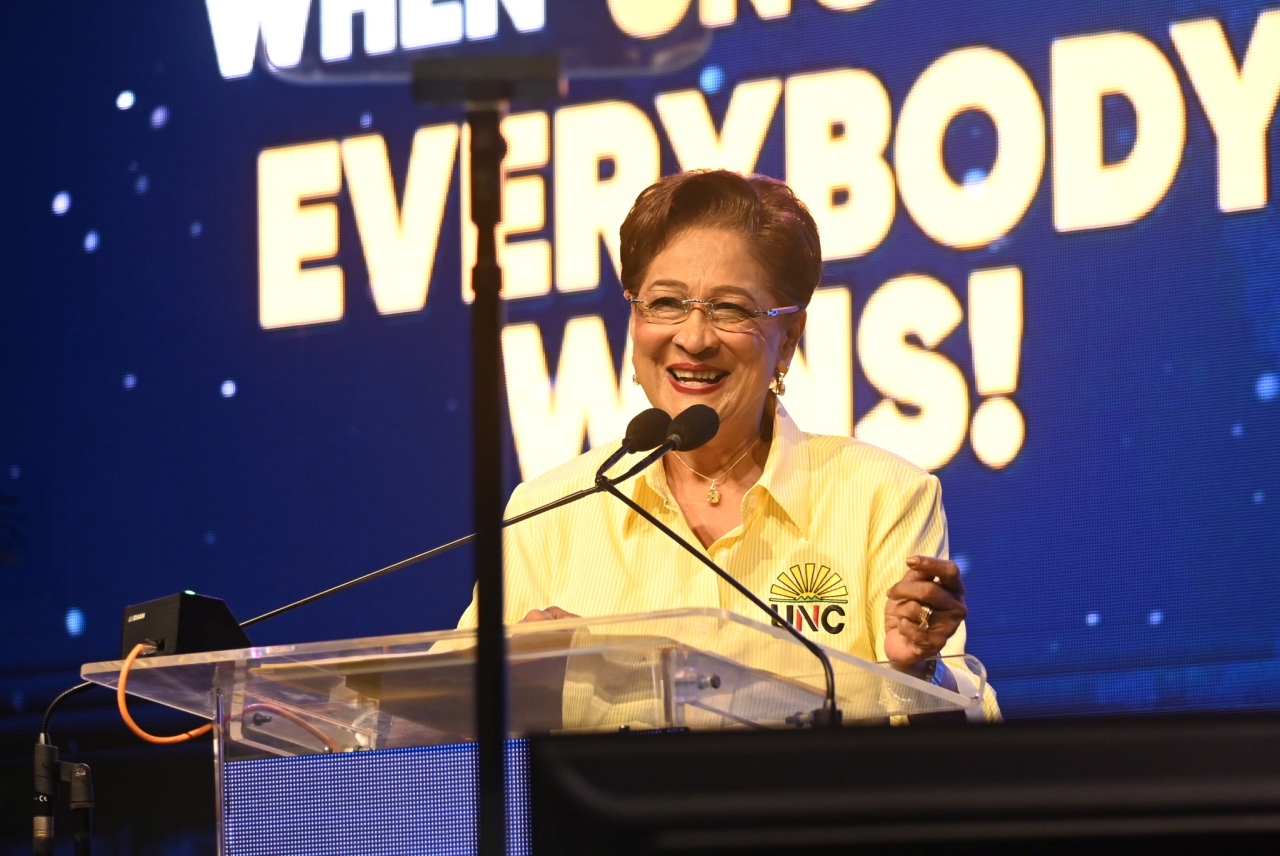
Photo: UNC.
I recently visited Guyana and felt this collective hope.
As part of my research, I have been studying the labour market in the Caribbean, including the aspirations of our young people. Having spoken to university students in Barbados, Guyana, Jamaica and Trinidad, the Guyanese students were the only ones to state that they foresee little challenges to finding employment or starting a business after graduating.
In terms of economic development, Guyana still has many strides to make, but it has been growing rapidly, recording the highest national output growth globally of 44% in 2024.

Photo: Randy Brooks/ CPL T20 via Getty Images.
Beyond the headline numbers, the sense of collective hope was visible when speaking to most people: from taxi driver to student to trade unionist to politician. This is not to say that everyone in Guyana is hopeful, but the collective vibe was evident.
Guyanese largely believe that the future will be brighter.
Contrast this with Trinidad and Tobago where collective hope seems to be waning. One tell-tale sign of this is declining engagement in activities that are needed for collective progress—or diminishing combined efforts.
We are losing hope in the ability of our economy to provide good jobs for us. A smaller share of the working age population has been participating in the labour market, and labour force participation is at an all-time low. It has fallen from a peak of 61.8% in 1984 to 55.1% today.
The decline is largely driven by falling male participation from above 80% to just above 60%. Female participation has increased slightly but is still below 50%.
This begs the questions what are our men doing? Why are they engaging less in the labour market?
When the economy is unable to provide desirable employment, this combined with various social factors, pushes people out of the formal labour market. Some end up in the informal economy, some in the illegal economy, and some emigrate. We know stories of all.
This decline in combined effort is not limited to the labour market.
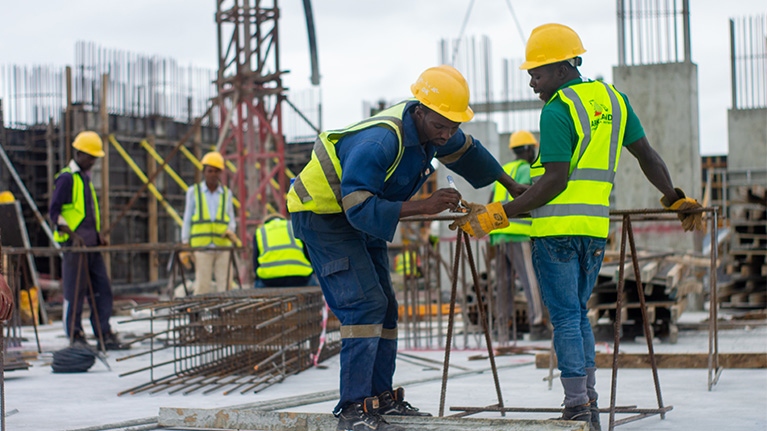
Photo: BN Americas.
We are also losing hope in our democracy, as a lower share participate in political processes. Voter turnout was at an all-time low in 2025 at 54%, down from 66.8% in 2015.
With the risk of war in our region looming large and relations with our Caricom neighbours entering unchartered waters, the importance of participating in choosing who sits at the helm could not be more apparent.
And, we are losing hope in our ability to reach others through acts of charity. According to (the most recent) data from the World Values Survey, the share of people in T&T who reported active membership of a charitable/ humanitarian organisation was 9.6% in the 2010-2014 wave, down from 13.7% in the 2005-2009 wave.

We need to actively engage in our democracy, our economy and with our people to shape our country’s future. We need collective combined efforts to build.
Declines in these efforts can then result in a vicious cycle—the more we lose hope, the less we engage and the more dire the situation becomes. So, we lose a bit more hope, engage a bit less, etc, etc.
So how do we break this cycle? There is no easy answer to this question. But as with most collective problems, a concerted effort is needed to nudge society in the right direction.
To begin this process of change requires asking and clearly articulating the answers to some fundamental questions at the national level—which we have not been doing with any degree of seriousness.

Photo: Daniel Prentice/ Wired868.
For example, what do we stand for as a people? Where would we like to be as a society? How can we get there given our shared resources (physical and human)? And, how do we advance together, without leaving some of our citizens behind?
My hope for 2026 is that, perhaps, we start taking these questions, and our shared future, seriously.
On most maps, Trinidad and Tobago is a small smudge near the mouth of the Orinoco River. In real life, Read more
I don’t recall ever seeing such a high level of apprehension in our space. Do you? It’s coming from a Read more
Thinking about the issue of belonging, I have been wanting to return to the subject of patriotism. I came across Read more
“[…] Rachel Price made this observation reflecting on social media: some things that may have been deemed shameful a mere Read more
“[…] By praising Donald Trump and stating that this country is proud to be aligned with US Secretary of State Read more
“[…] Some teachers have already expressed support for a police presence, noting that officers are not bound by the Ministry’s Read more

Want to share your thoughts with Wired868? Email us at editor@wired868.com.
Please keep your letter between 300 to 600 words and be sure to read it over first for typos and punctuation.
We don’t publish anonymously unless there is a good reason, such as an obvious threat of harassment or job loss.
