 Wired868 Wired868 for smart sport news and opinion
Forty years ago, while I was pregnant, I fell into a pothole. Fortunately, the fall did not terminate my pregnancy, but I still have the scar on my foot as a reminder.
Forty years later our country continues to be haunted by potholes, despite owning the Pitch Lake and producing bitumen for many years. What can we learn from our failure to manage potholes throughout our country?
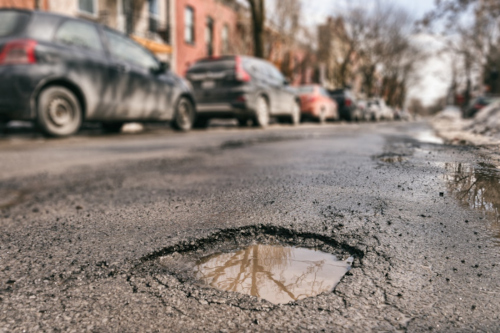
(Copyright Holts Auto)
Life is not a perfectly paved road and potholes will show up at various times. We continuously must choose how to react to the potholes.
Do we continue to walk around them, or find long-term solutions to repair them? Do we ignore the potholes, and allow them to get wider and deeper?
Do we use the excuse: “life is not perfect” to avoid expending any effort to correct issues that affect us?
Like many systemic problems, such as crime and corruption, it is difficult to navigate around them. A re-design of our systems and processes is needed to prevent the crime and corruption from becoming more deeply entrenched.
In other instances, do we engage in quick temporary repairs at the risk of the reappearance of the pothole?
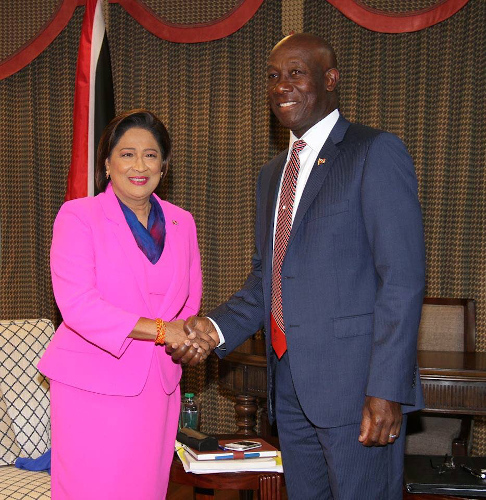
(Copyright Newsday)
There is no single fix and every time I walk or drive around a pothole, I ask the question: “Why do we tolerate this level of incompetence?”
Is it that many of us live in our little bubbles and are not aware of the extent to which this ignoring of potholes is undermining the foundation of our society? Or are we so afraid of change that we prefer to live with this proliferation of potholes rather than to alter the way we do business?
Our society is at a stage where we must urgently navigate the potholes of life. We are no longer able to steer around the potholes or create temporary, inefficient, or even harmful fixes for our problems.
We need a deep, systemic redesign to be able to create a non-destructive future for our children and grandchildren. For example, we need leadership that is courageous enough to tackle both white-collar crime and gun violence.
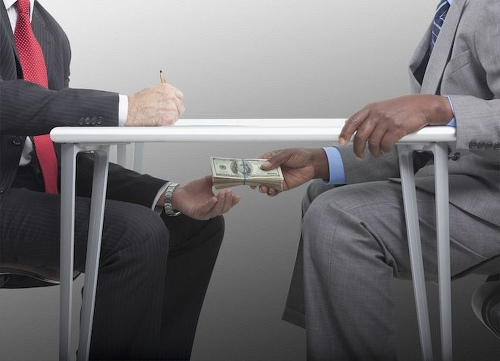
(Copyright Canadian Business)
We need leaders who are strong enough to transform customer service amongst our public servants. We need leaders with the ability to communicate effectively but still be empathetic. We need leaders who will provide us with a vision of the future that we can all embrace.
A look around the globe and you will see Trinis excelling in various fields. Undoubtedly, we are gifted with intelligent people, and the necessary resources are available. What is missing is the leadership to make new decisions and choices that are in the national interest.
It is time for Trinidad and Tobago to embrace new ways of doing things. By actively embracing new behaviours, we will demonstrate that we have the audacity to help our country live up to its potential.

(Courtesy Maria Nunes/ Wired868)
Potholes will turn up at every turn to challenge our self-belief and whenever they turn up, it is an opportunity to redesign our roads and make life smoother.

“[…] It’s not necessarily that I don’t like you—it’s just immensely discomforting to be up close and personal. “It feels Read more

In 2005, Thomas Schelling won the Nobel Prize in Economics for his work on cooperation and conflict. Schelling’s work largely Read more
“[…] I urge our PM not to use the word ‘coolie’ to self-reference. I accept the fact that you may Read more
In two years, I will be a pensioner myself. So when I say the upcoming budget must increase the old Read more
“[…] ‘No rule was broken’ is a legal answer to a question that isn’t, at its heart, legal. It’s a Read more
Is this new UNC Government celebrating our Independence, or declaring its independence from public accountability and the rights of its Read more

Dennise Demming grew up in East Dry River, Port of Spain and has more than 30 years experience as a communication strategist, political commentator and event planner. She has 15 years experience lecturing business communications at UWI and is the co-licensee for TEDxPortofSpain. Dennise is a member of the HOPE political party.