 Wired868 Wired868 for smart sport news and opinion
When I reach into the freezer for something from my hoard of cooked dishes, I am often reminded of the origins.
The oildown from when breadfruit kept calling me, and I was roasting, mashing, and cubing obsessively.
A version of a shepherd’s pie with small chunks of stewed goat nestling under a blanket of herbaceous roasted, then mashed, breadfruit with no cheese, was the last episode, but I had done enough to store the starch and protein separately, so I could try a different combination another time.
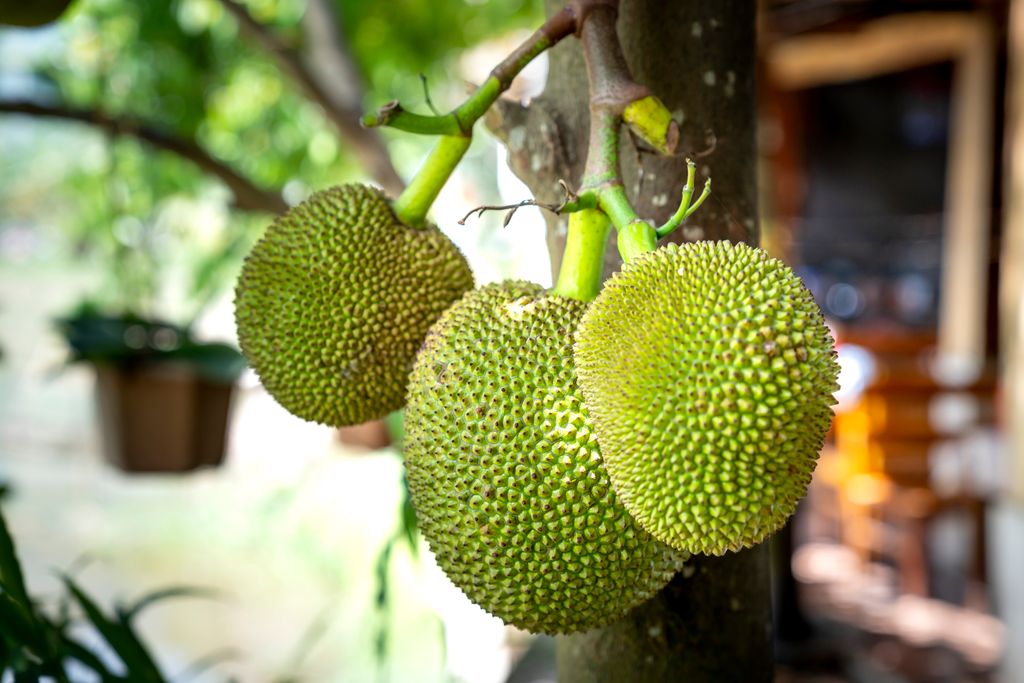
Taking out the oildown, sent me mentally traipsing back to one of the stalls I frequent. Hearing my intention, the vendor told me she had made oildown the day before because this batch of breadfruit was the yellow, creamy kind and “it cook nice”.
Curious as to how people do their thing, I asked her what she put in it. She preferred callaloo bush to regular bhaji.
Did she use ochroes, I asked, eyeing up a lovely heap. “Some people does put it, but I doh really like it in oildown,” was the response. I purchased and went on my way. It was one of the days when I felt like cooking.
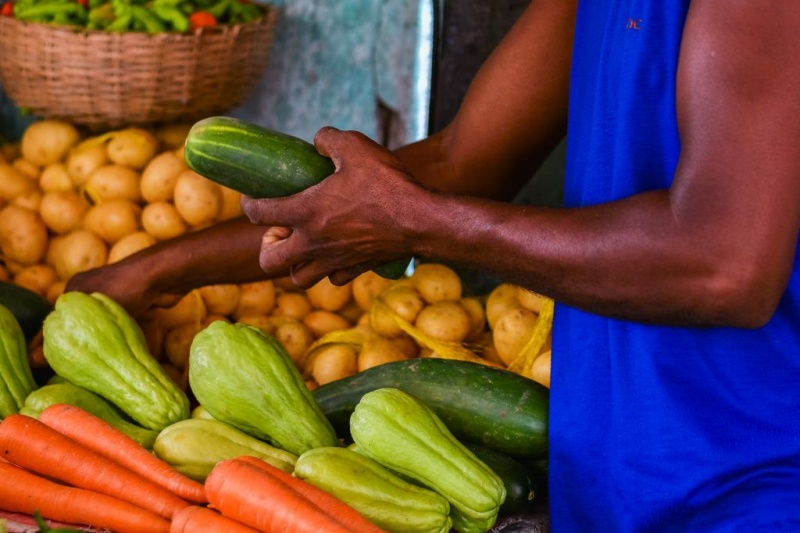
I went to one of the larger greengrocers in Aranjuez, where the variety is wide, but the prices are hot. I wanted saltfish (I was thinking about bhaji rice, too). The beautiful stack of saltfish was appealing. How much a pound? $35. I left it right there.
I visited the guy who sells from the back of his station wagon. I bought chive, chadon beni, pimentos and tomatoes, and he gifted me a hot pepper and two limes. He always tosses in something extra.
From the small grocery nearby, I got pigtails and packaged, boneless saltfish, much cheaper than the grand greengrocer, who was selling ginger at $25 a pound when I got it elsewhere at $18.95.
I recalled those encounters as I took out one of the two containers of oildown nestled next to two containers of bhaji rice (one of which I might take out later).
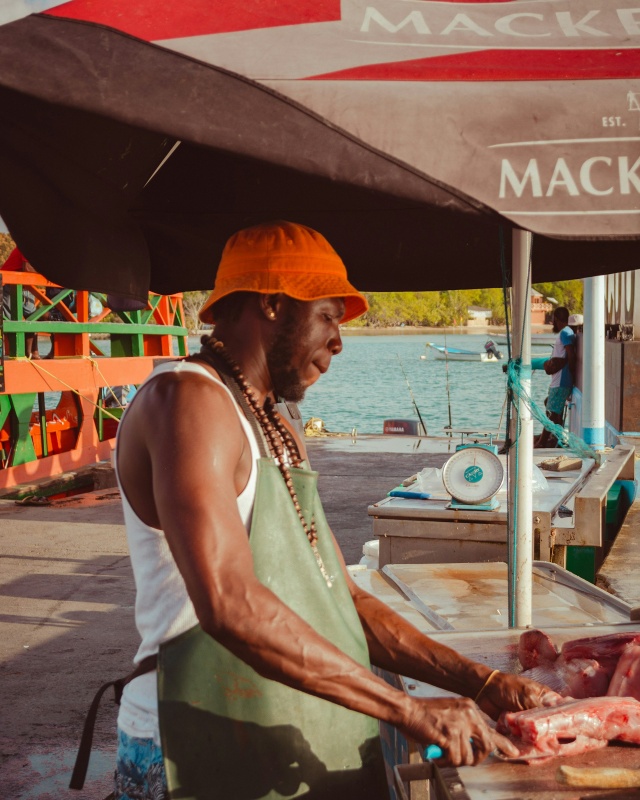
Preparing fresh shark, Buccoo Beach, Tobago. Photo by Ruona Gbinije on Unsplash.
It happens often when I forage in my freezer. I look at the labels and recall the circumstances of their preparation.
The ole talk, the generosity of vendors—surly ones lose my custom quickly—I believe that your spirit permeates produce, just as it does when you are cooking. That’s why I am grateful that I can cook only when I am in the mood.
And it is in those moments of extraction, when I am exploring the contents of my freezer that I am reminded of the backstories behind them, and I find an extra pleasure in their existence.
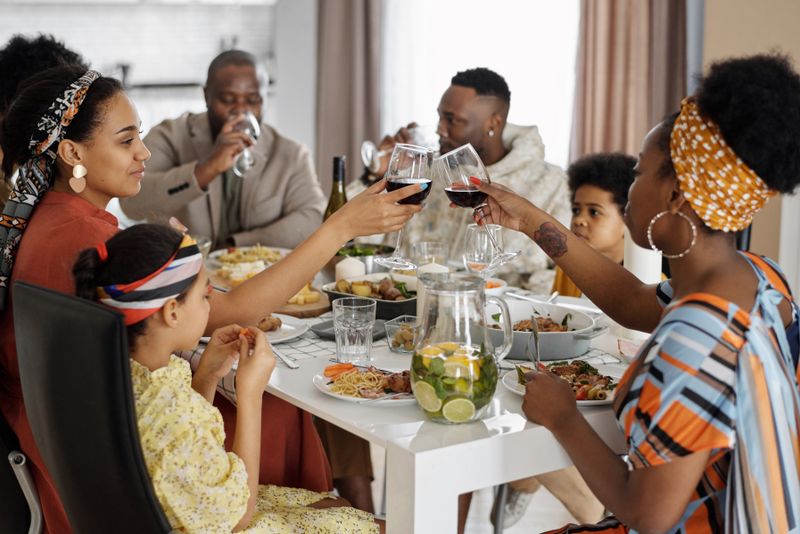
It is often said that our warmest memories are connected to food. We recall childhood through the poignancy of aromas, tastes, domestic chaos and the blanket of family.
Memory is an act of distillation. We pull out what we need at any given moment. It is not always a pleasant journey, but when we connect happily, it is often in an environment of sharing a meal.
I find that same kind of connection in the food in my freezer. I hardly keep uncooked food in it. It’s one of my quirks. I buy things when there are specials.
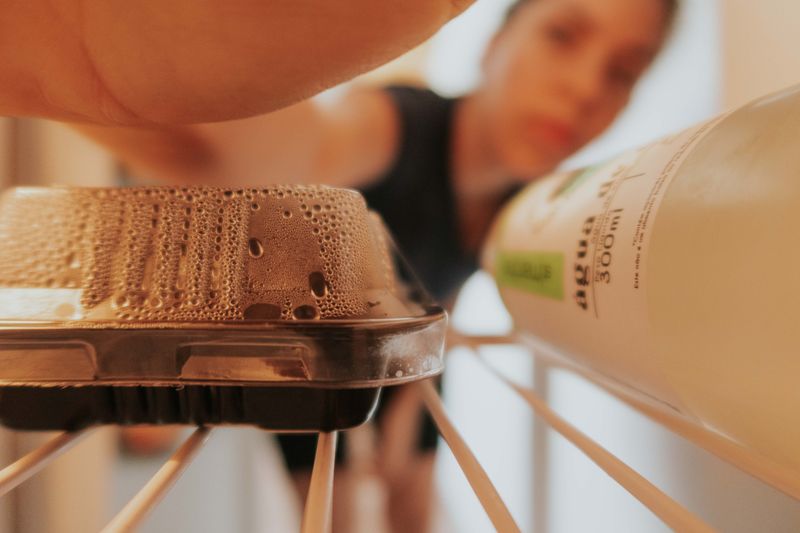
I can go for long periods without cooking, but when I get the urge, I get ambitious.
Fresh herbs and vegetables are my undoing. When I bring them home, I cannot bear to leave them to languish in my fridge. So I prep them and cook up a range of dishes and store them away.
I figure if I spend two days of prepping, cooking and freezing, it is worth it for the liberation it brings.
But each foray comes with its stories, and retrieving a dish from the freezer is like reliving an experience.
When we talk about food and memory, we usually invoke an ancestral link. The ingredients and techniques used by our foreparents, the cultural traditions we follow; they are a powerful bond that reminds us that we belong to a community.
I suppose there are several strings that weave the tapestry of memory.
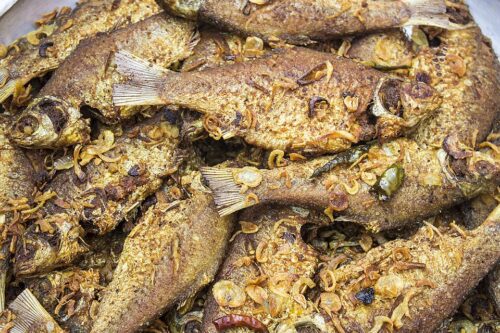
My father used to love to go fishing, and when he returned with his fresh catch, my mother would immediately clean and fry them.
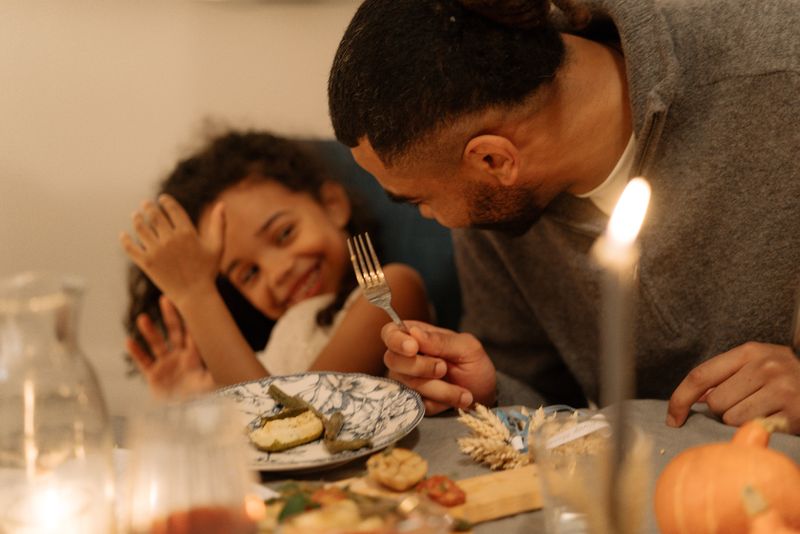
We would sit around the table, and he would break off pieces and make sure there were no bones as he fed them to us; the way birds feed their young. I suppose it is why I love fried fish, because that is a memory of love and togetherness.
Although I am passionate about cooking, I disliked being in the kitchen as a youngster. My mother operated with a kind of chaos that bewildered me, and looking back, I think it caused sensory overload.
I learned to cook on my own, and it became a series of adventures, many of which were disasters.
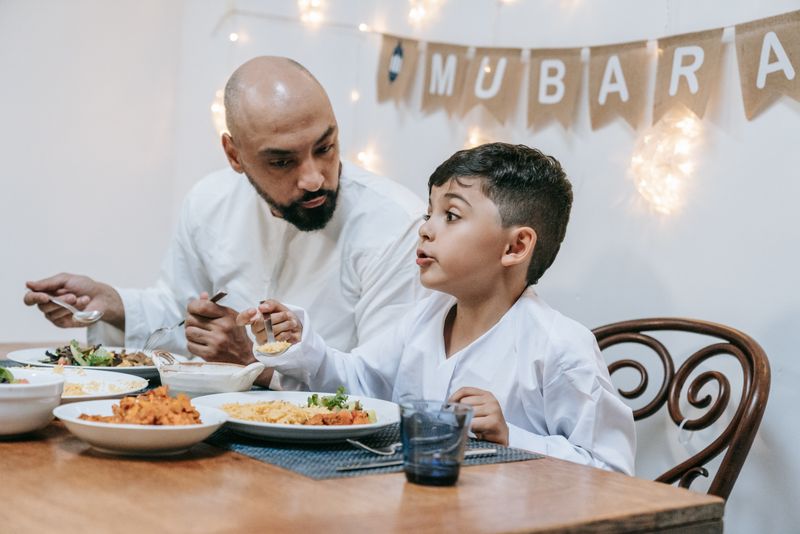
I think I was driven by a desire to reproduce the dishes that I had loved in childhood. I wanted to make food the way my grandmother, my mother, and my father did.
Looking back, I can see that they were probably attempts to revisit the warmth of those experiences.
It was a way of reminding me of a time when life was far less complicated and how simple pleasures you took for granted linger on your palate and memory.
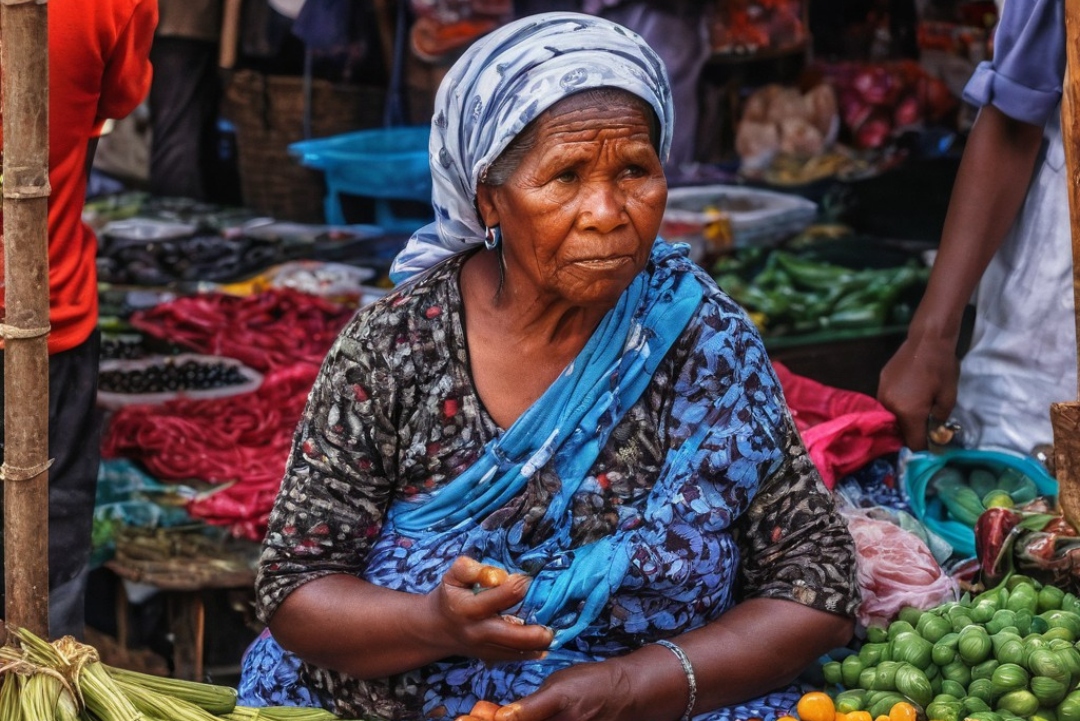
She wasn’t one of my regular produce vendors—her stall was just off my usual tracks and her array of vegetables Read more

Ask someone for help to resolve an issue and more often than not they will tell you that YouTube is Read more

I was a fair way into my column when the call came. It was from one of the sharpest, most Read more

I have a question—a few actually. They are related to the policies at the Eric Williams Medical Sciences Complex, commonly Read more
For some time, the thought of approaching a memoir as a collection of essays has been floating about. Assembling memories Read more
Hard to imagine that Sade is 67. For decades, she wooed the world with her mellifluous voice and songs about Read more
Vaneisa Baksh is a columnist with the Trinidad Express, an editor and a cricket historian. She is the author of a biography of Sir Frank Worrell.

