 Wired868 Wired868 for smart sport news and opinion
“[…] As the applause faded, I thought about our inconsistent and unreliable water schedule, even in the rainy season. I’ve seen farmers complain about losing 35% of their crops to relentless heat.
“[…] Data centres are water and energy monsters… This is not development—it is deferred reckoning…”
The following Letter to the Editor on the potential downside of giant data centres in Trinidad and Tobago was submitted to Wired868 by Salaah Inniss of Santa Rosa Heights, Arima:
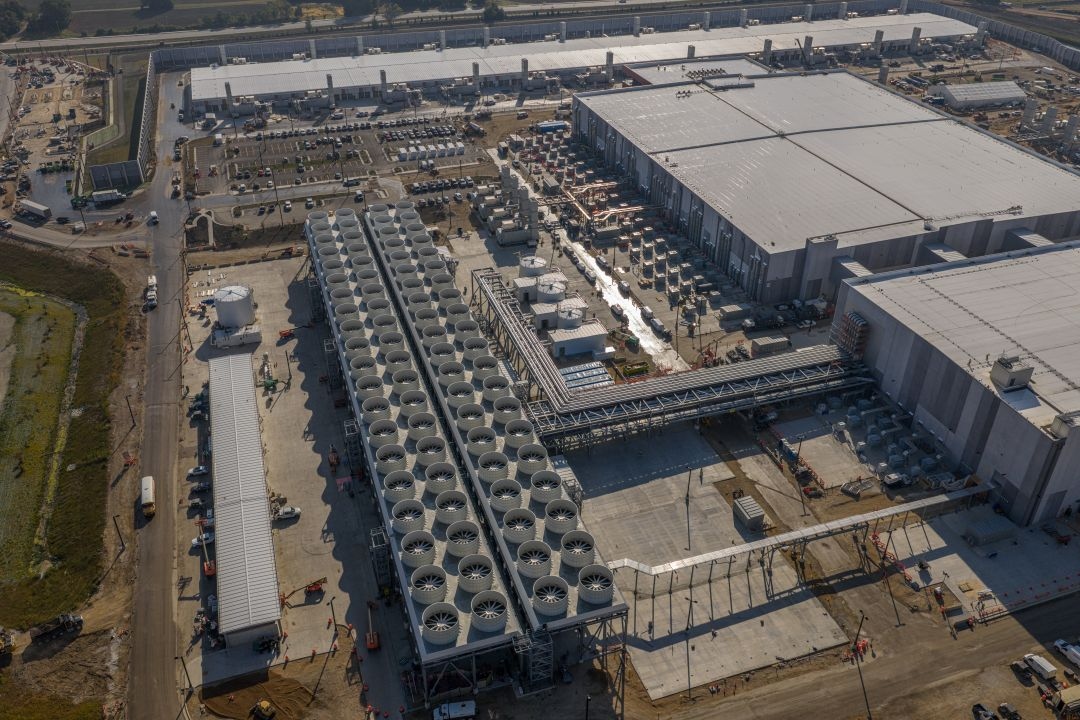
I watched the news last week as Prime Minister Kamla Persad-Bissessar signed memorandums of understanding with Hummingbird AI Holdings and Ernst & Young, paving the way for AI (Artificial Intelligence) data centres of 150 MW and 300 MW capacity.
For those unfamiliar, an AI data centre is essentially a massive warehouse filled with thousands of powerful computers, which run nonstop to train artificial intelligence systems.
With an opportunity for optics, cameras flashed, hands were shaken, and officials spoke glowingly of the creation of jobs—over 5,000 of them. But as the applause faded, I thought about our inconsistent and unreliable water schedule, even in the rainy season.

Photo: UNC.
I’ve seen farmers complain about losing 35% of their crops to relentless heat. Is this development? Or a gamble we cannot afford?
Government supporters will argue this is precisely what Trinidad and Tobago needs. Foreign direct investment. High-tech jobs. A foot in the door of the artificial intelligence revolution.
The Prime Minister herself framed it as rejuvenation. They will say data centres can use treated wastewater for cooling, not our precious potable supply. They will point to job creation and the promise of economic diversification beyond oil and gas.
The US government helped facilitate these deals, they would note—surely that comes with a level of credibility. In their view, this is progress. To oppose it is to reject the future.
Here is the uncomfortable truth: this is not development—it is deferred reckoning.
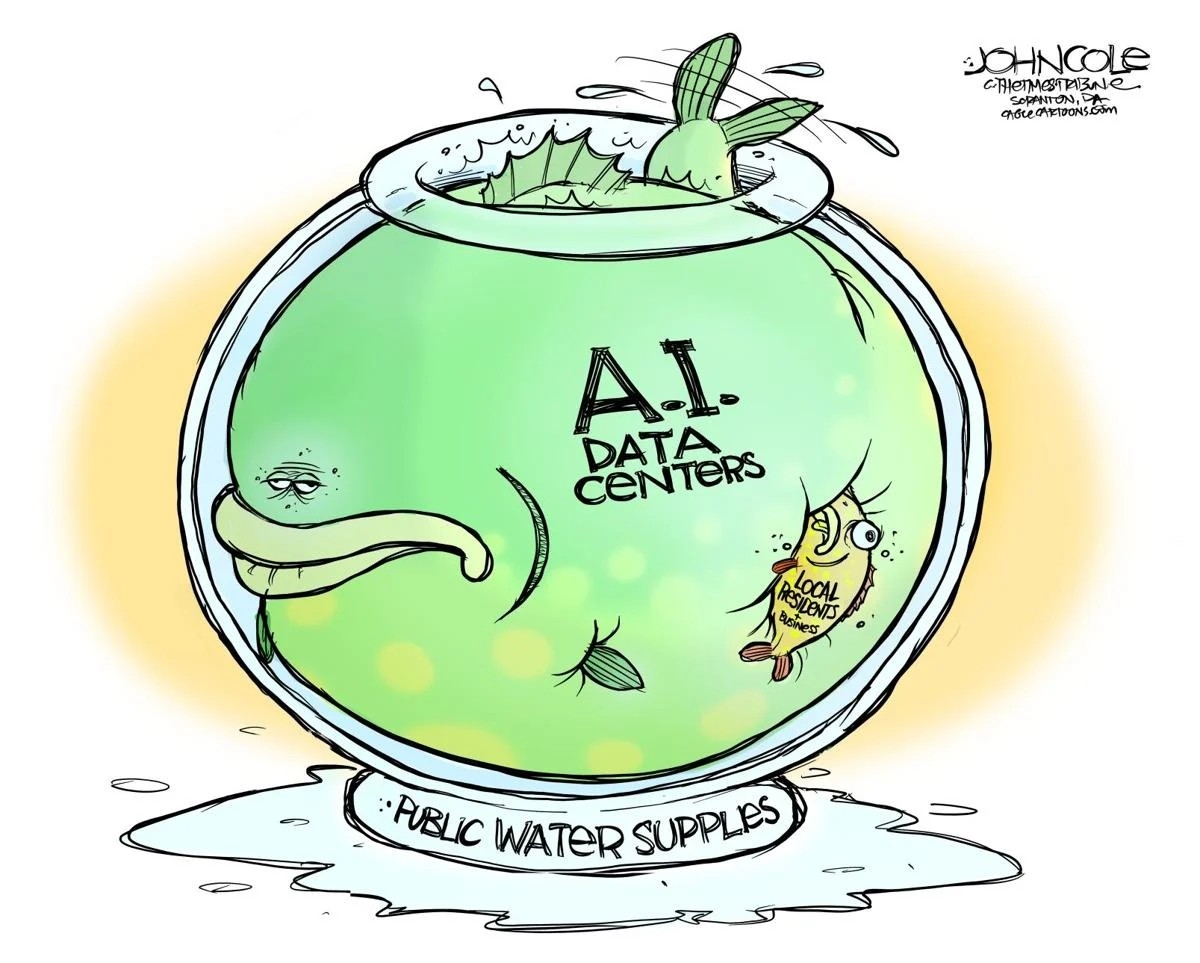
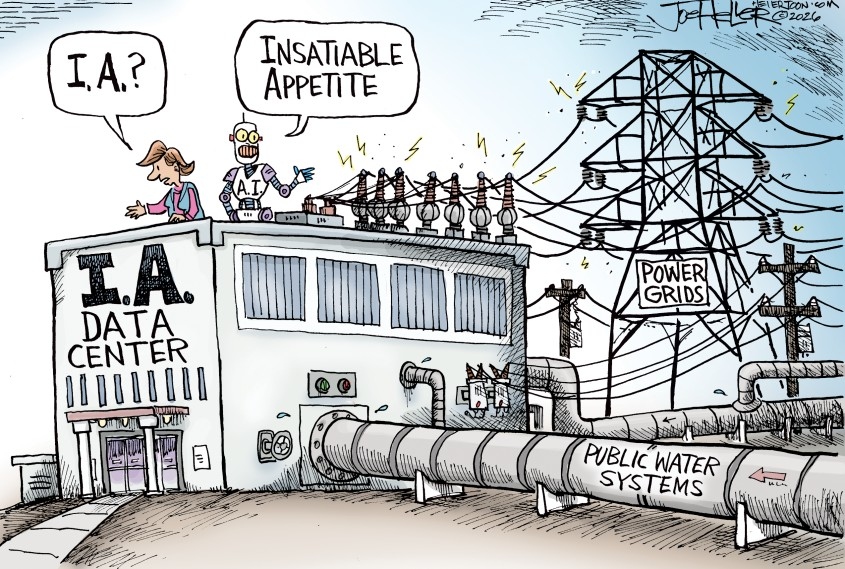
Data centres are water and energy monsters. Research has shown that a hyperscale facility or giant data centre can consume up to 20 million litres of freshwater per day, which is equivalent to the usage of a small city like San Fernando.
And most of that water does not return—up to 80% evaporates in open-loop cooling systems. Globally, data centres already consume about 560 billion litres annually, and AI workloads are turbocharging demand. An AI query uses up to ten times the energy of a standard web search.
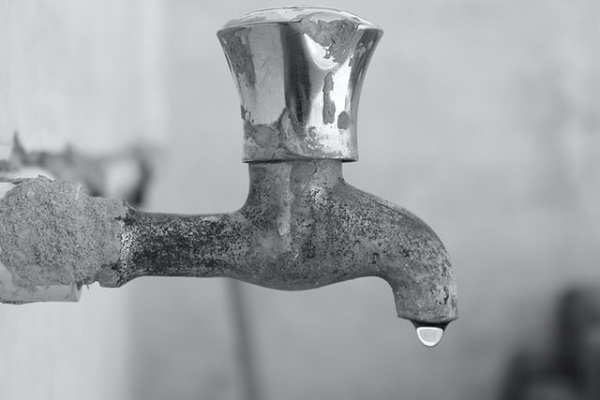
Now place that alongside the reality of our water supply in Trinidad. A country where many households get water from their taps as rarely as once a week. Where WASA has activated dry-season management plans and restrictions. Where agriculture, our food security, is already buckling under heat and drought, with farmers abandoning fields because irrigation is too expensive.
(Copyright Shridhar Vashistha / Unsplash.)
Our four main reservoirs might look healthy now, but climate projections show Trinidad warming at 0.24°C per decade—2.5 times faster than the global average—and rainfall declining across every month. This is the gap that officials refuse to acknowledge.
We have walked this road before. In the late 1970s, the Point Lisas Industrial Estate was carved from what was once Goodrich Bay, Monkey Point Bay, and Point Lisas Bay—beaches and mangroves swallowed by industry, an ecological disaster.
The promise was jobs, prosperity, industrial might. And we got all that, yes. But we also lost the Couva coastline.
We watched mangrove dieback and disease cycles that followed. The cost of putting things right came long after the benefits had been extracted.
Development was never free. It always comes with a price tag. This time, the price might be our precious water.
This brings me to the most critical point: why do we need this now? Our economy is fragile. The 2025 national budget surplus of $3.05 billion, while a victory, was largely driven by higher energy prices—not structural reform.
Moody’s warned that we must “unlock growth” because our existing model is stagnant.
We are still grappling with $25 billion in outstanding public debt. We have a healthcare system struggling to serve the population, schools in need of repair, and a police service underfunded.
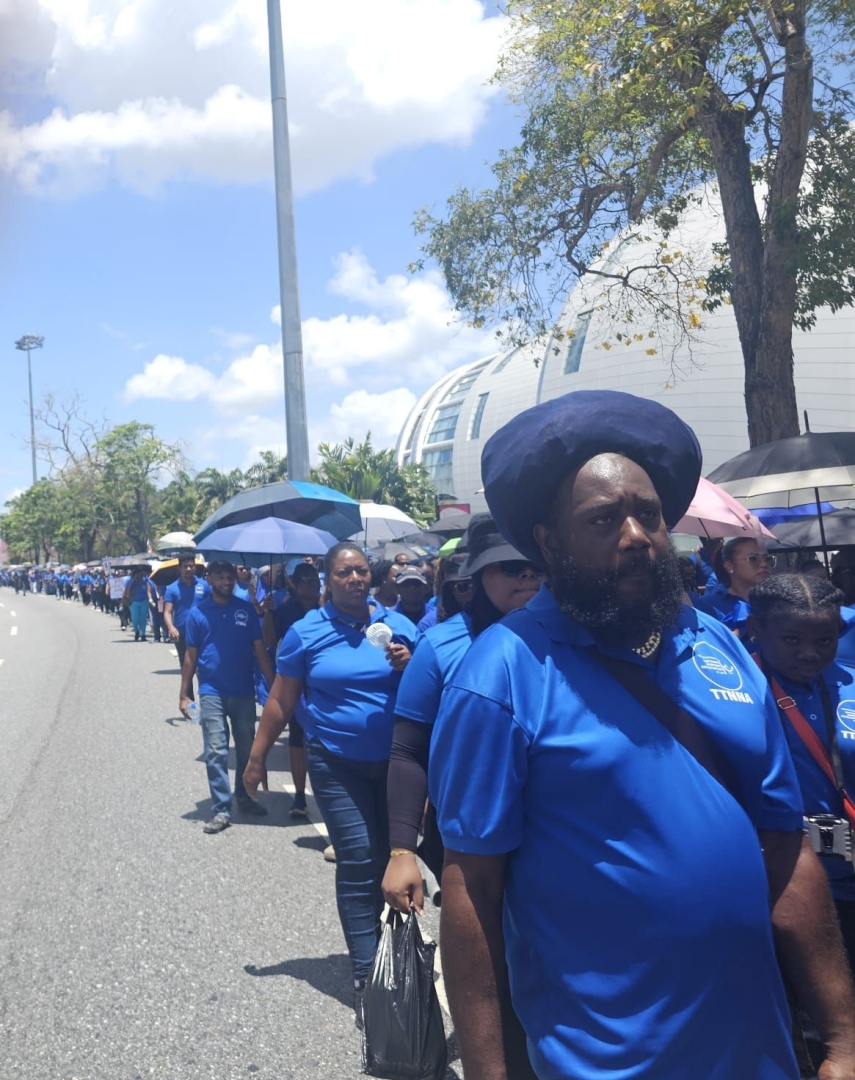
(via TTRNA.)
Yet we are entertaining a foreign-driven megaproject that will consume our water, strain our gas-based grid, and generate emissions that worsen the very climate conditions threatening our agriculture.
This is not diversification. This is doubling down on extraction—except this time, the resource being extracted is our environmental stability.
Our country needs water security. We need a resilient agricultural sector. We need climate adaptation, not acceleration. But what are we getting? An energy-intensive, water-guzzling industry that will compete with households, farmers, and ecosystems for scarce resources.
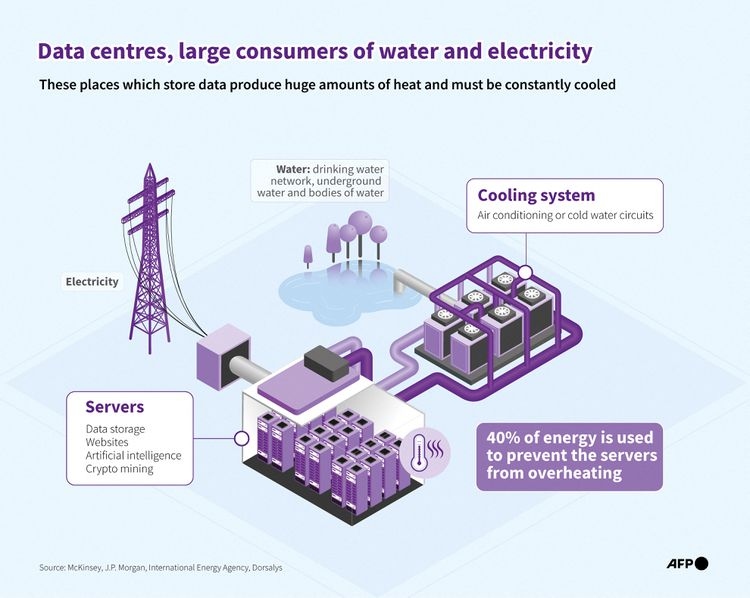
The energy footprint is staggering—the 300 MW facility alone could consume electricity equivalent to a small city, and globally data centres could account for nearly 3% of all electricity use by 2030.
Our energy grid is almost entirely natural gas-dependent, so these facilities will burn fossil fuels, contributing to the very emissions that worsen our drought and heat. This is not sustainable. It is not even rational, given our economic fragility.
Social activist Dr Wayne Kublalsingh put it bluntly: the government is “trying to present something which looks like development, but which is not development”. He is right.

(via UNC.)
The government must immediately commission a comprehensive, independent environmental impact assessment—not a rubber-stamp exercise and the EMA must not compromise its integrity. This assessment must be made public and subject to genuine consultation.
We need transparency on water source plans. If treated wastewater is the answer, prove it works at scale. We need a guarantee that domestic and agricultural water supply will be protected.
We need to ask: why pour billions into this, when our schools, hospitals, and crime-fighting infrastructure are underfunded? Citizens, parents, and young people: demand answers.
Ask your government MP: how much water will these centres consume daily? Where will the energy come from? What happens during the dry season when reservoirs drop?
This is not opposition for its own sake; it is stewardship for our children’s future.
Development should not mean choosing between foreign investment and the water our own children drink. After all, sustainable development is development that “meets the needs of the present without compromising the ability of future generations to meet their own”.

“[…] It’s not necessarily that I don’t like you—it’s just immensely discomforting to be up close and personal. “It feels Read more

“[…] I urge our PM not to use the word ‘coolie’ to self-reference. I accept the fact that you may Read more

In two years, I will be a pensioner myself. So when I say the upcoming budget must increase the old Read more
“[…] ‘No rule was broken’ is a legal answer to a question that isn’t, at its heart, legal. It’s a Read more
Is this new UNC Government celebrating our Independence, or declaring its independence from public accountability and the rights of its Read more
There is a strange irony in the national conversation now unfolding. We are being asked to consider hosting artificial intelligence Read more

Want to share your thoughts with Wired868? Email us at editor@wired868.com.
Please keep your letter between 300 to 600 words and be sure to read it over first for typos and punctuation.
We don’t publish anonymously unless there is a good reason, such as an obvious threat of harassment or job loss.