 Wired868 Wired868 for smart sport news and opinion
The UNC won the 2025 general elections promising to transform Trinidad and Tobago’s economic fortunes, treat workers fairly and address the crime situation—all important domestic issues.
And as expected, as the Kamla Persad-Bissessar-led Government marks a year in office this month, commentators and analysts have opined on their performance in these areas.
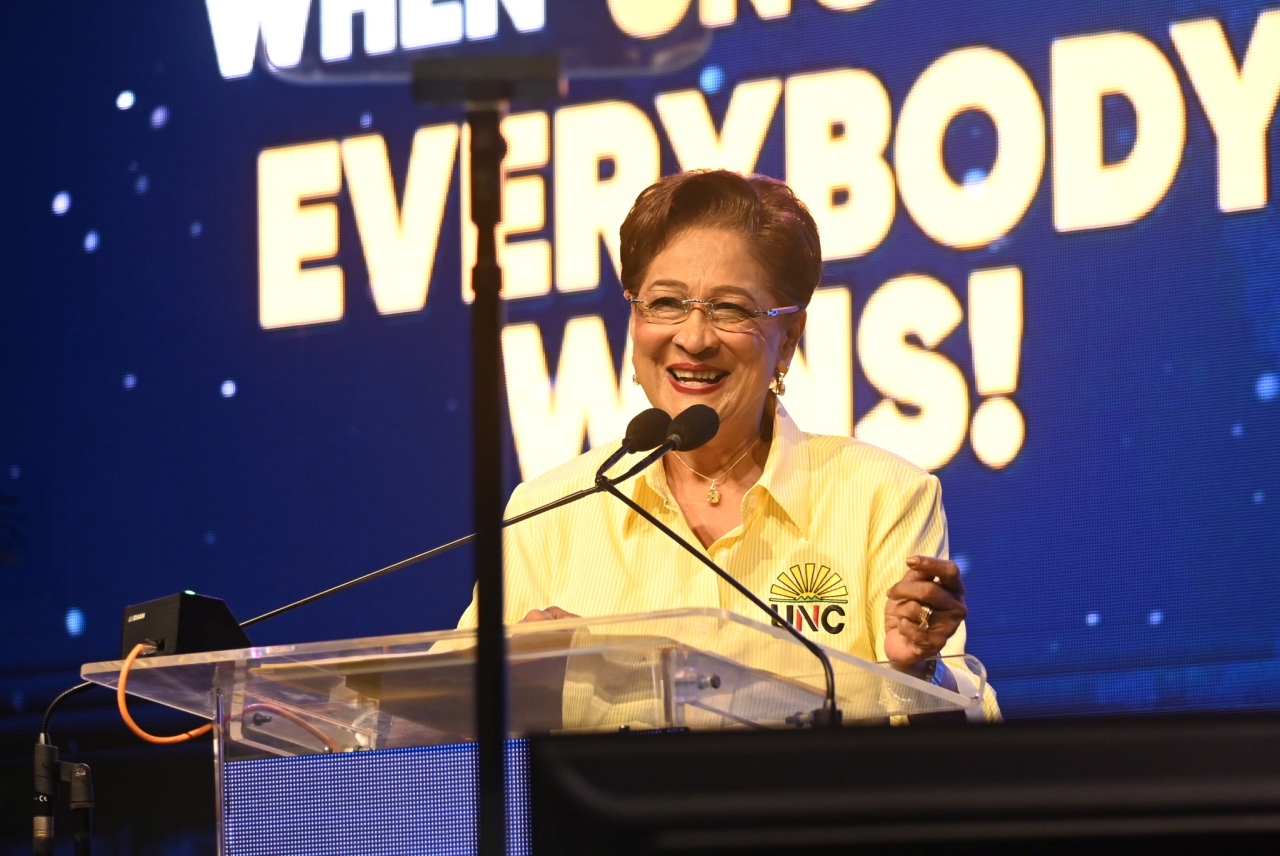
Photo: UNC.
Though opinions defer, what is very clear is that the Government, in its first year, has not been able to defy economic theory—most situations are ‘zero sum’, and both winners and losers emerge.
Unless the economy grows significantly, more good quality jobs are created and crime falls dramatically, everybody cannot win.
That said, although not everyone might agree with the Government’s domestic policies, this is what was (largely) campaigned on, and what the participating electorate voted for. The Government has a mandate for this.
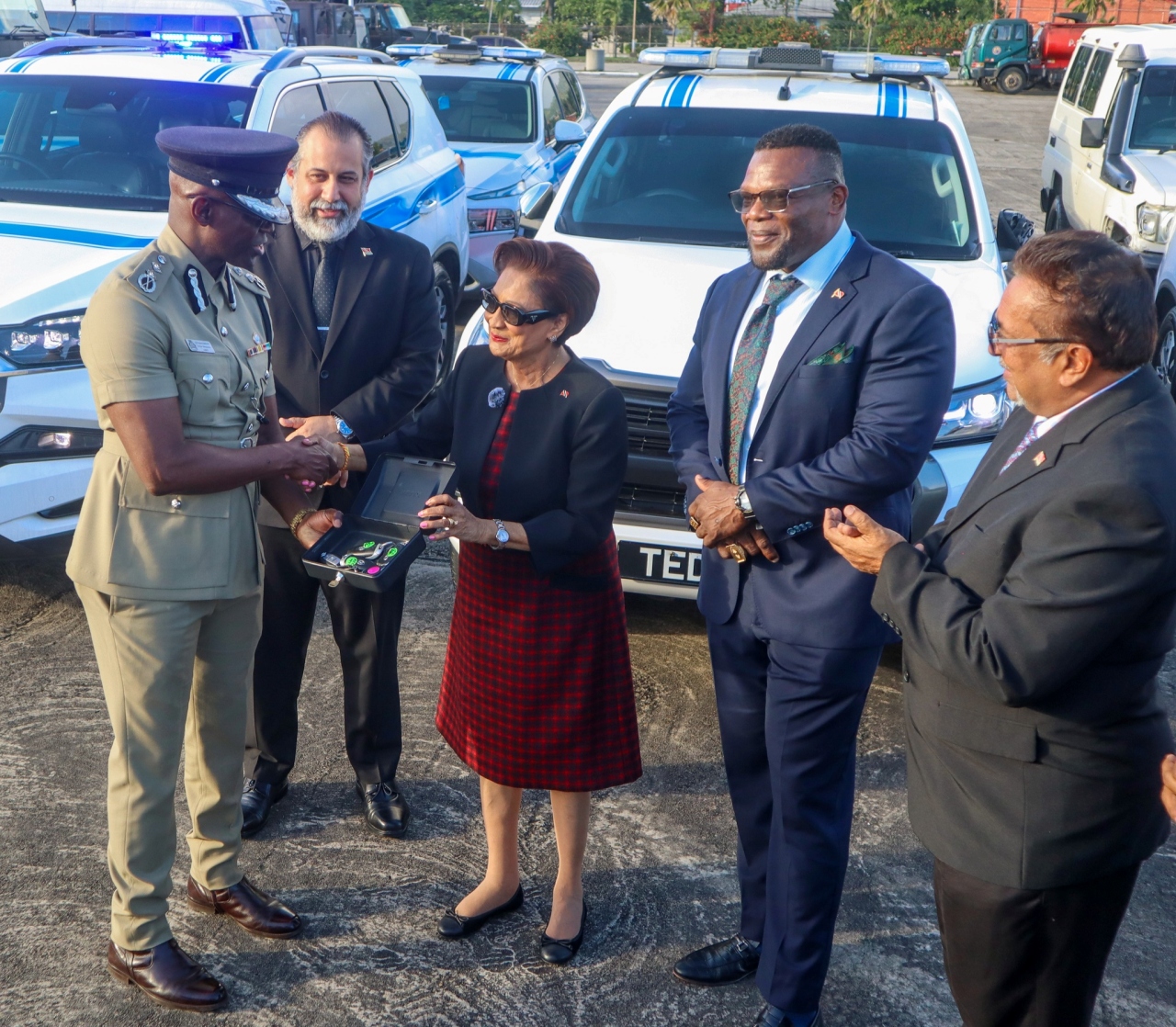
Photo: UNC.
But what about foreign policy?
The cabinet-approved UNC manifesto is available on the Ministry of Planning’s website. The document is 108 pages long.
Nowhere in those 108 pages is there any mention of the words Venezuela, Cuba, United States or Middle East. Designation of entities as terrorist groups is also not mentioned.
“Caricom” appears on pages 18 and 41 in relation to strengthening trade partnerships. The words “foreign policy” are not mentioned at all.
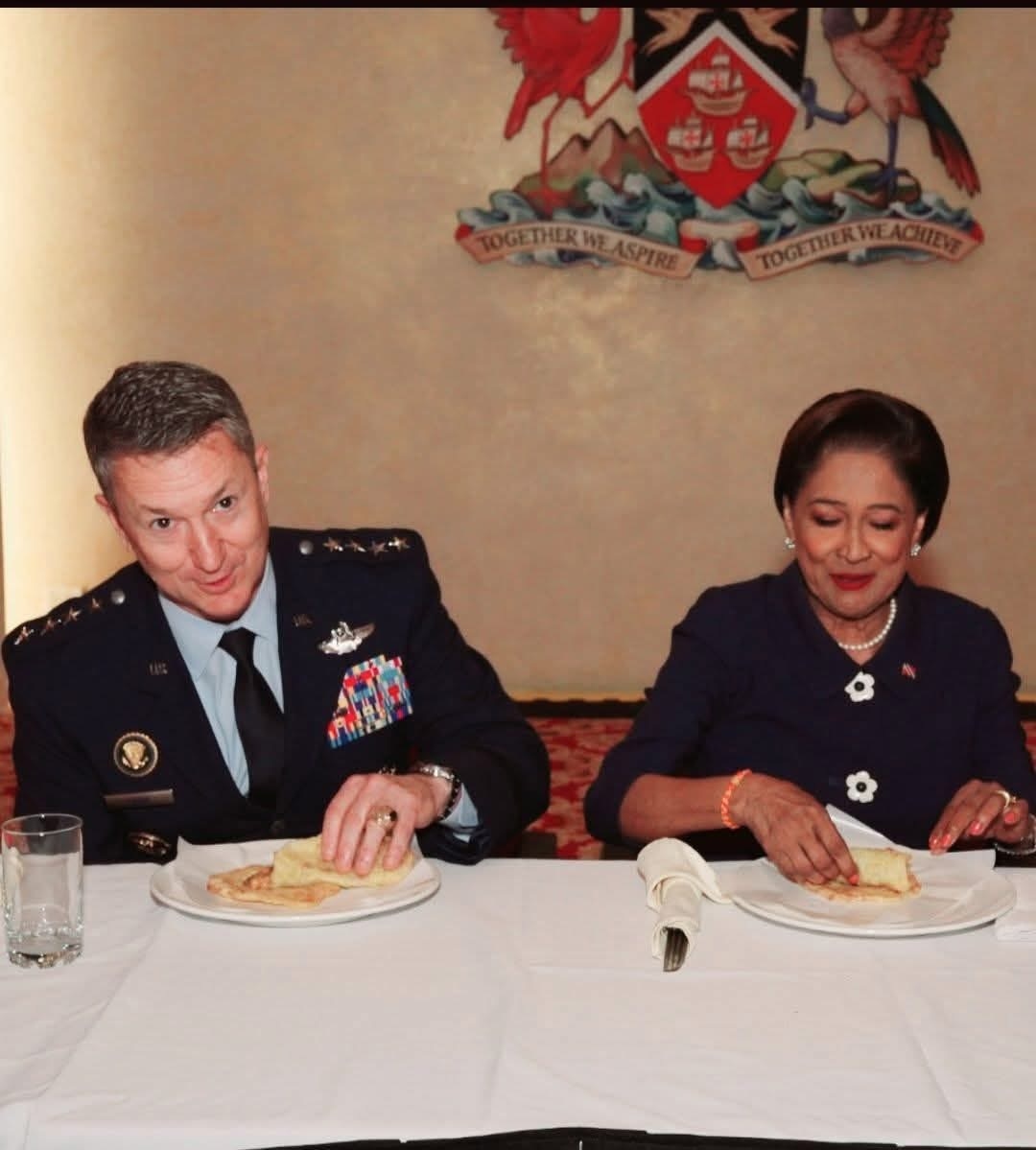
Caine, the chairman of USA’s Joint Chiefs of Staff, is America’s highest-ranking military officer.
Photo: UNC.
In short, the UNC did not campaign on any foreign policy position in the 2025 general elections. Foreign policy is basically absent from the manifesto—and a manifesto is a promise to the electorate.
Yet the UNC government’s foreign policy position is quickly becoming one of the defining features of this administration.
This raises a fundamental question: given our representative democracy system where the electorate votes on issues presented on the campaign trail, does an elected government—any elected government—have a mandate for big issues beyond what is promised during the campaign?
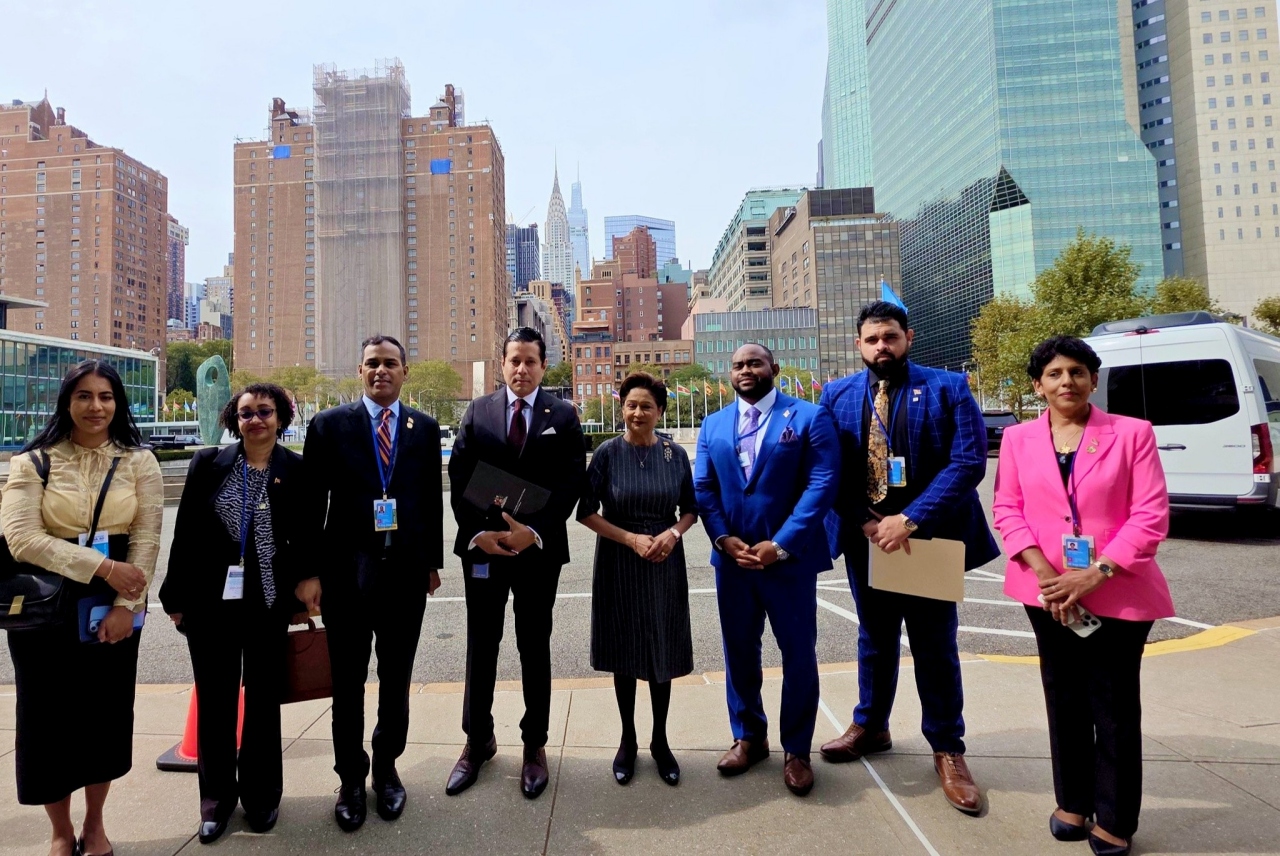
(via UNC.)
And if so, how far does this go? Can a government essentially do whatever it wants without putting this to the people first?
This is particularly important with the ongoing tensions with Caricom, which will undoubtedly change future relations between Trinidad and Tobago and our closest neighbours—neighbours with whom we not only share the Caribbean Sea, but a common Caribbean history and culture.
The big question is therefore: how do the citizens of T&T feel about this?
We do not know the answer to this question as we, the citizens, have not been asked. And in a democracy, such important decisions should be taken to the citizenry.
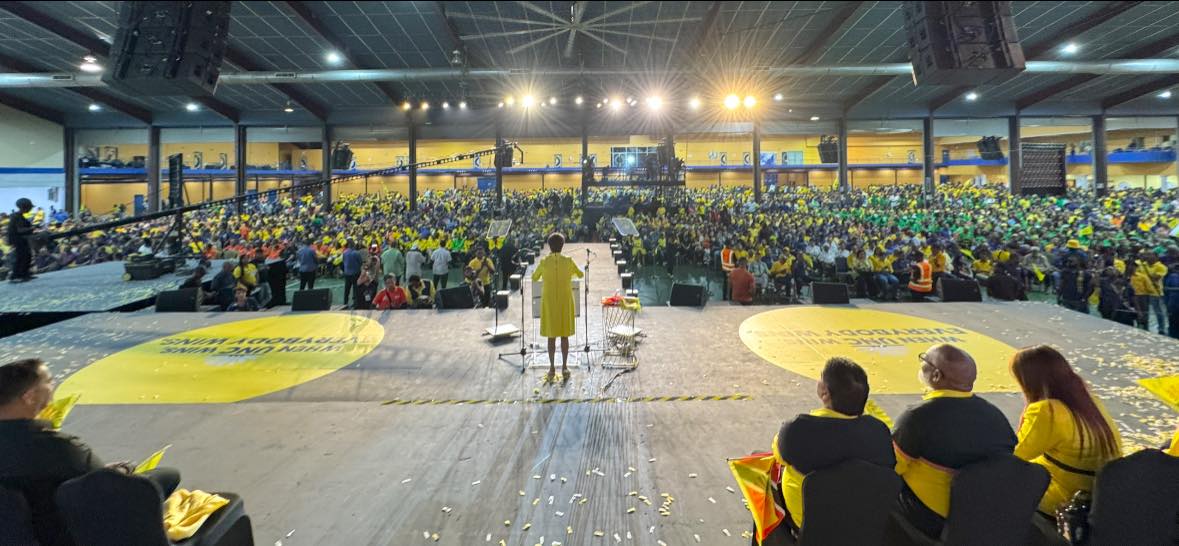
Photo: UNC.
Why? Because history teaches us that agitation against a regional block seldom ends in a unifying outcome.
In the 1959 Jamaican elections, Norman Manley’s PNP won. The PNP was pro-Federation. Alexander Bustamante and the JLP on the other hand were pro-independence, and after much agitation, a referendum was held in 1961.
Jamaicans voted in favour of independence (and against Federation). Manley called elections in 1962 and lost to Bustamante.
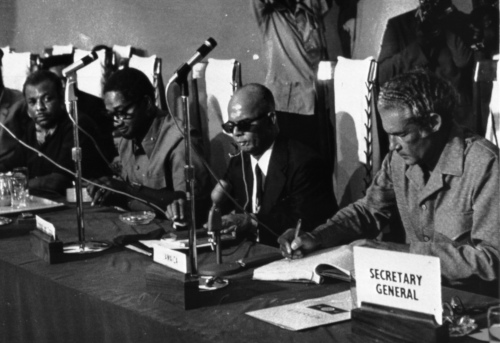
At his side (from second to right to left) are Trinidad and Tobago Prime Minister Dr Eric Williams, Guyana Prime Minister Forbes Burnham, and Barbados Prime Minister Errol Barrow.
(Copyright AP Photo.)
When Jamaica exited the West Indies Federation it was disappointing, but not entirely surprising, as the JLP campaigned on independence and won.
Take a more recent example. The United Kingdom Independent Party (UKIP), a fringe party at the time, agitated against the European Union (EU). This led to a referendum where the UK voted to leave the EU in 2016.
In both these cases, the agitator did not hold the reins of power. They first had to convince the people of their foreign policy position before being elected.
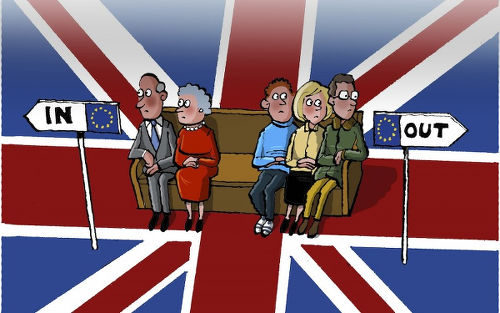
(Copyright Corbett Report.)
We in Trinidad and Tobago have therefore found ourselves in a peculiar situation.
Although our relationship with Caricom has been changing in the past year, and the Government has deviated from our traditional foreign policy position of neutrality to a more aggressive stance, we have not been directly asked about this as a population.
So where is the debate unfolding? On social media where not everyone is represented, loud voices and bots push hate and division, and memes have more value than intellectual discourse? Or in traditional media (print, TV and radio), which have suffered from declining engagement in recent years?
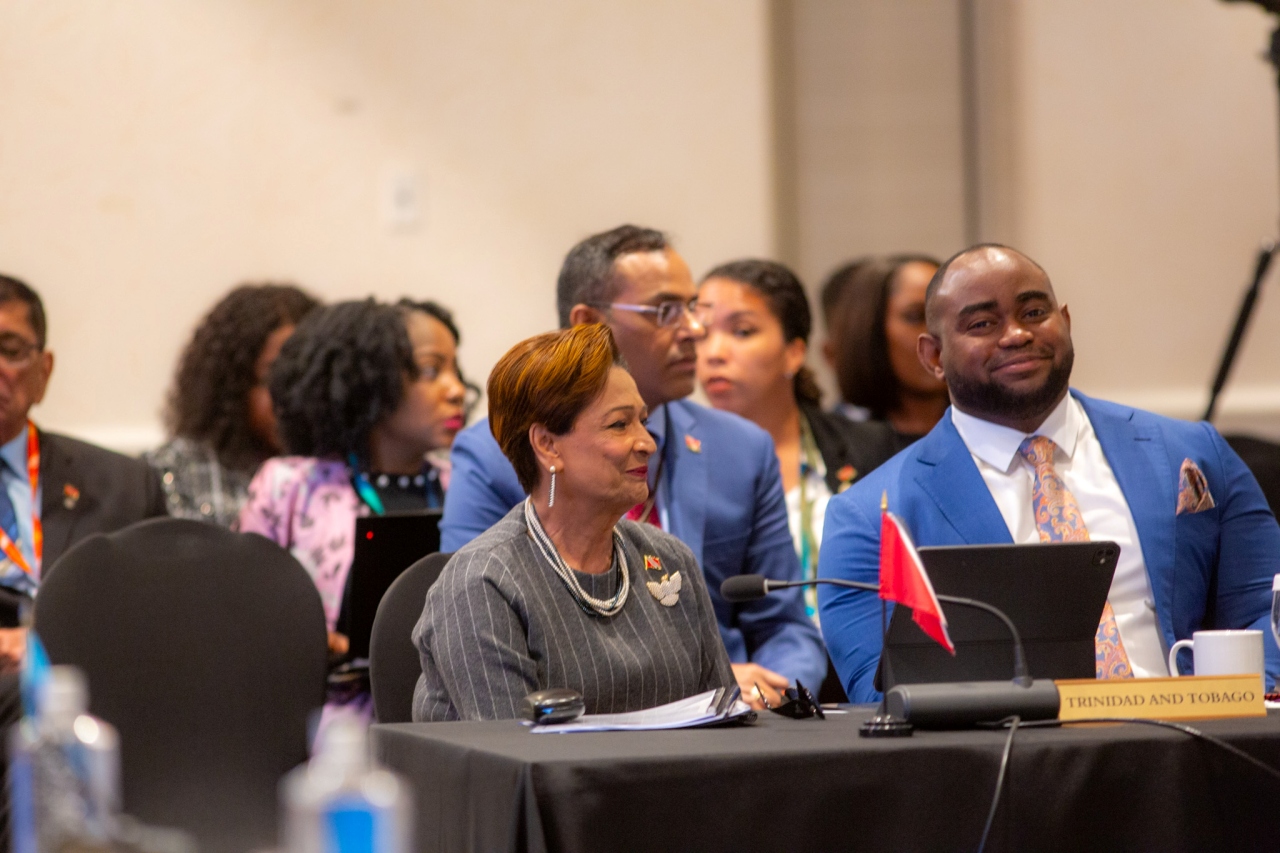
Photo: Ministry of Foreign Affairs and Caricom.
The fact remains, unless a government goes to the people with their policy position and consults with them, we have not been asked.
I am not suggesting that the Trinidad and Tobago government wishes to leave Caricom—the PM has said this is not her objective. But equally, the Government has not clearly articulated its policy position on Caricom either, and what the “end game” of this impasse might look like.
What we have seen, is increasing tensions, threats to withhold funding, talk of Caricom being an unreliable partner, references to corrupt backroom operations and non-attendance at important Caricom meetings.

Photo: Caricom.
In the absence of a clear policy, this can appear like one foot in, one foot out.
Inevitably this leads to a breakdown in trust. The issue is that trust is not broken with this Government alone, it is broken with Trinidad and Tobago. With all of us.
Trust is easy to break, but difficult to build.
We do not know how this dispute with Caricom will unfold, but what we should know is how the people feel about it. Let us ask them.
|
Wired868 has provided readers with solid, independent journalism since 2012. If you appreciate our work, please contribute to our efforts. Support Independent Journalism |

Thirteen years have passed since health care workers, Lake Asphalt employees and other workers last received a salary adjustment. In Read more
Having just celebrated 64 years of independence, discussions as to whether Trinidad and Tobago is better off since gaining independence Read more
“[…] To the ‘UNC family’ she offers the old tired hymn: lagoons, cane fields, salt and rice, ponds and springs—the Read more

Some years ago, I lived and worked in Sierra Leone. I arrived in the capital, Freetown, just ten years after Read more
“[…] The media release by the heads of judiciaries—that seemed to focus on the leak of the emails and breach Read more
“[…] Neither African nor Indian communities benefit from this… In cases where division arises unintentionally, accountability must fall on leaders, Read more

Dr Jamelia Harris is an economist and Assistant Professor at the University of Warwick. She studies and has written on the labour market, public finance and development policy in Africa and the Caribbean. She is a double President’s Medal recipient and holds a PhD from the University of Oxford.
What a curious notion! Govts need prior approval of their foreign policy from the electorate? Need for what? To be elected?
But you yourself say that “the UNC did not campaign on any foreign policy position in the 2025 general election.”
Who won that election? Oh, the UNC and, ergo, everybody! Presumably, the PNM’s manifesto was silent on the issue of foreign policy? And there was a clear foreign policy position set out in the 2020 document, correct?
Ah! So governments need it to be RE-elected? That doubtless adequately explains the election outcomes in 1986, 1990, 2001 (NOT 2000!) and 2016 as well.
Thank you, Doctor, for reminding all of Trinidad and Tobago of that important insight at the appropriate time in 2030.