 Wired868 Wired868 for smart sport news and opinion
It has been one of those weeks. The kind that leaves a residue.
Murders that shock, then settle uneasily into the background.
A parliamentary inquiry that veers, unexpectedly, into something resembling theatre complete with shameless “track changes”—as if oversight itself required editing.

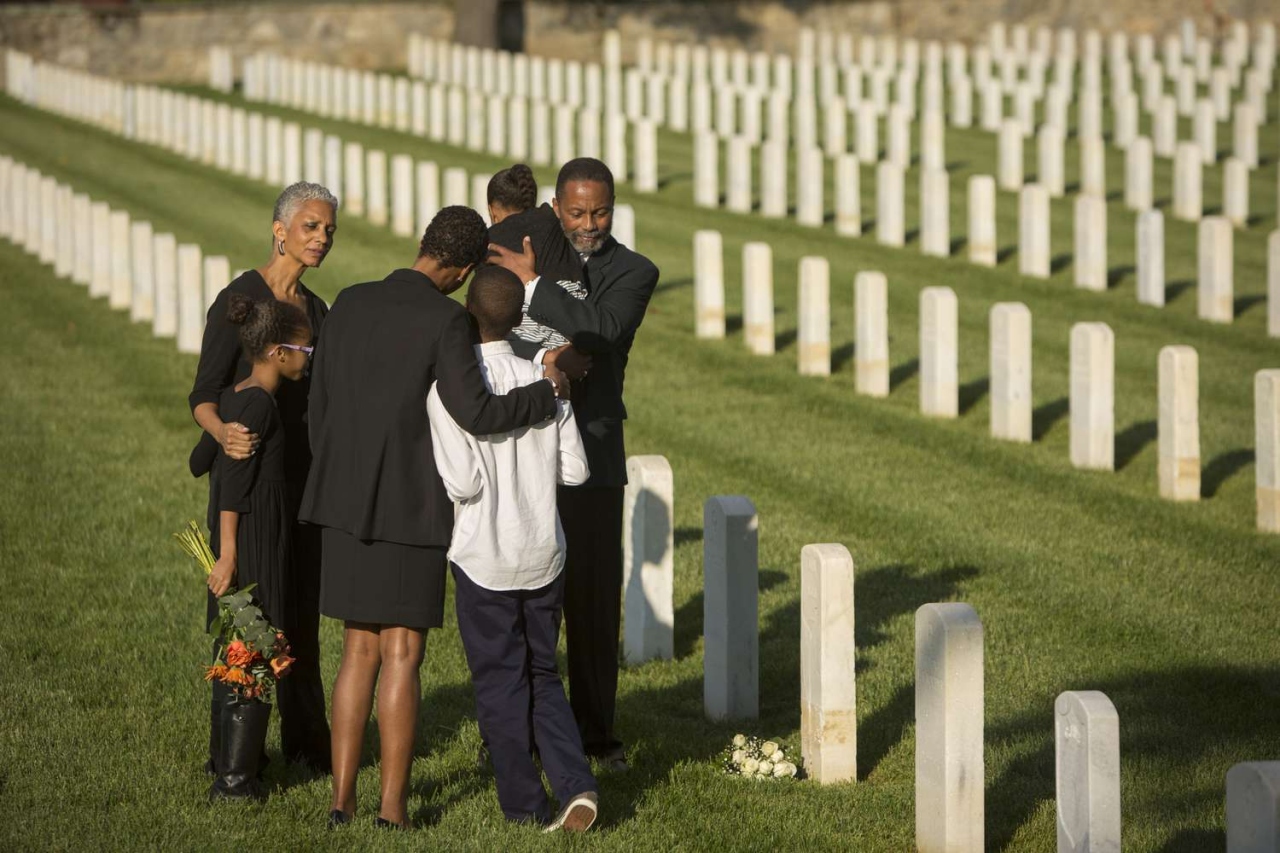
Photo: AP Photo/ David Goldman.
And now, the reports from Cumuto.
Each story disturbing in its own way.
Together, they feel connected by something harder to name. A loosening. A quiet erosion of boundaries we once assumed were fixed.
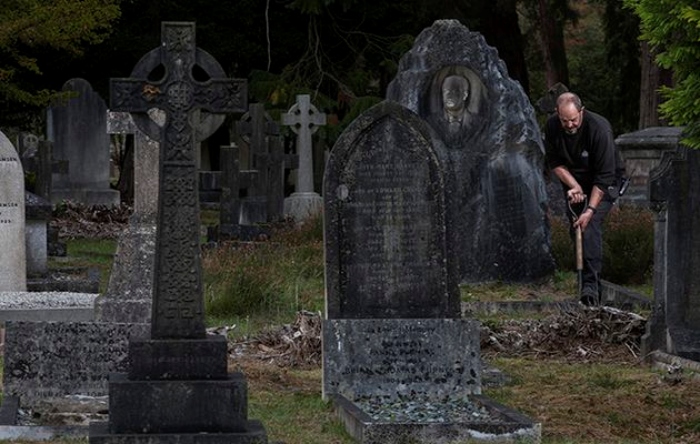
What really happened in that cemetery in East Trinidad?
Dozens of bodies. Buried together. No permits. No clear documentation. No certainty about who they were, how they died or how they came to rest in that patch of earth.
The early suggestion is that these may have been unclaimed bodies. Possibly stillborn infants or fetuses before twenty-eight weeks.
There are procedures that exist precisely to ensure that even the unclaimed are not abandoned. Because the absence of family does not mean the absence of dignity.
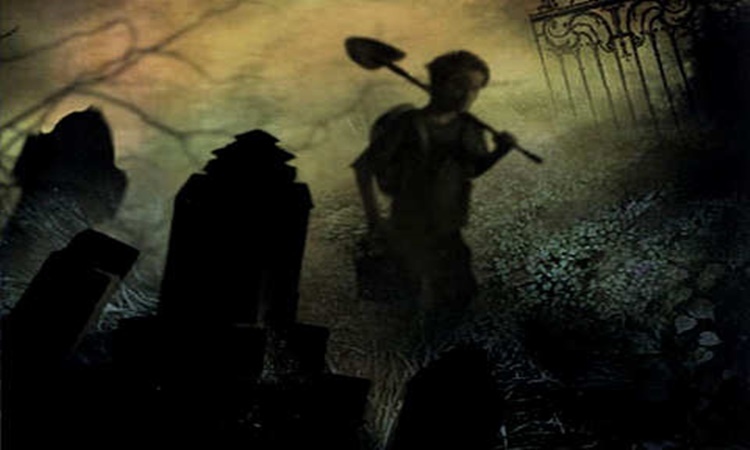
(via Philnews.)
The law in Trinidad and Tobago is not ambiguous on this.
Burial is not an informal act. It is regulated. There must be notification. There must be registration. Even the act of burial itself is controlled—typically one body per grave, except in defined circumstances, with proper depth, spacing and documentation.
In other words, the law anticipates order. Not improvisation.
Certainly not mass burial without trace.

(via Sky News.)
A mass grave carries a weight that language struggles to soften.
The phrase belongs to a darker vocabulary.
- War.
- Disaster.
- Collapse.
- Not routine.
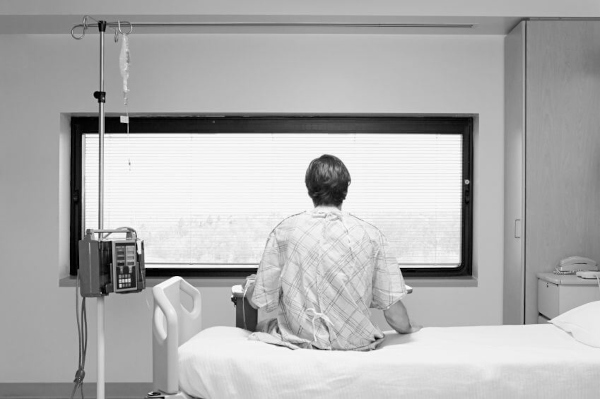
In medicine, there is a principle that is rarely written but universally understood. The duty to the patient does not end at death.
The body is no longer something to be treated, but it remains something to be handled with care, with dignity—with an awareness that it still belongs to a family, to a history, to a story that does not simply vanish.
We see this in small, deliberate acts.
The careful covering of a body. The pause after death is declared. The quiet respect in how it is moved, stored and released.
None of these acts alter the outcome. But they matter. Because they affirm that the person who was there is not being reduced to a task.
There is a temptation to treat this as an isolated failure.
A lapse. A moment.
Perhaps it is. But systems do not produce outcomes like this overnight.
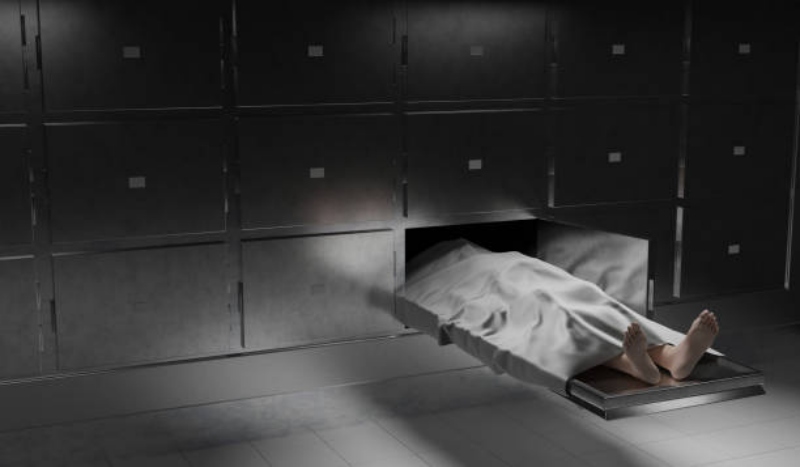
(via iStockphoto.)
They drift. Gradually. Quietly. Under pressure.
Staff stretched thin. Processes strained. Oversight dulled by fatigue.
Until what was once unthinkable becomes… manageable.
Then acceptable. Then routine.
It is a slow recalibration of standards.
There is, uncomfortably, a precedent for moments like this.
At Alder Hey Hospital in the United Kingdom, it was discovered that organs had been retained from children by the pathologist, without the knowledge or consent of their families. It was not done in secrecy so much as in a culture where process had drifted away from principle.
What was technically possible quietly overtook what was ethically acceptable.
The outrage that followed was not simply about what had been done. It was about trust. Parents believed their children had been treated with dignity in death.

(via CDC.gov.)
They discovered, instead, that systems made decisions on their behalf without transparency, without consent and without the basic respect owed to the dead.
The lesson from Alder Hey was that the dead are not objects of convenience. That systems, however strained or well-intentioned, must never lose sight of that.
There is, too, an uneasy parallel with the other stories of the week. The sense that lines are no longer as firm as they once were. That roles blur. That processes bend. That what should be clear becomes negotiable.
We have become, perhaps, too accustomed to dysfunction.

(via Liverpool Echo.)
We expect delays. We anticipate confusion. We accept explanations that would once have been questioned.
We shrug. Because shrugging is easier than sustained outrage.
But every so often, something interrupts that quiet acceptance.
Something that reminds us that there are lines. And that some lines, once crossed, are not easily redrawn.
A mass burial without proper process is one of those lines. Not because of the number alone. But because of what it represents.
A break in the chain of care that extends beyond life. A moment where systems designed to serve people begin to treat them as entries to be closed.
And perhaps most troubling of all is a question of accountability. Who knew? Who approved? Who asked the obvious question and did not receive an answer?
In the days ahead, there will be reports. The language will be careful. It will speak of processes and protocols. It will attempt to restore order through words.
But beyond all of that, something will linger. A quiet discomfort. A sense of unease that international news agencies felt compelled to amplify and examine.

There is a phrase, “danse macabre”, the dance of death. A reminder, historically, that all of us, regardless of status, share the same end.
But even in that stark image, there is structure. There is recognition.
There is, paradoxically, dignity.
Because the measure of a society is not found only in how it treats the living. It is found, just as clearly, in how it treats those who can no longer protest.
Those who depend entirely on the systems we have built.
Those who ask for very little such as a name, a place and a measure of respect.
Dignity is not something we grant the dead. It is something we prove about the living.

In the days before the new academic year begins, the quest for books, uniforms and shoes continues. Health is often Read more

This Independence Day, Trinidad and Tobago turns 64. If the country were one of my patients, this would be about Read more

The third scalding shower before breakfast was not for cleanliness. It was the only place the young man stopped vomiting. Read more
The half-used insulin vial was wrapped in a stained cloth and tucked inside a small purse. She had carried it Read more

Men will discuss chest pain, blood in the urine and constipation with surprising courage. Erectile dysfunction often arrives in a Read more

For thousands of years, humanity has suspected the moon of interfering in almost every department of medicine. Sleeplessness, fever, bleeding, Read more