 Wired868 Wired868 for smart sport news and opinion
“[…] Change did not come easy. Brunell Jones of Trinidad’s Evening News likened it to trying to ‘sell a bicycle to an Arab who had grown accustomed to riding a horse or a camel’ and ER Ward of the Trinidad Guardian deplored what he called the latest craze by the ‘football czars’.
“The boys, he and others insisted, should be allowed to ‘play their own game’. Systems were made to suit conditions, and the ‘tradition, mind and aptitude’ of Trinidadians did ‘not seem to take to the new style’.
“It made local footballers ‘confused [and] hesitant’ mimics of the English…”
The following is an excerpt from Richard J Blackett’s new book, A History of Trinidad & Tobago Football, 1908-2006, which can be purchased HERE:
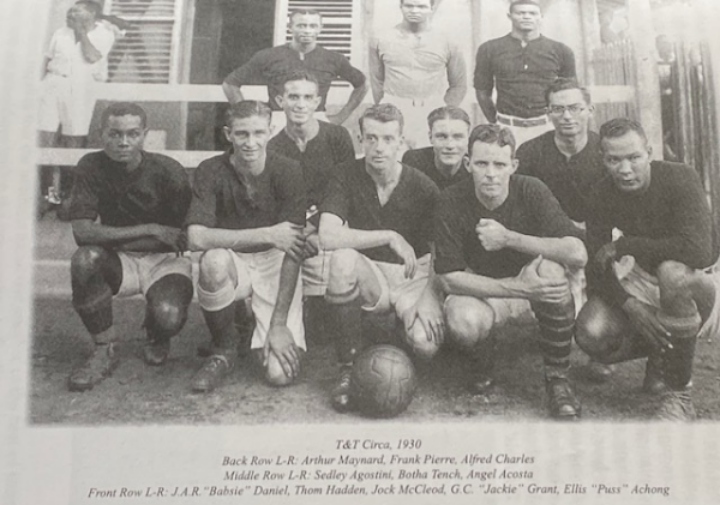
Towards the end of my interview with Andy Ganteaume, a pillar of Maple, and a fixture on the left side of the attack on Trinidad teams of the 1940s, I asked if he would name his best eleven. Here is his choice:
Goalkeeper: Rolph Grant (Casuals);
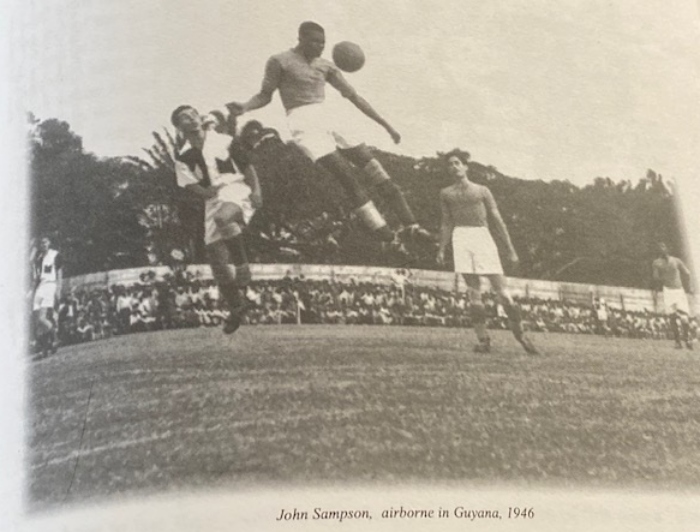
Defenders: Right back – John Sampson (Maple), full back – Botha Tench (Casuals), left back – Alfred Charles (Everton);
Midfielders: Right half – Delbert Charleau (UBOT), left half – Sedley Agostini (Shamrock);
Attackers: Right wing – Babsie Daniels (Maple), inside right – Carlton “Squeaky” Hinds (Malvern), centre forward – John Alkins (Sporting Club), inside left – Rex Burnett (Notre Dame), left wing – Ellis “Puss” Achong (Maple).
Others would no doubt question Ganteaume’s choices, but the point of the selection in this case is twofold—to identify the formation that all teams played in the first half of the 20th century, and to point to the significant role played by the full back.
It was, in fact, the pivotal position. As far as I can tell, captains of representative team invariably occupied the position—directing play on the field, rearranging players where necessary, pulling forwards back to reinforce the defence, or moving defenders forward in search of an equalizer or winner.
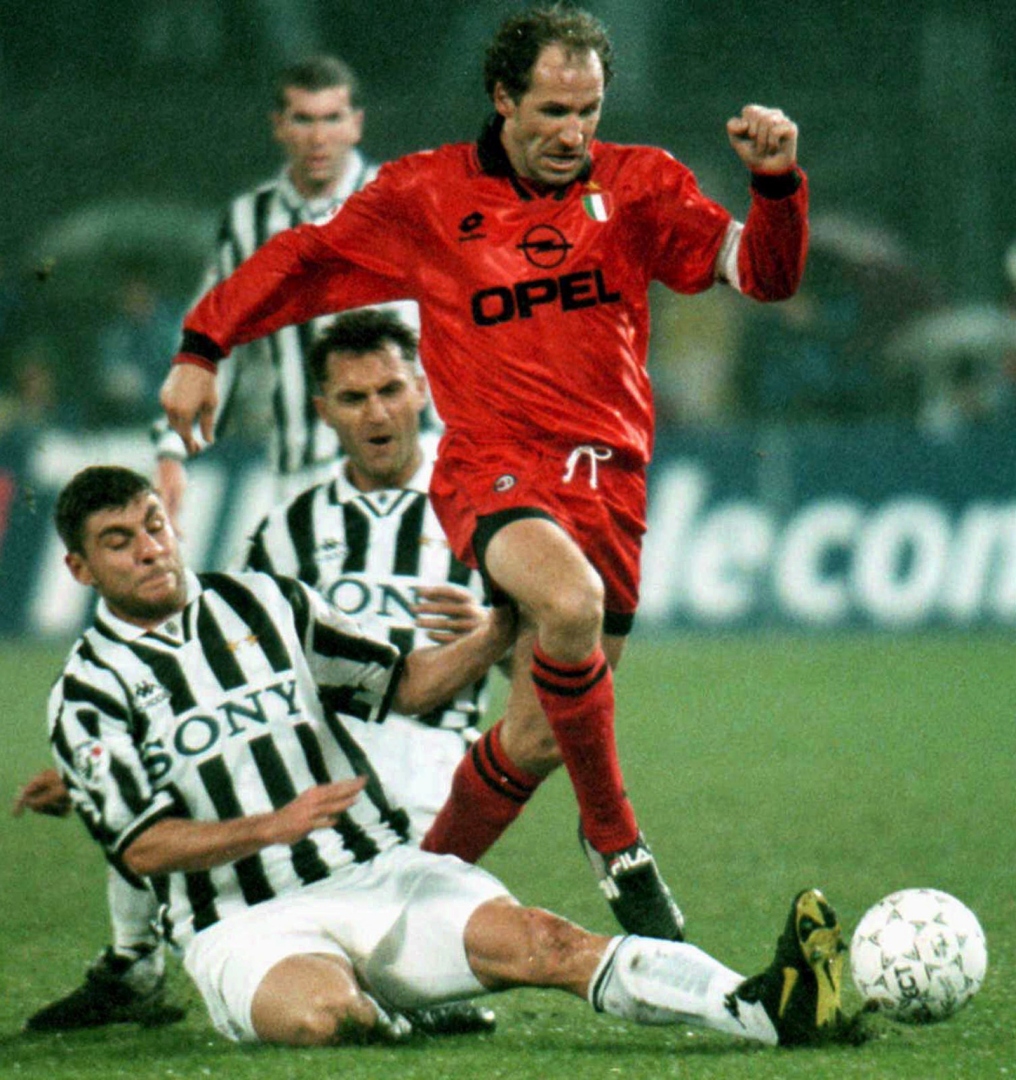
Baresi was arguably the world’s last great “full back”, although the name of the position had changed by then.
(AP Photo/Mauro Pilone, File.)
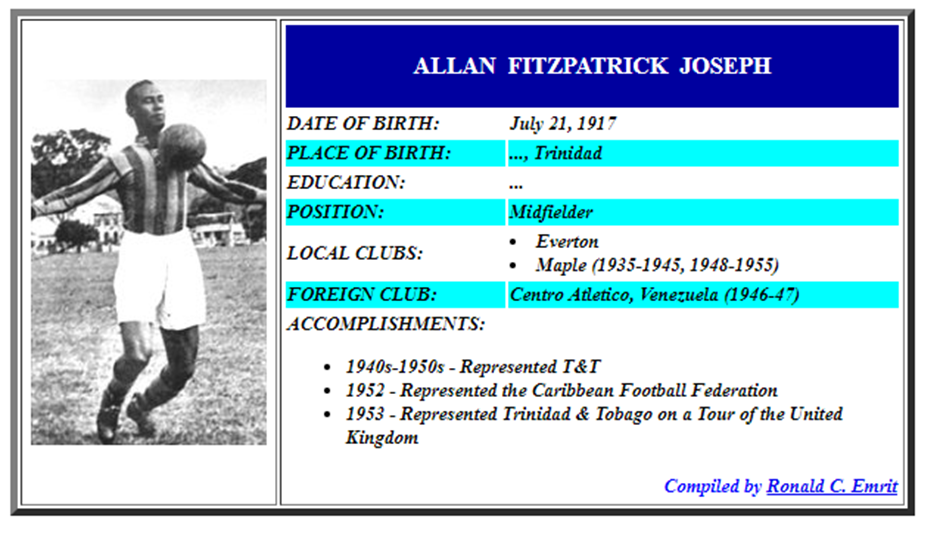
The occupants over the years included such stalwarts as Prior Jones, who was also the West Indies opening bowler, Arthur Wilkinson, the English master at QRC, who led a successful tour of Jamaica, and Allan Joseph of Maple—captain of the squad on the 1953 tour of England.
That tour had a profound effect on the local game. Not only was it the dream of players to test their skills in the country where the game was founded, it was also to be Eric James, the secretary/ treasurer of the Association, believed: an “educational” opportunity.
The squad of 20, a nice mix of youth and experience, impressed ER Ward of the Guardian, as football ambassadors following a path laid down by the first West Indies cricket team to tour England in 1900.
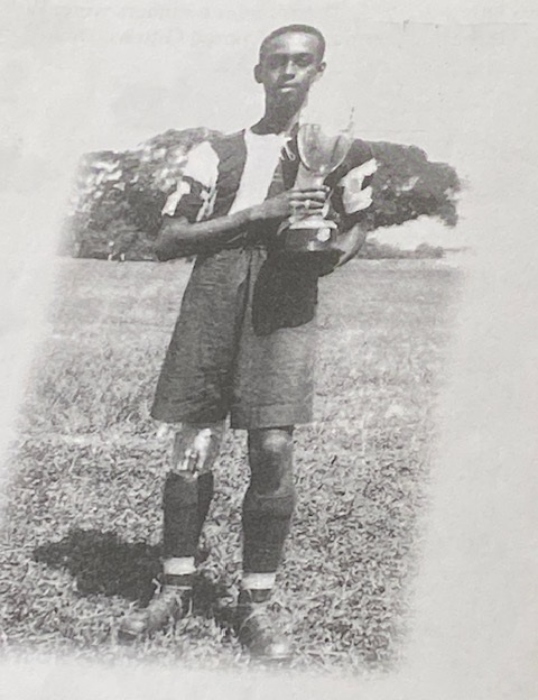
Less well known is Ganteaume was also an accomplished footballer who also represented his country at right wingin that sport.
They played mainly against lower-ranked professional and first-rate amateur teams in the West Country. Local reporters were impressed by their speed, ball control and grit under unusual playing conditions—acquitting themselves better than most observers expected winning five, losing six and drawing three.
Sylbert “Shay” Seymour and Matthew Nunes, the leading goal scorers, attracted the attention of a few professional teams before signing with Bury, a financially-strapped Lancashire club.
Vincent Brown, the team manager, thought the lessons learned on the visit would benefit the game at home.
Some observers in England expressed surprise that the team continued to use what they considered an outdated formation, suggesting it was time they adopted the “third back” system—the preferred formation in European football.
Not Allan Joseph, who won praise from English observers for what they called his continental style of play. Soon after the team’s return, he made his position clear. Maple would not play the third-back system while he was captain.
There was “no better game”, he told a reporter, than the “roving centre half, and my team, while I am captain, shall not depart from it”.
Others, however, tinkered with the system. Curepe’s Upsetters used Harold Pantin as both a roving centre half and third back in a game against Everglades.
Raffie Knowles at Casuals held to the old defensive formation but pulled his centre forward back a little to provide some cover against counterattacks.
Shamrock chose to stick with the old system—but over the next few seasons, others such as Sporting Club, Colts, Providence, Malvern, Notre Dame, QRC and St Mary’s College adopted the third back system.
Change did not come easy.
(Copyright TTFootballHistory.com.)
Brunell Jones of the Evening News likened it to trying to “sell a bicycle to an Arab who had grown accustomed to riding a horse or a camel” and Ward deplored what he called the latest craze by the “football czars”.
The boys, he and others insisted, should be allowed to “play their own game”. Systems were made to suit conditions, and the “tradition, mind and aptitude” of Trinidadians did “not seem to take to the new style”. It made local footballers “confused [and] hesitant” mimics of the English.
Following the tour, footballers “suddenly switched from an enthusiastic free-kicking, hell-for-leather approach to goal-scoring to the more orderly, aristocratic patterns of the English.”
Consequently, the formerly “uninhibited Trinidadian player lost his will and his enthusiasm for the sport”. The way the game used to be played reflected the “spirit of West Indian sport” and the “personality of the Trinidadian”.
As West Indians, he pleaded, Trinidadians “must develop their own form—a style to suit excitable inclinations [and] eagerness to be in the play.” Ward did not have to tell his readers that the West Indian cricket team had shown the way with an impressive showing in England in 1950, playing the game their way.
Much of the uncertainty over formation had been resolved by the time of the West Indian football tour of England in 1959. But the debate over how the game was played, the of style-of-play, was never finally resolved.
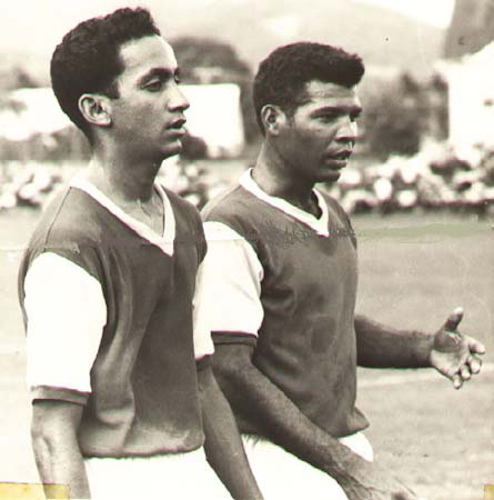
As the 1973 World Cup qualifiers wound to an end in Port-au-Prince, Haiti, Edgar Vidale, who had taken over as manager from the Englishman, Kevin Verity, for the final game against the Netherlands Antilles, pleaded with the team to “play their style of football”—not the “rigid kind of game that foreigners forced” them to play.
The implication was obvious, yet to that point in the competition the team played superior football only to be denied by some suspect officiating. Playing “calypso football”, as one reporter described it, they won 4-0—Steve David netting all the goals.
Neither Verity nor the reporter offered a description of what this “style of football” entailed.
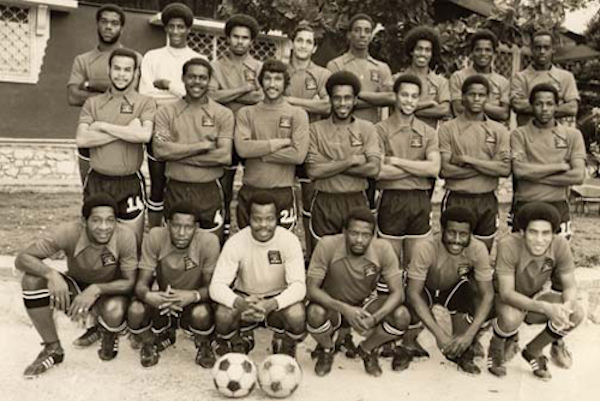
Back row (L-R): Lawrence Rondon, Devenish Paul, Peter Mitchell, Steve Khan, Dennis Morgan, Leo “Twinkle Toes” Brewster, Tony Douglas, Henry Dennie.
Center row (L-R): Leon Carpette, Selwyn Murren (captain), Gerald Figeroux, Sydney Augustine, Russell Tesheira, Ramon Moraldo, Steve David.
Front row (L-R): Selris Figaro, Wilfred Cave, Kelvin Barclay, Warren Archibald, Gally Cummings, Ray Roberts.
Missing: Winston “Bee” Phillips.
(via Everald Cummings/ Caribbean Beat.)
This was not the case when, in 1989, the country again came close to participating in the World Cup.
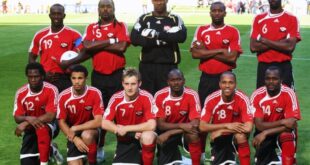
Soon after assuming the reins of the team, Everald “Gally” Cummings announced a new formation: 2-3-2-3 built around what he called the “pivot”—in effect a roving mid-fielder. Allan Joseph and other old roving centre backs must have nodded in agreement.
Cummings also worked to instill a new philosophy and a different style of play, one that reflected the culture and temperament of the country, its “flair and flamboyance in motion”.
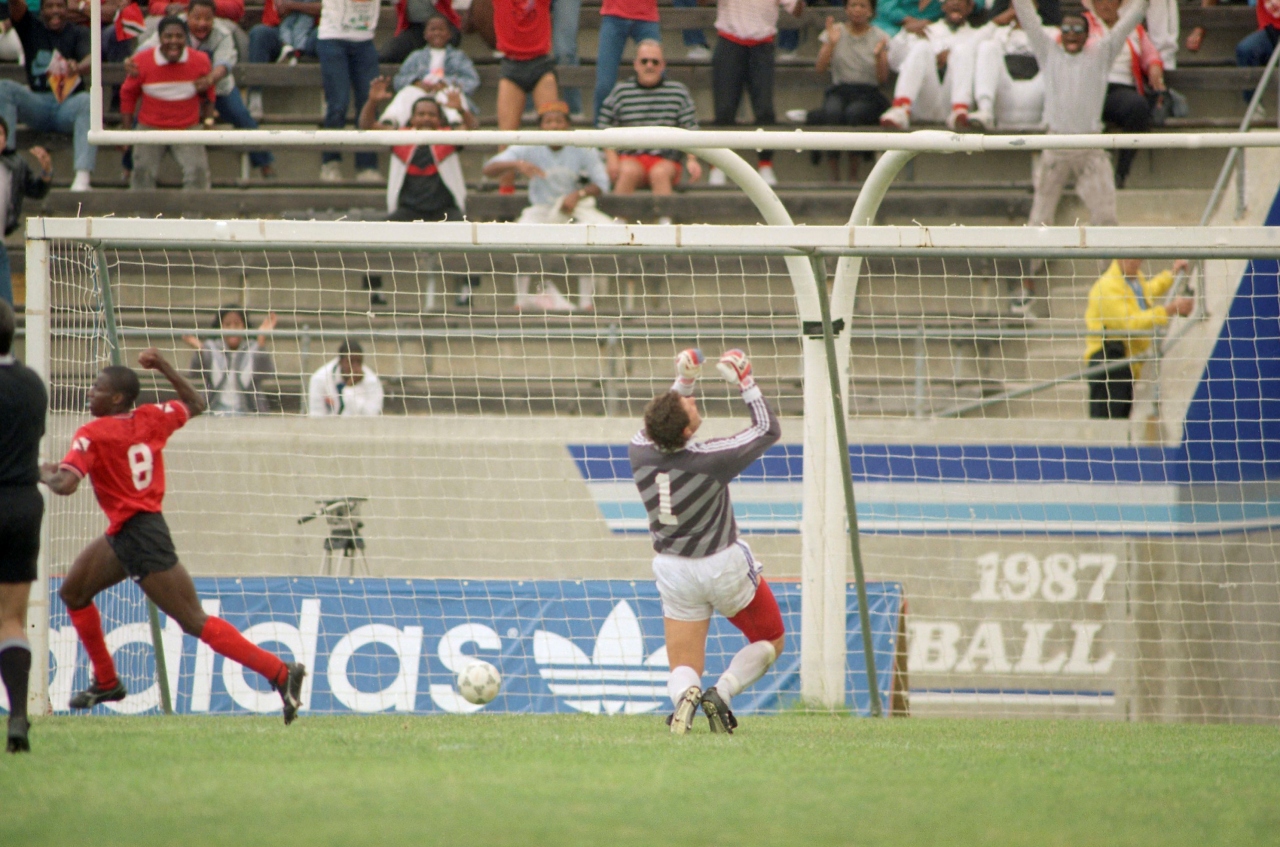
Charles’ iconic goal sealed a 1-1 tie for the Strike Squad and their first point of the Hex on the ‘Road to Italy’.
(Copyright AP Photo/ Reed Saxon.)
He aimed to build what he called an “indigenous” football, a mix of an attacking style and a sturdy defense—necessary, he insisted, if the country was ever to attain the levels of success on the field of play that they desired. He called it “kaisoca soccer”.
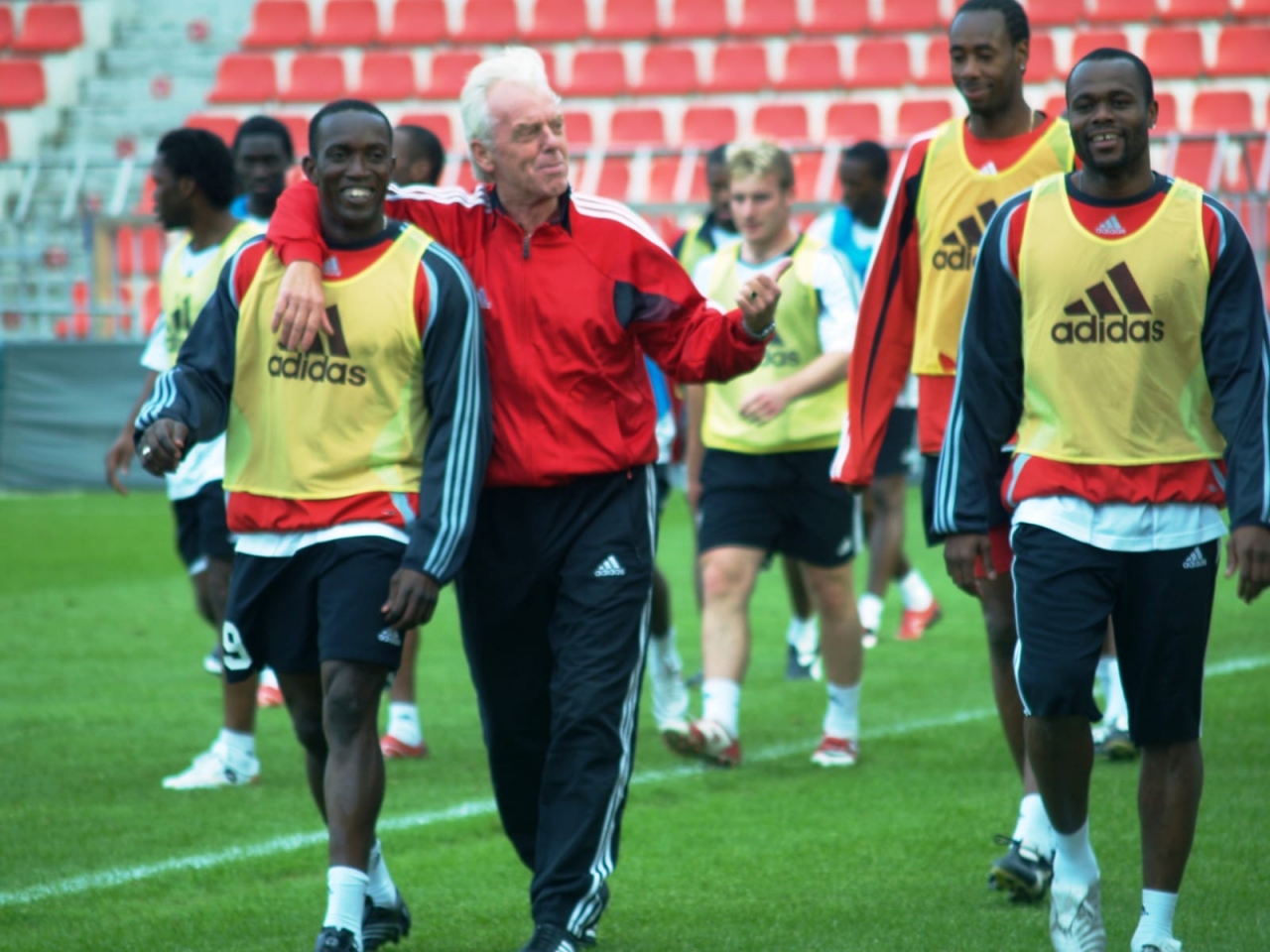
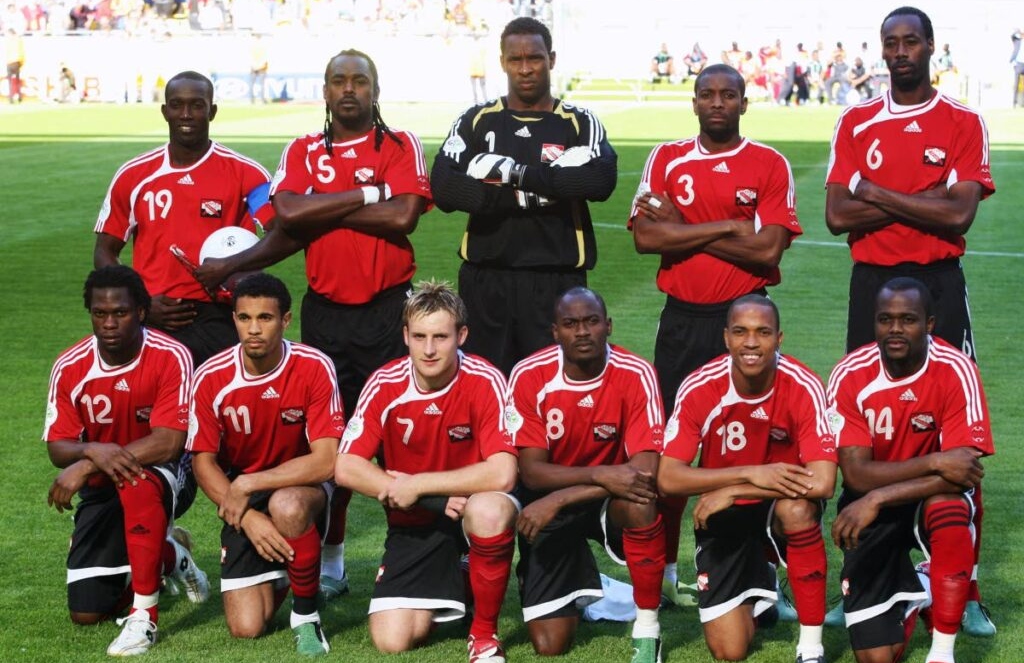
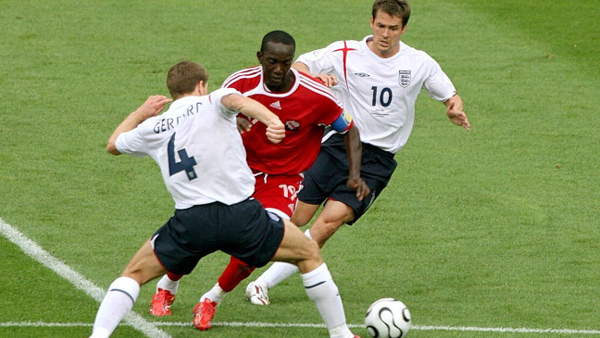
When in 2006 the country did make it to the final in Germany, the Dutch coach Leo Beenhakker, Dwight Yorke recalled, insisted they played with “more effect and passion”, as well as run until there was “blood in their shoes”.
He did not ignore the players’ culture, allowing the playing of calypsos, steelband music and other sounds of carnival during practices. But in accepting “their personal lives” he demanded they give him “their football lives”.
The debate over formation and styles of play—of its culture—are central to the history and evolution of the sport in Trinidad and Tobago and other former colonies searching for a style of play that reflected their experiences.
Neither Vidale nor Cummings was ever clear about what their new cultural vision entailed, only that the play on the field should reflect the ways of the people before whom they played: their love of life, flair, inventiveness and expressiveness—all admittedly frustratingly imprecise terms.
Editor’s Note: A History of Trinidad & Tobago Football, 1908-2006 can be bought at https://rjmblackett.com.
|
Wired868 has provided readers with solid, independent journalism since 2012. If you appreciate our work, please contribute to our efforts. Support Independent Journalism |

“[…] Besides Chris Birchall, born in England of a Trinidad mother, all the members of the starting XI against Sweden Read more
Britain-based author Richard Blackett, who, at present, is working on A History of Football in Trinidad and Tobago, 1908-2006, made Read more

Former Club Sando head coach and ex-Soca Warriors standout Cornell Glen will lead the St Mary’s College football team for Read more
“1990?” asks Bobby, a rueful look distorting his facial features, “What I remember best about that campaign is Philbert Jones Read more
“[…] Coming out of the Covid pandemic shutdown, there were a few tournaments that allowed for a return to play, Read more

“Doh leh ’im shoot! Doh leh ’im shoot!” Panic in the voice but no crowd scatters. He does shoot. And Read more

Want to share your thoughts with Wired868? Email us at editor@wired868.com.
Please keep your letter between 300 to 600 words and be sure to read it over first for typos and punctuation.
We don’t publish anonymously unless there is a good reason, such as an obvious threat of harassment or job loss.