 Wired868 Wired868 for smart sport news and opinion
Trinidad and Tobago Boys’ National Under-14 Team head coach Randolph Boyce said his troops were placed in a tough group, after failing to advance from Group B in the 2026 CFU U14 Challenge Series, which comprised Haiti, Puerto Rico and French Guiana.
The young Soca Warriors whipped French Guiana 4-1 in their closing affair yesterday at Cap Cana, Dominican Republic, which saw them finish second—ahead of Puerto Rico on goal difference.
But it was not enough to get a semifinal berth in the Caribbean Football Union (CFU) tournament as the best runners-up.
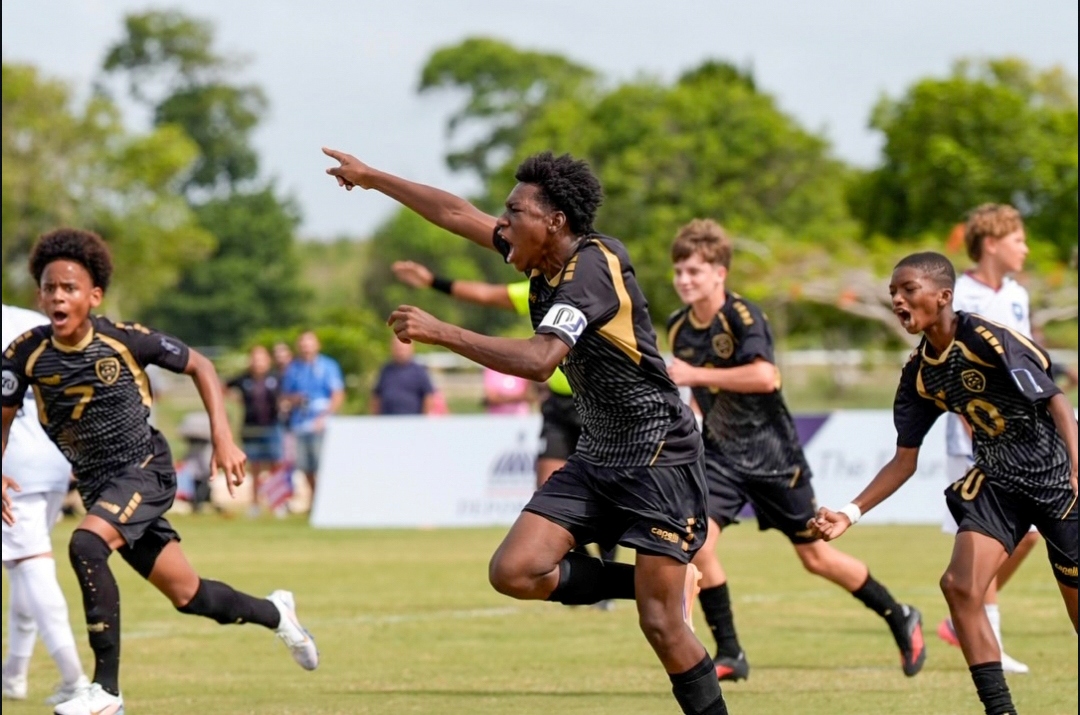
(via TTFA Media.)
Trinidad and Tobago drew their opening match 1-1 with Puerto Rico before falling 4-1 to group winners, Haiti—although the latter team finished the game with 10 players.

“I am glad that the group we were in was a tough group,” Boyce told the TTFA Media. “If you go and play in an easy group and you win, to me that is a false positive and we wouldn’t learn much.
“We need to see where the gap is and then know how to go and close the gap and what to do to close the gap.”
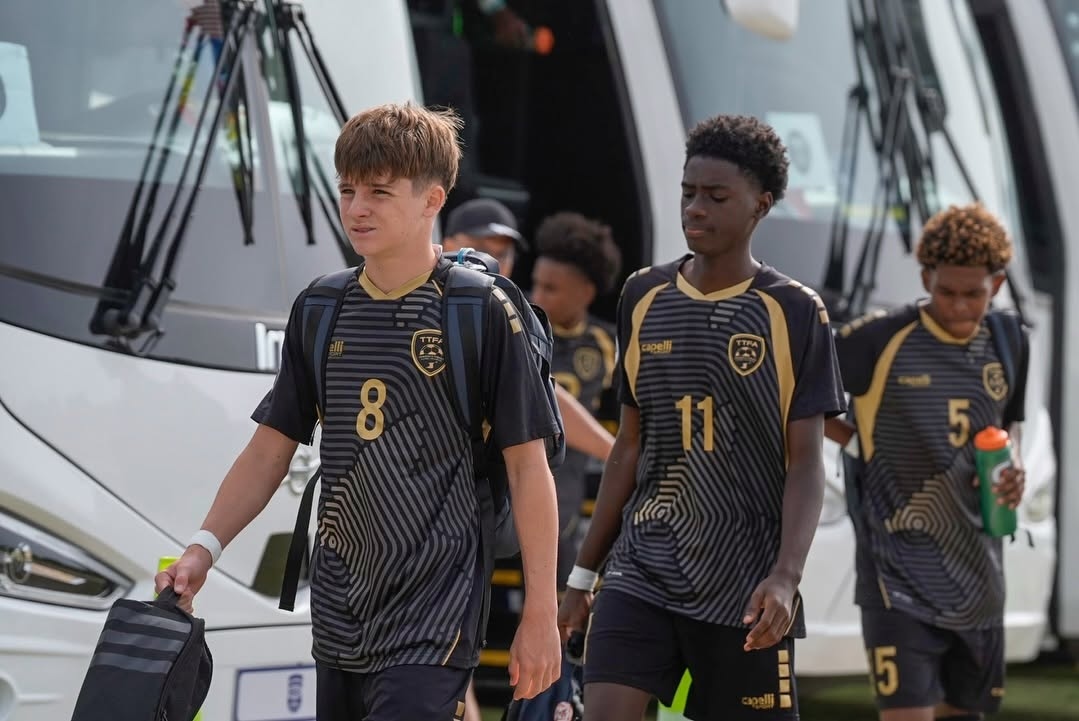
Photo: CFU.
Earlier this year, the Trinidad and Tobago Men’s National Under-17 Team, also coached by Boyce, finished third on home soil behind Barbados in a Concacaf World Cup qualifying group.
And the Men’s National Under-20 Team, led by Marvin Gordon, were third behind Bermuda at Concacaf U-20 World Cup qualifying level.
The Men’s Senior National Team, coached by Dwight Yorke, finished third in an all-Caribbean 2026 World Cup qualifying group, behind Curaçao and Jamaica.
Perhaps it is a reality of where the local game is at present, then, that Boyce suggested the Soca Warriors could learn from the likes of Haiti and Puerto Rico.
“Haiti [are] a nice, developed team—they are doing something good there with the development that we could take note of,” said Boyce. “We had conversations with all the teams, in terms of the management and staff.
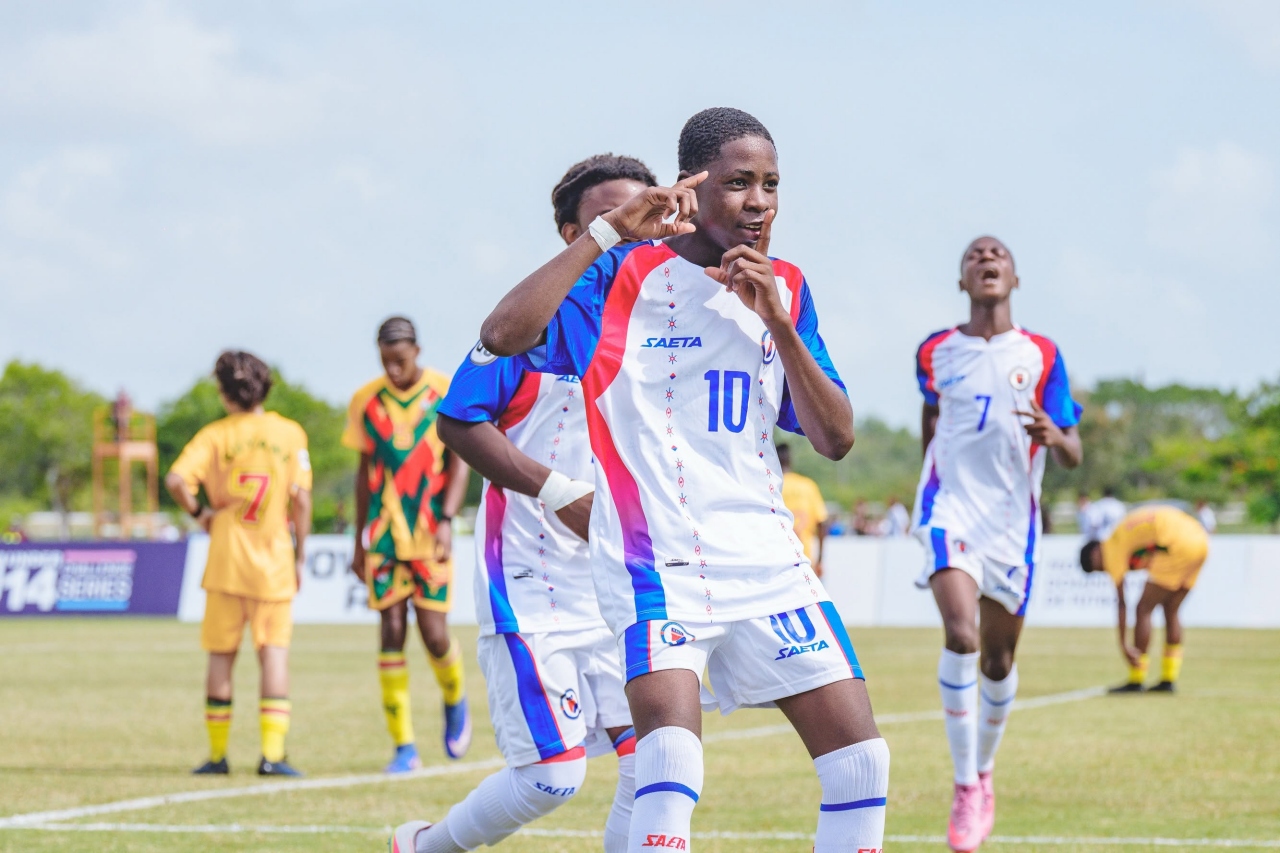
Photo: CFU.
“We had conversations with all of them to find out how they do things and to learn from it, because that is what the tournament is for—learning from each other.
“[…] We would definitely be doing some things differently and adding some things. And I know we will have the support on the backend to be able to do things differently, just as we need the backing of the other coaches, the clubs and the schools.”
Haiti had just 10 players on the field when they scored their fourth goal against Trinidad and Tobago, and the French-speaking islanders might easily have managed more items.
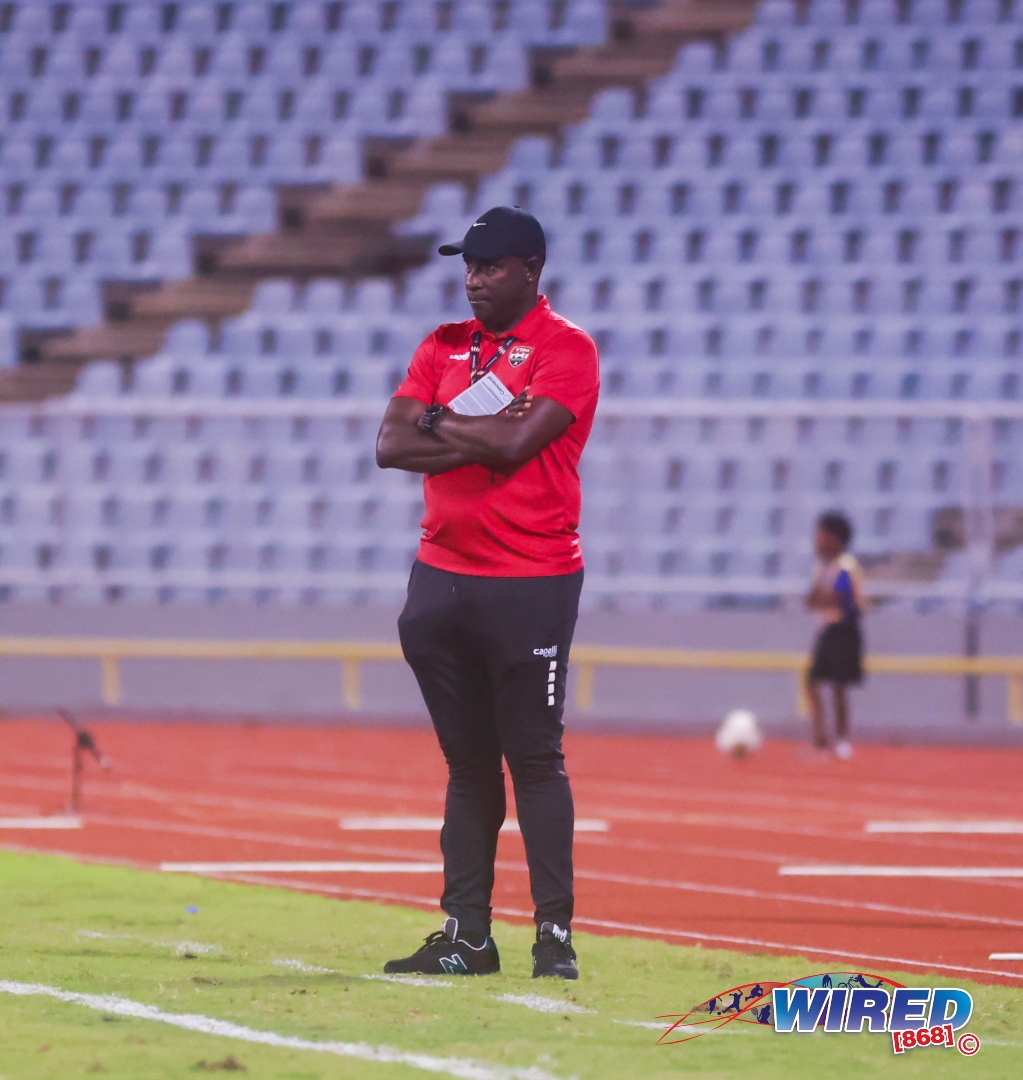
Trinidad and Tobago lost 1-0.
Photo: Nicholas Bhajan/ Wired868.
However, Boyce suggested that the final result flattered Haiti.
“The Haiti game, I wasn’t too critical on the players or coming down on them or anything like that,” said Boyce. “We had too many individual mistakes, but we reviewed back the game, pointed out the mistakes and showed them.
“Nobody goes out to play to make a mistake; mistakes happen and they are in a developmental stage… We believe that if we didn’t make so many mistakes, especially so early in the game, the game could have been a closer finish.
“[…] We also had two really nice, clear opportunities in the game that we didn’t take.”
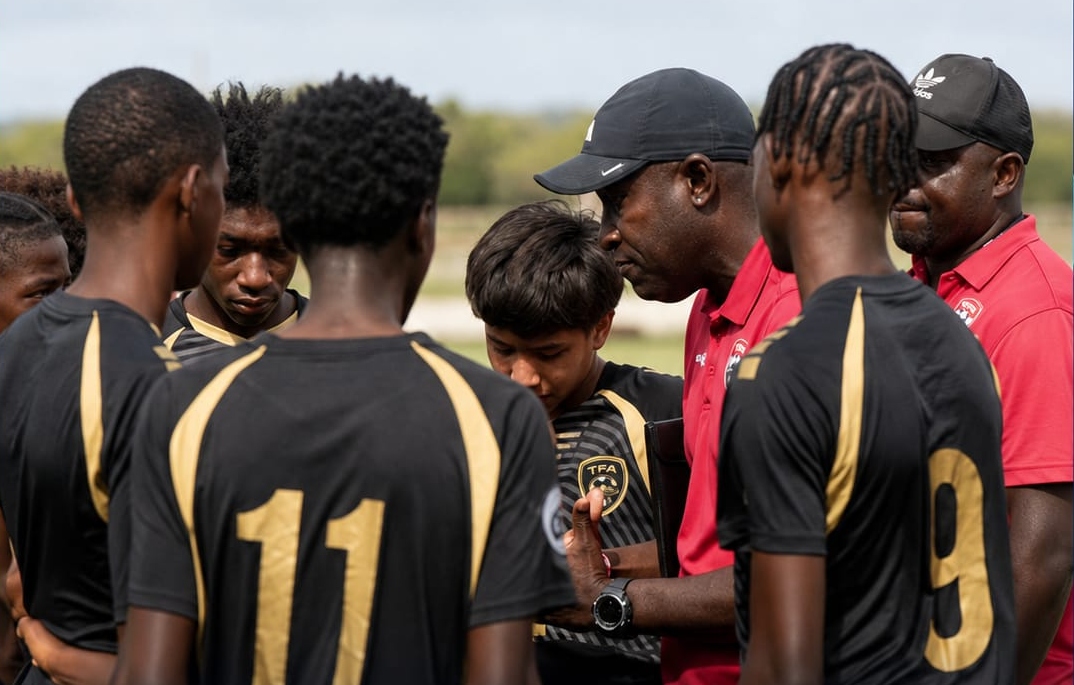
Photo: CFU.
In Trinidad and Tobago’s opening game, Puerto Rico dominated ball possession for most of the contest, although the young Soca Warriors started brightly and also had a strong spell in the closing five minutes.
Boyce, though, was pleased with his troops’ showing in that affair.
“During the first game, we played a really good game,” he said. “[…] I think that game could have gone anywhere. It could have gone in our favour, but unfortunately we didn’t get the victory. We got a draw.
“I think it was a fair, balanced game. Puerto Rico [are] a good side.”
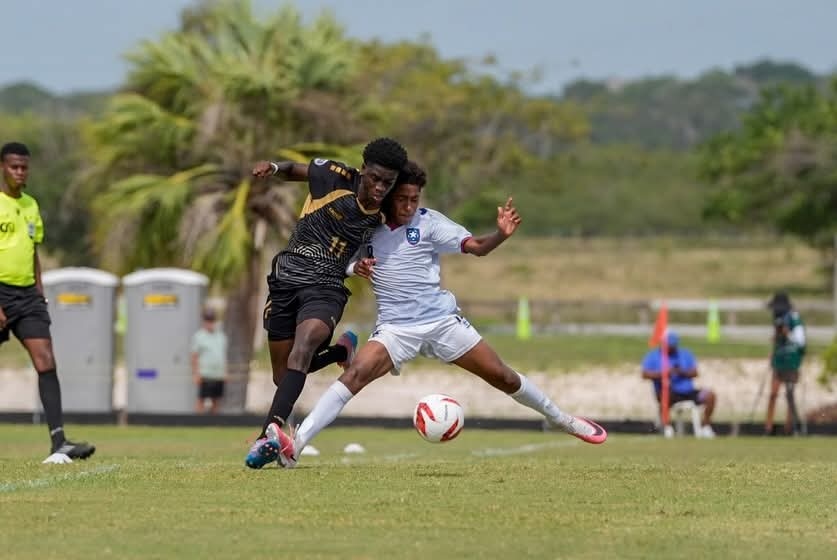
(via TTFA Media.)
And what of Trinidad and Tobago’s 4-1 thumping of French Guiana? Boyce said his team missed some KPIs, and deserved a bigger win.
“Today we basically set them some KPIs in terms of what we looked at in the group,” said Boyce, “and we set a target in terms of how much we probably needed to score to be able to get into the second round.
“For us, it would have been like five or six goals. We conceded one, so we had to add another one to it. We started off nicely in terms of chasing down the target and we fell short.
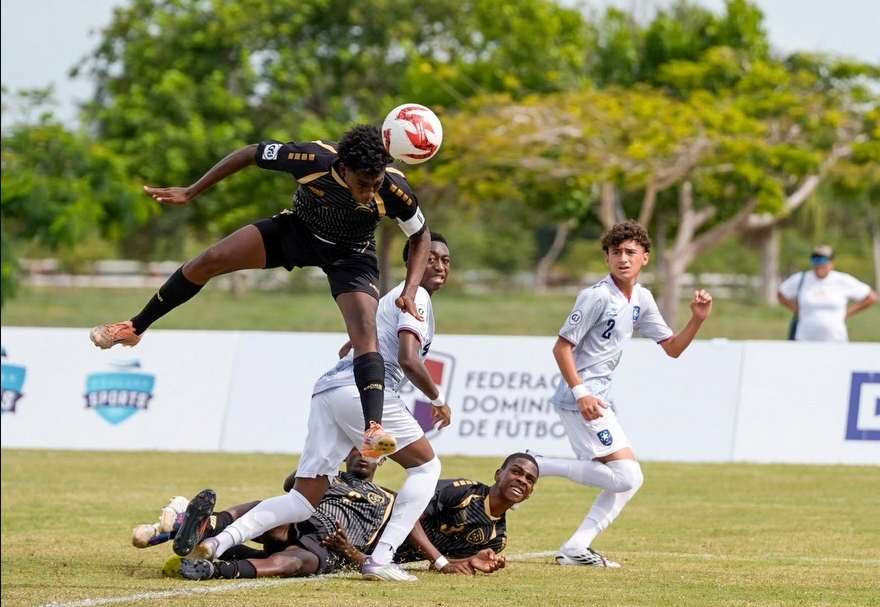
Photo: CFU.
“At the time, we were hoping it would still be enough to get us through to the next round based on the other results.”
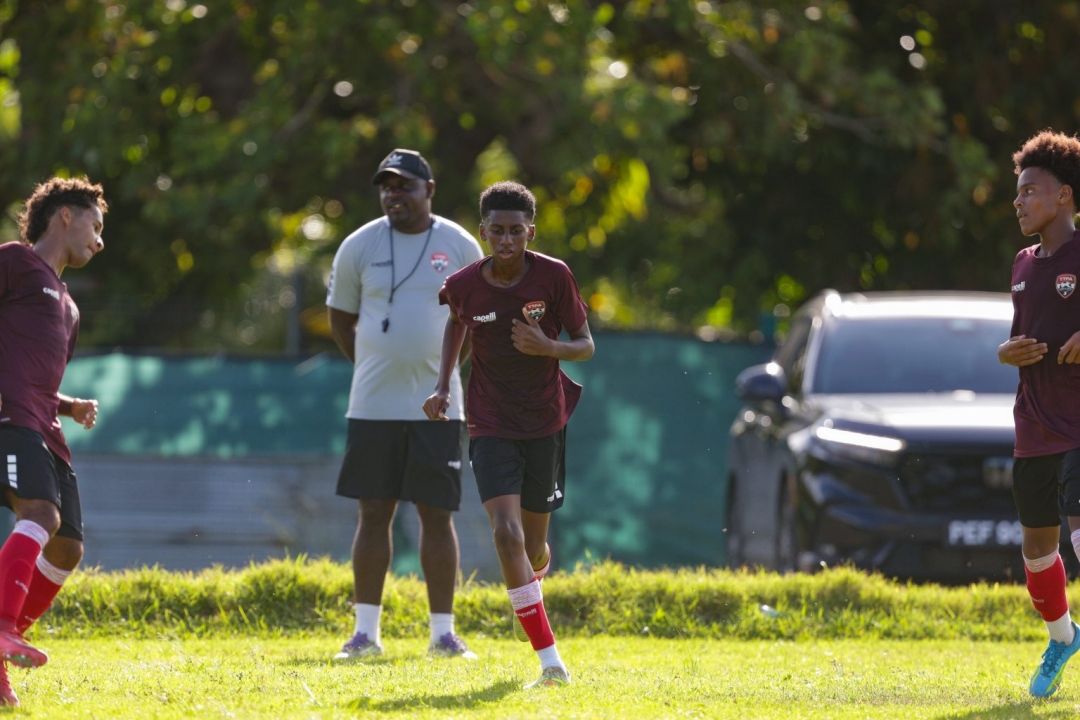
Boyce said his goal is to increase “the speed and intensity of Trinidad and Tobago’s youth football” and suggested there were glimpses of that from the young Warriors in the Challenge Series.
“We want to bring up the energy level and the way that we play,” he said. “We play too laid-back and too slow sometimes, so we want to change the culture a little bit, and let the culture be aggressive and […] about playing a little faster.
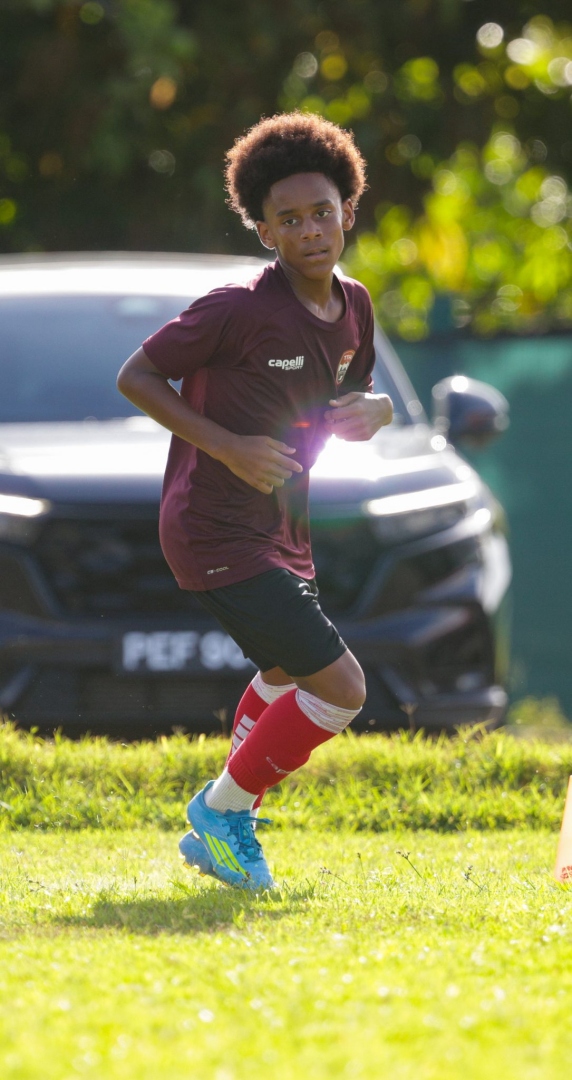
(via TTFA Media.)
“If you play fast, you have to think faster. You have to make your decisions faster. Speed of thought, speed of play, speed of decision-making—speed of everything.
“[…] If we could reach that level, then we could understand the different moments when we need to slow down and those kinds of things. But first we have to know that we have to reach somewhere.”
He claimed to also have a clear understanding of where and how Trinidad and Tobago can improve. And he vowed to create individual programmes for each player, to continue working on their strengths and weaknesses.
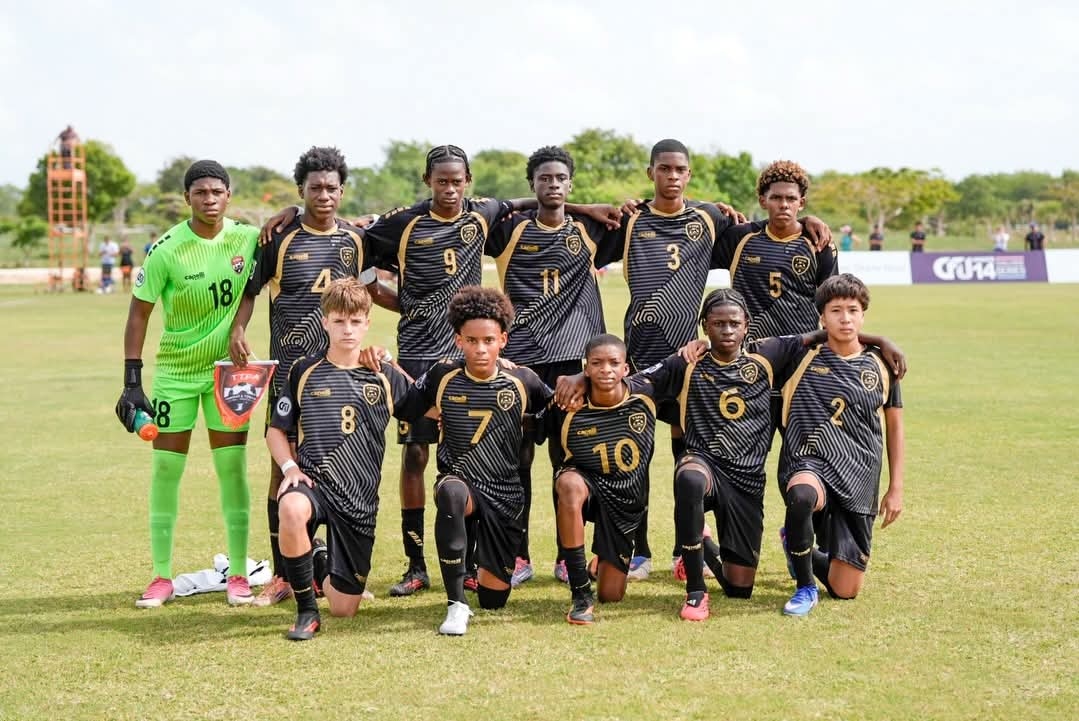
Photo: CFU.
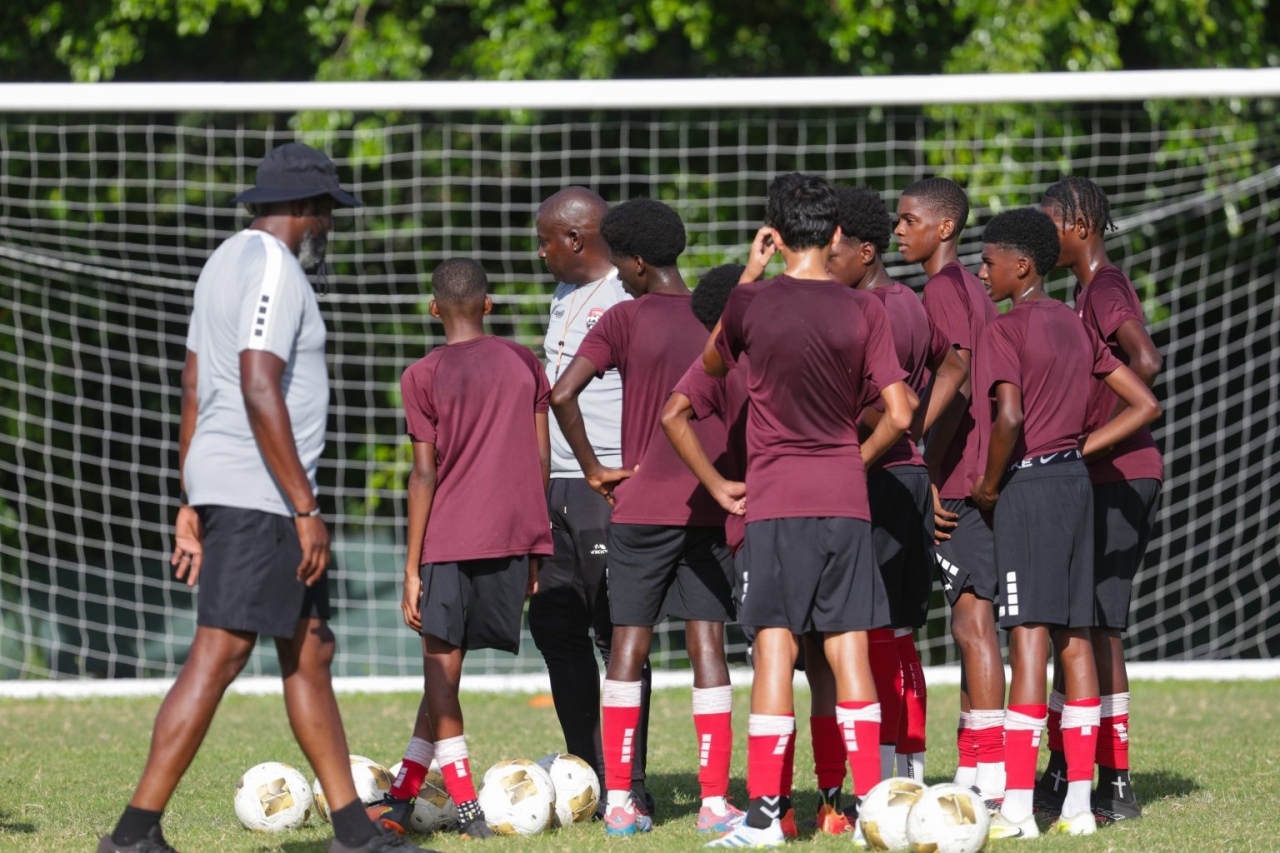
“The biggest area where we need to improve is decision-making—knowing our options and which […] is the better one to pick at that point in time,” said Boyce. “I think they have grown a lot through this tournament… We kept motivating them and encouraging them about the positive things that they have been doing.
“We had the opportunity to review the games back on the television, rewind the game, pause it and point out the positives and the negatives, and they were taking it in [a] good light.”
The CFU Challenge Series, like Concacaf competitions at that level, mandates that every player must feature for a minimum of 70 minutes. Boyce suggested that the TTFA should copy this developmental rule in the management of its own youth tournaments.
(via TTFA Media.)
“No matter the age group […] sometimes the focus is on the ‘W’ (winning) rather than the ‘D’, which is the development,” said Boyce.
The Kieron Edwards-led TTFA knew about the Challenge Series since December 2025. However, the local football body only hired a coaching staff in July.
The late activation of the team impacted on not only preparation, but squad selection. Boyce never held open trials for the U-14 side, nor was he able to scout for players during the 2026 National Youth League (NYL).
(via TTFA Media.)
And his final squad had 10 players from one club, City FC.
Despite the shambolic preparation and group stage elimination, Boyce described their appearance in the Challenge Series as “a good experience”.
“All in all, it was a good experience for the boys, a good experience for the staff and a good experience for the Member Association as well,” said the national coach. “Now we see how we push forward from here.”
“[…] A new coach may bring fresh ideas, different tactics, and renewed motivation—but if the underlying problems remain, how much Read more
“[…] Mr St Gary Rose speaks extensively about what complainants are not entitled to demand. Yet he provides considerably less Read more
“[…] Our responsibility is not to respond to the loudest voice, but to protect every child according to their individual Read more
“[…] In April 2025, Wired868 reported that TTFA safeguarding manager Gary St Rose said his department had handled 561 reported Read more
“[…] The safeguarding process belongs to the protection of the child and the proper management of risk—it does not belong Read more
“[…] A Trinidad and Tobago National U-14 player was reportedly left at Piarco International Airport at approximately 3am, after the Read more