 Wired868 Wired868 for smart sport news and opinion
On 7 April 2002, at the time when the House of Representatives was deadlocked 18-18 and was unable to elect a speaker, the first of these weekly columns was published. It was entitled Equal Shame.
I pointed then, at the outset of my journey as a weekly columnist, to our failure to rally around issues, and stated that “simply ascribing blame and cursing one another is not politics or politic”. I described our politics as “structurally sick” and asserted that both sides were equally responsible.
My second column, a week later on 14 April 2002, was entitled Commissions of Futility. That column began: “Commissions of enquiry are in the news again. There is undoubtedly accumulated discontent with them.”

It will not escape readers how forcefully this statement is applicable in the aftermath of the Colman Report into the CL Financial/Colonial Life Insurance Company Limited (Clico) financial disaster, which was laid in Parliament last week—nearly 10 years after it was delivered and 17 years after the collapse of the Group.
In that column, nearly 24 years ago, as commentators frequently do, (sometimes even in anticipation of a likely adverse turn of events) I made a recommendation.
It concerned the office of the Director of Public Prosecutions (the DPP). It was this:
“For public satisfaction to be obtained when things go wrong, there is little substitute for sound, independent police work and vigorous prosecution at the direction of an equally independent DPP. It is into the DPP’s department that taxpayers’ money spent on commissions should be put.”

(via Trinidad Newsday.)
In 2022, at the time of the appointment of the COE into the Paria diving tragedy in which four divers lost their lives while they were working on one of the pipelines of Paria Fuel Trading Company, I returned to the subject of commissions of enquiry (COE) and the failure to resource the office of the DPP.
Around that time, it was reported that the DPP had been pleading with the Court of Appeal to stay its decision on permitting bail applications from murder accused, because his department was not equipped to handle 1,200 potential applications and that his department would be at a disadvantage.
There is no need to list again the several COEs that have led nowhere. The futility of COEs has also received attention in places like India and post-Nelson Mandela South Africa.
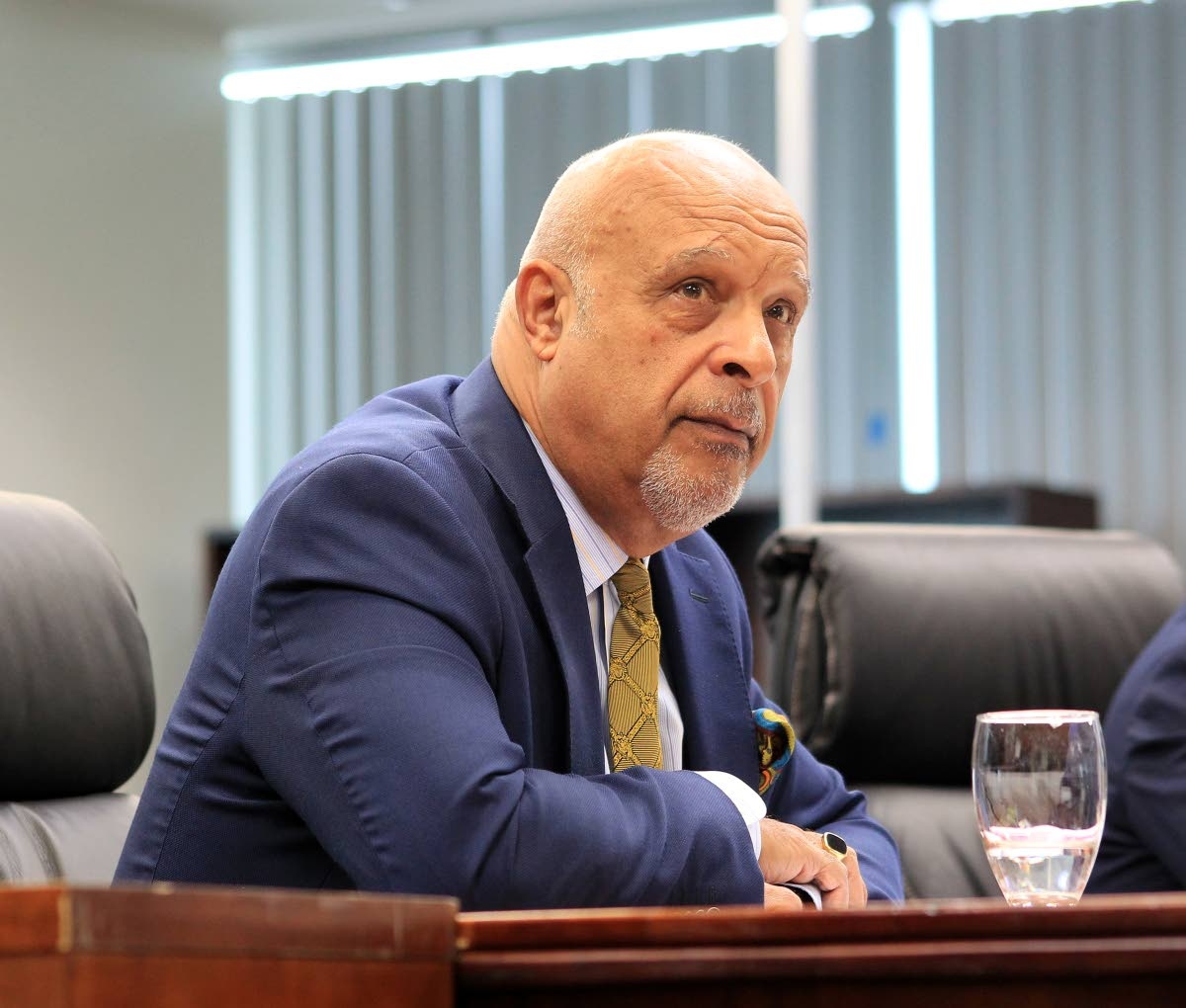
Photo: Trinidad Newsday.
This month in IOL, an online publication originating in Johannesburg, South Africa, Muzi Sikhakhane SC, expressed his radical dissatisfaction with post-apartheid South Africa, which he asserts “has left intact the core architecture of colonial power” and has not truly liberated African people.
Fully acknowledging that our post-colonial environment is not the same as that of South Africa, I nevertheless share with readers how he frames his “fundamental question” about COEs:
“Can commissions of inquiry resolve the country’s crises when society itself remains unwilling to confront its moral foundations? Do we require commissions to tell us what is already evident? Can they assist in putting in place a more liberatory policy framework?
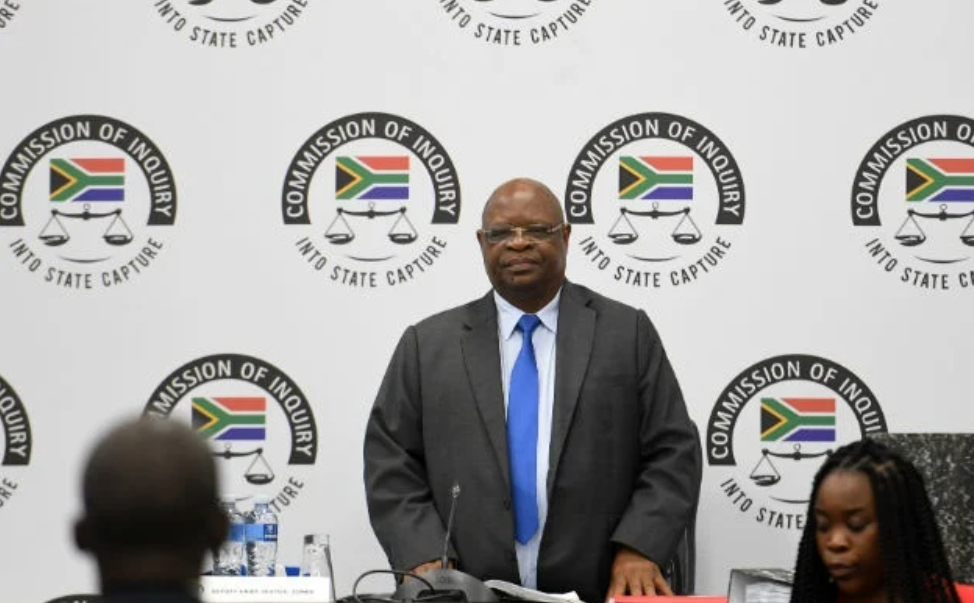
“Often these commissions play out as legal thrillers, used as instruments of political diversion and scapegoating. They are weaponised against long-identified political foes and shield those indispensable to the prevailing political grand game.”
He concluded that COES “have become legal thrillers without transformative consequence”.
What we have not confronted in Trinidad and Tobago is fundamental socio-economic reform. Various bodies as well as commentators have made many suggestions or, as I have done, also voluntarily appeared before bodies appointed by both parties when in government.

Copyright: Office of the Parliament 2025.
However, recommendations of government appointed commissions and committees are not pursued in any meaningful way.
Meanwhile, our political parties are rarely accountable except when sometimes one is voted out in disgust and the other voted in. Malignant issues are pushed aside on the basis of claims that “you did it too”.
Vision is blurred by appeals to race and class. Material wealth wantonly dispensed through state agencies suppresses consciences.
I close this Sunday by congratulating the Independent Senators on their measured contributions to the Zones of Special Operations legislation last week, despite abuse directed at them similar to what occurred in July last year.

Having just celebrated 64 years of independence, discussions as to whether Trinidad and Tobago is better off since gaining independence Read more

Some years ago, I lived and worked in Sierra Leone. I arrived in the capital, Freetown, just ten years after Read more

In October 1995, I was part of a fellowship offered by the Committee to Protect Journalists. A dozen or so Read more
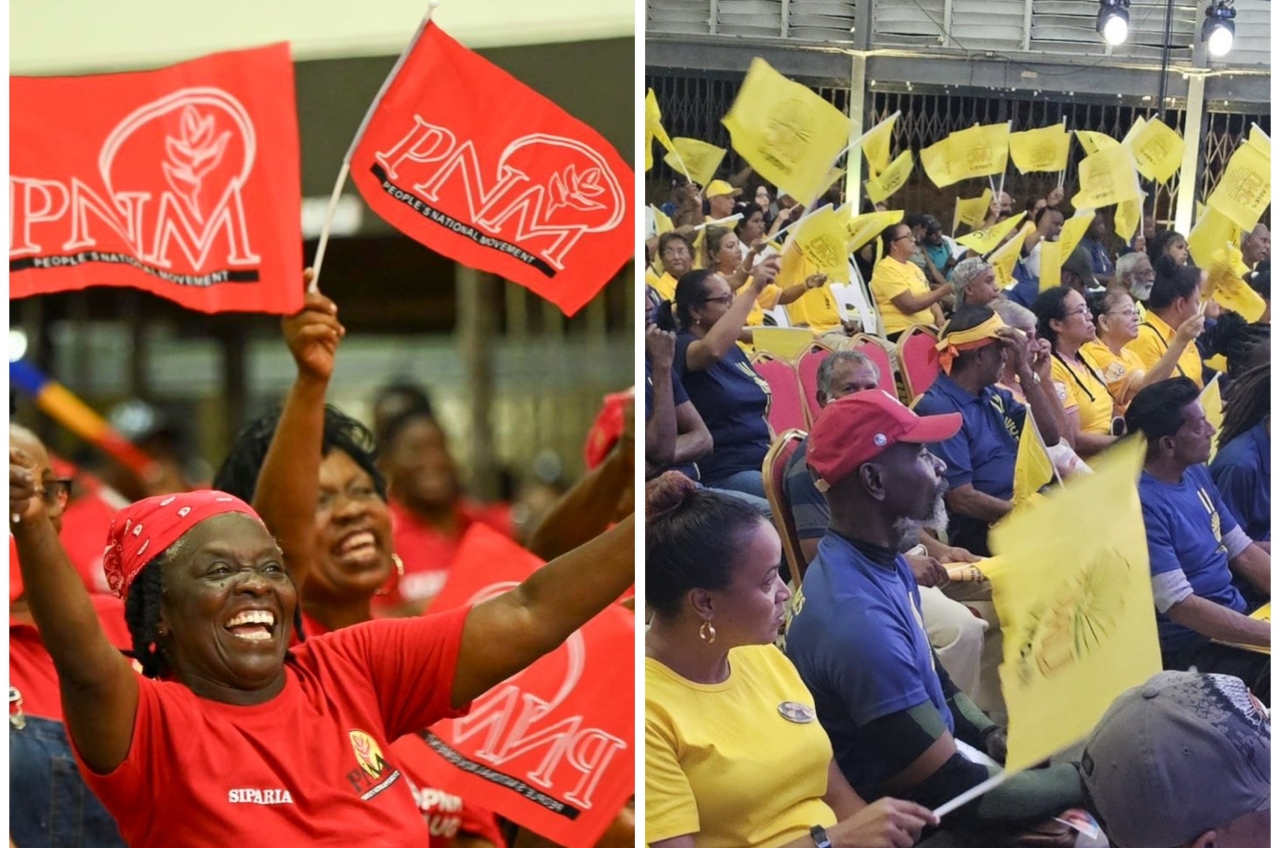
“[…] Neither African nor Indian communities benefit from this… In cases where division arises unintentionally, accountability must fall on leaders, Read more

A few years ago, Michal Teja captured hearts and titles with his hit song, DNA. At the time, I was Read more

Three thousand dollars a month. That’s the minimum National Insurance pension a citizen receives after a lifetime of work. It’s Read more
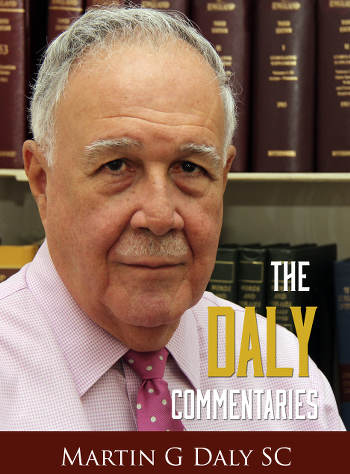
Martin G Daly SC is a prominent attorney-at-law. He is a former Independent Senator and past president of the Law Association of Trinidad and Tobago.
He is chairman of the Pat Bishop Foundation and a steelpan music enthusiast.

Martin Daly’s writing follows a familiar pattern: careful lament, historical recollection, moral unease — and a striking absence of operational solutions.
He is right that Commissions of Enquiry often fail.
But he misdiagnoses why they fail, and offers no serious alternative.
The problem is not a lack of moral courage in society.
It is defective institutional design.
Commissions fail because their terms are politically shaped, their findings are non-binding, there is no statutory duty to implement recommendations, and no automatic prosecutorial pathway. These are legal and structural flaws, not ethical ones.
His repeated prescription — “resource the DPP” — is radically incomplete.
A functioning accountability system requires independent investigative units, statutory referral mechanisms, mandatory prosecutorial timelines, oversight of inaction, and protected whistleblowers. He proposes none of this.
After 24 years, his analysis has not advanced beyond diagnosis.
He retreats into vague claims about race, class, and political culture — a fatalistic argument that explains everything and changes nothing. Culture does not cause impunity; unpunished power does.
Ironically, Daly condemns Commissions as “legal thrillers without consequence”, yet his own columns have become the same: morally engaging, historically literate, politically safe — and institutionally sterile.
Dissatisfaction is not reform.
Without concrete legal machinery, he is not challenging futility.
He is normalising it.