 Wired868 Wired868 for smart sport news and opinion
“[…] It is time that pan (read Pan Trinbago, or PTB) involves itself in some long-term policies, strategies and actions that have the long-term goals of sustainability of the pan and benefits to the thousands of panmen who continue to play for free, simply for their unenviable love of pan.
“[…] PTB must network with other stake holders like the Emancipation Support Committee, The Lidge Yasu Village, TUCO, carnival band leaders, et al, and involve in other economic businesses towards becoming independent and self-sufficient…”
The following Letter to the Editor, which suggests how the steelpan fraternity could free itself from dependency on state funding, was submitted to Wired868 by Kelvin McClean of San Fernando:

Photo: Pan Trinbago.
As Black Stalin cautioned us, pan has gone and left the panman behind. Until these “missifs” translate into some income and sustainability of pan, they are just platitudes and imagery.
It is time we stop being enamoured by events like these, which lull us into a sense of satisfaction, while tomorrow for pan remains the same as it is today: NOTHING.
It is time that pan (read Pan Trinbago, or PTB) involves itself in some long-term policies, strategies and actions that have the long-term goals of sustainability of the pan and benefits to the thousands of panmen who continue to play for free, simply for their unenviable love of pan.
This chronic bad habit must stop.
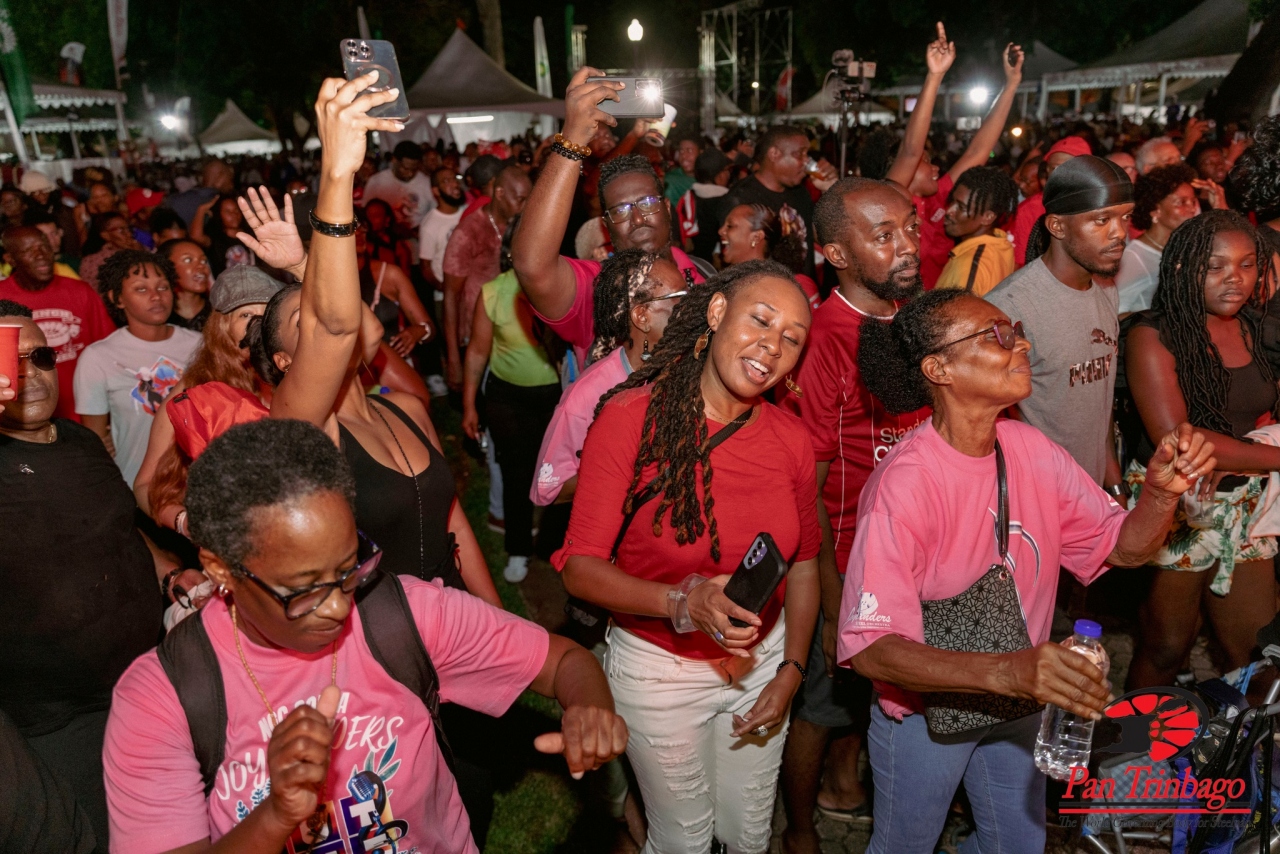
Photo: Pan Trinbago.
PTB must network with other stake holders like the Emancipation Support Committee, The Lidge Yasu Village, TUCO, carnival band leaders, et al, and involve in other economic businesses towards becoming independent and self-sufficient.
Scrap the $280 million building in Port of Spain, acquire 20 acres of land from the government, develop a purpose-built Pan City, rent commercial spaces, generate employment—in say, costume construction, food, transportation, flea markets, fete promotions—and even an administration headquarters.
The building in Port of Spain can do none of that.
By the way, the government can acquire and solve any land acquisition problems. If PTB do not have the in-house expertise for business, they can simply hire a company for that purpose and just provide oversight.
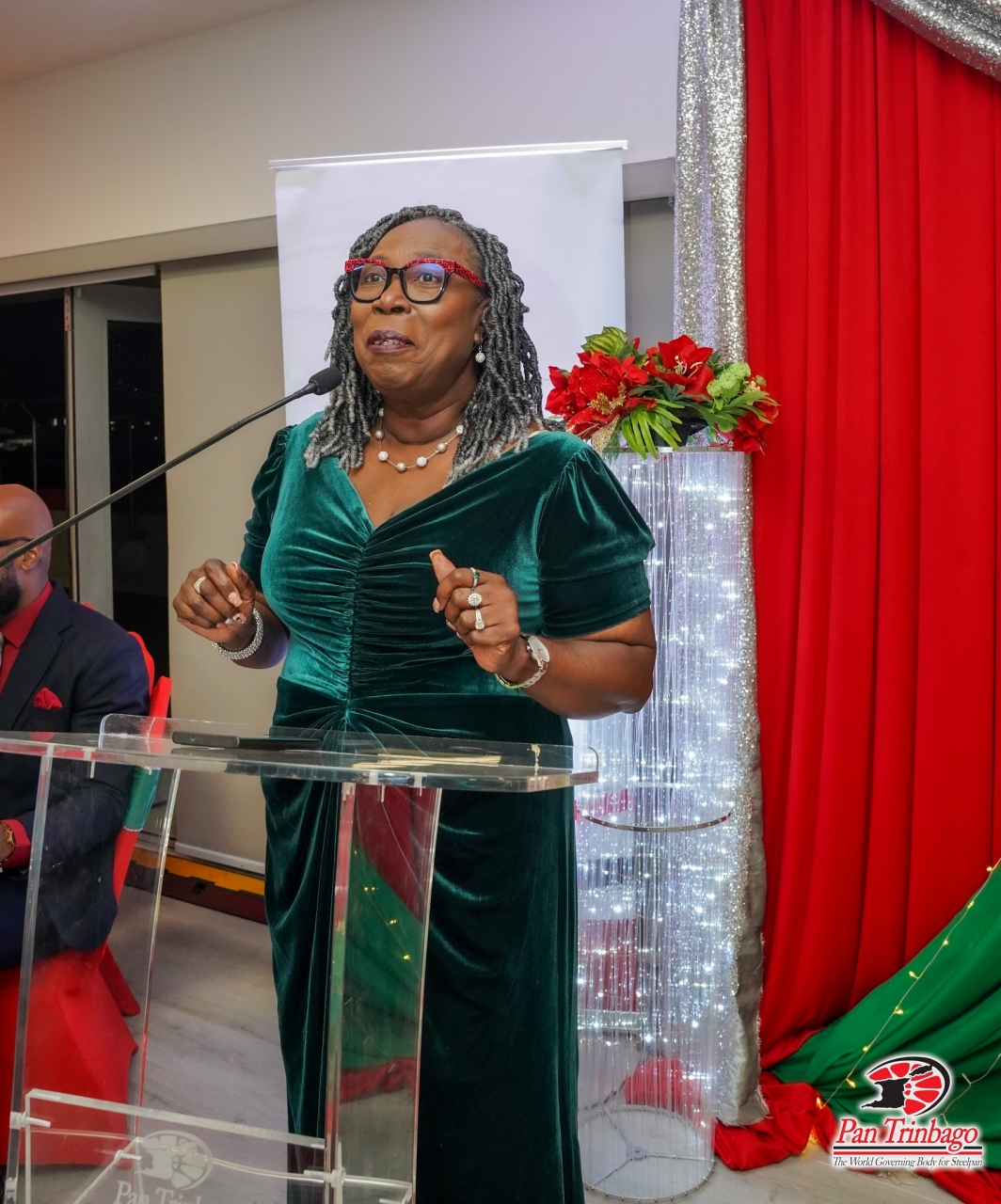
Photo: Pan Trinbago.
The withdrawal of pan sponsorship by the lucrative state-owned NGC is unwelcomed—but perhaps it is a necessary wake up call for PTB to change course.
It may be the swift kick in the backside that is needed. There are no excuses, but our lack of imagination.

As our Trinidad and Tobago economy has declined consequent upon the steep decline in our foreign exchange earnings, our economists Read more

“[…] Dale’s death forces a hard truth… I’m grieving. “But I also feel sorrow for Ishmael’s family. Because the system Read more

“[…] It is clear that this Administration, having outsourced its decision-making with respect to relations with Venezuela, has not learnt Read more
“[…] Critics may dismiss the [Home Invasion] Bill as mere ‘political comfort food’. Its purpose is practical: to bridge gaps Read more

“[…] The Home Invasion Bill does not expand rights for householders. It does not reshape murder elements... What it does do is reassure Read more
October and Calypso History Month are behind us now. February and Season 2026 beckon. What lies ahead? What is in Read more

Want to share your thoughts with Wired868? Email us at editor@wired868.com.
Please keep your letter between 300 to 600 words and be sure to read it over first for typos and punctuation.
We don’t publish anonymously unless there is a good reason, such as an obvious threat of harassment or job loss.

Pan sits at the heart of a question Trinidad and Tobago has been avoiding for decades. Is this thing we claim as sacred culture meant to survive on sentiment alone, or is it supposed to sustain the people who give it life. The answer matters now, because the gap between global admiration for pan and the economic reality of pannists at home has become impossible to defend. We celebrate pan loudly, but we structure it like a hobby, protect it like a relic, and expect it to perform like a product. That contradiction is killing it softly.
The world already treats pan as a product. Cruise lines buy it. Universities license it. Film scores use it. Foreign orchestras monetise it year round. What we resist in Trinidad and Tobago is not commercialisation itself, but control. We cling to the idea that culture must remain pure, even as others build systems around our invention and extract consistent value. When we say you cannot put a price on culture, what we really mean is we have failed to design a commercial framework that benefits us.
A hobby exists for personal joy. If it disappears, nothing else collapses. A tradition exists to transmit meaning across generations. Its success is measured in continuity, not income. A product is different. A product has a defined audience, a repeatable form, standards of quality, and a value chain where multiple people earn. Pan in Trinidad and Tobago is treated as tradition, occasionally indulged as a hobby, but never fully structured as a product—yet every Carnival season, we demand that it magically behave like one.
The annual Panorama exposes the problem brutally. It is emotionally powerful, culturally central, and economically thin. It concentrates attention and money into a short window, rewards a handful of winners, and leaves the rest dependent on stipends and subventions. That is not an industry. That is a ritual wrapped around a lottery. Outside of Carnival, the system goes quiet, and players wait. Products do not wait for seasons. They move continuously.
The resistance to product thinking is often framed as moral. People fear that packaging pan for markets will dilute its soul. But culture does not die because it earns money. It dies because the people who carry it cannot afford to continue. Jazz survived because it built clubs, circuits, standards, and contracts. Reggae survived because it formalised production, publishing, and export while keeping its identity intact. Flamenco survived by separating the sacred core from the commercial stage. Pan has refused that separation, insisting everything must remain inside the panyard, even when the world outside is ready to engage.
Evolving culture into a product does not mean changing the culture itself. It means designing interfaces for people who are not already insiders. It means moving from one-off events to year round systems. It means shifting from grant dependence to market validation. The source remains the same, but the delivery becomes intentional. Pan already has global demand. What it lacks is structure. Ask yourself some honest questions: If PanTrinbago could have done any of this…why havent they done so already? Who inside there can activate a genuine commercial product from that structure?
Right now, T&T exports pan talent but not pan institutions. Individuals leave, teach, perform, innovate, and build careers abroad, while the home base remains fragile. Knowledge migrates, but ownership does not. We end up importing validation for something we invented. A productised pan ecosystem would reverse that flow, anchoring global activity back to T&T city centres through licensing, branding, and intellectual property control.
The uncomfortable truth is that pan in T&T is protected as culture but treated like a pastime. Players are expected to rehearse endlessly for love. Arrangers are expected to rescue weak systems through brilliance. Bands are expected to survive on subventions while delivering world class output. None of that is sustainable. If pan were a product, rehearsal would be labour, not sacrifice. Performance would be contracted, not hoped for. Excellence would be standardised, not accidental.
This is urgent because younger generations are watching. They love pan, but they also see the limits. They see no clear professional pathway, no predictable income, no year round economy. When culture cannot compete with survival, culture loses. Not because it lacks beauty, but because it lacks systems.
Pan does not need saving. It needs structuring. The panyard does not need erasing. It needs bridges. The instrument that emerged from resistance, innovation, and community deserves an economic model that reflects its global impact. Until we accept that culture and product are not enemies, only different tools, we will keep celebrating pan loudly while starving it quietly. The world has already moved on. The only question left is whether WE will claim its invention properly, or continue to watch others do it for us.