 Wired868 Wired868 for smart sport news and opinion
Christmas is over and the New Year, 2026, is just ahead. Writing a column for publication today was stressful.
This is different from times past when, despite the governance failures of the months preceding Christmas and misgivings about the coming New Year, “the time for putting smoke in the kitchen” (like Scrunter’s joyful Madam Jeffrey) gave rise to columns containing pleasurable references to pastelle, pork, pan and parang, bringing out the ham.

Photo: UNC.
We had another commendably peaceful democratic change of government in April. However, it has been a year of disruptions (some positive), unending crime, job losses and of money tight in many communities.
Added to this we have the unease of rumours of war. Below the surface of the sights and sounds of Trini Christmas, these things have been somewhat challenging to our Trini Christmas that “is de bess”.
As the United States steps up its pressure on the Nicolás Maduro-led government of Venezuela by means of an oil tanker blockade, Trinidad and Tobago has to balance many things.
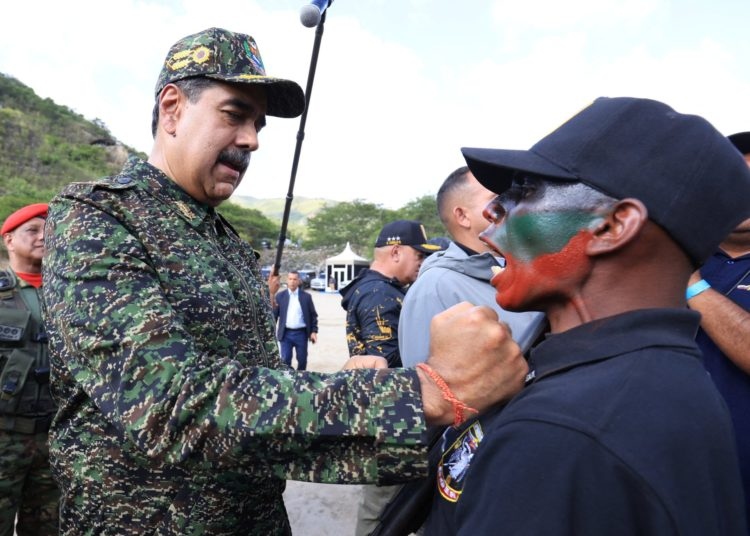
Our position of extremely close proximity to Venezuela requires the Government to consider carefully and, in my view, very pragmatically the geopolitical risks and consequences which we face.
Having chosen to be an ally of the US, it is also required that our Government speak diplomatically, particularly because—as Faiz Khan, president of the Joint Consultative Council for the Construction Industry (JCC), has powerfully observed—we are “indispensably” linked to the Caricom market.
Nevertheless, whatever the disparate views about the Venezuela situation, we do not know what might befall us if there is combat and what internal chaos we may inflict upon ourselves.
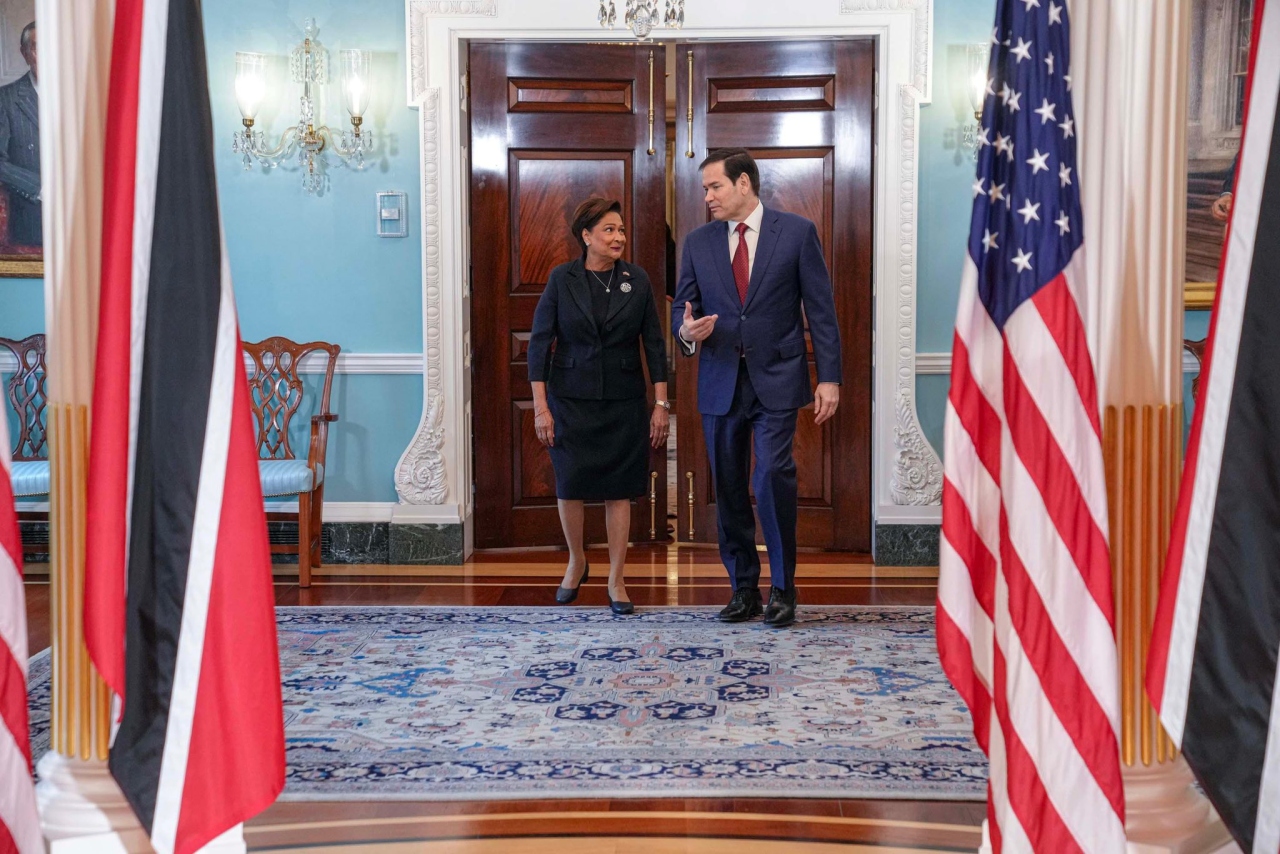
Photo: UNC.
There is also a troubling by-product of the attention international commentators are paying to the issues and the military might confronting Venezuela. That by-product is reference to Trinidad and Tobago in an unflattering light, confirming the extent of the reputational damage to which I have been drawing attention.
For example, I heard a retired four-star US General, without hesitation—in the course of a US television panel discussion—refer to Trinidad and Tobago as a transshipment point for cocaine.
A column of 14 December entitled A Trini Christmas Tradition, written by my insightful fellow Sunday columnist, Scarlet Benoit Selman, helped me feel validation regarding what I wrote about our unwillingness to face the several crushing realities, which I sought to describe in the course of over two decades as a weekly columnist.

(via OPM.)
That column of Scarlet’s contains a careful description of how Trinis balance or ought to balance celebration with complaint and chides us for not pressing our grounds for complaint.
She raises important questions asking as we celebrate “whether we pair that joy with responsibility” and “whether we can laugh AND still demand change where it is possible”.
She then asserts: “We can celebrate AND demand systems that function. We can laugh AND refuse to normalise dysfunction.”

Photo: UNC.
I am not confident that we can achieve those objectives. It seems to me our constant celebrations have made us irretrievably delusional about the true state of “Sweet T and T”. So-called civil society is largely supine, greedily indifferent to our descent into a narco-infiltrated State.
We are so nonchalant that we laughed at the statement of the Commissioner of Police that fear of contracting dengue fever mosquito bites inhibited the police in a drug bust operation in the bush, which might have led to arrests.
Having laughed, we have not demanded accountability. Why didn’t any of our parliamentary representatives or civil society follow the lead of the Trinidad Express newspaper’s editorial and take up this dotishness?
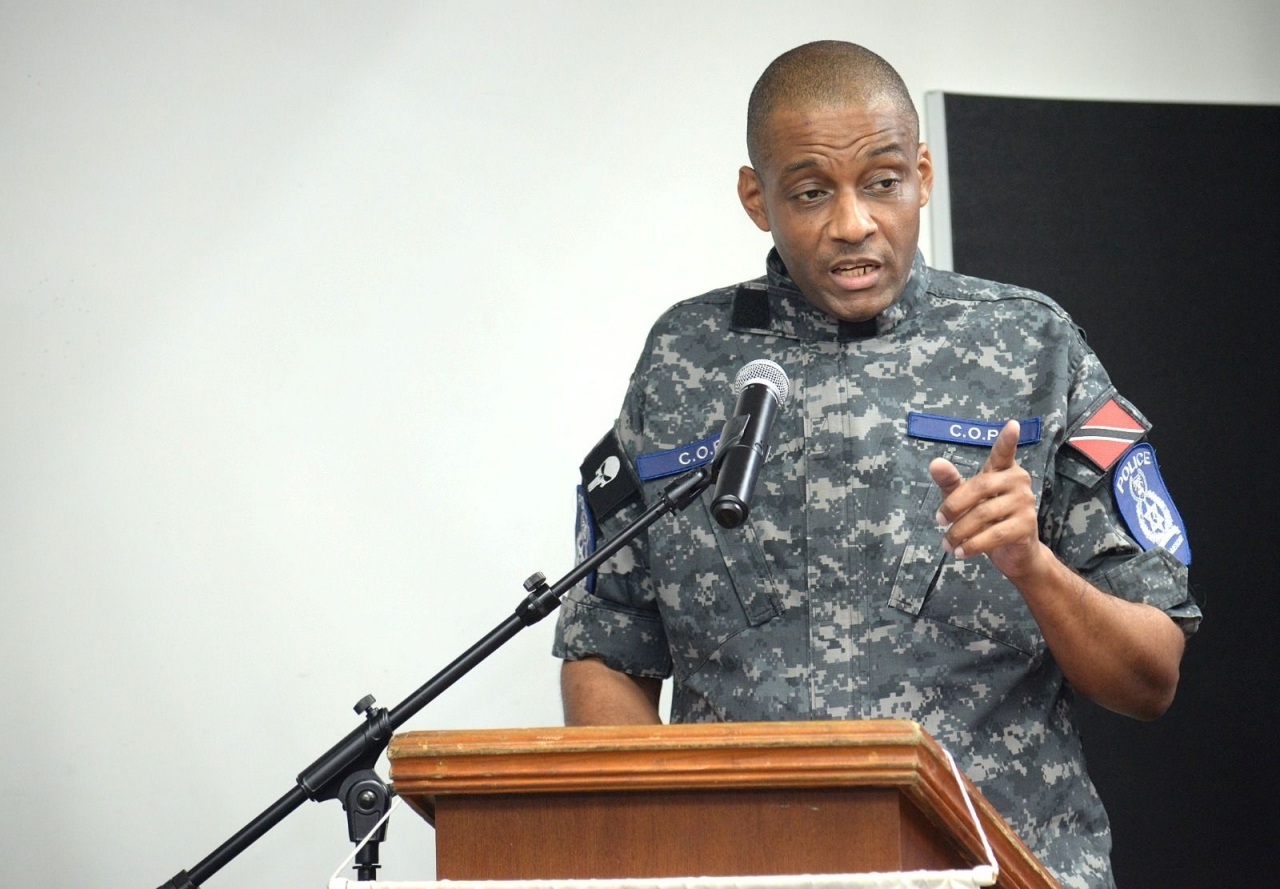
Photo: TTPS.
Those besetting the public with the opportunistic crime detailed on Monday last by Joanne Paul, also a truly grounded fellow columnist, must be laughing their heads off at the normalisation of the disastrous state of public safety, which makes criminal activity so trouble free.
Around the corner, on 6 January, Epiphany commemorates the Wise Men following the Star of Bethlehem and finding baby Jesus and the revelation of his birth.
An epiphany for us, in terms of enlightenment in the use and misuse of the power that we give our public officials and in terms of demanding accountability for it, seems unlikely.

“[…] What happened in Venezuela has nothing to do with Trinidad and Tobago. Citizens, just like myself, went about our Read more

As our Trinidad and Tobago economy has declined consequent upon the steep decline in our foreign exchange earnings, our economists Read more

Kamla Persad-Bissessar: “[…] Trinidad and Tobago is NOT a participant in any of these ongoing military operations. Trinidad and Tobago Read more
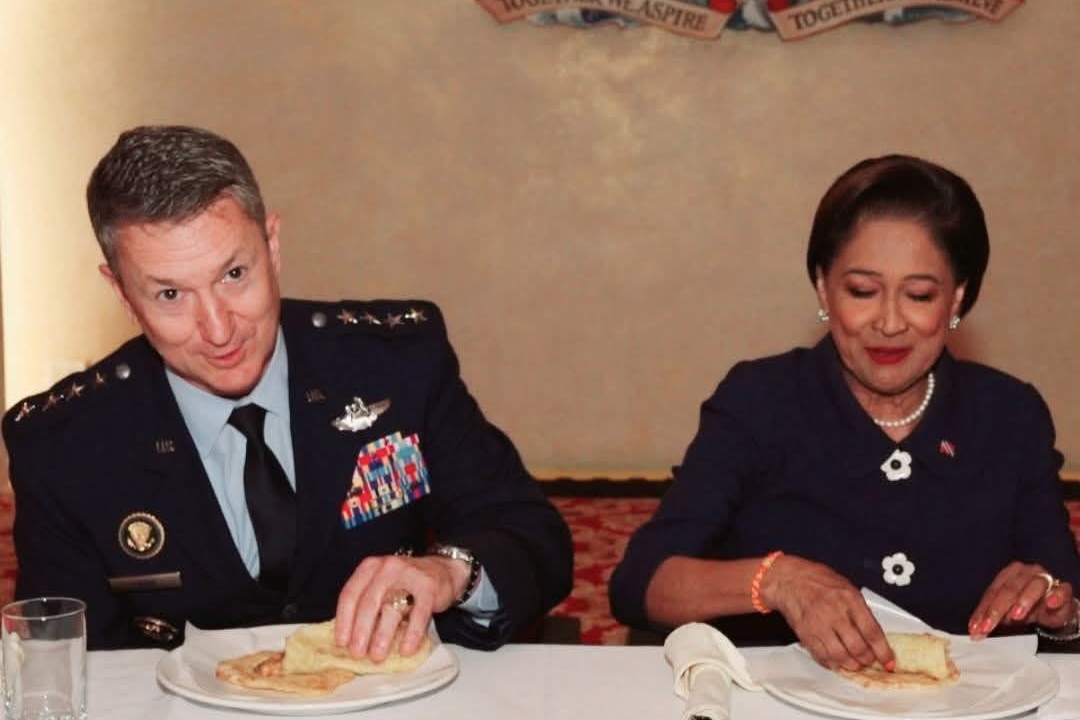
“[…] It is clear that this Administration, having outsourced its decision-making with respect to relations with Venezuela, has not learnt Read more

A little over a week ago, on 29 November 2025, the Washington Post identified “the Caribbean allies helping the US Read more
“[…] Critics may dismiss the [Home Invasion] Bill as mere ‘political comfort food’. Its purpose is practical: to bridge gaps Read more
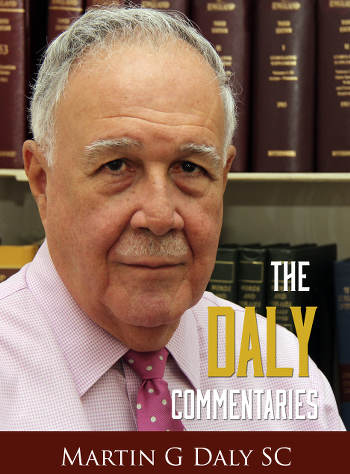
Martin G Daly SC is a prominent attorney-at-law. He is a former Independent Senator and past president of the Law Association of Trinidad and Tobago.
He is chairman of the Pat Bishop Foundation and a steelpan music enthusiast.

When Self-Citation Replaces Substance
Martin Daly’s latest column reads less like analysis and more like a guided tour of his own archives. Faced with crime, geopolitics, institutional decay, and public anxiety, he ultimately reaches for his most reliable authority: himself, circa 20 years ago.
Longevity, however, is not evidence. Repeating one’s past warnings does not convert opinion into proof, nor does it transform frustration into foresight. If it did, half the country’s bar-room conversations would qualify as prophetic literature.
The column drifts elegantly through Christmas nostalgia, Venezuela, CARICOM, narco-states, dengue-averse police operations, and civil society’s alleged slumber—before landing on the familiar refrain: I told you so, and you didn’t listen. This is not argument; it is autobiography with footnotes.
Grave claims are made—narco-infiltration, reputational collapse, institutional failure—yet the supporting material consists largely of television commentary, anecdotes, and Daly’s own prior columns. Quoting oneself is not corroboration. It is circular reasoning with better prose.
Most striking is the confusion between criticism and accountability. We are scolded for laughing, feting, and tolerating dysfunction, but never told—concretely—who should be held accountable, through what lawful mechanisms, and for which specific failures. Accountability is not summoned by moral disappointment alone. It requires structure, process, and consequence, none of which are seriously examined.
The tone is stern, the vocabulary sharp, the despair palpable. But severity of language is not seriousness of thought. Calling the population “delusional” may feel bracing; it also conveniently absolves institutions of detailed scrutiny.
A columnist has a choice: illuminate the path forward, or repeatedly remind readers that the lights have been out for years. One approach advances public understanding. The other merely confirms that the writer has been sitting in the dark the longest.
Quoting oneself from 20 years ago is not an epiphany.
It is a habit.