 Wired868 Wired868 for smart sport news and opinion
He was ranting angrily about his wife of 25 years. He often came to me to vent; she did too. There was little to do but listen. They were spectacularly unsuited for each other, but the thought of getting a divorce was an unthinkable one, because according to the way she interpreted Islam, it was not an option.
On this particular day, as he raged by my gate, he paused: “In all the years we marrid, I never once raise mih hand to hit she.”
He said it as if it were evidence of his self-control, as if he had displayed extreme forbearance in restraining himself from exercising a God-given right. I had not thought that he harboured the belief that hitting his wife was something he was authorised from on high to do. She was lucky to have him.
The horrific murders and maiming of our womenfolk by their partners, past and present, continue to molest our minds. What is to be done? Yes, there is an obvious failure by the protective services, but how much can policing prevent?
Something deeply ingrained in the male psyche feeds this idea that violence is an appropriate way to establish control. It goes back for as long as humans have tried to cohabit, and it’s not just in domestic situations.
Here are a couple of stories.

A Muslim girl married a Hindu boy and went to live at his family’s home. She converted to Hinduism, thus invoking the disapproval of her parents.
Soon, she found herself facing the brunt of his family’s disdain for her Islamic roots, and despite tremendous efforts on her part to be both a devout Hindu and a devoted wife and daughter-in-law, she was subjected to cruel treatment.

It was not physical, but unrelenting insults that became unbearable.
She eventually went tearfully to her divorced parents and told them separately of her plight. I mention the divorce because without them discussing her situation, they both told her the same thing. She must go back to the situation and endure it because, in a sense, his family now “owned” her.
It recalled for me a similar story I once recounted in this space about my maternal grandmother.
She had been married off to a man who did not look after her three children and herself. Basically, he rationed out foodstuff for her to cook, and if the meal was not to his liking, he would beat her and throw away the food. Things like that.
When she went to her parents and said she could not live like that, they gave her the same instructions. Go back.
But she refused. She sat by the side of a river, crying, and said she would rather die than return. And so, despite the fear of Allah’s wrath, her father relented and let her stay. She later met and married my grandfather, who came from India, and they lived peacefully together until death parted them.
How big a role does religious indoctrination have in conveying that sense of ownership and control to men? Religious teachings embrace the idea that men are heads of households and are entrusted to protect the “weaker sex”. That comes with all sorts of collateral interpretations about their rights.
Here’s another story about a couple who were breaking up during her pregnancy because he had formed a new relationship. Things got stormy, and they had a physical fight one day. She thought it was an aberration, but then there was another quarrel, and he told her that if she ever raised her voice at him again: “I will cut your arse.”
She left.
I am dredging up these unpleasant stories because I believe that the issue of domestic violence extends far beyond the purview of laws.
It’s not easy for me to write about it because in my childhood, I witnessed so much. My father beat my mother. My alcoholic uncle, who lived in the apartment adjoining ours, beat his partner and his daughters mercilessly when he was drunk.
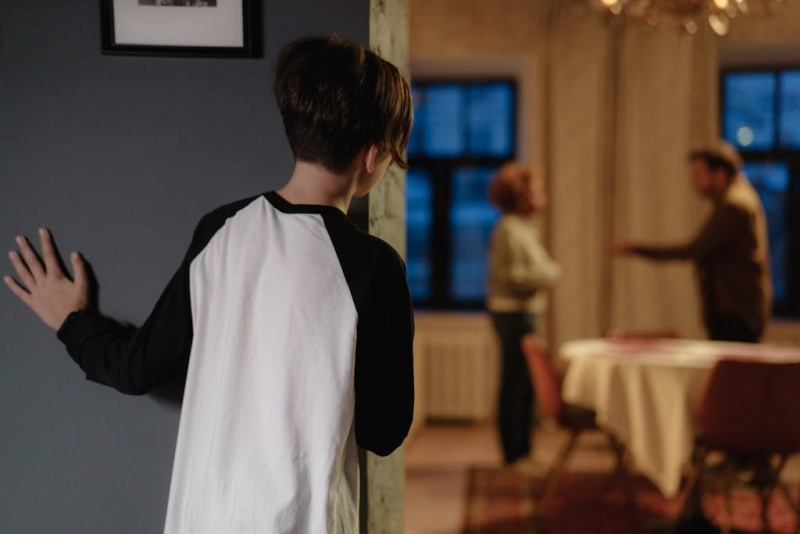
The sound of the blows, their blood-curdling screams, the terror we felt at hearing it all and imagining that there was blood and there would be death—all of that comes back in a rush whenever a new episode comes into the public space.
I know I have been traumatised, and I can only imagine how many young lives are scarred forever by proximity to that kind of abuse. It doesn’t happen overnight.
It builds and builds until you are living in a constant state of dread, and home becomes a house of horror. Your childhood disappears. Your personality changes. You learn that no one can be trusted. You might feel rage at your own inability to stop it.
I ran to the kitchen, grabbed an ice pick, and tried to poke it into my father’s butt cheek as he was hitting my mother. My older brother had jumped onto his back. I didn’t know what to do. I must have been five or six. But it is a vivid memory of helplessness and terror.

Women stay for all sorts of reasons. None of them is simple. A police report, a restraining order, or even removing themselves and their children from the home guarantees no safety.
The scars leave different wounds. For some, violence becomes the answer; for others, it weighs down relationships. Either way, it is damaging.

According to Chinese astrology, from mid-February, 2026 will be known as the Year of the Fire Horse. From what I’ve Read more

Everyone seems to be gloomy, and angry. The far-flung wishes for merriment, good health and prosperity making their way into Read more

We’re on the brink of losing many things that have shaped us. Makes me wonder what we would select to Read more
I don’t recall ever seeing such a high level of apprehension in our space. Do you? It’s coming from a Read more

Thinking about the issue of belonging, I have been wanting to return to the subject of patriotism. I came across Read more

It’s not a local thing, not a Caribbean thing even. It’s more of a contemporary thing; this craving for brown Read more

Vaneisa Baksh is a columnist with the Trinidad Express, an editor and a cricket historian. She is the author of a biography of Sir Frank Worrell.
