 Wired868 Wired868 for smart sport news and opinion
“[…] Consider slavery. The transatlantic slave trade was not opposed by scripture—it was justified by it. Genesis 9:25–27 legitimised enslavement of Africans. Ephesians 6:5 instructed slaves to obey masters. Leviticus 25:44–46 explicitly permits buying slaves and passing them as inheritance.
“[…] The sexual abuse crisis represents the starkest contemporary failure. This wasn’t isolated misconduct but systematic abuse protected by institutional structures claiming moral superiority. Bishops knew. Cardinals knew. The Vatican knew.
“[…] Critically, systemic exposure came not from within the Church but from secular forces—investigative journalism, civil litigation, state-mandated inquiries, and public pressure. The moral reckoning was imposed from outside the religious system, which persistently resisted it…”

It is an issue that also affects multiple religious groups.
The following response to Leela Ramdeen’s column on the moral compass of the Catholic Church was submitted to Wired868 by Dr Russell Lutchman, consultant forensic psychiatrist, Birmingham, UK:
When scripture sanctified shackles, when papal decrees blessed bloodshed, and when religious authority shielded abusers rather than the abused—what remains of its claim to moral authority?
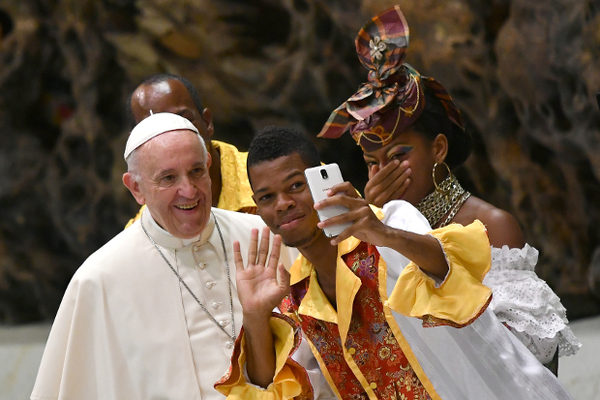
Leela Ramdeen’s assertion in The Guardian of 07 February 2026 that Catholic teaching represents a reliable moral compass collapses under the weight of its own history: a legacy scarred by the sanctification of slavery, the fervour of crusades, the brutality of inquisitions, and the violence of colonial conquest.
(Copyright Getty.)
Her answer is Catholic teaching: the Catechism, the Magisterium, the Beatitudes, and scripture. She warns against moral relativism and presents religious authority as the foundation for integrity, justice, and compassion.
The historical record is crushing.
Religious institutions claiming transcendent moral authority have participated in, justified, or failed to prevent some of history’s worst atrocities. Any framework claiming moral mandate must be evaluated by its outcomes. By that basic standard, religious moral authority fails catastrophically.

Consider slavery. The transatlantic slave trade was not opposed by scripture—it was justified by it. Genesis 9:25–27 legitimised enslavement of Africans. Ephesians 6:5 instructed slaves to obey masters. Leviticus 25:44–46 explicitly permits buying slaves and passing them as inheritance.
Pro-slavery Christians appealed to literal readings. When abolitionists argued against slavery, they did so by reinterpreting scripture or appealing to broader principles, contending directly against entrenched biblical texts. The passages on slavery had to be actively overcome, not followed.
The Crusades, Inquisition, and colonial conquests demonstrate systematic institutional failure. Pope Urban II launched the First Crusade promising salvation for killing Muslims. The Spanish Inquisition operated for three centuries with papal approval, torture explicitly authorised in 1252.
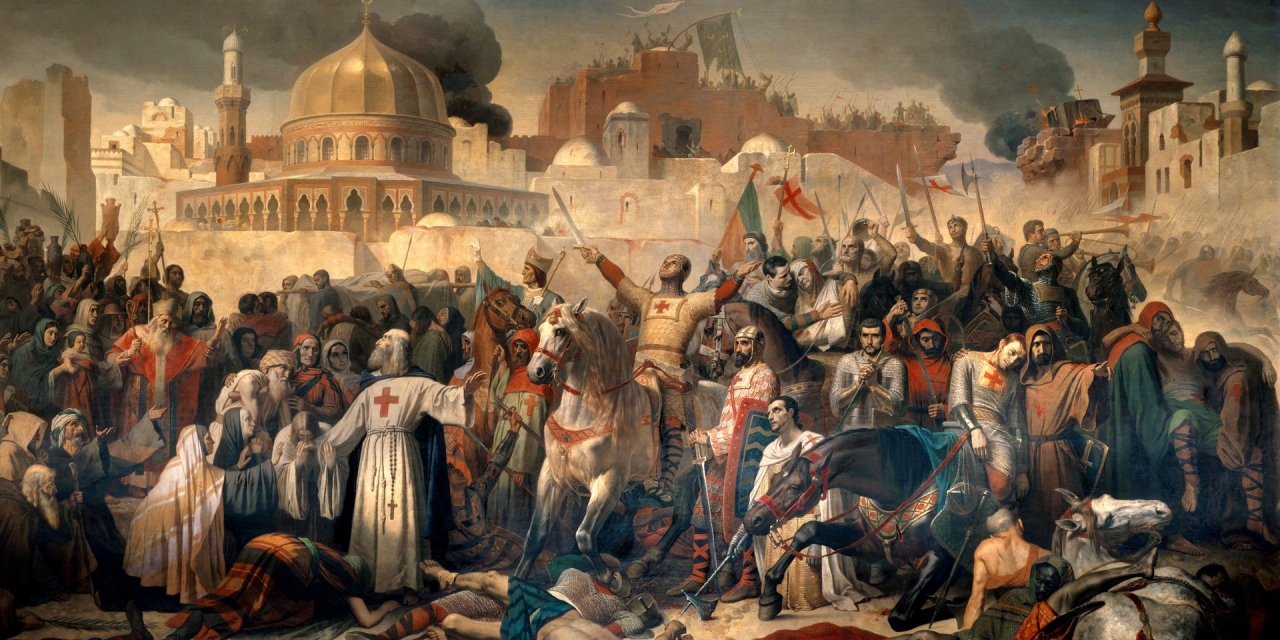
Papal bulls authorised European conquest of non-Christian lands. Pope Nicholas V’s 1452 decree permitted Portugal to “invade, search out, capture, vanquish, and subdue all Saracens and pagans” and place them in “perpetual slavery”.
Indigenous children were removed from families, languages forbidden, cultural practices criminalised. All blessed by churches; justified by scripture.
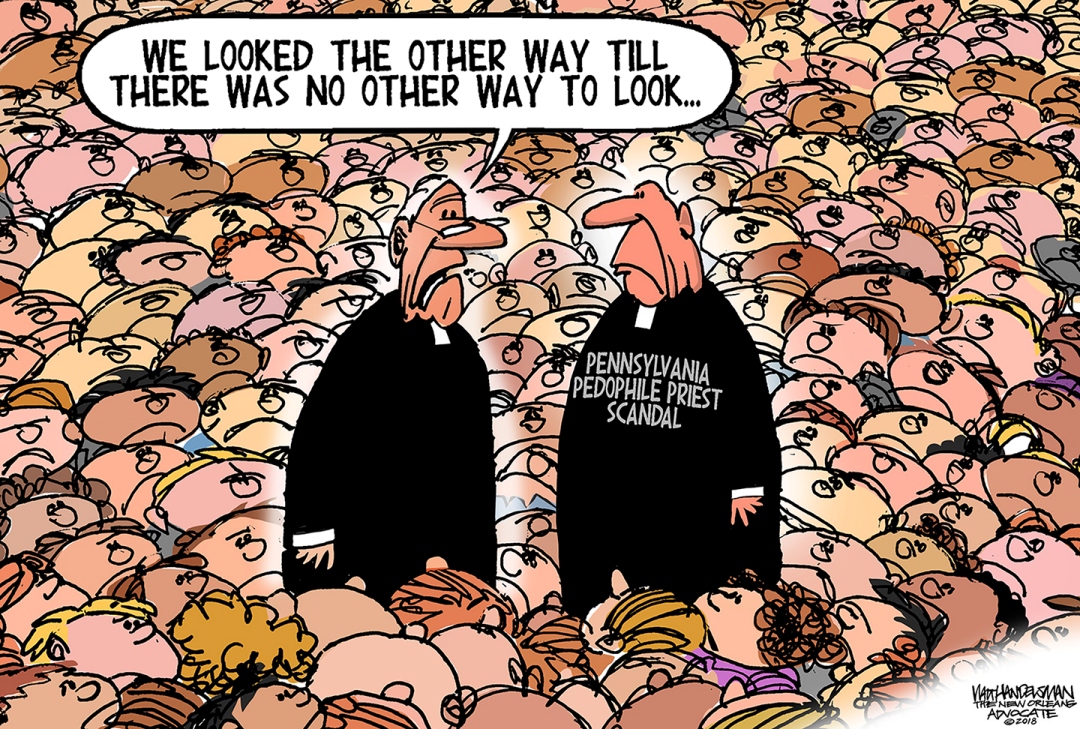
The sexual abuse crisis represents the starkest contemporary failure. This wasn’t isolated misconduct but systematic abuse protected by institutional structures claiming moral superiority. Bishops knew. Cardinals knew. The Vatican knew.
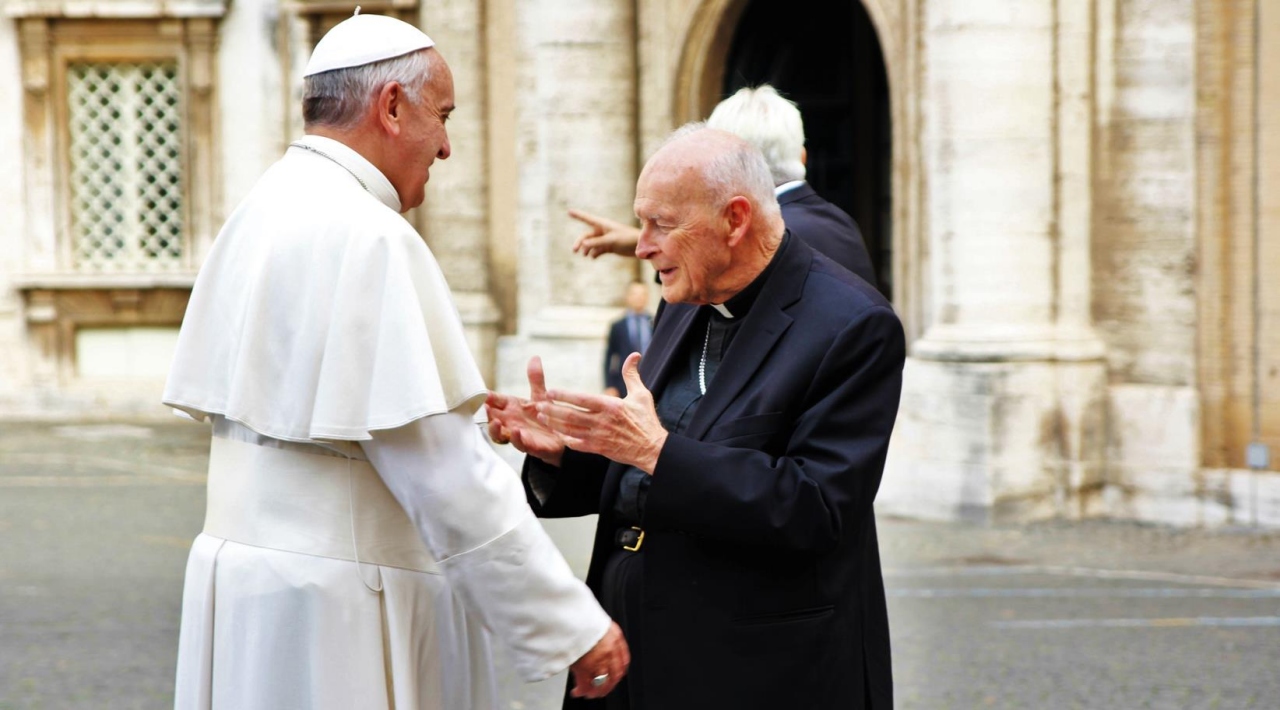
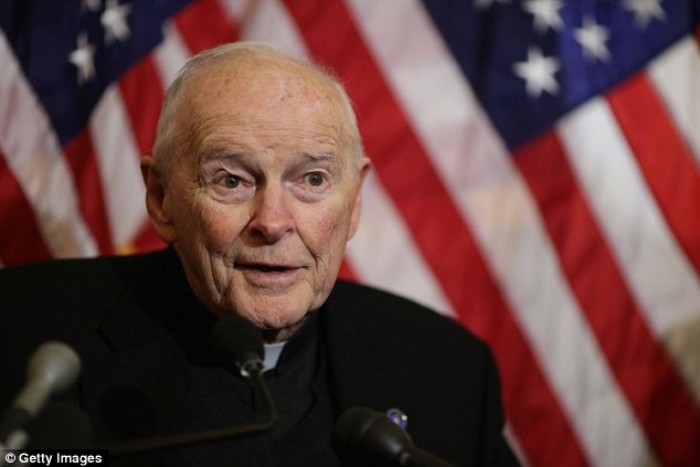
In 1994, a priest accused McCarrick of inappropriately touching him while papal nuncio to the US, Agostini Cacciavillan, was warned by a parishener about scandals involving the priest.
Yet McCarrick served for another 20 years–during which time he rose to the position of archbishop, then cardinal and travelled the world on behalf of Pope Francis. He was eventually dismissed for sexual abuse in 2019.
(via ABC Mundial.)
Rather than protect children, institutions protected abusers. Canon law maintained secrecy. Victims were threatened with excommunication. Perpetrators were quietly relocated.
Australia’s Royal Commission found 7% of Catholic priests were subject to allegations of child sexual abuse between 1950 and 2010. Similar patterns emerged in Ireland, Germany, France, Chile, the United States, the Philippines.
What is devastating is not merely that individuals committed these crimes, but that religious authority structures systematically enabled and protected them.
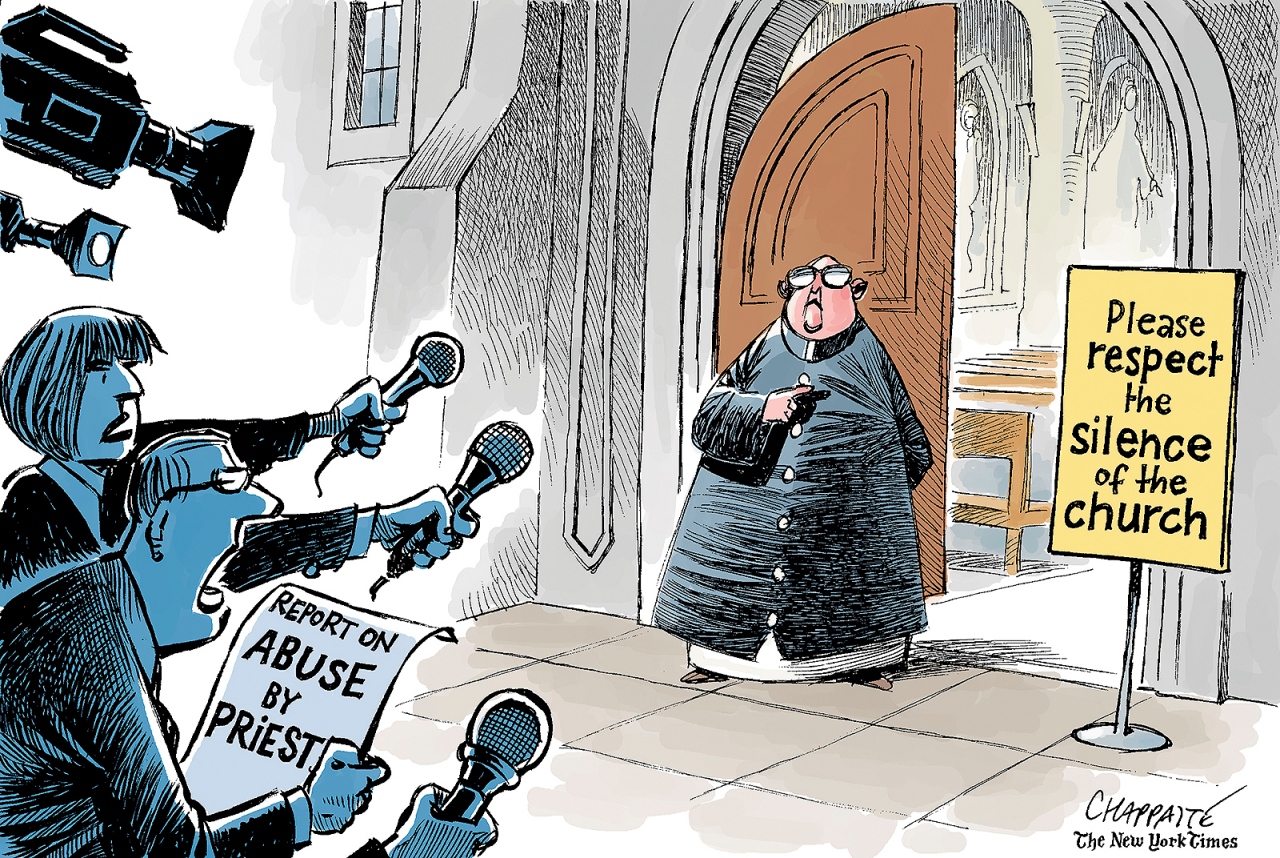
Critically, systemic exposure came not from within the Church but from secular forces—investigative journalism, civil litigation, state-mandated inquiries, and public pressure. The moral reckoning was imposed from outside the religious system, which persistently resisted it.
This pattern extends beyond Catholicism. Nearly 400 Southern Baptist leaders pleaded guilty or were convicted of sex crimes against 700+ victims since 1998. Evangelical megachurches demonstrate identical dynamics.
Jehovah’s Witnesses’ 2015 Australian Royal Commission found records of 1,006 alleged perpetrators involving 1,800+ victims since 1950. None were reported to police by the organisation. Their “two-witness rule” makes it nearly impossible for survivors to be believed.

(via BBC.)
This is not a Christian problem. It is a religious authority problem.
The Dalai Lama admitted in 2018 he had known about sexual abuse by Buddhist teachers since the 1990s, calling allegations “nothing new”. Sogyal Rinpoche resigned in 2017 after decades of abuse allegations dating to 1981.
Tibetan monasteries face lawsuits alleging systematic rape with institutional facilitation. Thailand has experienced major scandals involving senior monks.
The pattern is structural: religious authority is manipulated to convince students abuse represents spiritual advancement.

Hindu spiritual institutions show identical dynamics. Asaram Bapu received a life sentence in 2018 for raping a 16-year-old at his ashram. Gurmeet Ram Rahim Singh was convicted of raping two followers and serves 20 years.
Multiple high-profile gurus have been convicted of systematic sexual exploitation. Victims are told sexual contact represents divine blessing.
Religious teachings justify exploitation. Institutional structures protect perpetrators.

If challenged that these represent historical failures now corrected, the response is straightforward: they are not simply historical.
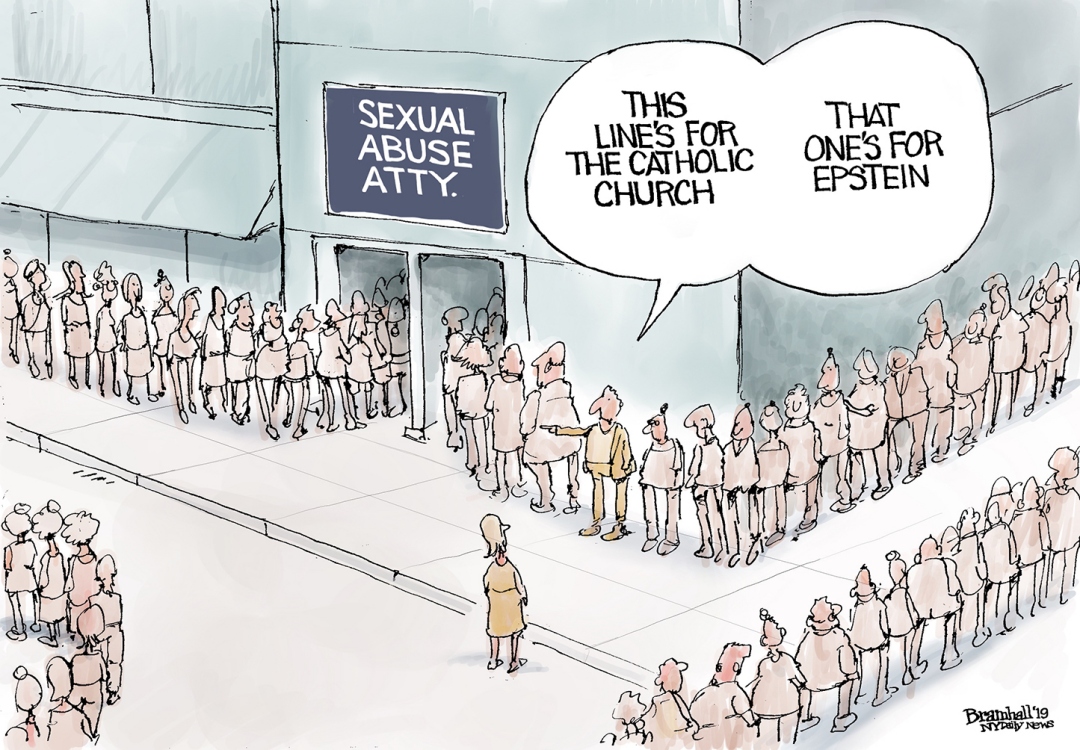
The Los Angeles Archdiocese paid $880 million to abuse survivors in October 2024—the largest single Catholic settlement in history. In December 2024, New York’s Diocese of Rockville Centre approved a $320 million settlement with 600 survivors.
Between 2004 and 2024, the Catholic Church in the United States alone paid over $5 billion in settlements.
Eleven Dallas-Fort Worth evangelical pastors resigned or were removed in 2024 following abuse allegations. Jehovah’s Witnesses faced criminal charges in Pennsylvania in 2023 and March 2025 for systematic cover-up.
Buddhist institutions confronted major scandals across Thailand, Tibet, and the United States throughout 2023-2025. Hindu spiritual leaders continue facing convictions.
A 2019 Associated Press investigation found nearly 1,700 credibly accused Catholic priests living unsupervised. Many work with children.
This is not a dark past overcome. This is present tense. The list is much longer.
(via Getty.)
Ramdeen presents Catholic teaching as a moral compass. But she moved the compass needle. The true direction of the compass would point towards slavery, crusades, inquisitions, colonial conquest, and systematic cover-up of abuse.
She warns against relativism denying absolute truths. However, claims to absolute, divinely sanctioned moral truth have repeatedly enabled atrocities by insulating institutions from scrutiny.
Absolute certainty does not protect against moral failure; it facilitates it by making religious authority resistant to correction and accountability.
The values she champions—integrity, justice, compassion, accountability—didn’t originate with religious authority, aren’t unique to it, and haven’t been reliably protected by it.
What drove moral progress? It was Secular Enlightenment values. Democratic accountability. Freedom of conscience. Empirical investigation. Journalism. Public pressure. The said frameworks religious institutions often opposed.
Moral frameworks must be evaluated by demonstrable outcomes, not aspirational rhetoric. By that standard, religious moral authority has failed catastrophically. Any discussion of ethical foundations that ignores this history confuses moral language with moral action.
(via Newsweek.)
Ramdeen’s column fails by the very principles she elevates. She calls for integrity, but her argument omits the historical integrity of the record. She demands accountability, but avoids accountability for the atrocities justified by the authority she champions.
She champions transparency, yet presents a morally curated vision that conceals systematic harm. True moral leadership begins with an unflinching audit of one’s own tradition.
Without this reckoning—without aligning moral claims with historical and institutional reality—the call to ethical behaviour remains aspirational rhetoric, devoid of the credibility or merit.
“[…] I urge our PM not to use the word ‘coolie’ to self-reference. I accept the fact that you may Read more

In two years, I will be a pensioner myself. So when I say the upcoming budget must increase the old Read more

“[…] ‘No rule was broken’ is a legal answer to a question that isn’t, at its heart, legal. It’s a Read more

Is this new UNC Government celebrating our Independence, or declaring its independence from public accountability and the rights of its Read more

“[…] As the applause faded, I thought about our inconsistent and unreliable water schedule, even in the rainy season. I’ve Read more

A 13-year-old girl singing Tight and Pretty with sexually explicit lyrics is a child protection issue! The Child Protection Unit Read more

Want to share your thoughts with Wired868? Email us at editor@wired868.com.
Please keep your letter between 300 to 600 words and be sure to read it over first for typos and punctuation.
We don’t publish anonymously unless there is a good reason, such as an obvious threat of harassment or job loss.

For detailed information and analysis please read Sex and Violence in Tibetan Buddhism- The Rise and Fall of Sogyal Rinpoche by Mary Finnigan and Rob Hogendoorn. Jorvik Press. Available on Amazon