 Wired868 Wired868 for smart sport news and opinion
“[…] Now, Trinidad and Tobago is a shadow of its former self, undermined by a lack of innovative leadership, perceived corruption, crime, poor infrastructure and most of all, a culture that has transformed itself into rewarding mediocrity rather than excellence.
“[…] Evidence-based decision-making is critical in achieving service excellence… [For instance] there is a need to regulate the tech-vocational or the ‘trade-man’ market.
“We cannot be talking tech-vocational training, yet still, there is no registered database for ‘tradespeople’ where citizens can go and assess performance via ratings, so both parties can be protected…”

(via istockphoto.)
The following Letter to the Editor on our challenges to building a culture of excellence was submitted to Wired868 by Jairzinho Rigsby, a former UNC local government election candidate and part-time UWI economics lecturer of Dundee Village, Arima:
We have just concluded our 49th year of republicanism, and as usual, our leaders have praised the citizens for achieving this milestone. I would also like to congratulate all our national awardees for their contributions toward the development of our great republic.
However, amidst the progress we have attained as a society thus far, can we say with confidence that we are truly a republic, considering our present economic state and knowing that Trinidad and Tobago was once the wealthiest country in the Latin American and Caribbean regions?

Photo: Nicholas Bhajan/ Wired868.
Now, T&T is a shadow of its former self, undermined by a lack of innovative leadership, perceived corruption, crime, poor infrastructure and most of all, a culture that has transformed itself into rewarding mediocrity rather than excellence.
I have used the phrase “underachievers’ paradise” in many conversations to describe situations where I felt that we have settled for less rather than more as a society.
Dr Terrence Farrell alluded to this concept in one of his books entitled The Underachieving Society, where he posits that T&T’s economic underachievement is a result of cultural factors.
Acknowledging Dr Farrell’s arguments, I would also like to posit that T&T’s continued overall decline is attributed to a general culture of low expectations, lack of motivation, and complacency in all contexts of our society.

This includes education, leadership, science, customer service, product quality, economics, public service and general development, which can be changed by forward-thinking political leadership.
Please permit me to develop this discussion further and, as usual, offer some suggestions that the current administration can consider in their efforts to create a culture of excellence.
While there may be pockets of individuals and businesses that strive to promote excellence, whether in customer service/quality products, and their personal lives, mediocrity and low expectations have become the modus operandi in all strata of our society.

However, I would like to focus on T&T’s political leadership since, in my humble opinion, it is the political leadership that sets the “tone and tenor” for the rest of the society to follow.
To justify my point, Norway’s sovereign wealth fund, which was incorporated in 1990 after production started in 1971, has a net asset value of USD$1.8 trillion (Fortune 500) today, versus T&T’s net asset value of USD$6,087 billion as at fiscal 2024 (Heritage and Stabilisation Fund (HSF) Report 2024).
T&T started commercial production in 1908. While we all know that the People’s National Movement (PNM) was in power during that time, I pose one question: would our present crop of politicians have been able to achieve Norway’s success if they had been given the chance in the early 1970s?

Copyright: Office of the Parliament 2025.
Furthermore, wait until the budget debate starts in both houses and see if the menu changes from macaroni pie and coal pot to curry duck and “chulha”.
An important avenue for improving our culture of excellence is through our education system. As the world shifts towards an artificial intelligence (AI) focus, some argue that the emphasis must shift to tech-vocational training, as AI is likely to replace administrative jobs, rather than trades.
To the Minister of Education, it’s time to reward our tech-vocational students in the same manner we reward our academic students with the President’s Medal, as we all know that some students excel with their hands.
(via Servol.)
Secondly, to improve knowledge and social capital, schools can be utilised as community centres on afternoons and weekends. This is easy to do, and the costs of building new community centres could be diverted to other needs.
Mr Minister, we also need to give school principals the autonomy to approve educational events at their schools, instead of the lengthy bureaucratic centralised approval process.
Finally, why is it that SEA/CXC/CAPE results are such a guarded secret?
It’s time for state/schools to put this data on their websites so citizens can see the performance of the teaching staff, and if targets are met, compensation can be paid.
(via MoE.)
This way, excellence can be achieved, starting with our teachers and students.
Evidence-based decision-making is critical in achieving service excellence. To the Hon Minister of Public Administration/AI, as you know, AI relies on data, and as such, the Central Statistical Office (CSO) must be equipped with the resources to improve data collection.
This has been a call for past administrations to address, but with no success.
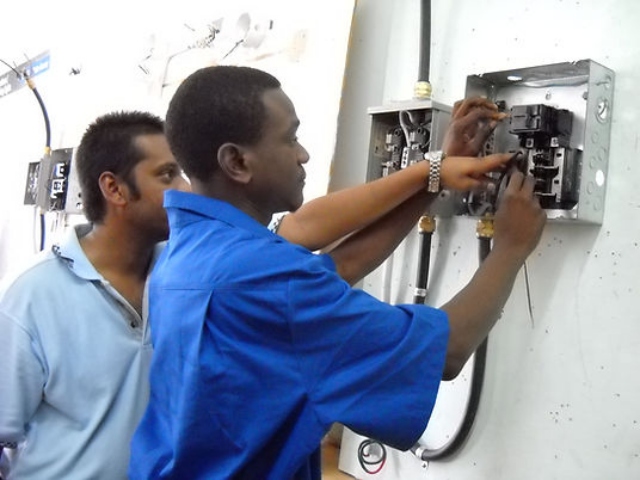
Finally, there is a need to regulate the tech-vocational or the “trade-man” market. We cannot be talking tech-vocational training, yet still, there is no registered database for “tradespeople” where citizens can go and assess performance via ratings, so both parties can be protected.

(via istockphoto.)
I close by utilising Express’s quote of the day, which aptly sums up improving T&T’s excellence culture as citizens.
“We all must resist any divisive elements; unity is possible, and it’s in reach if we want it. It all begins with the leaders.”
|
Wired868 has provided readers with solid, independent journalism since 2012. If you appreciate our work, please contribute to our efforts. Support Independent Journalism |

“[…] The media release by the heads of judiciaries—that seemed to focus on the leak of the emails and breach Read more
“[…] Neither African nor Indian communities benefit from this… In cases where division arises unintentionally, accountability must fall on leaders, Read more

A few years ago, Michal Teja captured hearts and titles with his hit song, DNA. At the time, I was Read more
Three thousand dollars a month. That’s the minimum National Insurance pension a citizen receives after a lifetime of work. It’s Read more
A popular quote attributed to Benjamin Franklyn aptly summarises the situation that Trinidad and Tobago finds itself in: “He that Read more

On 30 August 1962, speaking at a youth rally, Dr Eric Williams stated the now famous words: “You carry the Read more

Want to share your thoughts with Wired868? Email us at editor@wired868.com.
Please keep your letter between 300 to 600 words and be sure to read it over first for typos and punctuation.
We don’t publish anonymously unless there is a good reason, such as an obvious threat of harassment or job loss.