 Wired868 Wired868 for smart sport news and opinion
As our Trinidad and Tobago economy has declined consequent upon the steep decline in our foreign exchange earnings, our economists have included tourism and creative arts in their list of potential sources of new foreign exchange earnings.
The currently fashionable phrase for economic activity in the creative sector is “the orange economy”, which refers to “economic sectors driven by intellectual property, talent and creativity to produce goods and services with cultural and artistic value”.

Alongside economist Professor Roger Hosein’s recent commentary on approaches for 2026, there was a list of prescriptions, one of which was that we “launch the phased tourism expansion strategy targeting 3 million overnight visitors by 2040 anchored in cultural, ecological, medical, sporting and Carnival based products.” (See Sunday Express 28 December 2025).
I was drawn to this link between tourism and culture because, even with the beauty of Tobago amongst our assets, we do not have a sun, sand and sea landscape which, on its own, can catch-up or compete with the traditional Caribbean vacation tourism products of that variety—exemplified by Antigua-Barbuda, Aruba, Barbados, St Maarten/St Martin, and the US and British Virgin Islands, which are powerhouses among the smaller size islands in that sun, sea and sand milieu.
Aruba, for example, reportedly had just over two million visitors in 2024, of which nearly 1.29 million were stop-over visitors. Tourism accounts for 20 % of its GDP.

The bigger islands of Dominican Republic, Puerto Rico and Jamaica are equally strong or even more powerful in that milieu. The group of Bahamas islands that attracts 10 million cruise visitors to one million stay overs, must also be mentioned.
These are only some of the neighbouring islands with which we have to compete as a destination. The volume of airlift and accommodation available in those islands is greater than what we have.
When it comes to sweet han’ in local cuisine, we can match any of the well-known Caribbean tourist islands, as cuisine is an essential part of cultural tourism. When sweet han’ is linked to our vibrant but incoherently organised performance arts and culture sector, we have a creative output loaded with the potential to compete successfully with other destinations in the Caribbean.

(Courtesy Globe Trotting In The Grio.)
We can offer a differently based product for stopover visitors, of which the sunshine is but one advantage while they are awed by the arts and culture scene.
Another of our economists, Indera Sagewan, in her Trinidad Express column on Christmas Day, shared the awe with which she saw Parang with Rome and stated that it was “a demonstration of what is possible when culture is treated not casually, but seriously; not as an afterthought, but as a product”.
She saw tremendous potential in “an experience that can be both culturally authentic and commercially viable”.
I wonder what level of awe would capture Indera if she attended a Trinidad All Stars production of Classical Jewels. Respectfully, her words are an elegant summary of what I have been asserting for decades.
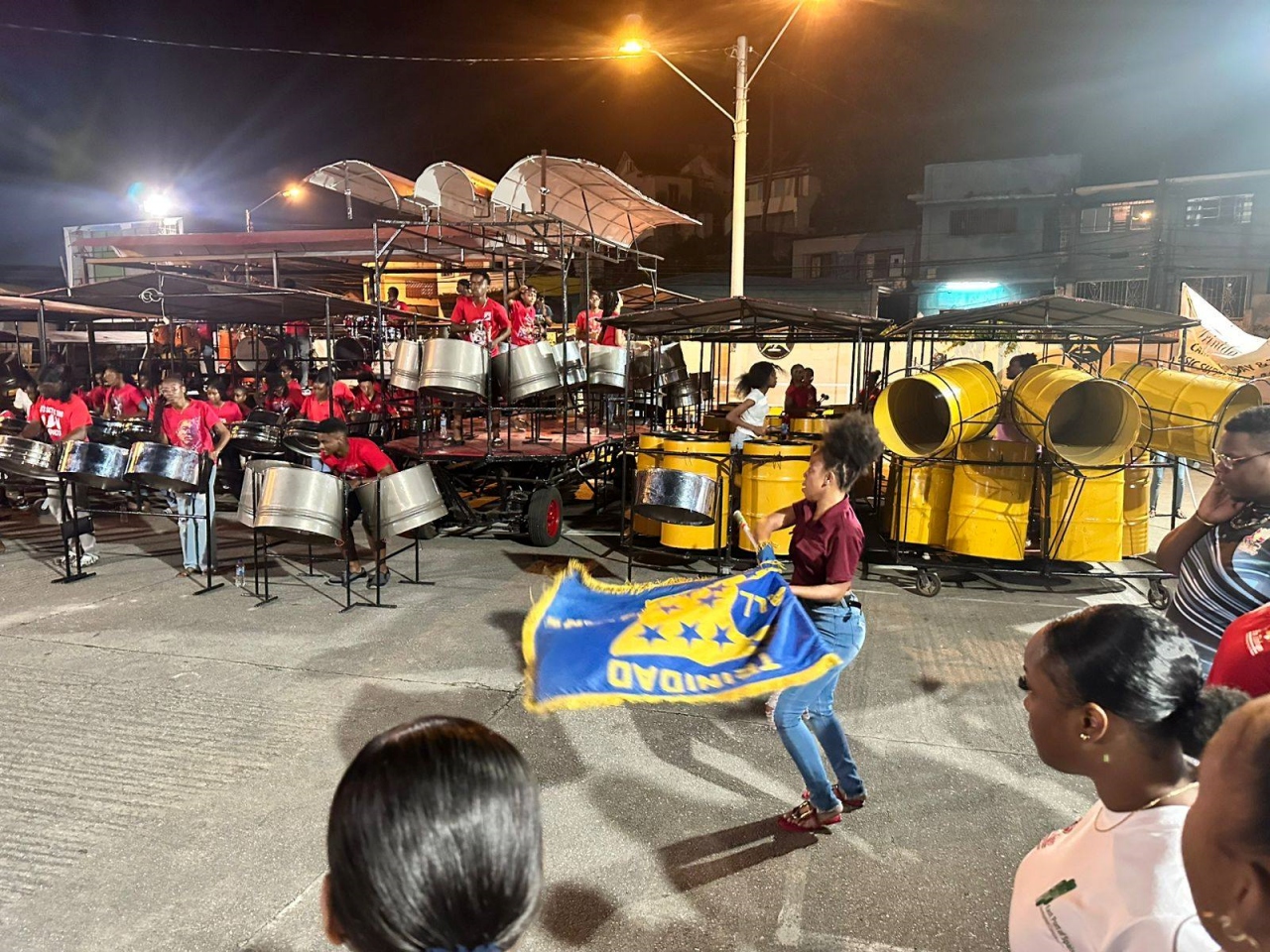
May I remind readers that, a decade ago, I described our performing arts as our other oil.
My recommendations, for example, include the creation of a sustainable and relatively safe theatre district, reviving the historic link between the Little Carib Theatre and the now expanded Invaders panyard.
I suggested we create pedestrian precincts when necessary and rebrand the Carnival season as a first quarter festival, to provide room for those of its authentic elements that have been shoved aside by the Mardi Gras elements of the Carnival parade.
We have, however, wasted a decade of opportunities to make a significant mark as a destination for live concerts and other productions before streaming gained the transforming momentum it now has.

(Copyright Jono Hirst.)
We just sat back relying on Carnival as the driver of event/cultural tourism. State funds were disbursed to support “contact” promoters and artistes.
With acknowledgement of the commentary of another insightful economist, Mariano Browne, these disbursements were made when the state was “a redistribution agency for energy-sector earnings”.
Meanwhile there are live event promoters who are doing very well without the need for a sit-down concert space. But they must now adapt in the face of strong opposition to sound that has become widely categorised as noise pollution.

“[…] It is time that pan (read Pan Trinbago, or PTB) involves itself in some long-term policies, strategies and actions Read more

Christmas is over and the New Year, 2026, is just ahead. Writing a column for publication today was stressful. This Read more

A little over a week ago, on 29 November 2025, the Washington Post identified “the Caribbean allies helping the US Read more

However the intended and laudable “revitalisation” of Trinidad and Tobago may proceed, the long standing need for socio-economic reform, accountable Read more

On 31 October 2025, Attorney General Senator John Jeremie SC gave the House of Representatives the Government’s rationale for an Read more
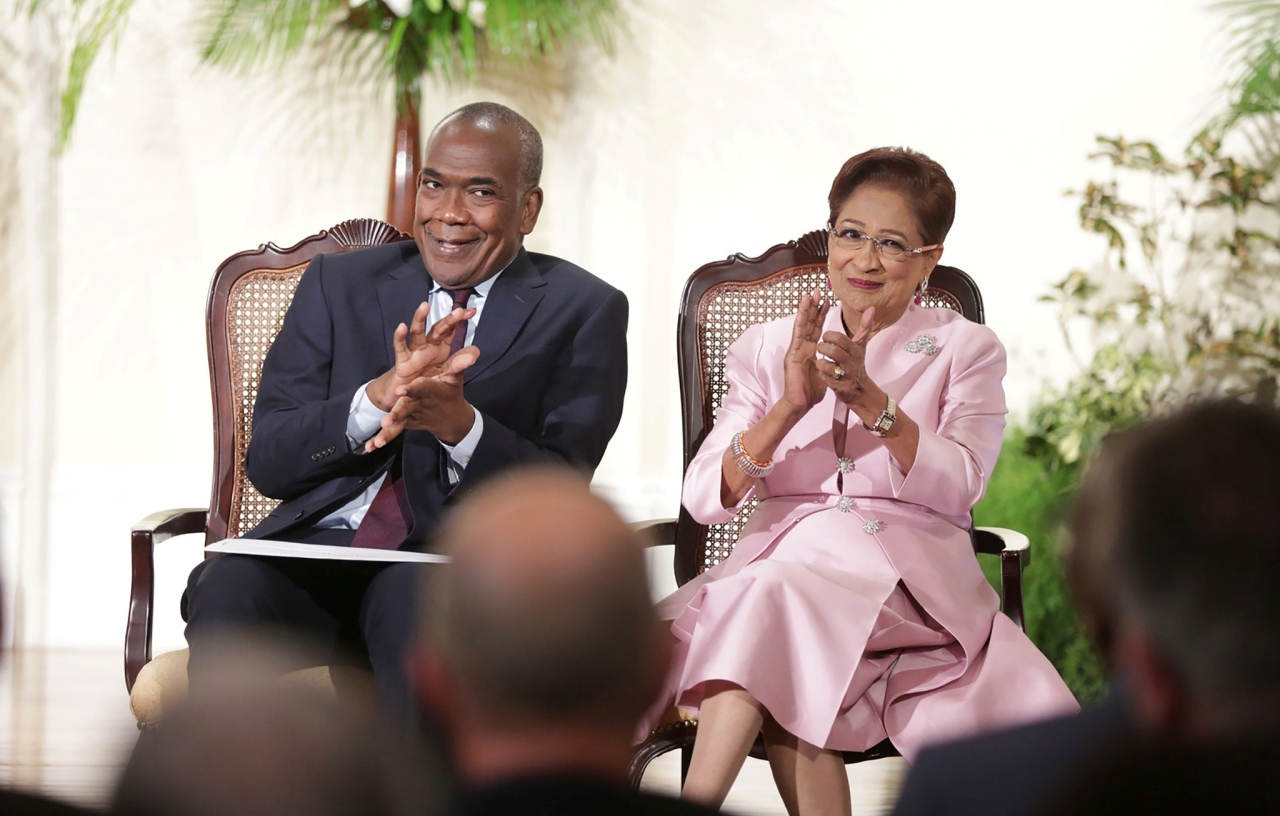
Our small country is currently living under a state of emergency. If, as authorised by the House of Representatives on Read more
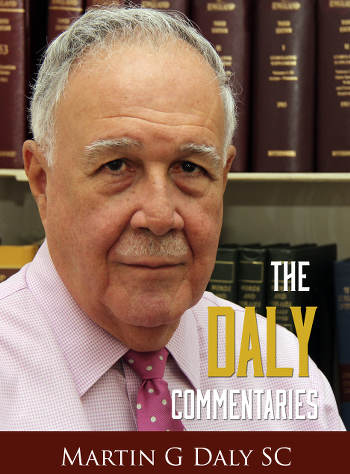
Martin G Daly SC is a prominent attorney-at-law. He is a former Independent Senator and past president of the Law Association of Trinidad and Tobago.
He is chairman of the Pat Bishop Foundation and a steelpan music enthusiast.

Culture Is Not Economic Policy
Conclusion first
Calling culture “our other oil” is not a strategy. It is assertion. Trinidad and Tobago’s creative sector has value, but without governance, infrastructure, regulation, and scale, it cannot substitute for serious economic planning or foreign-exchange generation.
1. Assertion is being mistaken for analysis
Repeatedly declaring that culture can drive tourism does not make it so. Oil generated foreign exchange because it was scalable, exportable, capital-intensive, and institutionally governed. The performing arts do not meet those criteria by rhetoric alone.
2. “Tourism anchored in culture” avoids the hard questions
Any serious tourism strategy must answer basics:
airlift,
accommodation capacity,
transport,
safety and policing,
trained labour,
predictable regulation.
None of this is addressed. Tourists do not arrive for sentiment; they arrive because systems work.
3. Regional comparisons expose the weakness
Caribbean competitors succeed because they have functioning tourism systems, clear regulation, noise and zoning enforcement, and investor confidence. They are not successful because they talk about culture more eloquently.
4. Nostalgia is being recycled as policy
Theatre districts, pedestrian zones, Little Carib, Invaders—these ideas are decades old and repeatedly recycled without costing, timelines, governance models, or political feasibility. Meanwhile, the live-events economy has already been transformed by streaming. That reality is acknowledged and then ignored.
5. The State is missing from the analysis
Apart from distributing grants, there is no discussion of:
regulatory reform,
accountability,
institutional design, or
separating culture from patronage.
Calling the State a “redistribution agency” is accurate. Offering no alternative architecture is not analysis.
Bottom line
This is not a roadmap for the Orange Economy. It is cultural nostalgia reinforced by authority signalling.
Culture matters.
But culture without systems does not transform economies.
Trinidad does not need more declarations.
It needs governance, regulation, and realism.