 Wired868 Wired868 for smart sport news and opinion
“[…] In medicine, we abandoned the idea of humiliation as therapy a long time ago… If we treated heart disease the way we treat traffic offences, we would simply fine people for eating fried food and call it prevention. Ridiculous? Exactly.
“Punishment alone is not prevention—it is abdication. Humiliation teaches citizens one thing very well: the state sees you as an enemy, not a partner…”
The following guest column, which suggests why increased fines will not necessarily make Trinidad and Tobago safer and more law abiding, was submitted to Wired868 by Dr Joel David Teelucksingh of Chase Village:

Every government eventually reaches for the same lever when frustrated: punishment.
When roads become dangerous, tempers flare and statistics worsen, the instinct is predictable—raise the fines, increase penalties, name, shame, blame and humiliate. It looks decisive. It photographs well. It satisfies public anger.
However, if punishment alone created good behaviour, there would be no smoking, no diabetes, no domestic violence, no substance abuse, and no repeat traffic offenders. Yet hospitals remain full, prisons overcrowded and roads increasingly dangerous.
So, before we applaud higher fines as bold leadership, we must ask a harder question: “Does shaming people actually change behaviour—or does it simply satisfy political optics?”

Photo: UNC.
In medicine, we abandoned the idea of humiliation as therapy a long time ago.

- We no longer shame patients with obesity.
- We do not publicly disgrace people with HIV.
- We do not fine diabetics for poor blood sugar control.
Shame does not heal. It hides, hardens and harms.
Anyone who has raised a child knows this: fear may force obedience but it never teaches wisdom. In fact, it often produces resentment, defiance and creative rule-breaking.
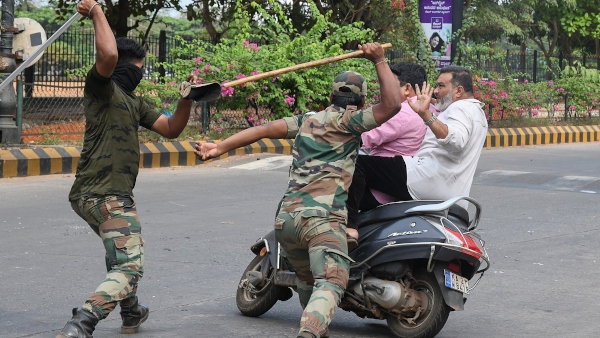
A child taught with care learns judgment, responsibility and empathy. That is how character is formed. Behaviour changes when rules are explained, consequences are fair and good examples are set. The same principles apply to nations.
When fines increase without context or education, drivers don’t suddenly become safer. They become more anxious, more evasive, more cynical.
They learn where police hide. They learn when enforcement relaxes. They learn how to game the system.
Blame is easy. Leadership is hard.

Blame says: “You are the problem.”
Leadership asks: “Why is this happening—and what systems failed?”
If traffic offences are rampant, we must interrogate more than individual morality.
- Why are roads poorly designed?
- Why are traffic lights malfunctioning or missing?
- Why is public transport unreliable, unsafe or nonexistent?
- Why are roadworks endless, chaotic and unmarked?
- Why is enforcement inconsistent, selective or politically timed?
In medicine, when a patient’s condition deteriorates, we do not simply scold them. We review the environment, the support systems, the medications and the education provided. We ask what barriers exist.
Public policy should be no different.
The safest countries in the world did not fine their way to safety. They educated their way there.
- Children learn road etiquette in schools.
- Drivers are retrained periodically.
- Public messaging is intelligent, not insulting.
- Enforcement is fair, visible and predictable.
Let me be blunt: this is public health.
Road traffic injuries are among the leading causes of death globally, particularly in young people. Emergency Departments see the carnage daily: fractured skulls, severed spinal cords, lives altered forever in seconds.
If we treated heart disease the way we treat traffic offences, we would simply fine people for eating fried food and call it prevention.

Ridiculous? Exactly. Punishment alone is not prevention—it is abdication.
Humiliation teaches citizens one thing very well: the state sees you as an enemy, not a partner.
There is also an ethical dimension. Raising fines disproportionately harms lower-income citizens—the very people who rely most on unreliable roads, poor public transport and ageing vehicles.
For some, a traffic fine is an inconvenience. For others, it is groceries, schoolbooks and medication. And when laws are perceived as unfair, people stop respecting them altogether.

If the goal is safer roads—not better headlines—then leadership must be smarter.
- Education Before Escalation
Nationwide, sustained road-safety education—not seasonal slogans. Schools, workplaces, media. Make it cultural. - Infrastructure Reform
Better signage. Proper road markings. Functional traffic lights. Logical intersections. You cannot fine people for navigating chaos. - Consistent, Fair Enforcement
No selective crackdowns. No political timing. Predictable enforcement builds respect. - Graduated Penalties With Rehabilitation
Points systems tied to retraining, not just payment. Education after offence, not humiliation. - Lead by Example
No blue-light impunity. No official arrogance. Laws must apply equally—or they apply to no one.

We have seen this movie before. During the Covid-19 pandemic, governments across the world mistook punishment for policy and optics for outcomes.
Lockdowns were announced without planning. Rules shifted without explanation. Citizens were blamed for viral spread while overcrowded hospitals, poor ventilation, inconsistent messaging and delayed procurement were quietly ignored.
People were shamed for gathering, fined for movement and publicly scolded—yet essential systemic failures went unaddressed. The result was predictable: confusion, mistrust, fatigue, non-compliance and an erosion of public confidence in authority.
Raise fines if you must, but do not confuse punishment with progress. A nation does not become safer because its citizens are frightened—it becomes safer when its people believe the rules are fair, the systems functional and the leadership honest.

Copyright: Office of the Parliament 2025.
That is how behaviour changes. That is how trust is rebuilt. That is the only road worth taking forward.
That is how 2026 should begin.
“[…] Ordinary citizens know the challenges all too well: waiting lines that stretch for hours before a doctor can be Read more
“[…] Today Christmas—and many other religious observances—has become totally commercialised as a rapacious capitalist system sees the opportunity to make Read more

“[…] We are losing hope in the ability of our economy to provide good jobs for us. A smaller share Read more

There have been recent announcements that will disrupt the output of the Carnival sector and its interconnected networks of employment Read more

“[…] Rachel Price made this observation reflecting on social media: some things that may have been deemed shameful a mere Read more

“[…] By praising Donald Trump and stating that this country is proud to be aligned with US Secretary of State Read more

Want to share your thoughts with Wired868? Email us at editor@wired868.com.
Please keep your letter between 300 to 600 words and be sure to read it over first for typos and punctuation.
We don’t publish anonymously unless there is a good reason, such as an obvious threat of harassment or job loss.

A rebuttal to this idiocy
This column collapses under the weight of its own confusion.
It begins with a smug premise — that governments “reach for punishment” — and then spends several hundred words attacking a problem that does not exist: the idea that fines are imposed on citizens as a class. They are not. They never have been. That alone renders most of the article sheer nonsense.
Let us state the obvious, since it appears to have been missed entirely:
Fines apply only to people who break the law.
They do not apply to the compliant.
They do not apply to the careful.
They do not apply to the law-abiding poor, rich, sick, anxious, or confused.
They apply to offenders.
This article repeatedly pretends otherwise, and the entire argument depends on that pretence.
The medical analogy is laughably bad
Comparing traffic offences to diabetes, HIV, or obesity is not insight. It is category confusion dressed up as compassion.
People are not fined for being diabetic because diabetes is not unlawful.
People are fined for speeding because speeding is unlawful.
One is a medical condition.
The other is a deliberate breach of a legal duty.
If the author cannot distinguish between illness and misconduct, then no amount of “public health framing” will rescue the argument.
“Punishing the poor” is a slogan, not a legal point
The claim that fines “disproportionately harm lower-income citizens” is emotive but irrelevant.
The law does not impose fines based on income.
It imposes fines based on behaviour.
A poor person who obeys the law pays nothing.
A wealthy person who breaks it is fined.
The idea that poverty converts unlawful behaviour into injustice is not progressive — it is incoherent. If that were true, the rule of law would be replaced by income-based moral exemptions.
That is not justice. That is arbitrariness.
The fantasy that education replaces enforcement
We are told — solemnly — that “the safest countries educated their way to safety”.
This is simply false.
Every safe jurisdiction combines:
education,
visible enforcement,
predictable sanctions.
Education without enforcement is advice.
Law without sanctions is a suggestion box.
The article argues as if consequences themselves are morally suspect. That position is unserious. No legal system on earth functions that way.
Infrastructure excuses are not accountability
Yes, roads may be poorly designed.
Yes, public transport may be inadequate.
Yes, enforcement may be inconsistent.
None of that makes speeding lawful.
None of that turns recklessness into virtue.
None of that removes agency from the driver.
Context explains behaviour; it does not erase responsibility.
If bad infrastructure excused illegality, there would be no traffic law at all.
The real problem: rhetorical inversion
This article survives only by reversing reality:
law-breakers are recast as victims,
enforcement is reframed as cruelty,
accountability is called “humiliation”,
and sanctions are confused with oppression.
That is not analysis. It is moral theatre.
Final word
You cannot fine your way to perfection — no one serious claims you can.
But you also cannot infantilise a population and call it leadership.
Fines do not punish citizens.
They punish offenders.
Once that elementary point is understood, the rest of this article is exposed as idiocy built on a false premise.
And no amount of sanctimonious prose will change that.