 Wired868 Wired868 for smart sport news and opinion
“[…] Under the proposed TTFA Statutes amendments, clubs would lose 21 votes, reducing their combined allocation from 36 to 15—a decrease of approximately 58.3%. Regional associations would gain six votes, increasing from 12 to 18, while the Women’s League would increase from two votes to three.
“The proportional changes are equally significant. Clubs would fall from approximately 63.2% of the 2024 electorate to 34.9% of the proposed 43-vote electorate. Regional associations would rise from 21.1% to approximately 41.9%.
“The proposed structure would therefore reverse much of the increased electoral weight allocated to clubs in 2024. Regional associations would become the largest voting bloc by constituency category, while clubs would lose their collective majority…”
The following Letter to the Editor, which looks at proposed amendments to the TTFA Statutes by the Kieron Edwards-led executive committee and their potential impact on the 2028 president elections, was submitted to Wired868 by Betterment:

The proposed 2026 amendments to the Trinidad and Tobago Football Association (TTFA) Statutes raise fundamental questions about the future of football governance in the country.
Are the changes designed to improve representation, accountability and institutional integrity, or could their combined effect redistribute electoral power in ways that favour the incumbent administration ahead of the 2028 presidential election?

Photo: TTFA Media.
The issue extends beyond the allocation of Congress votes. It also concerns who may contest elected office, how unresolved disciplinary proceedings affect candidate eligibility, and whether the institutions responsible for administering elections can operate independently of executive influence.
Constitutional amendments are not inherently improper because they benefit particular constituencies. Nor does a potential electoral advantage prove improper intent.
However, when proposed changes simultaneously affect voting weights, candidate eligibility and institutional oversight, their rationale must withstand objective scrutiny.
The background begins with the TTFA’s 2019 presidential election, contested by David John-Williams, William Wallace and Richard Ferguson. The subsequent dispute between the TTFA and Fifa culminated in Fifa appointing a normalisation committee in March 2020, displacing the elected administration amid concerns involving financial management and governance.
On 28 January 2024, Congress approved revised statutes intended to satisfy Fifa and Concacaf requirements and facilitate a return to elected governance. Contemporary reporting also recorded concerns that rejecting the proposed framework could prolong the Normalisation Committee’s tenure. (Wired868, 28 January 2024.)

Photo: TTFA.
The changes to Article 26 significantly altered the balance of voting power. Before the revision, Pro League and Super League clubs collectively held 18 votes within an electorate of 49.
Under the revised TTFA Statutes, qualifying Tier 1 and Tier 2 clubs received two votes each, increasing their combined allocation to 36 within a 57-vote electorate.
The clubs’ share consequently rose from approximately 36.7% to 63.2%.
On 13 April 2024, Kieron “Bo” Edwards defeated Colin Wharfe, receiving 38 of the 57 votes cast, equivalent to approximately 66.7% of the electorate. (Wired868, 13 April 2024.)

Photo: TTPFL.
This sequence is significant: a substantial change to the voting structure preceded the presidential election by less than three months. The figures demonstrate the importance of club votes under the revised framework—although they do not establish that the amendments caused Edwards’s victory, or were adopted specifically to secure it.
The proposed 2026 amendments now raise questions about whether that balance should be substantially altered again.
Article 26: A redistribution of electoral power:
Based on the proposed provisions supplied for examination, the voting allocations would change as follows:

Voting constituency 2024 Statutes (Proposed 2026)
Tier 1 clubs 24 (10)
Tier 2 clubs 12 (5)
Six regional associations 12 (18)
TT Women’s League Football 2 (3)
Seven other organisations 7 (7)
Total 57 (43)
These calculations assume the proposed increases apply to regional associations and the Women’s League, while the seven other organisations retain their existing votes. The complete amended text must confirm those assumptions.

Photo: Daniel Prentice/ Wired868
On this basis, clubs would lose 21 votes, reducing their combined allocation from 36 to 15—a decrease of approximately 58.3%. Regional associations would gain six votes, increasing from 12 to 18, while the Women’s League would increase from two votes to three.
The proportional changes are equally significant. Clubs would fall from approximately 63.2% of the 2024 electorate to 34.9% of the proposed 43-vote electorate. Regional associations would rise from 21.1% to approximately 41.9%.
The proposed structure would therefore reverse much of the increased electoral weight allocated to clubs in 2024. Regional associations would become the largest voting bloc by constituency category, while clubs would lose their collective majority.

Photo: Nicholas Bhajan/ Wired868.
This is more than a technical revision. It changes the coalitions required to win a presidential election and the relative importance of different members in determining the outcome.
The TTFA may have legitimate reasons to reconsider its voting model. However, it should explain why the proposed allocations best represent the interests of football and provide members with an opportunity to evaluate alternative models.
Could the proposed structure favour the incumbent?
Consider a hypothetical candidate supported by four regional associations, the Women’s League and four clubs. Assuming each association votes as a bloc, that candidate would receive 12 regional votes, three Women’s League votes and four club votes, totalling 19.

Photo: Nicholas Bhajan/ Wired868
That would fall short of a majority of the proposed 43-vote electorate. If all votes were cast and a simple majority were required, the winning threshold would be 22.
Nevertheless, the candidate would need only three additional votes to reach that threshold.
The example illustrates how changes in voting weights could alter electoral strategy. An administration whose support among clubs has weakened might become less dependent on club votes, if it retains reliable support among regional associations.

(via TTFA.)
But political support must not be presumed. An association president’s alignment with an incumbent does not establish how its delegate will vote, and historical support does not guarantee future loyalty. This scenario identifies a potential advantage, not a predetermined outcome.
The central question is whether the proposed voting structure can be justified independently of its political consequences.
If regional associations are to receive greater influence, the TTFA should explain why. The same standard should apply to reducing the voting power of clubs, which remain central to organised football and player development.

Photo: Daniel Prentice/ Wired868.
The distribution of votes is only one aspect of electoral integrity. Relationships between candidates, clubs, sponsors and administrators also warrant transparency.
Before the April 2024 election, Edwards acknowledged his intention to approach Premier Football League clubs for support and resigned from his assistant-manager role at La Horquetta Rangers.
Reporting also connected him to Richard Ferguson, the club’s managing director, who participated in the election.

Behind Ferguson to his left is Inspector Andrew Boodoo, who is also a current TTFA executive member.
Photo: Allan V Crane/ CA-Images/ Wired868
Separately, reporting raised concerns about sponsorship relationships and their potential influence within football governance. Such relationships deserve scrutiny, but they do not, by themselves, establish that financial support was exchanged for votes or that clubs were improperly directed.
The proposed Electoral Committee arrangements are therefore important. Independence depends not merely on a committee’s title, but on its appointment procedures, conflict-of-interest safeguards, candidate eligibility decisions and dispute-resolution mechanisms.
Proposed changes to quorum rules, executive composition and presidential involvement in appointing the general secretary should likewise be assessed against their practical consequences. Some may improve administration; others may increase executive discretion or alter representation.

Photo: Daniel Prentice/ Wired868.
Their effects should be established through examination of the actual wording rather than assumptions about motive.
However, even a balanced voting structure cannot fully protect an election if the rules determining who may contest are unclear or inconsistently applied.
Article 37.4: Could unresolved proceedings affect candidate eligibility?
The proposed changes to Article 37 introduce another critical question: could unresolved disciplinary proceedings or provisional safeguarding restrictions prevent an individual from contesting the 2028 presidential election?

(via TTFA Media.)
Under Article 37.4 of the January 2024 TTFA Statutes, executive committee members must not previously been found guilty of an incompatible criminal offence or previously been sanctioned or suspended by Fifa, Concacaf, CFU or the TTFA.
The issue is whether the proposed 2026 wording changes, expands or clarifies these restrictions in a way that could affect someone facing an unresolved investigation, provisional suspension or interim safeguarding measure without a final disciplinary determination.
A final sanction following an established process is not necessarily equivalent to a precautionary restriction imposed while allegations are investigated. Nor does the existence of an investigation establish wrongdoing.

If eligibility depends on the existence of a suspension rather than a final finding, a prospective candidate could become ineligible while the underlying proceedings remain unresolved.
If the restriction continues for an extended period, the individual could be excluded throughout the electoral process without the substantive matter reaching a conclusion.
Whether Article 37.4 would produce that outcome depends on its precise wording, the applicable disciplinary regulations and the interpretation adopted by the Electoral Committee.

The word “previously” in the existing provision does not, by itself, settle how an ongoing provisional restriction should be treated. This ambiguity must be addressed explicitly before the amendments are approved.
Safeguarding, due process and the risk of exclusion
The TTFA’s handling of safeguarding matters has already attracted public scrutiny.
In March 2025, former national Under-17 coach Shawn Cooper was prohibited from coaching players aged 18 and under, under the Association’s safeguarding framework.

Photo: Daniel Prentice/ Wired868.
In May 2026, the High Court dismissed Cooper’s application for an interim injunction seeking to lift the restriction. That decision concerned interim relief and did not, by itself, finally resolve the substantive dispute or the interpretation of the applicable suspension-duration provisions.
Cooper subsequently brought a defamation claim against the TTFA and its safeguarding manager, according to contemporary reporting. (Trinidad Guardian, 14 May 2026.)
The proceedings must be described according to their actual status. They do not, individually or collectively, establish misconduct by either party.

Nevertheless, the case illustrates how an unresolved restriction can affect professional opportunities while a dispute remains outstanding. It does not establish that safeguarding procedures were used for electoral purposes; its relevance is the broader question of how restrictions are imposed, reviewed and maintained.
The TTFA has defended its safeguarding framework against allegations that it has been weaponised, arguing that restrictions may be precautionary and that confidentiality limits what can be disclosed publicly. (Wired868, 15 April 2025.)
That position deserves fair consideration. Safeguarding must protect children and vulnerable persons, preserve investigative integrity and respect appropriate confidentiality. Electoral interests cannot automatically override legitimate protective measures.

Equally, safeguarding must operate under clear rules, with proportionate restrictions, appropriate review mechanisms and timely decisions.
Imagine a prospective presidential candidate who is subject to an interim restriction when nominations open. If the Electoral Committee interprets Article 37.4 as automatically disqualifying anyone who has been suspended, that individual could be prevented from contesting before a final determination of the underlying allegations.
The concern becomes more serious if restrictions lack clear review deadlines, disciplinary processes lack sufficient independence, or effective appeals are unavailable.
Such a framework could have an exclusionary effect regardless of intent.
(via TTFA Media.)
Establishing deliberate suppression of opposition, however, would require evidence of selective treatment, improper interference or other conduct connecting disciplinary proceedings to the electoral contest.
The mere existence of an unresolved case does not prove improper motive. But the absence of such proof does not remove the need for safeguards against arbitrary or inconsistent application.
Article 26 determines the relative weight of voting constituencies. Article 37 governs eligibility for the Executive Committee and may affect who can participate as a candidate. These must be considered together.
Photo: Nicholas Bhajan/ Wired868.
If clubs lose substantial voting power while regional associations gain influence, the balance within Congress changes. If eligibility provisions also allow unresolved suspensions to prevent prospective challengers from standing, the range of candidates available to members could be affected.
Neither possibility proves that the amendments were designed to favour the incumbent. However, voting rights and candidate eligibility are complementary elements of electoral fairness.
A credible system must ensure that votes are allocated on a defensible basis, candidates are assessed under clear and consistent rules, and electoral decisions are subject to independent review.
(via TTFA Media.)
The combined effects of these proposed changes therefore deserve examination before approval, not after the political contest has begun.
The TTFA should publish the complete proposed amendments alongside an explanatory memorandum addressing the following matters:
- Voting rights: Provide verified calculations of existing and proposed allocations and explain the rationale for changing the relative influence of clubs, regional associations and other members.
- Electoral independence: Clarify the Electoral Committee’s appointment procedures, conflict-of-interest safeguards and dispute-resolution powers.
- Candidate eligibility: Distinguish expressly between final disciplinary findings, completed sanctions, provisional suspensions and unresolved investigations.
- Independent review: Establish a prompt process for reviewing eligibility decisions and preventing restrictions from leaving candidates indefinitely uncertain about their status.
- Executive accountability: Explain the consequences of proposed changes to quorum requirements, executive composition and the appointment of the General Secretary.
- Member consultation: Give Congress sufficient time to examine the proposals, consider alternatives and raise concerns before voting on the amendments.

Photo: Nicholas Bhajan/ Wired868.
The TTFA should also clarify whether revised eligibility provisions would apply to existing disciplinary matters and explain how confidentiality and the rights of affected individuals would be protected.
In 2024, substantial constitutional changes preceded a presidential election by less than three months. With the next election anticipated in 2028, the Association has an opportunity to undertake a transparent review well in advance, avoiding the pressure of consequential revisions immediately before nominations or campaigning.
The proposed 2026 amendments raise two connected concerns.
First, the proposed Article 26 revisions could substantially redistribute voting power from clubs towards regional associations. If the incumbent’s support base aligns more closely with the constituencies gaining relative influence, the changes could provide an electoral advantage.
Photo: Nicholas Bhajan/ Wired868.
That possibility warrants scrutiny, but it is not proof of deliberate manipulation or a predetermined 2028 result.
Second, the proposed Article 37 revisions raise questions about whether unresolved disciplinary proceedings or provisional safeguarding restrictions could affect candidate eligibility.
The TTFA must preserve its ability to enforce integrity standards and protect vulnerable persons, while ensuring that disciplinary procedures do not become arbitrary or disproportionate barriers to electoral participation.

Photo: Nicholas Bhajan/ Wired868
The decisive question is whether the revised framework allocates voting power on a defensible basis, applies eligibility standards consistently and ensures that electoral and disciplinary decisions are subject to independent oversight.
The TTFA should publish the full proposed wording, explain the rationale for each material change and give members a meaningful opportunity to scrutinise the consequences before approval.
A legitimate electoral system must protect more than the ballot count. It must protect the fairness of the rules governing voting rights, the independence of those administering elections and the ability of eligible candidates to contest under transparent standards.
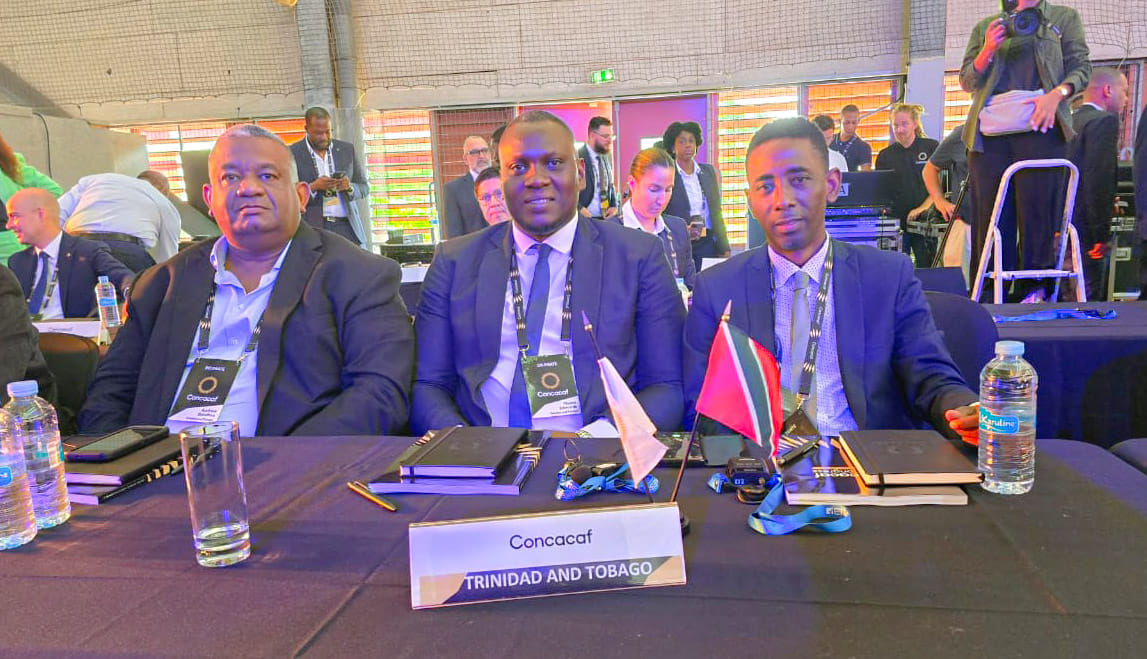
(via TTFA Media.)
Ultimately, the credibility of the 2028 presidential election will depend not only on who wins, but on whether the membership can trust the process that produces the winner.
Electoral reform should strengthen confidence in the outcome—not leave members questioning whether the rules have redistributed power or narrowed the field of competition.
The TTFA has time to demonstrate that its proposed changes serve the collective interests of football. It should use that time to establish a framework that is transparent, proportionate, independently administered and fair to every constituency and every eligible candidate.
“[…] Where else would you find U14 and U16 games playing at 10am on a workday, attracting 200 to 300 Read more

“[…] Mr Gary St Rose himself acknowledges that the investigations are not complete. So what exactly formed the basis of Read more

Trinidad and Tobago Boys’ National Under-15 Team manager Adrian Romain has been cleared to continue his duties with the national Read more

“[…] The TTFA’s published Safeguarding Policy and Framework (version 3.0) says the TTFA ‘shall’ impose conditions on a licence whenever Read more
“[…] A strategic plan should not simply articulate where an organisation hopes to be in four years. It should clearly Read more

“[…] The TTFA could work with clubs, academies, parents and relevant child-protection stakeholders to review its youth-team travel standards and Read more

Want to share your thoughts with Wired868? Email us at editor@wired868.com.
Please keep your letter between 300 to 600 words and be sure to read it over first for typos and punctuation.
We don’t publish anonymously unless there is a good reason, such as an obvious threat of harassment or job loss.